
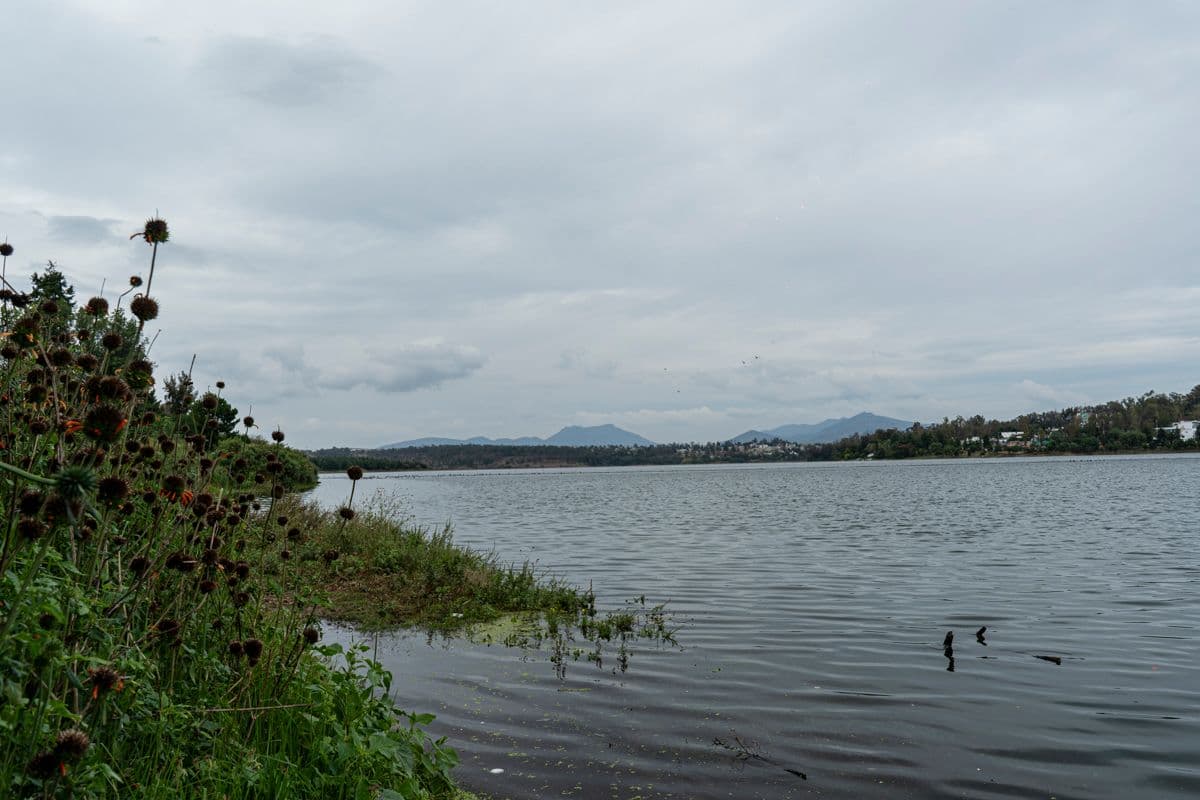
They began by collecting garbage from the lake, planting lavender, lantana and myrtle trees and shrubs, and ended up converting a corner on the shore of the Lago de Guadalupe dam, in Cuautitlán Izcalli, State of Mexico, into a botanical sanctuary of 530 linear meters with nurseries, orchards and gardens, where bees, butterflies, bats and hummingbirds go to feed.
Every weekend, a designer, a marketer, a high school student and a retiree meet with other young people, neighbors and volunteers to maintain the Pollinator Corridor, with its botanical and sensory gardens, built for citizens, and to try to restore the body of water.
The lake suffers from the continuous inflow of coliform bacteria and industrial heavy metals. 97 percent of the pollution comes from wastewater discharges from the municipalities of Nicolás Romero, Atizapán de Zaragoza and Cuautitlán Izcalli.
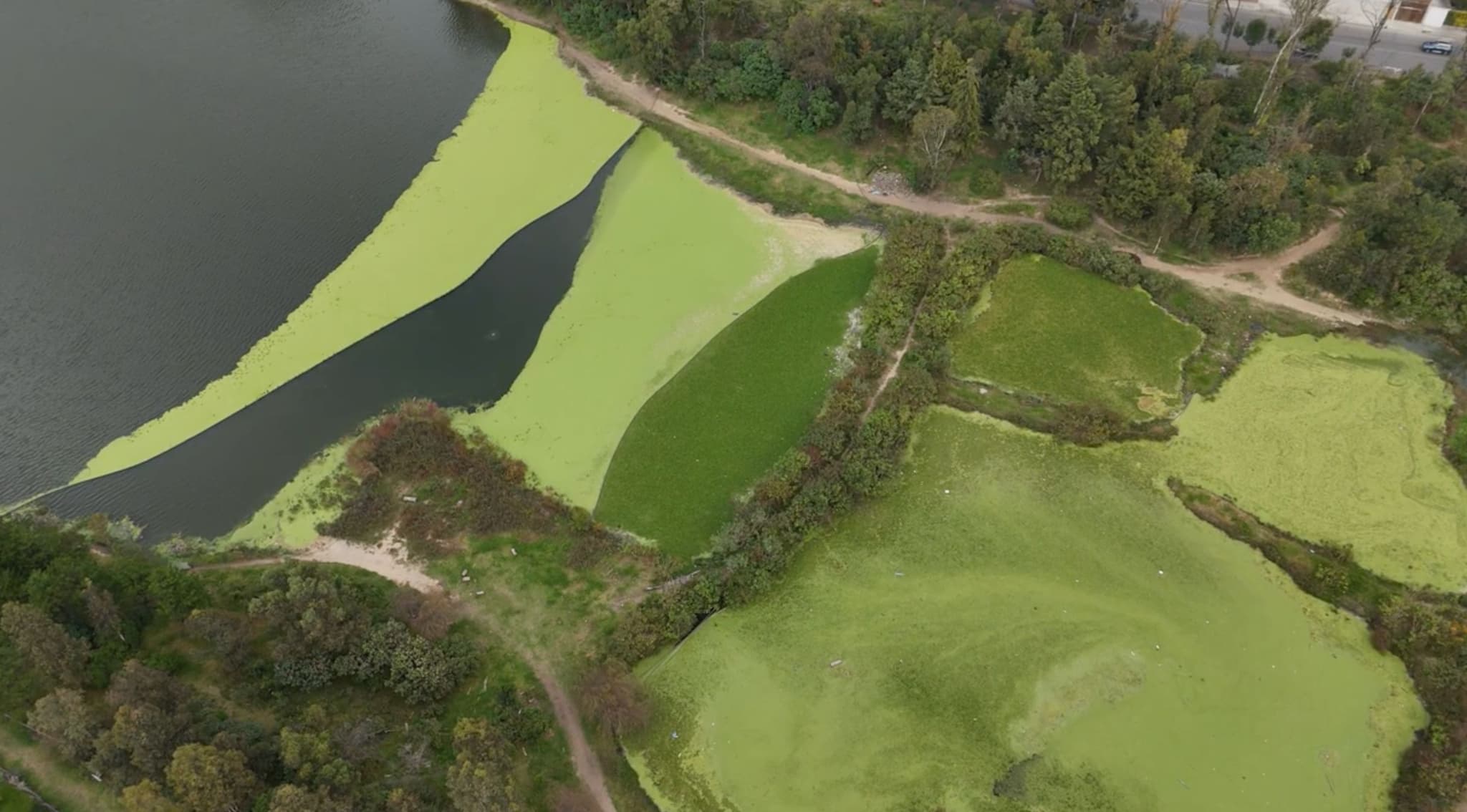
It's a Sunday at the end of October 2026, in one part of the lake you can see a huge green spot, like cream, invading it. It's a water lily. As the plague progresses in the lake, with brooms, picks, shovels and scissors, volunteers fight to keep areas green. They focus on the surroundings of the small library, which seems like something out of a story, that they built in the Corridor, just 3.03 percent of the lake's total perimeter of 17 kilometers.
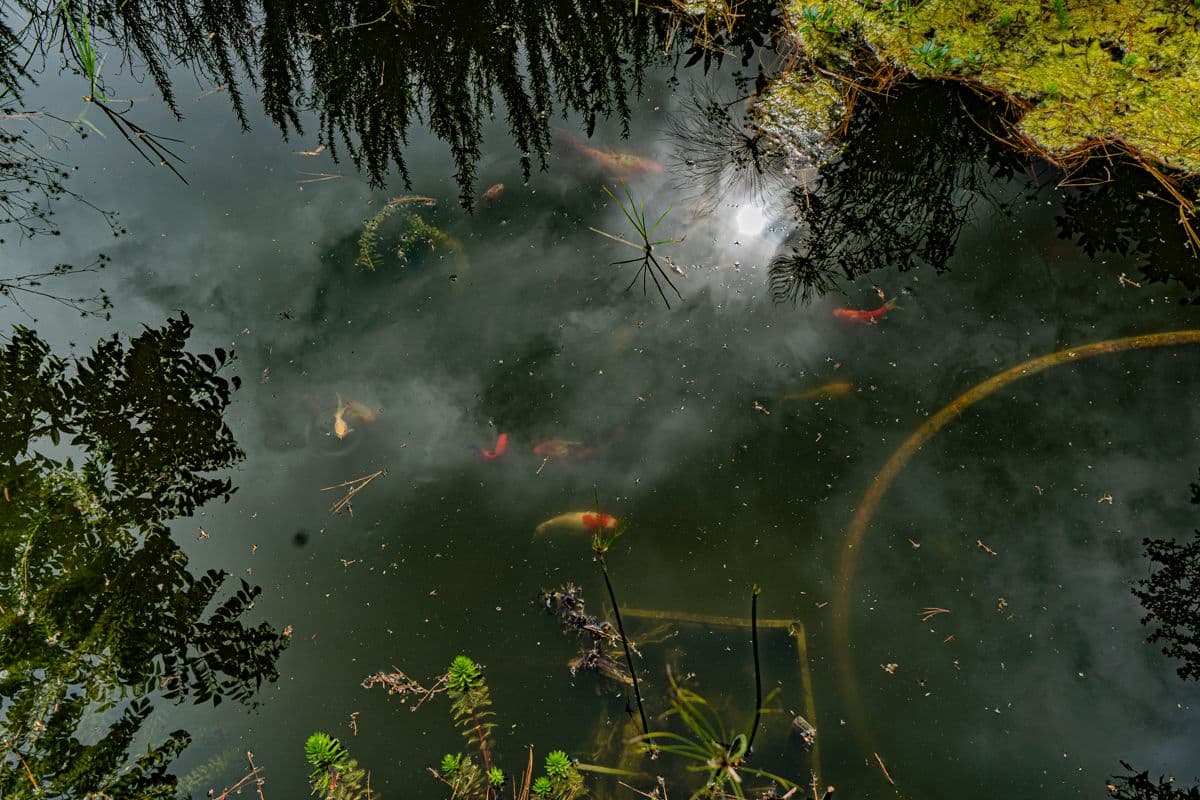
They start to clean the pond, carefully because it is full of fish. They also prune the area so that grass doesn't invade pollinator plants. It's a voluntary routine, without compensation, without government support, that unites this community around the lake.
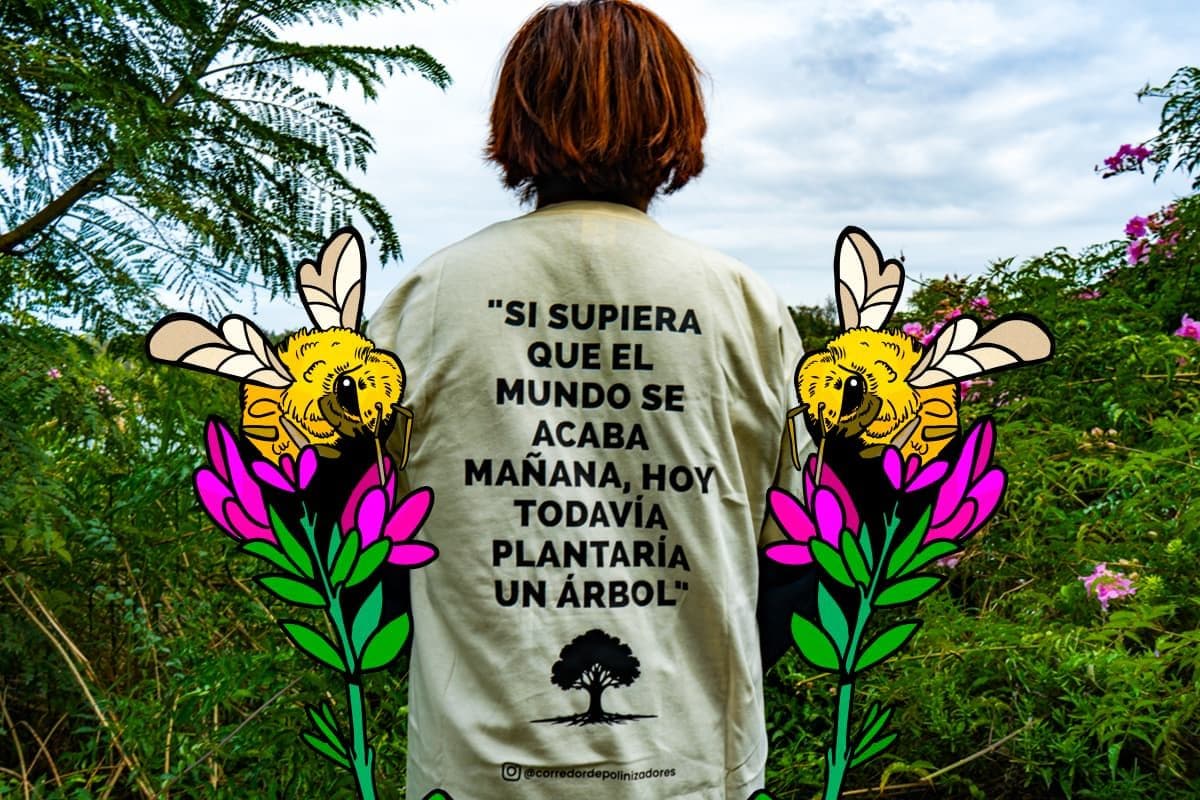
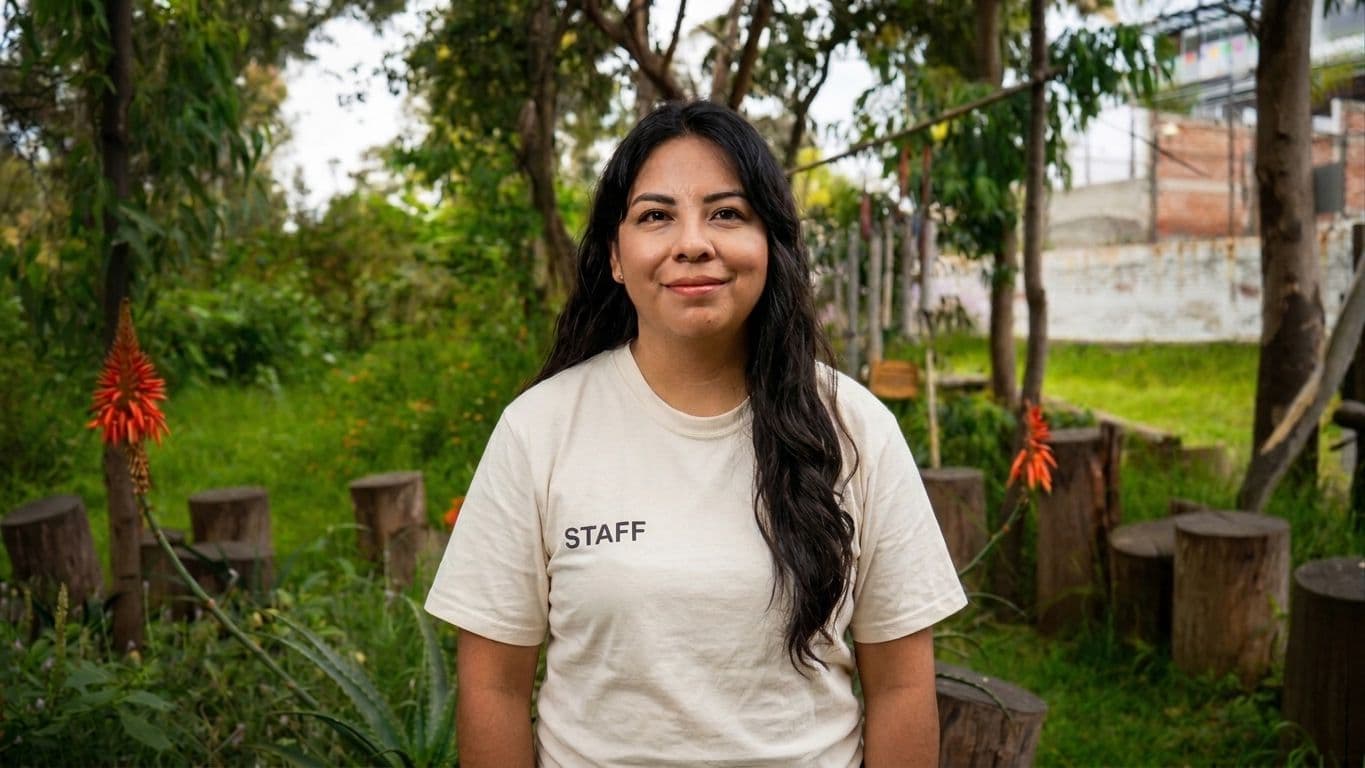
Miriam Millán, is a graphic designer and environmentalist. It has been participating in the Pollinator Corridor since the end of 2023. “I loved it and they didn't take me out of here anymore. I have been a stable volunteer for three years, and I was very involved in the project.”
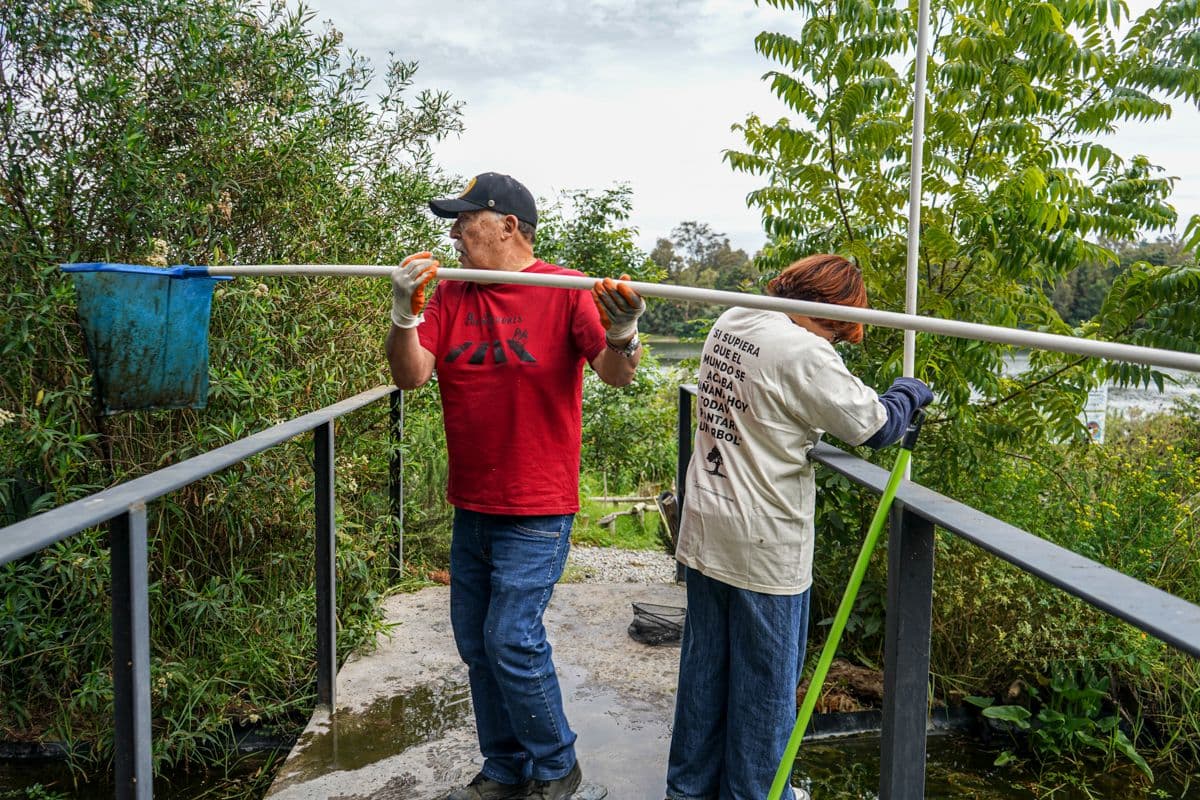
His t-shirt reads: “If I knew that the world would end tomorrow, today I would still plant a tree”. The phrase sums up what they're doing here, greening the landscape.
In this place full of flowers that produce nectar and pollen, bees don't have to struggle to find food. They go from flower to flower. There are dozens and dozens of them. Some rounder than others, bees and bumblebees stop at flower buds until they are satisfied.
Although they don't live in water, bees, butterflies, bats and hummingbirds are essential to maintaining the ecological balance of a lake. Its pollination work directly connects the earth to the body of water. They pollinate the plants and flowers that grow on the banks, which in turn stabilize the soil with their roots and prevent erosion into the water.
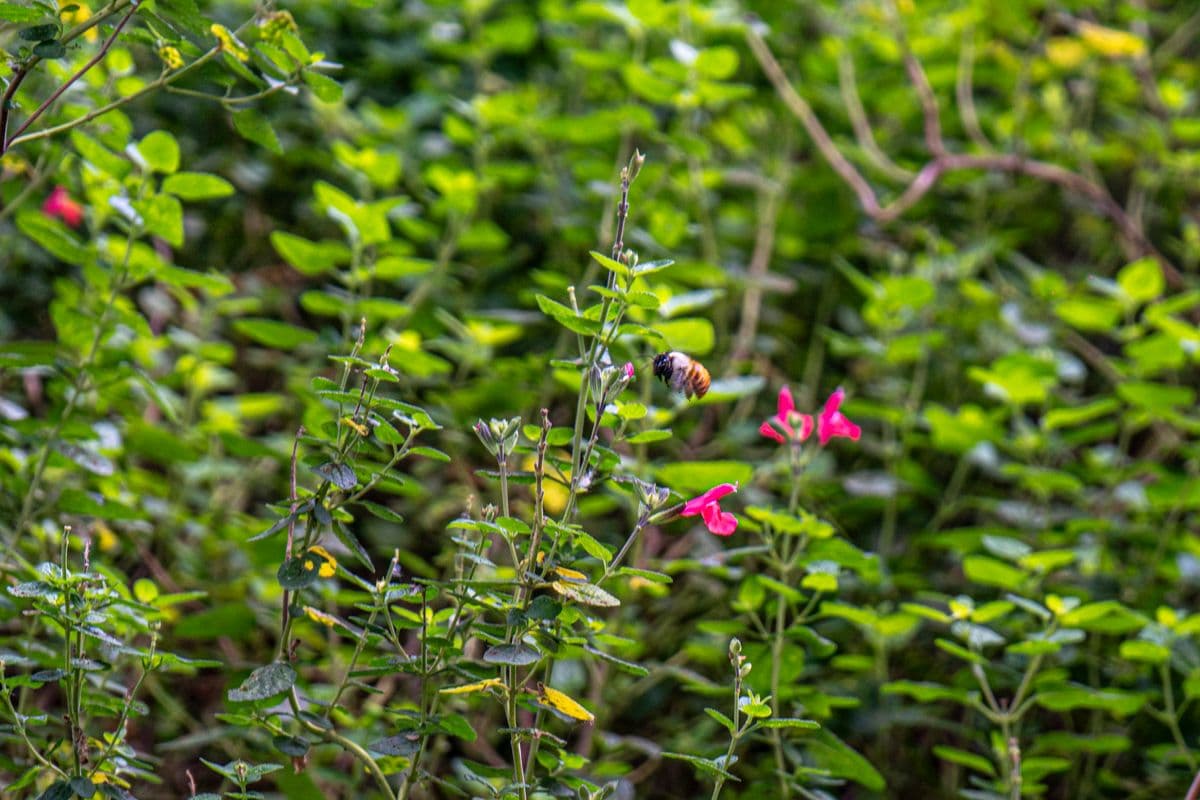
Bees are also indispensable for the diet of humanity, their pollinating work allows plants to produce the fruits and seeds we consume. This completes the chain. Bees, butterflies, bats and hummingbirds are responsible for pollination. In a way, this Pollinator Corridor returns the favor.
Here they find food without the obstacles imposed by climate change, habitat loss and agricultural pesticides.
“Our work is aimed at restoring the space, because as you know it was a total garbage dump, it was something horrible,” Miriam says.
From garbage dump to pollinator corridor
Elizabeth Garcia arrived in 2018 to live in front of Lake Guadalupe and found a large garbage dump. Although it has been a Protected Natural Area since 2004, garbage floated in the lake and the smell of sewage was penetrating. “There was a lot of garbage that existed in everything that is now the corridor, which of course was nothing like that before,” says Elizabeth.
In the Covid-19 pandemic, he began to see from his window a group of people doing cleaning work around the dam, considered an ecological reserve, which is part of the Moctezuma river basin, and where wastewater discharges from three Mexican municipalities reach: Nicolás Romero, Atizapán de Zaragoza and Cuautitlán Izcalli.
The doctor in environmental sciences Germán Lucciolino sowed the idea. He began with the ecological restoration project on Lake Guadalupe, to which Elizabeth soon joined. “I integrated myself into planting, digging holes, because the truth is very tiring and it's a lot of work,” he says.
Soon after, Miriam joined, who gradually went from being a volunteer to a facilitator, meaning that she is the one who makes “things happen”, as if more and more young people are joining this community work.
Although Germán is no longer on the project, he left a board of directors in charge. The project is maintained through financial and in-kind donations such as plants, tools and even volunteer work. “My job here is precisely to do community work, to make it easier for all people to join the project, it's a 100 percent social project.”
Three generations for the lake's ecosystem
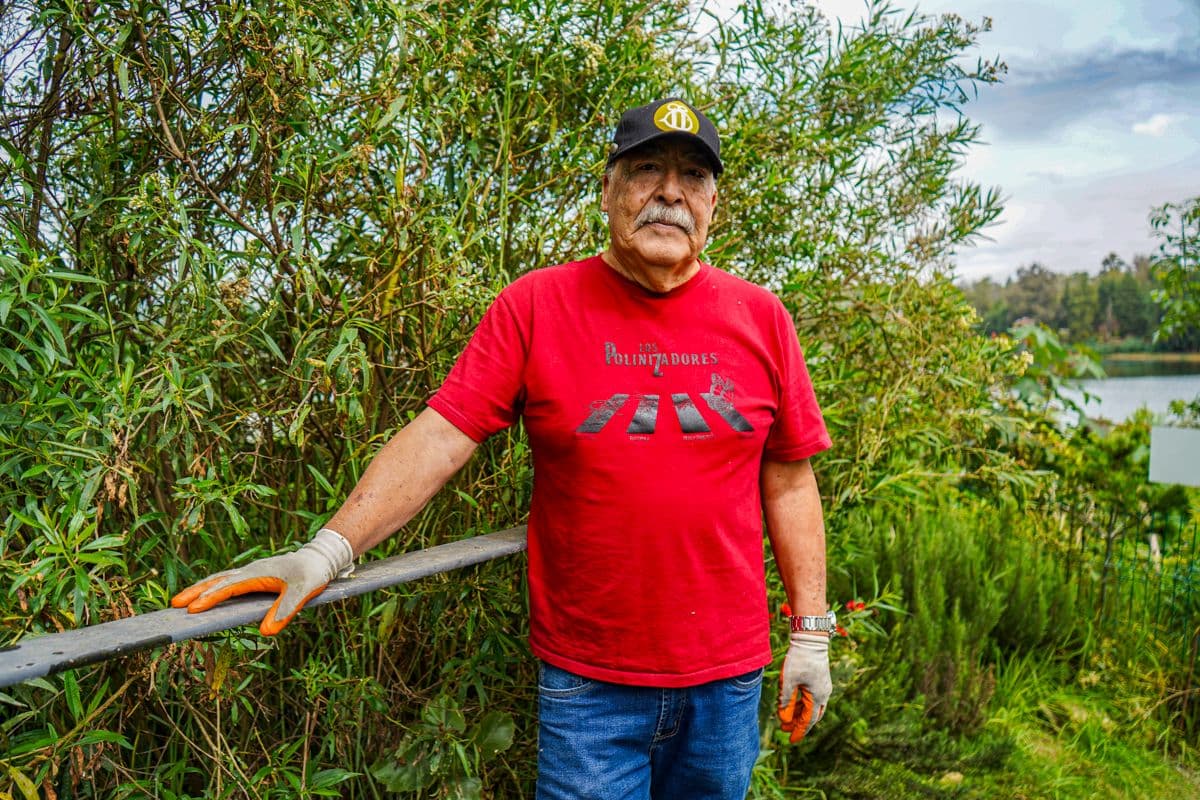
Francisco Garduño Sevilla is retired and is dedicated to gardening, Ángel Córdoba is a young marketer and publicist, and Yolot Sánchez Jiménez a 13-year-old teenager, all of whom have in common being volunteers in the Pollinator Corridor.
This Sunday, October 25, a cloudy day, but without rain, Francisco covers the ground with a machete in his hand and scissors; Ángel is dedicated to placing the wooden locks that delimit the path so that horses and runners do not step on the pollinating plants in the garden and Yolot helps with the cleaning of the pond.
Garduño came to the project because he is a neighbor of Lake Guadalupe and his wife invited him to visit the place. “And from there I no longer separate myself from the group. I work weekdays, as many days as I can,” she says.
“We have planted a lot of trees, a lot of them, and fortunately we are already seeing some results, there are already trees that are three years old, four years old, already about three meters tall,” Francisco says.
For this man who wears a red cap with a bee, the emblem of the collective, all this is for the benefit of the youngest. “It's for the future, not for my children, maybe my grandchildren can see some of what we're doing and of the grandchildren of my classmates' children.”
The future is precisely the concern of Yolot, who has just passed the third grade of high school and has been participating in environmental projects since she was 8 years old because her father, a great example for her, has infected and encouraged her. “He began to explain to me topics such as lack of water, lack of resources, global warming,” recalls Yolot, whose name comes from Nahuatl and means heart.
“After learning, for example, about big problems such as the melting of the poles or the water bankruptcy that we are suffering right now or the probable water war in a year or two, I feel that this issue should matter to a large part of society, because if we all did something, the world would improve a lot,” she says worriedly.
Yolot shares environmental awareness with this community in which different generations participate. For example, Ángel, the marketer, who manages the collective's social networks, is passionate about the environment and has been here for about three years. First he came once a month and now every week. Sometimes, their job is to coordinate volunteers to do reforestation and planting.
Why does he do it? It's a simple question to answer. “I think that when people get to know a space so beautiful, natural and so close, I think it's impossible for them not to want to take care of it, that is, to say, 'this is so beautiful, I can contribute to taking care of it',” he says.
And the thing is that taking care of a runner of this magnitude is not easy. “Right now is the rainy season, but when it's not, you have to be pouring water on the trees. You have to prune part of the tree just so that it continues to grow in the crown. You have to lift locks that fall down all day, every day. You have to prune, you have to reforest when it's season,” he says.
The work is heavy, but it's worth it. The goal, Francisco says, “was very ambitious”, it was 7 kilometers of corridor, barely 530 meters long, but they didn't take their finger off the line. “We can't do more because we don't have hands. We need hands to help us, to continue conserving.”
For this reason, Ángel makes an invitation to citizens. “We are going to teach you a bunch of things that can help you to make your garden at home, to make your garden, to contribute here and I think that always doing activities that are as if connected to nature, give a lot of peace. It's like occupational therapy, this place is super therapeutic.”
The ducks return and a monarch butterfly is born
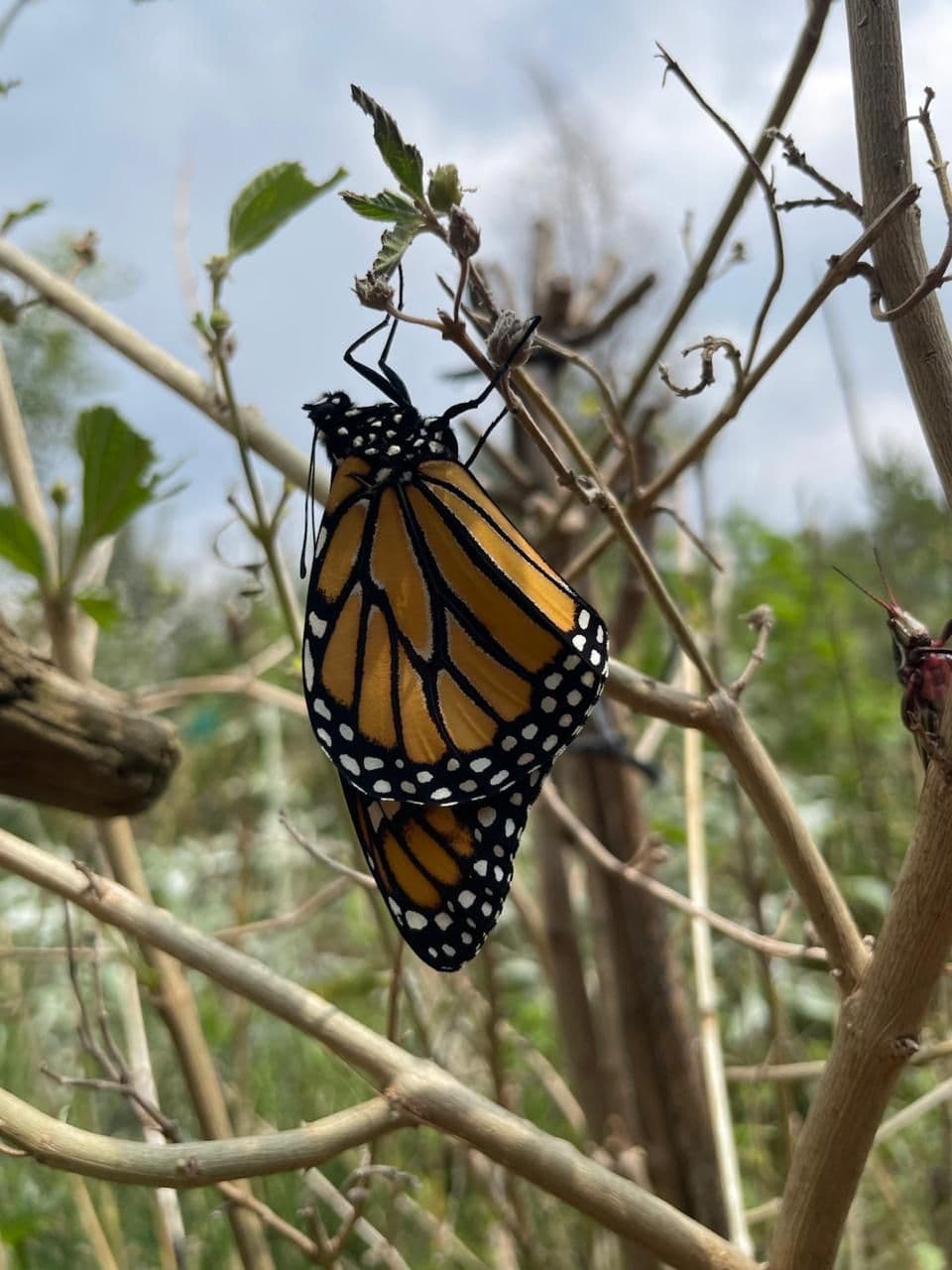
The Mexican duck has returned. There were also births of monarch butterflies. The seagulls are back. They have seen bats that come out of their cave and come to eat.
“A lot of species have returned that were no longer coming to the lake. The water quality is very poor and it is not a decent home for all species,” says Miri.
Since the past, the lake has been home to several species of birds from Canada and the United States, such as ducks (Anas diazí) and herons (Árdea spp), according to Geographic Research, Bulletin of the Institute of Geography in the report Spectral Analysis of Lake Guadalupe, using satellite images and in situ data by Raúl Aguirre Gómez.
“The Lake Guadalupe dam is a Protected Natural Area, which attracts a lot of attention, but the lake has always had a problem that it discharges wastewater from different municipalities.” As Miri narrates in the background, you can see the water lily, whose growth has been detonated due to the discharge of wastewater from urban areas.
A contradictory project that did not contemplate the community
Faced with this situation, the National Water Commission (Conagua) announced an investment of more than 5.5 billion pesos to build a water treatment plant capable of processing up to three thousand liters of water per second.
However, environmental groups and neighbors have protested to say that extracting water without cleaning the dam will accelerate the deterioration of the Protected Natural Area and fear that the water will benefit other areas of the Valley of Mexico instead of supplying the local community.
In fact, according to the Regional Environmental Impact Statement (MIA-R), number 15EM2025H0258, of the project Use of the Lake Guadalupe Dam as a source of drinking water for the Metropolitan Area of the Valley of Mexico, Conagua confirms that the objective is not only local supply, but also to bring treated water to municipalities in Mexico City, validating citizen fears. To this end, it includes a 2.25-meter-high diverter curtain in the dam, a 4.4 kilometer aqueduct, a 4.3 kilometer water treatment plant and a pipeline of 9.7 kilometers and 60 inches in diameter.
Conagua promises that regular cleaning of the dam and the implementation of dredging will be carried out, accompanied by continuous desolving to remove the accumulation of sediment and garbage. Although when evaluating the impacts on biodiversity, the MIA-R also states that the work will not affect aquatic flora or fauna because the collection will be limited to shooting at the foot of the curtain “without having to carry out activities on the lake”.
SEMARNAT decided to authorize the project, but on a conditional basis, setting a deadline of five years for preparation and construction, and 50 years for the operation and maintenance phase. The environmental authority imposed a financial lock on Conagua, since it determined that it will not be able to move a single stone or start works until it acquires and delivers a duly validated insurance policy or environmental guarantee.
This bond requires financial support to ensure compliance with rescue, relocation and ecological compensation programs due to the registered presence of species of flora and fauna classified as a risk category under the NOM-059-SEMARNAT-2010 standard.
The Future of the Corridor
Miri and her group pay attention to what may happen with Lake Guadalupe. He says they are willing to have a dialogue with the authorities for the sake of space and clarifies that their activities in the place are aligned with the management plan for the Protected Natural Area.
“It became a restored space, I would say 100% and that obviously benefited the neighbors, it benefited all the people who locate this part of Lake Guadalupe, because this is a small part, it's like 17 kilometers around the entire lake, and we did our bit,” he says.
“Above all, I think that we have an environmental impact and this one also socially because this, after being a garbage dump, is now an area for people to come, enjoy and take care of it,” concludes Elizabeth.
Now, Elizabeth can bring her grandson to play here. “I think this is invaluable and I hope that a lot of people will integrate and also come to enjoy it, not just work on it, right? Let's enjoy it too”, he concludes.
This group is giving back to pollinators some of what other human beings have taken from them.
This work is a collaboration between CN Media and Ruido en la Red


Comentarios (0)