
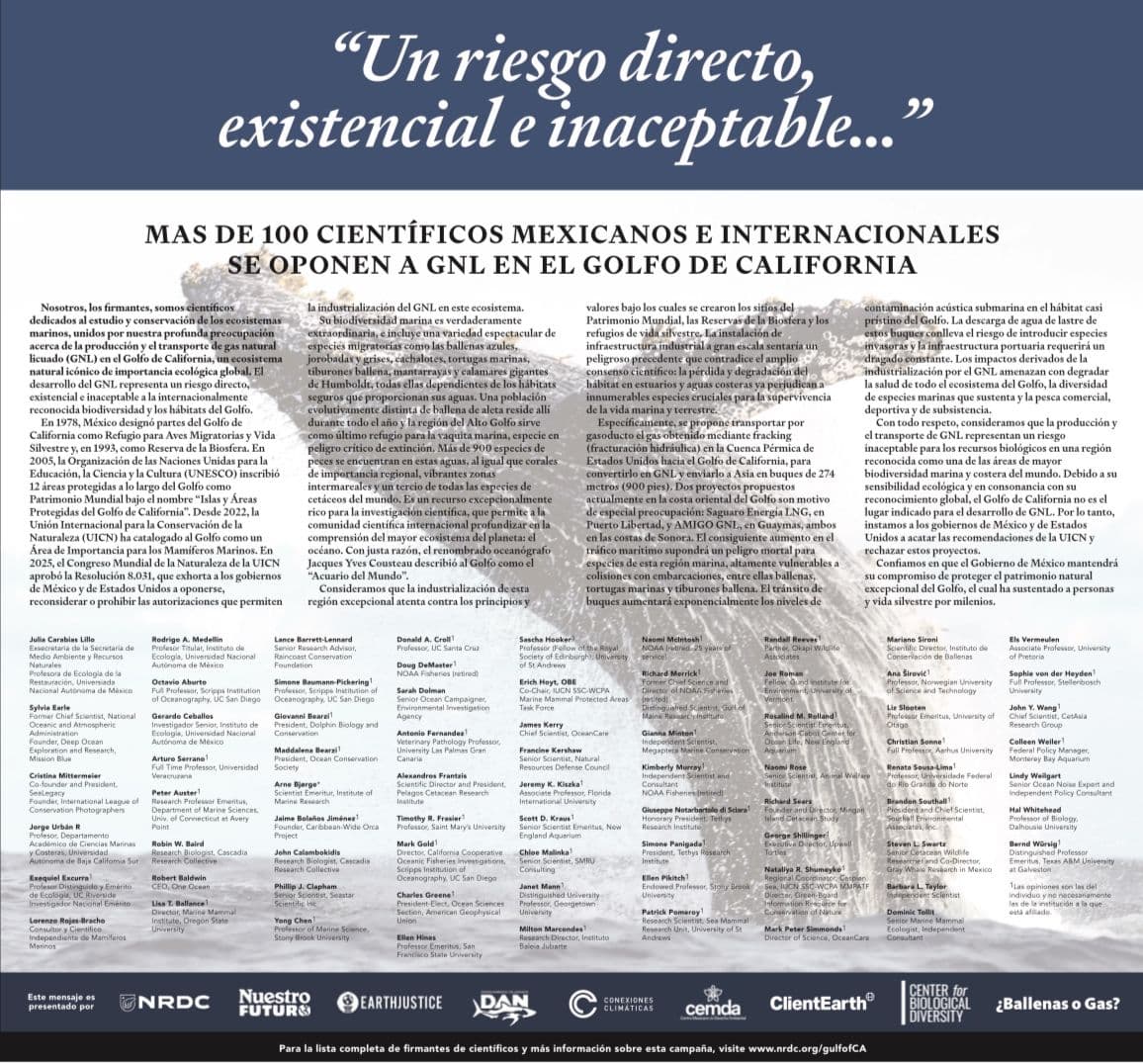
Mexican and international scientists signed a report to warn about the production and transportation of liquefied natural gas (LNG) in the Gulf of California.
Scientists point out that this industrial activity represents a risk to biodiversity and habitats in the region in a statement that was released this Wednesday, September 23.
The Gulf of California has been officially designated as a Refuge for Migratory Birds and Wildlife since 1978, a Biosphere Reserve since 1993 and a UNESCO World Heritage Site since 2005, they recall.
Additionally, in 2025, the World Congress of the International Union for Conservation of Nature (IUCN) approved Resolution 8,031, which urges the governments of Mexico and the United States to oppose or prohibit authorizations for the industrialization of LNG in this ecosystem.
The proposed industrial process consists of transporting gas obtained through hydraulic fracturing from the United States Permian Basin to the Gulf of California. The goal is to convert it into LNG and ship it to Asia using 274-meter vessels.
The document identifies two proposed projects off the coast of Sonora: Saguaro Energía LNG in Puerto Libertad and AMIGO LNG in Guaymas.
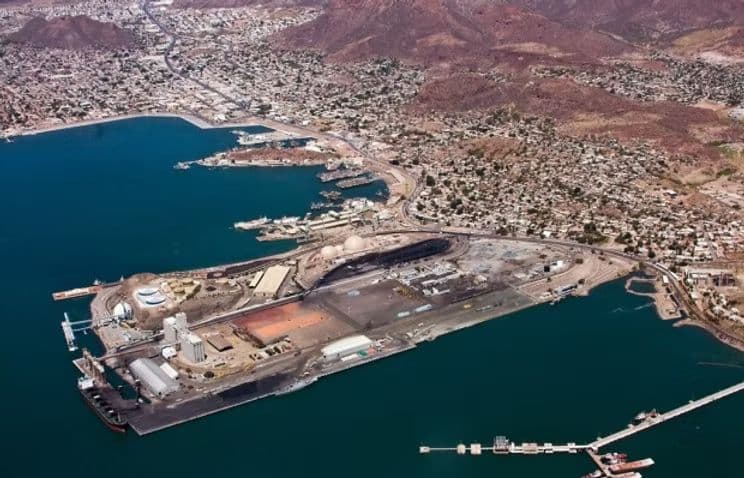
The signatories state that the traffic of these ships will increase levels of underwater noise pollution and will pose a collision hazard for species in the marine region.
They also indicate that the discharge of ballast water from boats carries the risk of introducing invasive species.
Finally, the group of scientists urges the governments of Mexico and the United States to comply with the recommendations of the IUCN and reject these projects.
Among the signatories are scientists from Mexico such as Julia Carabias Lillo, former Secretary of Environment and Natural Resources; Exequiel Ezcurra, National Emeritus Researcher; and Rodrigo A. Medellín, an academic at the UNAM.
International specialists such as Sylvia Earle, former chief scientist of the National Office of Oceanic and Atmospheric Administration (NOAA), also participate.
All of them are recognized in the areas of ecology, biology and marine conservation by their respective academic institutions and research organizations.


Comentarios (0)