
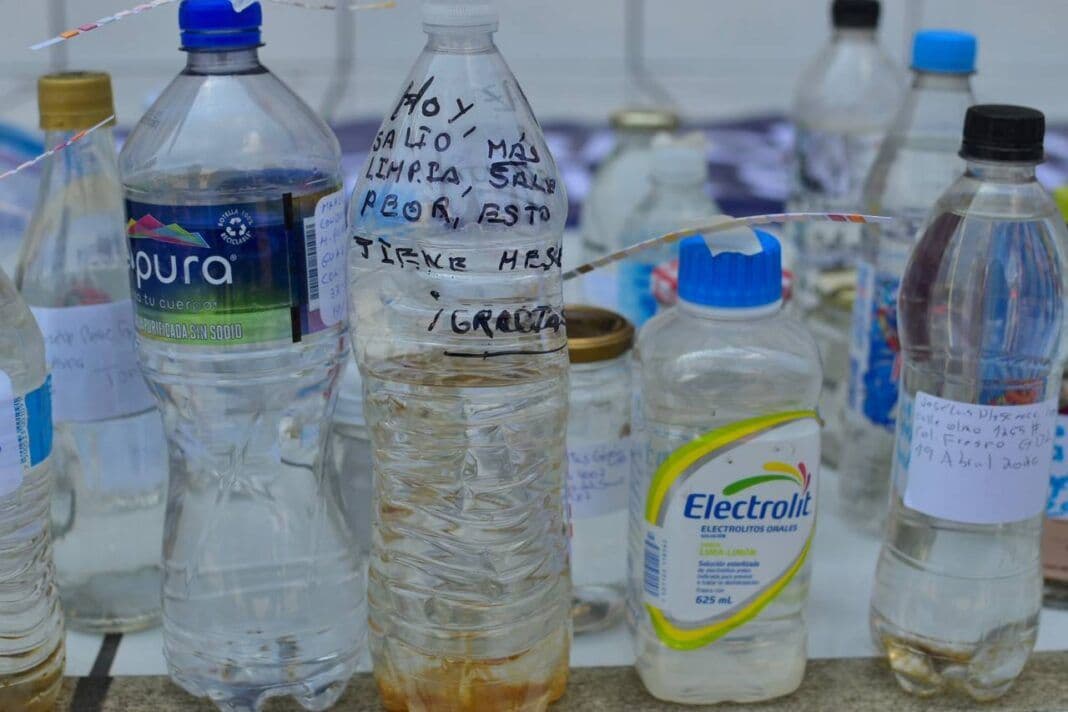
According to the latest report of the Intermunicipal System of Drinking Water and Sewerage Services (SIAPA), a total of 342 neighborhoods are being affected by poor water quality within the Guadalajara Metropolitan Area.
Opening the faucet has become an increasingly complex daily decision, as “drinking” water that should be used for bathing, washing hands, teeth or cleaning food and dishes reaches the pipes of thousands of homes, cloudy, with intense bad odors and even visible residues.
Uncertainty has led entire families to modify their basic cleaning activities inside their home and to seek alternatives to reduce their contact with the water they receive.
Flor de La Cruz, a resident of the Alcalde Barranquitas neighborhood in Guadalajara, says that she hasn't bathed directly with the water from her shower for more than six months and, inside her house, she has had to adapt a new routine: bathing herself and her children in “jicarazos”, washing their clothes in another house and allocating part of her income to buy bottled water or bottles.
The problem has also transcended domestic activities and has reached the health of his family: “we have been sick, my children, I have been sick with diarrhea, vomiting and eye infections that we have ended up treating ourselves in private offices because we don't have insurance and it's just another expense,” she says.
Their experience is added to that of others and other inhabitants interviewed and interviewed. Paloma, her neighbor, says that after bathing she feels burning eyes, “very similar to the symptoms of conjunctivitis”, an eye disease caused -among other reasons- by infections, allergies, irritation by substances and even neoplasms. He also says that since last year he began to perceive a bad smell in the water that reaches his home, but that this year the situation worsened, since it began to come out dirty, accompanied by what he describes as “garbage” and a kind of “sandstone”.
Paloma and Flor are not mistaken in their suspicions. The Technical Report on Water Quality Analysis in the Guadalajara Metropolitan Area , also called “Dangerous Water”, recognizes that the water that comes out of the pipes of the Guadalajara Metropolitan Area presents “turbidity, total coliforms, fecal coliforms and E. coli”, a reality that “constitutes a warning to public health systems, since problems could arise, as a result of them, gastrointestinal”.
The document is based on citizen monitoring of water quality within the Guadalajara Metropolitan Area and was carried out during March and April 2026, within the framework of the “The SIAPA We Want” initiative promoted by the Mexican Institute for Community Development (IMDEC), together with citizen organizations and universities such as ITESO and the University of Guadalajara (UdeG).
Santiago Olivo, a resident of the Jocotán neighborhood in Zapopan, remembers that there were times when he opened the faucet and the water came out green and “like hair”. Faced with situations like this, he simply chose to say: “I'm not taking a bath today”.
Residents are not only concerned and concerned about the appearance or smell of water, but also about the possible consequences that its use may have on their health. Rafael, from the Villa Ixtépete neighborhood, also located in Zapopan, points out that the water arrives cloudy, brown in color and with scrambled materials. He is sure that these conditions could be related to cases of conjunctivitis and digestive problems within his community.
For Roberto Maciel of the Movement for Drinking Water ZMG, it is “more than evident that the root of his recurring health problems” is the water that reaches his home: “for a year now, in other words, since 2026, we have been buying bottled water. And with that we bathe, with that we brush our teeth, with that we wash our brushes, with that we wash the dishes, the vegetables, we cook and well we haven't gotten sick. None of my children and neither me nor my wife. So, it's clear that the problem was water.”
The Mexican Institute for Community Development (IMDEC) points out that they have documented around 1,500 reports of health impacts that talk about skin diseases, gastrointestinal diseases and respiratory tract diseases, so these stories about health conditions spread throughout the Guadalajara Metropolitan Area.
María González Valencia, Executive Director of the IMDEC, points out that there are health risks that will not be immediate or short-term: “heavy metals are invisible and heavy metals are not discarded by our body, right? That is, they bioaccumulate. Therefore, the impacts on our health are not going to be immediate...”.
According to the second technical report prepared within the framework of the Campaign The SIAPA We Want, Water for Life, NOT for Business by IMDEC and presented on June 29, 2026, 184 samples analyzed in 90 neighborhoods in Guadalajara, Zapopan, Tlaquepaque, Tonalá and Tlajomulco de Zúñiga demonstrate that the water distributed by SIAPA in Guadalajara does not meet the standards required for human consumption.
All results were evaluated within the limits allowed by NOM-127-SSA1-2021, which establishes the basic conditions essential for the human use and consumption of the vital liquid. In addition, the report reveals that an almost total absence of residual chlorine was found. Of the total of 184 samples analyzed, it was identified that 93.48% of the monitored points lack a minimum disinfection barrier.
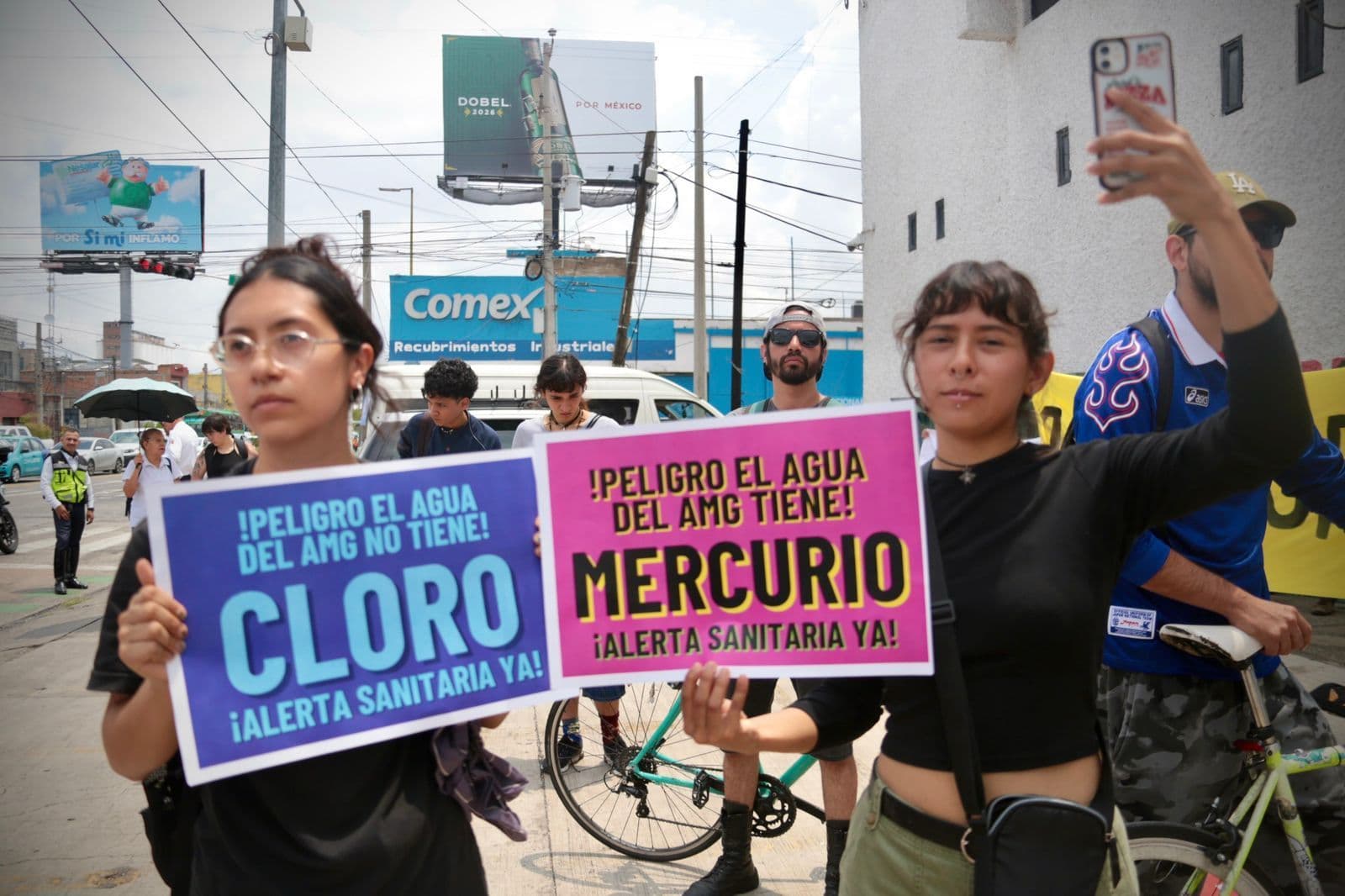
All the findings made regarding water quality indicate an obvious and serious lack of quality that not only affects people's health, but also intervenes in their daily lives in different ways, depending on the activities they perform and the needs they have. Roberto Maciel, for example, has had to take specific measures at home to take care of his son, “I have a son with autism and I had to close the faucets in the bathrooms so that he wouldn't wash his hands with that,” he says.
Flor de la Cruz has a similar situation: “I have a son with autism and I can't have a drum of 200 L of water or 100 L of water because it could cause an accident here in my house, arouse my son's curiosity and that there could be some kind of accident”.
María González Valencia, agrees that this problem influences different spheres of people's lives: “we are talking here about other rights that are also not being fulfilled, that are being violated, the right to health, the right to the economy, the right to a healthy environment, that is, above all these three rights, but also the right to information, participation and consultation that all people have in matters that are public and that have to do with effects on our lives”.
The need to find solutions to such a complex problem has generated frustration among those who believe that measures to address the problem should not fall solely on households. “Let the government be responsible for returning that money because it's part of people's health,” says Flor de la Cruz.
While the inhabitants seek answers and modify their daily routines to reduce their exposure to water of questionable quality, the Government of Jalisco announced on March 23 the replacement of the management of SIAPA, appointing Engineer Ismael Jáuregui Castañeda. Urgent measures were announced to address the crisis, however, 6 months later, contaminated water continues to affect the daily lives of citizens.
Today there is no clean water either...
When the water arrives cloudy, with a bad smell or with visible debris, families have had to find other ways to bathe, brush their teeth, wash clothes, prepare food or keep their homes clean. And the most “immediate” alternative has been to buy bottled water.
For one of the families interviewed, the expense has reached an extra $100 pesos per day, which means approximately $3,000 pesos per month that were not included in their budget before this problem began.
However, the water bill continues to arrive on a regular basis, “they believe that people continue to use water for daily activities, but that's not the case,” says Flor de La Cruz, pointing out that the SIAPA continues to charge for water as if residents were using it, when that's not the case. In your home, stopping using tap water has changed a routine that was previously automatic.
Thus, for some families, paying the water bill has become a dilemma. Flor de La Cruz points out that some neighbors have stopped paying for it due to the additional expenses incurred in obtaining water for their homes. On the contrary, Paloma says she would rather pay an additional cost in order to only get clean water in her home, “she could pay a little more money, make an effort to make sure it comes out clean,” she says.
In August, the State Human Rights Commission of Jalisco (CEDHJ) published a record of 302 neighborhoods in which citizens had filed complaints about poor water quality and the supply of vital liquid. By the month of October, 83 more colonies were added that also present this problem -according to the last session between municipalities and members of SIAPA-. This “recognition” has allowed people to access discounts on the collection of their payment receipts.
Paloma says that she now uses bottled water to brush her teeth, she also points out that she buys more than ten bottles a week and that given the situation she believes that she will have no other option but to install filters in her house.
In this way, the measures are not only limited to buying bottled water or bottles. Rafael mentions that in his home they have installed filters, they use chlorine tablets in the water tanks and try to shut off the passage of water when it arrives cloudy or with a bad smell to prevent it from contaminating the tank or the cistern.
They also point out that filters have increased in price and that simpler and cheaper models do not eliminate odors, or all waste, so some and some consider it necessary to purchase more specialized filters. Paloma points out that the husband of one of her friends is making his own filters.
The crisis has not only changed what people consume, but it has also changed the way they organize their homes, from adapting bathrooms, buying bottles, buying pipes to going to other places or houses to get clean water. “It's multifactorial because it affects everything,” summarizes Flor de la Cruz. School, business, household chores and family dynamics have had to adapt to a question that was not part of the routine before: can this water be used?
Are filters the solution?
For those who live in the Guadalajara Metropolitan Area, one of the solutions to face this crisis has been to install filters. Leonardo Cuevas of Grupo Agua, a company that offers solutions for water purification, points out that this crisis has greatly impacted the way people perceive these solutions.
“People already see it as a necessity when before many people saw it as a luxury...”, says the businessman.
The crisis has spread and filters have been presented as options in areas where they were not common. “sadly, they are needed throughout the metropolitan area,” says Leonardo Cuevas, “but we have seen that we have reached areas where we didn't sell before or we didn't have customers,” says the businessman.
However, for residents of different neighborhoods, even these solutions are not sustainable in the long term. Roberto Maciel, from the ZMG Drinking Water Movement, says that filters are often insufficient: “it depends a lot for a filter to work well or a filter system to work well, you have to first understand what the problem is. If the water is coming to you with sediment, well, you can fix the sediment with a filter, but if it comes with heavy metals, no.”
This water crisis is not limited to dirty, brown or black water with solid waste, but also to its supply, as Eugenia Garduño, a resident of Ciudad Granja in Zapopan, says, “sometimes we have water and sometimes we don't. Sometimes we have water again but it comes out dirty. We have to go elsewhere to get water...”
On July 13, Pablo Lemus Navarro, governor of Jalisco, announced through his official accounts that the main affected colonies would be given immediate attention with pipes and free access to purified water. However, as indicated by the testimonies of the families consulted, the situation has not been properly addressed. “they have left a drinking trolley for more than 300 colonies,” says Flor de la Cruz.
The complexity of this problem has led groups of citizens to mobilize to obtain answers on their own.
“For a heavy metal problem you have to have reverse osmosis and the filtering process is more complex, more expensive,” says Roberto Maciel. “The data collected by us indicate that the water contains aluminum, arsenic, mercury, cadmium, chromium, lead and faeces. So, imagine, it's a very serious problem,” he says.
The problem leaves no alternative for people, and in many cases, it's better to have a filter in your home than to have nothing, “there are reserves where we install for one person and all the neighbors ask them 'hey, with whom? ' and we install all the neighbors,” says Leonardo Cuevas from Grupo Agua. People are desperate, because they want to find the best alternative to take care of their health. “We have to make quick deliveries because more than anything else it is, the urgency,” he says.
The Power of Community
People's health cannot wait. On social networks, movements such as the Movement for Drinking Water (ZMG) have emerged on Facebook and campaigns such as The SIAPA We Want, which have mobilized those who seek to create change. “We don't have any political party behind us nor are we interested,” shares Roberto Maciel, administrator of the Facebook group. “In the end, my biggest ambition is to return home, to be able to bathe quietly, to be able to spend more time with my children.”
Despair, urgency and indignation over the situation are the engines of these neighborhood and community groups together with organizations that end up being a key part:
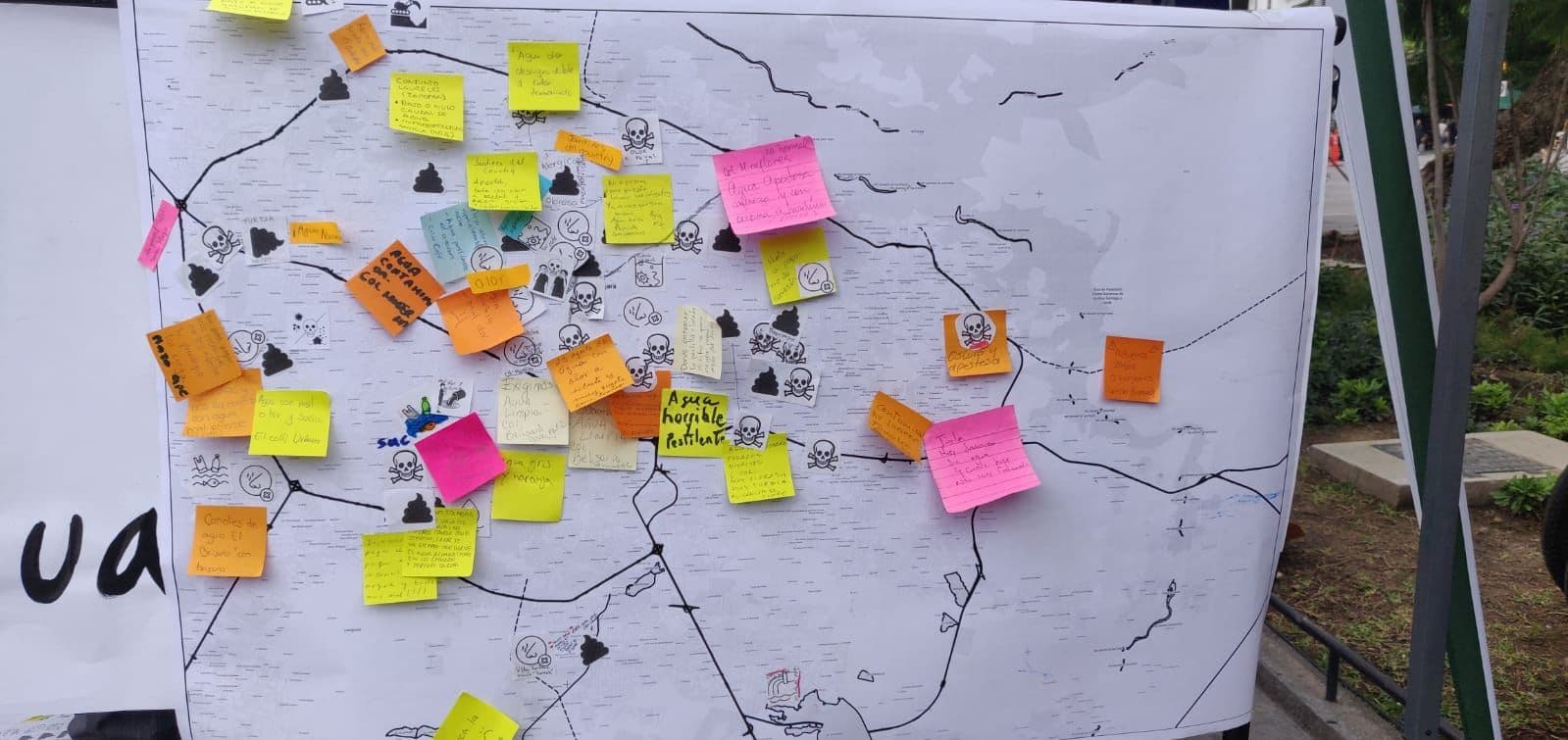
“that's why we decided to make a separate channel where the neighbors organized themselves to attend the marches, to set up work tables to analyze the water, together with groups. So neighborhood networks have worked in a certain way to make the problem visible,” adds Roberto Maciel.
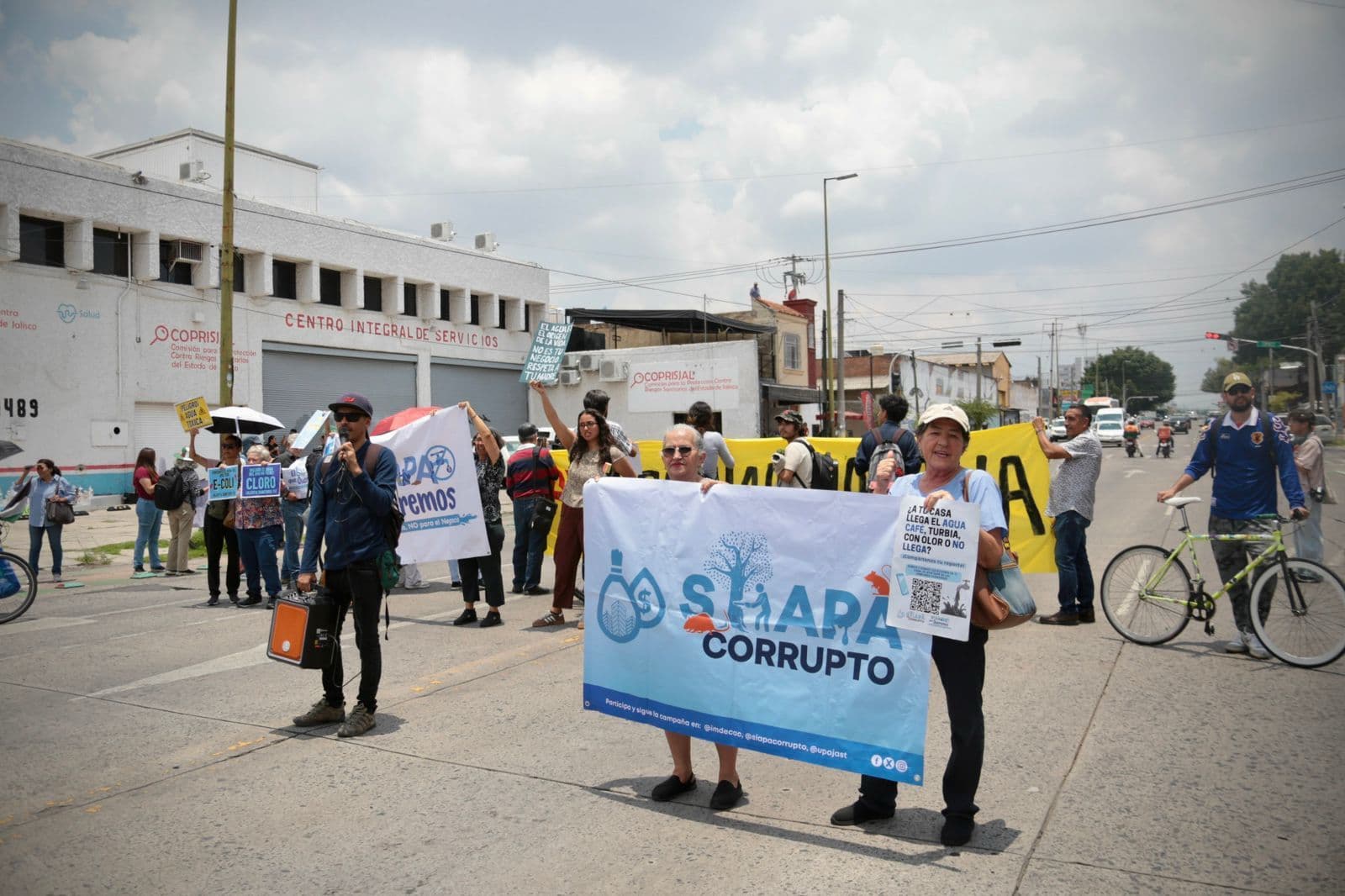
The community is playing an essential part in denouncing this problem, and it can be seen reflected in collectives, marches and the search for solutions. Movement for Drinking Water ZMG has mobilized with organizations such as the Mexican Institute for Community Development (IMDEC) to carry out marches, campaigns and workshops that seek to raise awareness, inform, denounce and promote change.
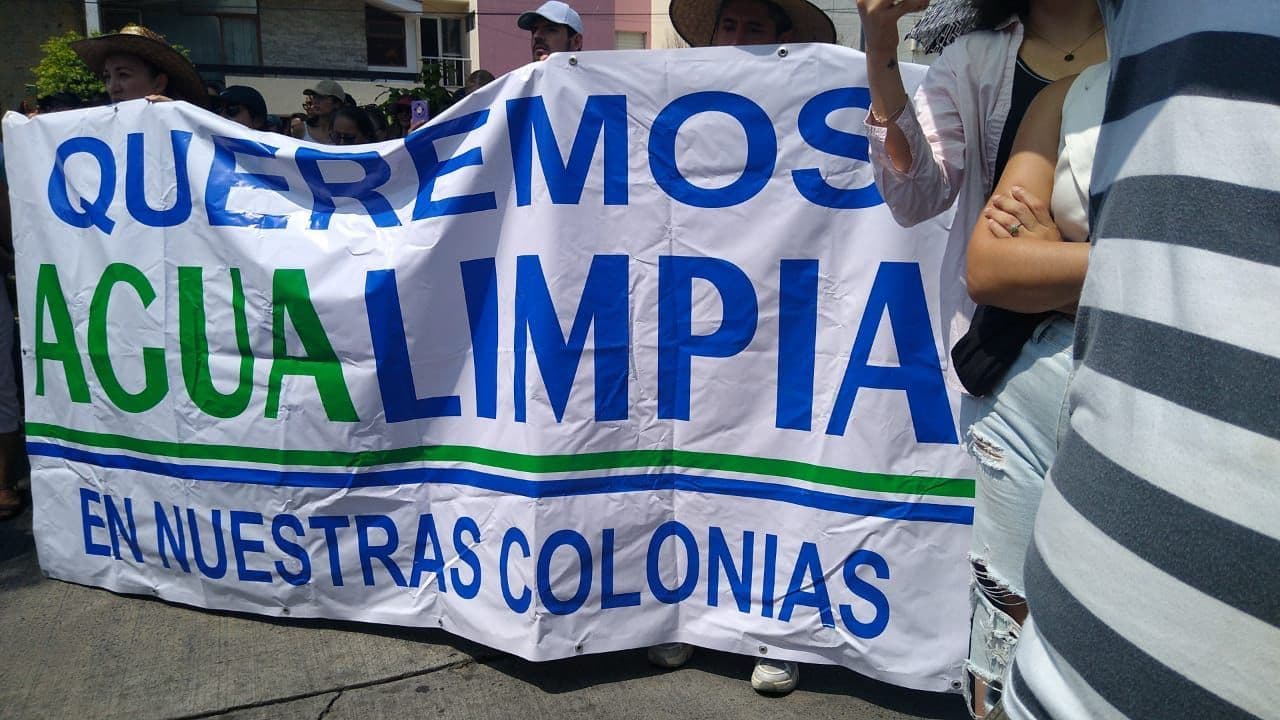
Roberto Maciel talks about the mega-march that took place on August 23 in favor of water, organized by the group Movement for Drinking Water ZMG, the IMDEC and ordinary citizens:
“that's what I and the neighbors proposed: let's do a march that ends in a festival that we eschatologically named Agua KK Fest, which was where all the working groups were going to help us to give us information on how we can alleviate the problem.”
The event was not limited to a march, but several activities were also carried out to raise awareness and involve the community and their families: “after the march we arrived at the center there in Plaza Liberación where it is at the height of the Goya theater, we set up work tables and there we had work tables for children and we busted piñatas, we made work tables to gather signatures, to talk about for the creation of homemade filters, water analysis, home water analysis, rainwater collection and among many other things that were done”.
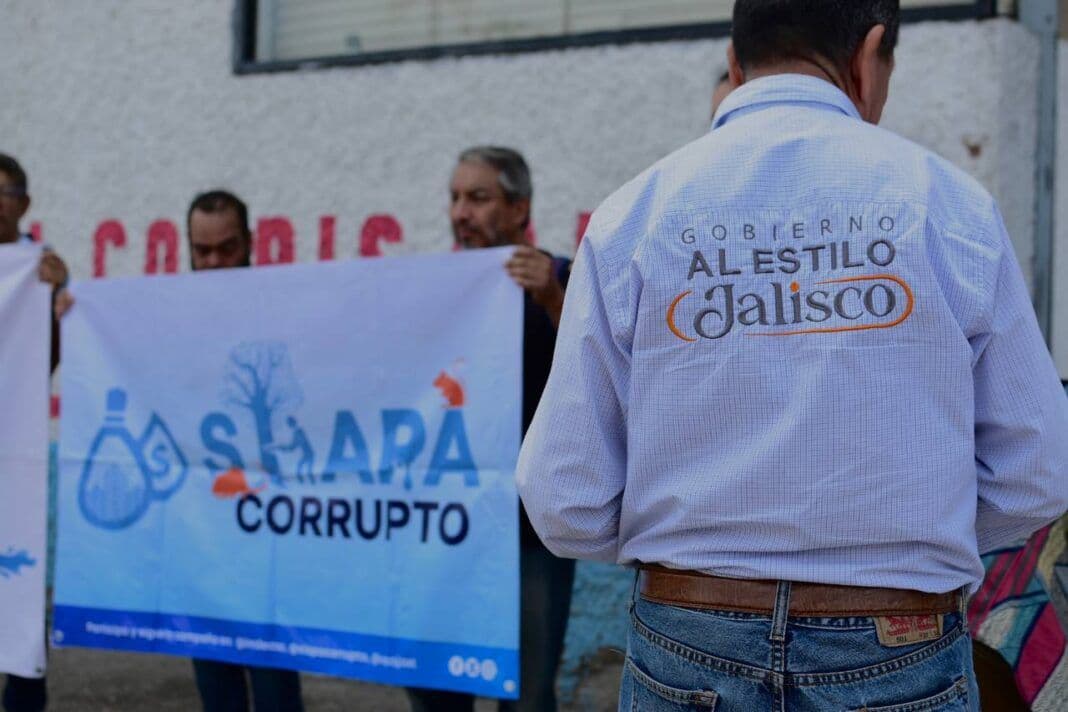
Roberto Maciel says that there are fewer people who mobilize than those who suffer from the problem: “the neighbors gave it a mega-march because we wanted it to feel like it was going to be a lot of people, and the truth is that we only reached around 1000 people. So, it's part of the job. We knew it was going to be like that, but that was part of what we wanted, for it to be visualized first, for people to begin to become aware of the problem, to visualize it and now to take action”. Bringing the possibility of reporting closer to people is an essential task for solving the problem.
The SIAPA We Want campaign , promoted by the IMDEC, also seeks to promote real change in the way SIAPA works in Jalisco. Its objectives are to guarantee the right to clean water and social participation, to promote the participation of citizens and communities, to promote new legislation and to defend the territory and bodies of water.
María González Valencia, Executive Director of the IMDEC, points out that water is not a recent problem, but that it has been affecting many communities for a long time: “We live in the metropolitan area of Guadalajara with inequity in access to drinking water, that is, we have documented that around half a million people, that is, 500,000 people do not have water in their homes and are not connected either to SIAPA or to any other municipal operating body. This, then, is serious...”
The omission of the relevant authorities has been one of the main factors in this problem: “they have never wanted to recognize that this problem of water pollution is toxic pollution, right? In other words, it's industrial pollution. And the authorities have always worked for false solutions such as treatment plants, but for domestic wastewater...”, adds María González.
Problems with water are not something completely recent, so initiatives and groups that fight for the right to water and health seek a total transformation of the old systems that are now obsolete: “What we are looking for is for the SIAPA to truly transform and to democratize. That is, to be decision makers and that we have a voice and vote”, concludes María González.
Despite all the efforts of citizens, the situation has not improved: the state of the water is still poor and there is no clarity regarding the situation. “We don't know when completely clean water will arrive,” says Eugenia Garduño, from Ciudad Granja in Zapopan
The SIAPA has proposed alternatives, as a result of citizen complaints. For example, a discount of up to 80% on the water bill has been offered to a select group of neighborhoods that are being affected by the problem, but not all people consider these measures to be the right ones.
“I really had no idea that this discount existed. I don't know if it's true, I don't know if it's a lie. If it's true, I don't know how good it is. I don't want a monetary discount for the dirty water I'm drinking. I want clean water,” adds Eugenia.
Meanwhile, the IMDEC has shared a series of recommendations to citizens of the Guadalajara Metropolitan Area, including boiling the water that will be used, avoiding using water containing heavy metals or fluorides, using activated carbon filters or reverse osmosis systems and using bottled water, especially in the case of children, pregnant women and nursing people.
The Government of Jalisco, through its representative, Pablo Lemus, announced a new model of “water tankers” for the metropolitan area, as a measure to “address the crisis” of dirty water in the state.
“Experts recommend that the best decision is to stop using water from the Las Pintas dam and the old Chapala system to supply water to the city. If we do this, we can see a substantial improvement in the quality of the water that the city receives in the coming weeks,” said Lemus Navarro on October 6.
The proposal involves the closure of the Las Pintas Dam while it is being cleaned up, in addition to a new service rotation scheme that will last at least six months in its first phase, during which time it is estimated that the works on La Calera will be completed and the expansion of the Miravalle Water Treatment Plant 1.
Meanwhile, as a response to the announcement, a MEGA March has been called again, a march for clean water with decent conditions for all people, leaving at 11:00 a.m. on October 11 from La Minerva in Guadalajara, Jalisco.
The union of citizens has led to making the problem visible and allowing those affected and affected to express their complaints. “I don't have the need to be taking to the streets to protest for water. It seems so illogical, so dystopian to be fighting for water...”, comments Roberto Maciel.
The IMDEC, the Movement for Drinking Water ZMG and the SIAPA We Want initiative continue to work for better conditions for the population, but there is something that remains latent among those involved: the frustration of a fight that should not have to be carried out if clean water in Jalisco were an accessible right and not an increasingly unattainable privilege.
***
This report was originally published by ZonaDocs: Clean Water, the New Luxury. It was carried out within the framework of the Convergent Journalistic Production Block of the Tec de Monterrey Campus Guadalajara, of which ZonaDocs served as Training Partner.


Comentarios (0)