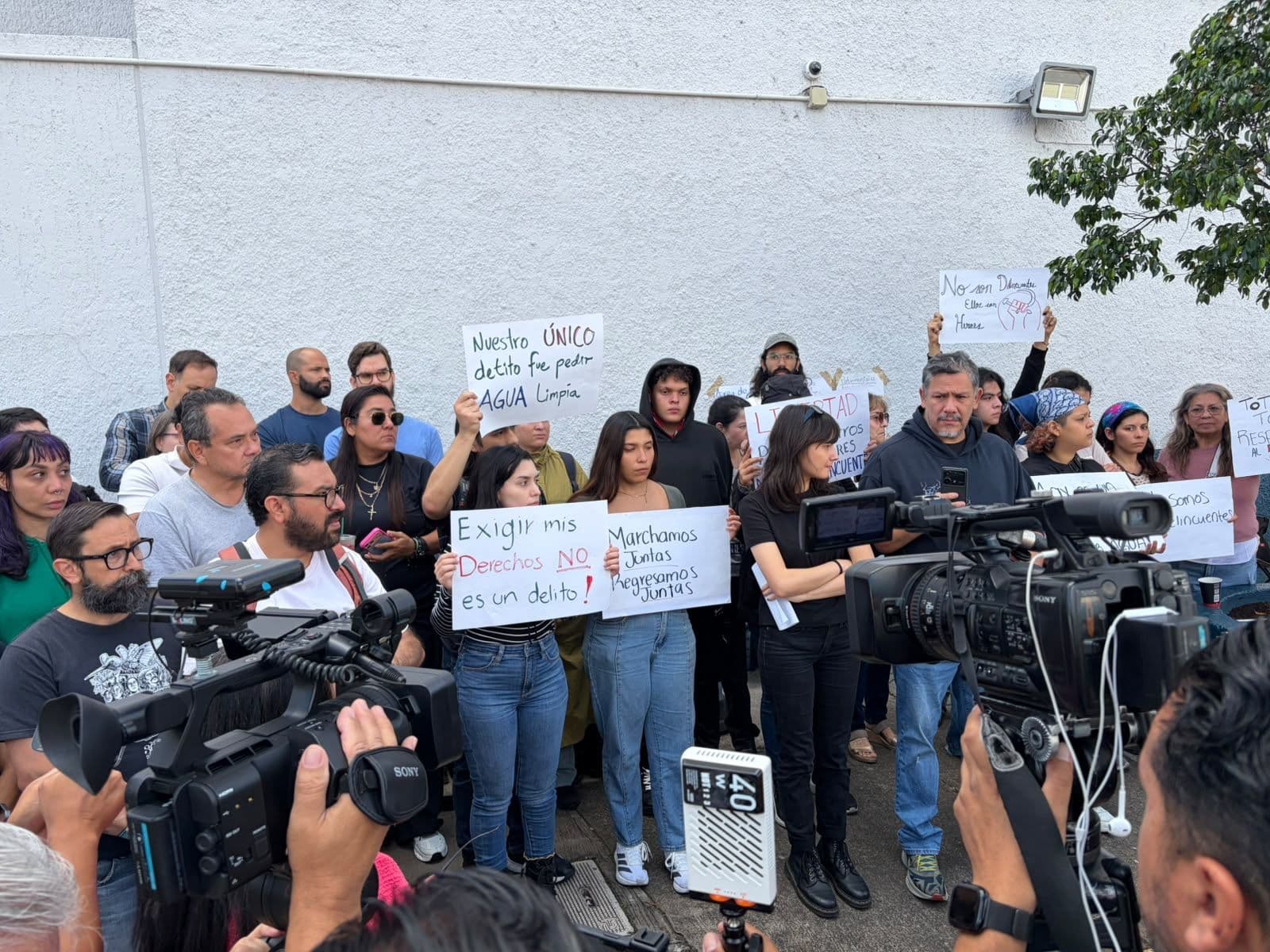
Civil and collective human rights organizations demanded the immediate and unconditional release of people arrested during the police operation deployed on Sunday, October 11 in front of Casa Jalisco, as part of the “Mega March for Clean Water” in Guadalajara.
The citizen mobilization brought together about 10 thousand people from 11:00am at the Glorieta de La Minerva. Around 1:10 p.m., riot control elements dispersed the concentration using tear gas in direct projectiles and pressurized water jets.
According to official and organizational figures, the day ended with 59 injured people —28 police officers and 31 civilians—.
Regarding the arrests, the state government reported the arrest of 39 people, while the groups documented at least 51 cases, stating that part of the transfers were directed to the Public Prosecutor's Office, municipal separations and Casa Jalisco facilities.
Until noon on October 12, the State Attorney's Office kept the demonstrators under criminal investigation for alleged crimes of attacks on communication channels, injuries and attacks against the authorities. This Monday, only 18 people were released.
The statement issued by the organizations, including Fundar, Elemente, Climate Connections, DataCívica, Ibero and the Center for Justice for Peace and Development (CEPAD), denounces irregularities in due process, such as the absence of immediate records of capture in accordance with the legal framework, restrictions on access to legal defense and lack of expeditious medical care.
In addition, the State Human Rights Commission integrated an investigation report after receiving complaints of abuse of police authority.
The protest was caused by pollution and the poor quality of the water supply in the Guadalajara Metropolitan Area during 2026, a problem recognized by the state administration itself.
These are 342 affected colonies, according to the registry of the Intermunicipal System of Drinking Water and Sewerage Services (SIAPA) and the technical reports of the Mexican Institute for Community Development A.C. (IMDEC), which document water levels outside the NOM-127-SSA1-2021 health standard.

Comentarios (0)