
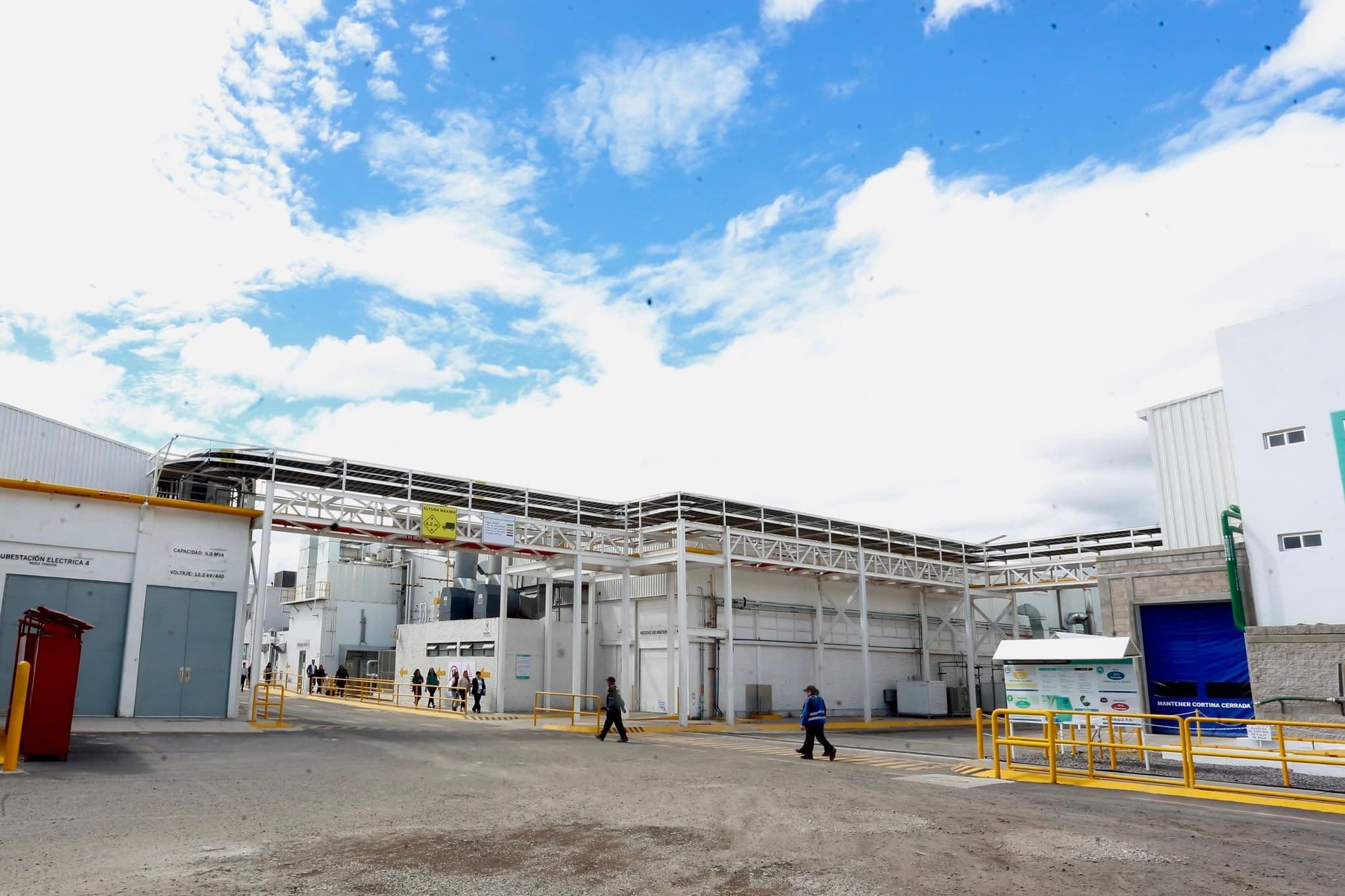
Mexico has accelerated its investment in the production of green hydrogen, a fuel that promises the decarbonization of the industrial sector and the reduction of Greenhouse Gas (GHG) emissions in Mexico. But the projects face multiple economic and infrastructure challenges, and their production requires high volumes of water.
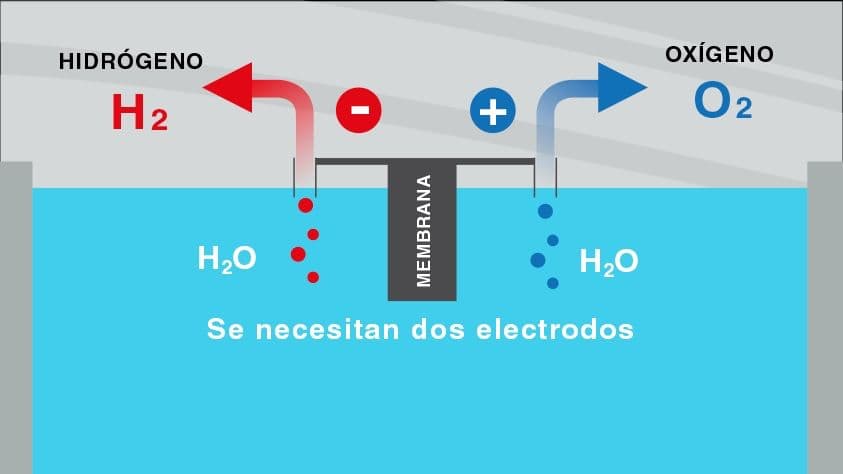
Green hydrogen is a fuel obtained through electrolysis, a process that breaks down water using renewable energies such as the sun and wind. This fuel is seen as an energy vector that would allow decarbonization, for example, by replacing the diesel and gasoline needed by the industry for transportation and its industrial processes, said Israel Hurtado, president of the Mexican Association for Hydrogen and Energy Transformation (H2Mexico).
“The industry is the one that is looking to promote this (green hydrogen) and it is the one that needs to decarbonize because it is under scrutiny in relation to its greenhouse gas emissions,” said Hurtado.
However, the production of this type of hydrogen has several challenges in the country. Most of the projects belong to European companies, with little participation from the Federal Electricity Commission (CFE), and with a limited market for their use. The Mexican Association for Hydrogen and Energy Transformation added that green hydrogen production still needs a specific regulatory framework and economic incentives.
The production cost of green hydrogen is twice that of gray hydrogen, which is produced from natural gas and is high in polluting emissions. In addition, companies and government bodies still lack the necessary infrastructure to avoid security risks.
Foreign companies promote the production of green hydrogen
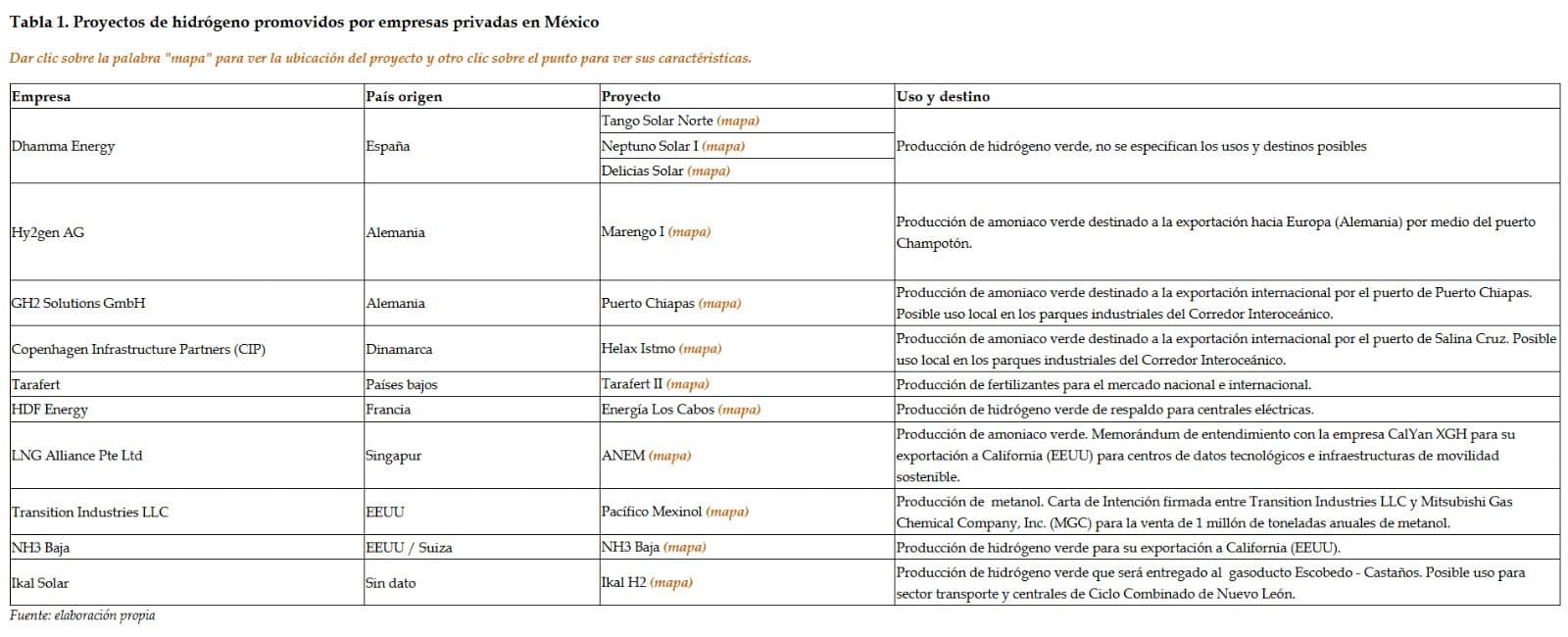
According to the cartographic research collective Geo, Mexico has 14 investment projects in green hydrogen. These projects would total an estimated production of 1 million 113 thousand tons per year of green hydrogen, of which 80% is concentrated in the private projects of Ikal H2 in Nuevo León (124 thousand tons per year), Helax Istmo in Oaxaca (180 thousand tons) and ANEM in Sonora (600 thousand tons).
Only two of the 14 projects identified are pilot programs of the Federal Electricity Commission (CFE): one at the Cerro Prieto geothermal plant in Baja California, and the other at the Puerto Peñasco photovoltaic park, in Sonora.
In December 2024, the Mexican company Ikal Solar announced the construction of a photovoltaic park for the production of Green Hydrogen in Mina, Nuevo León. This project would have an investment of 2,572 million dollars with a capacity of 2,865 megawatts (MW) and an annual production of 124,071 tons of green hydrogen.
The Ikal Solar project predicted a use of 2,633,008 m3/year of raw water. To this end, the use of groundwater from the Castaños Aquifer was considered, by extracting water by pumping five wells with a productivity of 32 liters per second and an operating time of 12.52 hours per day, for each well.
According to the report of the National Water Commission (Conagua), included in Ikal Solar's environmental impact analysis, the Castaños aquifer has an annual recharge of 18.9 million m3/year, committed natural discharge of 5.1 million m3/year, and a volume of groundwater extraction of 16 million m3/year. However, there is no groundwater available to increase the volume to be exploited, so its exploitation would compromise the aquifer and generate ecological imbalances.
This aquifer partially comprises the municipality of Castaños de Coahuila and the municipality of Mina de Nuevo León. These states have 23% and 15% of their municipalities with some type of drought, according to the Conagua Drought Monitor with a cutoff to September 30, 2026.
The Ikal Solar project was canceled by environmental authorities on September 5, 2025 in their MIA resolution analyzed by Semarnat. The Secretariat argued that the project is not environmentally viable, since the Castaños Aquifer did not have the necessary volume of water to supply the project, and the construction of the plant could cause possible effects on flora and fauna.
Another relevant case is the Neptuno Solar I green hydrogen project in San Luis Potosí, run by the company Gestiones Ambiental del Centro, S.A. de C.V. This project is under analysis of its environmental license before Semarnat.
The studies for the project estimate a consumption of approximately 15 liters of water to produce one kilogram of green hydrogen. This implies that the annual consumption of water for the production of this hydrogen will be 274 thousand m3/year.
Neptuno Solar 1 is considering the construction of a power generation plant with a production capacity of 165 megawatts in alternating current (MWac) and a green hydrogen generation plant. Yannick Deniau, a member of Geo, stressed that plants in this vector require large amounts of electricity, which involves the construction of large photovoltaic or wind farms.
The CFE and the French company HDF Energy are also considering a pilot Green Hydrogen project in Puerto Libertad, Sonora, according to the company's business plans 2023-2027 and 2024-2028. The project envisages a capacity of 20 MW, which will be financed with resources from the clean energy trust. However, there is no more information for now.
In total, twelve projects are being promoted by private companies, all with European capital. The Spanish company Dhamma Energy leads the concentration of projects with three and the French company HDF Energy with two, including the Oasis project.
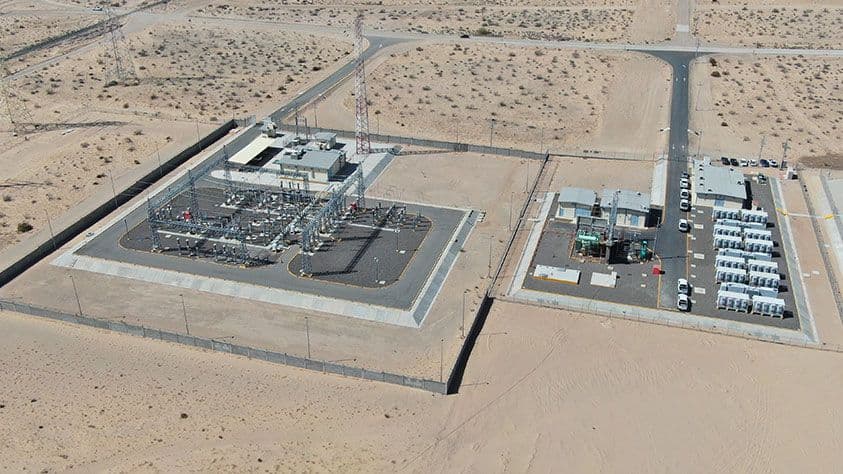
On September 10, the CFE announced the start of the Oasis Project, a project that will combine solar energy, batteries and green hydrogen to strengthen the electricity supply in Mulegé, Baja California Sur.
In a press release dated September 10, 2026, the CFE announced the Oasis Project, “the first of its kind in Mexico,” which will generate solar energy and incorporate green hydrogen as an alternative to gradually reduce the use of fossil fuels. The project will have a capacity of 60 MW and an energy storage system of 20 MW, with which the CFE will strengthen the electricity supply in Mulegé, Baja California Sur.
While another example of private participation in the generation of green hydrogen plants is the Grupo Infra and Gerresheimer plant in Querétaro. This plant had an investment of 100 million pesos and went into operation on October 8, 2025.
This plant, which uses treated water for the electrolysis process, is located in the Infra and Gerresheimer industrial complex in Querétaro. The hydrogen produced by this plant is used for the company's pharmaceutical processes.
According to Grupo Infra, this technology represents an advance towards industrial decarbonization. This project is in addition to the hydrogen plant in San Luis Potosí, and both plants allow the reduction of around 150 tons of CO₂ per year, according to Grupo Infra , which owns these plants.
In the case of the San Luis plant , inaugurated in 2024, the plant has a capacity of 6,000 m3 per day and is used for company processes and other customers. In addition, it recognizes the use of natural gas and demineralized water.
Luis Fernando Pérez, a member of Geo, highlighted that private funds are promoting these projects to meet environmental goals to reduce emissions, which facilitate their access to credit and financing.
However, projects have a high infrastructure cost and do not have a potential market for generating profits. He exemplified that hydrogen consumption occurs in the industrial processes of the companies that produce it and that the fuel is not exported due to its high transport cost and safety risks.
The specialists pointed out that Pemex is the largest consumer of hydrogen in the country, which it uses for its refining processes.
“The (green hydrogen) projects are not reaching the final investment decision, that is, when all the permits are fulfilled and the investors decide to hand over the money to start construction (...). Then, it must be transformed into the matter that has a market. There is no large green hydrogen project with the final investment decision,” said Pérez.
Water, Costs and Lack of Infrastructure
Green hydrogen is obtained from water through an electrochemical process called electrolysis, in which electrolyzers are used, equipment that breaks down the water molecule to separate oxygen and hydrogen, in addition to capturing hydrogen.
The production of one kilogram of green hydrogen requires around 10 liters of water and up to 26 liters of water can be used depending on the electrolyzer used, according to the Ministry of Industry, Energy and Mining of Uruguay.
In its visualization of green hydrogen projects in Mexico , the organization Geomentioned that the production of hydrogen and other derivative products, such as green ammonia and methanol, require large amounts of electricity and water.
According to the Inter-American Development Bank (IDB) , the main environmental risks of producing this hydrogen are water scarcity and water pressure, which consists of the constant exploitation of fresh or salty bodies of water.
Another consideration for green hydrogen projects is the high cost of production. The study “Green Hydrogen in Mexico: The Potential for Transformation ”, prepared by the German agency for sustainable development and cooperation (Giz) highlighted that green hydrogen is between 50% and 300% more expensive than gray hydrogen and other fossil fuels.
In an interview, Pérez de Geohighlighted that the installation of green hydrogen plants requires the construction of associated infrastructure, such as transmission lines, photovoltaic or wind farms, electrolyzers and pipelines for transporting hydrogen or ammonia.
For example, the investment required for the Neptuno Solar I project was 3,931 million 200 thousand pesos, while the Delicias Solar project in Guanajuato , which includes a photovoltaic power generation plant for the production of green hydrogen, required an investment of 1,480 million pesos.
Faced with this situation, Hurtado stressed that it is necessary to reduce the costs of electrolyzers, production and transportation.
“We have seen that costs have started to fall, perhaps not as fast as we would like, but technological development goes hand in hand with electrolyzers,” said Hurtado.
The technological diversity of electrolyzers has reduced the production of green hydrogen worldwide. According to the German news agency DW , numerous manufacturers of electrolyzers, with different technologies and power levels, make it possible to offer electrolyzers at a low price. For example, Hurtado highlighted the existence of electrolyzers that work with salt water.
Deniau highlighted that seawater desalination plants can also cause environmental impacts such as water pollution. On the other hand, he mentioned the existence of clean hydrogen projects that can use a mixture of salt and fresh water for the electrolysis process.
For its part, Mexico's Climate Initiative highlighted that the reduction in the cost of electrolyzers makes the generation of hydrogen from renewable energies attractive. However, a large number of projects are required to further reduce their costs.
Despite this, independent estimates highlighted that green hydrogen could prevent the emission of 40 MtCO2e (millions of tons of carbon dioxide equivalent) per year and create 90,000 new jobs by 2050.
In the public sector, Hurtado pointed out that the incorporation of green hydrogen in CFE planning allows this technology to form part of the vision of expansion and diversification of the electricity sector. The association suggests that this may open up opportunities to develop capacities, projects and value chains related to hydrogen.
Hurtado highlighted that the Chamber of Deputies approved the inclusion of green hydrogen in the General Law on Climate Change and approval by the Senate is expected in this legislative period. In addition, he mentioned that federal authorities are working on guidelines and a national green hydrogen strategy in the country.
For his part, Deniau highlighted the lack of information regarding green hydrogen projects in the country, as well as regulatory updates from the authorities.
The Hydrocarbons Sector Development Plan includes the production of green hydrogen by Petrleos Mexicanos (Pemex). The government company will seek to develop operational capacity between 2027 and 2030 to supply the sustainable aviation fuel value chain and, subsequently, evaluate its gradual incorporation into the National Refining System and other international business opportunities.
Deniau concluded that, although there may be a reduction in greenhouse gas emissions with the use of green hydrogen, the country still lacks definitive regulation to boost its production.
This piece is the result of the “A Pole to Earth” grant, School of Journalism for Green Industrialization in Mexico, sponsored by the organization Journalists for the Planet (https://periodistasporelplaneta.com/).


Comentarios (0)