
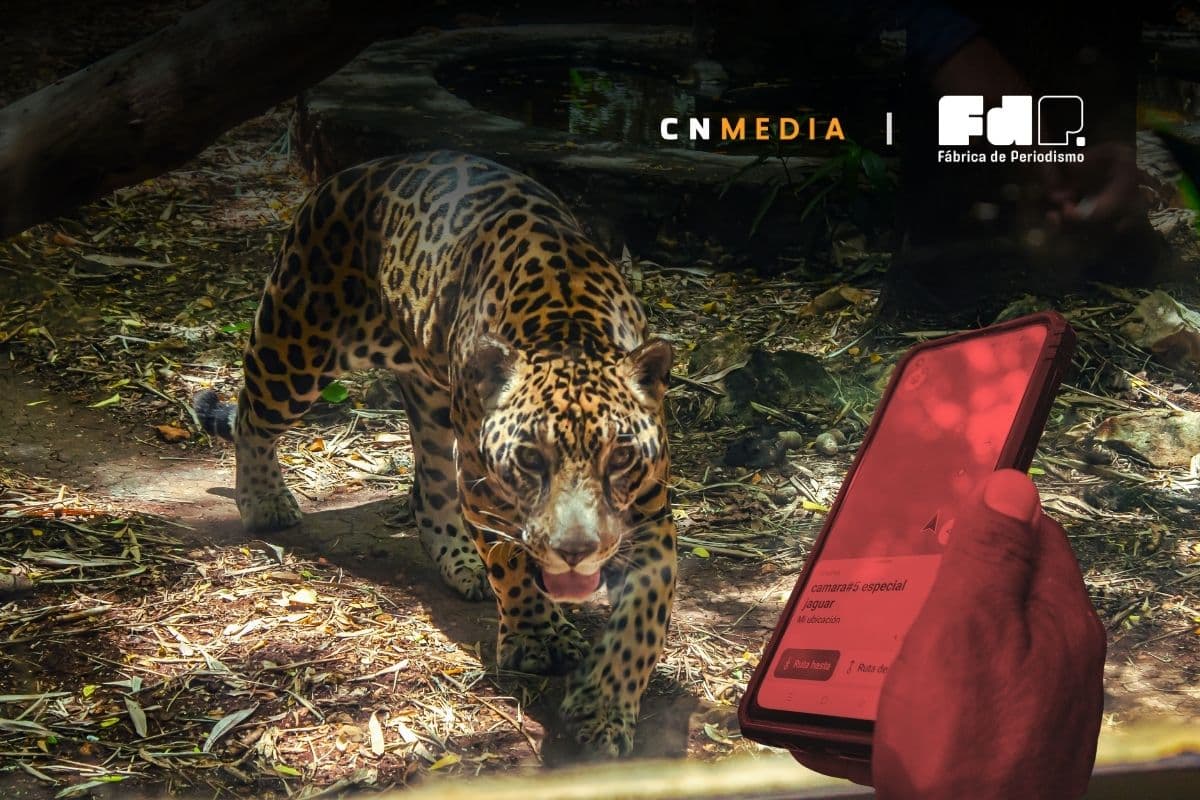
About eight years ago, Fredi Meléndez Ricardo, a resident of the Campeche ejido Centauro del Norte, in Calakmul, arrived at his cattle ranch and saw some of his sheep dead. For almost a month, he found a total of about 50 sheep that had been killed out of his hundred. He thought: Who was it? Who did the evil thing to kill them? They weren't even eaten, just hurt, dead.
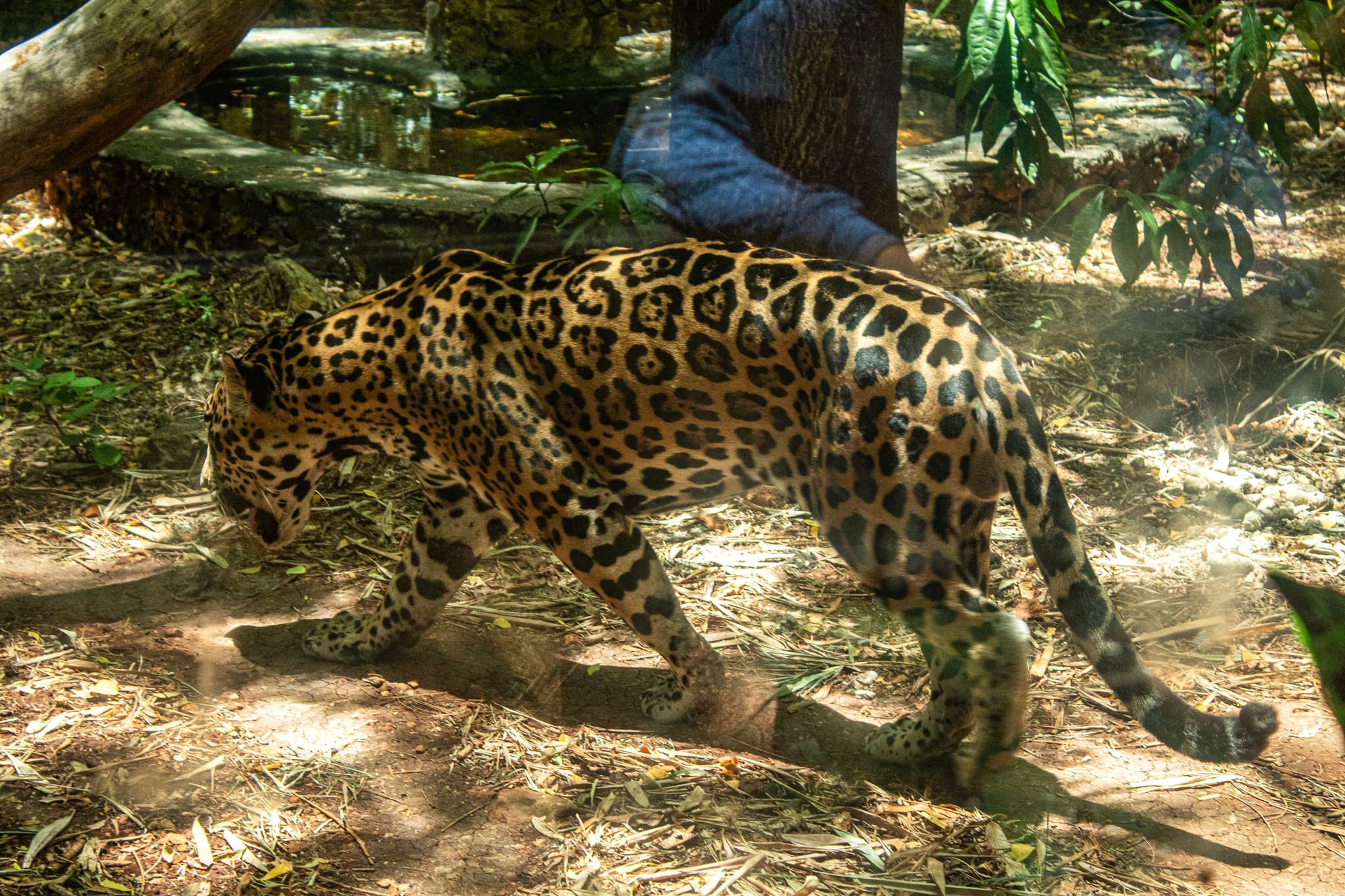
At first he thought that some neighbor killed them. Later, he noticed that it was a feline, specifically a jaguar that prowled the area.
Fredi was born in 1984. His family arrived in Centauro del Norte from Veracruz in 1996, when he was 11 years old, and upon his arrival he dedicated himself to supporting his father in field work, cleaning plots, carrying water; the ejido was a town without electricity. For him it was taking a step “from light to dark”. He then went to the United States, where he stayed from 2002 to 2019, when he returned to Centauro and invested in livestock.
The death of the sheep represented the loss of part of their family wealth. The jaguar that attacked the sheep chose its prey. “Pure sheep of the prettiest and all those that were loaded,” Fredi says.
I had heard stories of other farmers in the Calakmul region who, to get rid of jaguars and other felines such as pumas that attacked cattle, used dogs, smoke, fire or came to hunt them.
For decades, Fredi and the farmers of Centauro del Norte and the Mayan Jungle of the southern Yucatecan Peninsula have lived in conflict with felines, especially large cats. Jaguars and pumas besiege around the ranches they manage and, from time to time, they hunt cattle, especially small animals such as sheep.
According to the World Wildlife Foundation (WWF), in the Yucatan Peninsula, these conflicts with ranchers are the main cause of trafficking in jaguars and pumas, the largest felines in America.
Fernando Contreras, field officer of the World Wildlife Foundation in Calakmul, explains that this is not “a specialization for hunting jaguars, but is circumstantial, merely opportunistic. Once he's dead, that corpse, the skin, the skull, the claws can be sold to a domestic market that can eventually go to an international market.”
“Jaguars and pumas look for prey during the feeding process and usually when they leave the reserves what they are going to find is cattle, it can be cows, it can be sheep. This creates a negative interaction with farmers, who when they get angry what they are going to do is look for the animal and kill it. Once the animal is killed, once the corpse is there, ideal conditions are created for traffic.”
Monitor felines and keep an eye on hunters
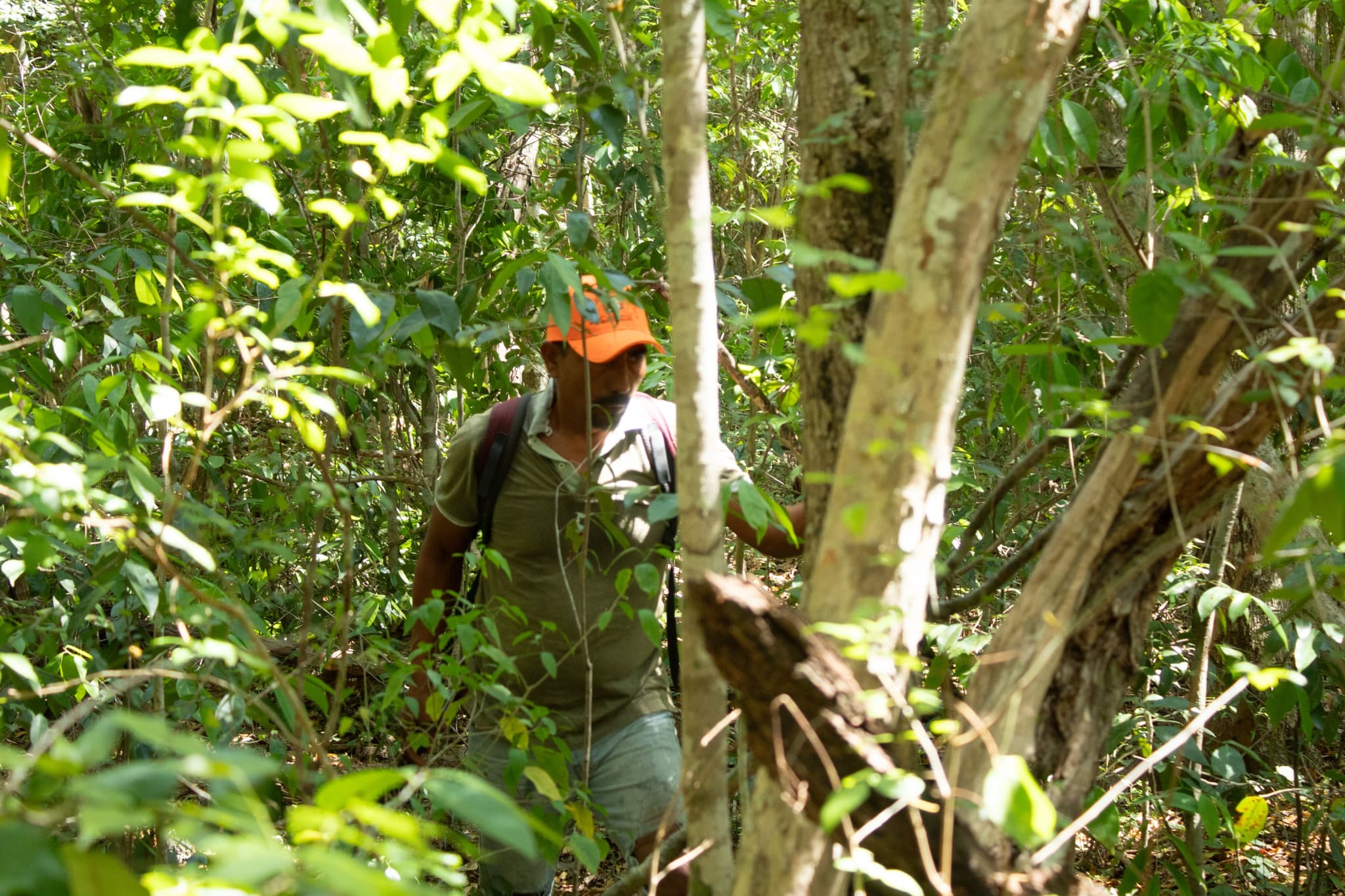
Gelasio Maldonado is Fredi's neighbor. He is a skinny 55-year-old man who participates in organizations focused on caring for nature together with society. He walks along trails in search of camera traps with which he monitors and monitors the jungle of the Centauro del Norte ejido.
With each step, the journey gets heavier. It's the middle of May, a dry season, but the Mayan Jungle is humid. The hot embarrassment, the sweat and the increasingly thick vegetation force him to stop.
“I don't want you to faint,” he tells me. He is able to withstand this journey. He is used to traveling twelve kilometers a week — six one way, the other way back — to change the camera traps scattered everywhere.
But he notices me: he sees me tired and agitated. “If something happens, I won't be able to get you back,” he adds. If it were up to me, I would try to continue, I tell him, but he doesn't risk it. He knows this territory like the back of his hand. He knows the resistance that visitors can have in this place.
The heat is excessive, the road will be lost in a couple of hundred meters and with each advance it will be more difficult to enter the jungle with branches that scratch and trunks to overcome. We return to our steps.
Gelasio is aware that he will not always be able to make this journey, he weighs more and more every day (although not as much as me) and in a few years he will have to give up his place as ejidal park ranger to the new generations.
Although he seeks to train his 12-year-old son on this path, he fears that no one else will join, since Centauro del Norte is an ejido of emigrants. Adolescents and young adults have left their homes in search of the so-called “American Dream” in the United States. This is what Gelasio did for more than a decade; several of his neighbors have done so.
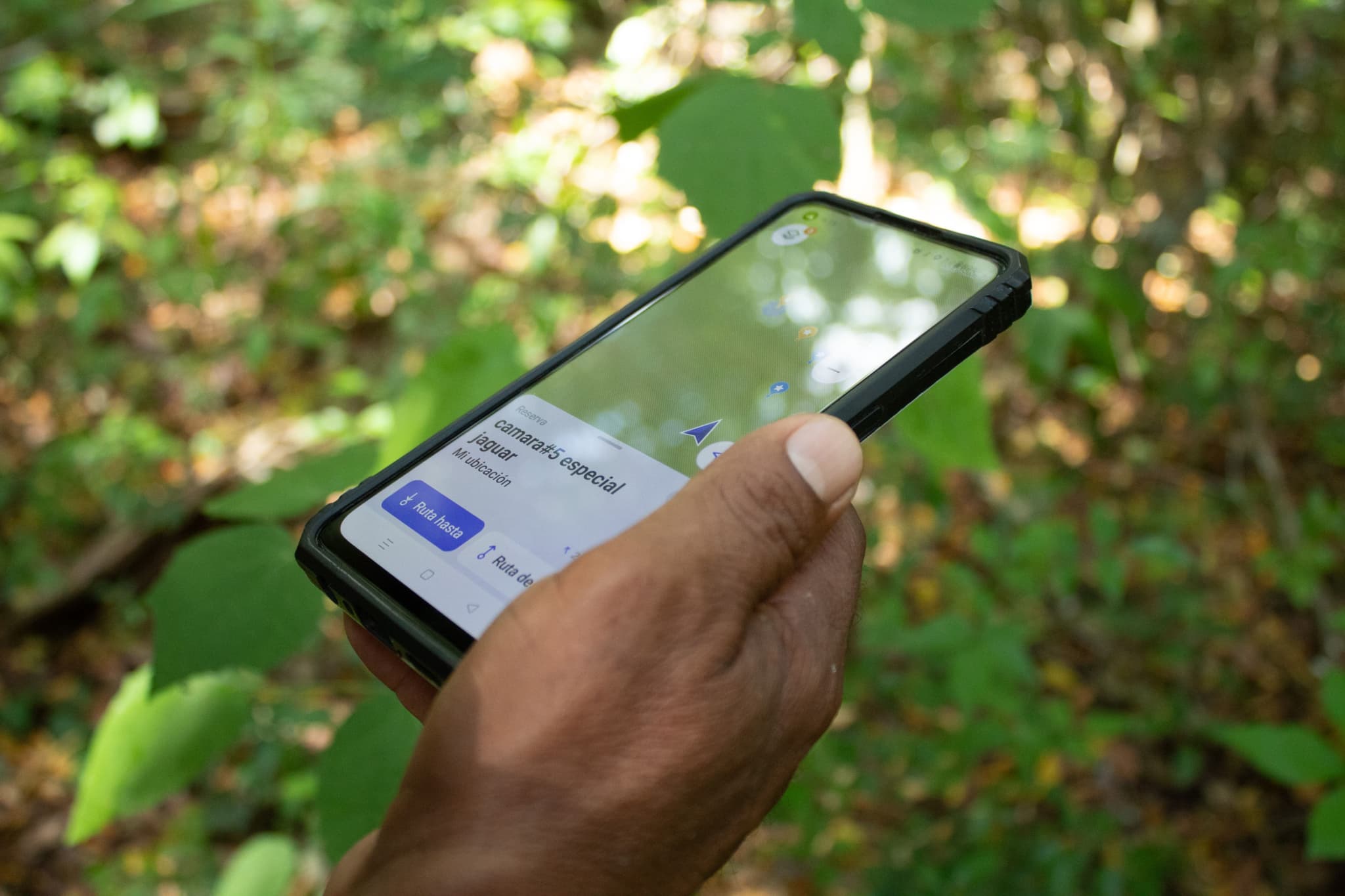
We access the first camera trap. It is a square device, taped around the trunk of a tree, about 30 centimeters above the ground. You can hardly see it. You have to be very obsessed to realize that it's there. With it, Gelasio, a member of the Centauro del Norte ejidal surveillance council, monitors the species that circulate here, such as tapirs, deer, wild turkeys and felines: ocelots, tigrillos, jaguarundis, pumas and jaguars.
With the same cameras, Gelasio also identifies hunters who go out into the mountains and kill the animals.
Gelasio changes the camera's SD memory. He does this tour once a month. It has four different routes, so once a week it goes into the jungle to extract the information collected during the last seven days and insert a clean SD card to document animal and human presence.
To the south of Centauro del Norte there is only jungle. Jungle, jungle and more jungle, with several pre-Hispanic Mayan settlements hidden in it. There are 110 kilometers of trees and animals that cross the border with Guatemala until they reach Uaxactún, a pre-Hispanic settlement near Tikal, in the department of Petén. This is the habitat of the two big Latin American cats: pumas and jaguars. Their homes extend from the United States to Argentina, across diverse ecosystems.
According to Fernando Contreras, the estimates of different organizations are that about 500 specimens live in Gran Calakmul. The data is imprecise because it is based on camera trap monitoring of organizations that participate in the region.
Electric fences as an alternative
When she saw her dead sheep, Fredi thought of an unusual option to deal with the big cats that stalked her sheep. He recalled that the WWF went to Centauro del Norte to invite them to install electric fences that would separate domesticated animals and crops, from felines and vegetarian mammals such as tapirs and wild turkeys.
— Losing an animal causes deep anger. That person is always angry because their wealth was damaged because the jaguar ate a cow, ate a pig, ate a sheep that was perhaps destined for sale and to strengthen its economy, says Contreras.
Fredie himself tried to go to the authorities and organizations to receive payment for each animal hunted by predators. Of the fifty sheep that were killed by the jaguar, he was only paid three; in addition, they required him to submit photographs of the animal.
—If you don't do something, what are we going to do? We are going to kill them,” he warned WWF when he requested support.
The organization responded with a proposal implemented in countries such as Brazil and Costa Rica: electric fences.
—They allow cattle to be calm because they reduce predation to 100%, says Contreras. Fences arise from a decades-old use in which cattle were prevented from coming out, through an electrical pulse that is cut off, so it is not a direct current that could be dangerous for animals or people. That's how the animals learned not to get close.
They were used to keep out predators and in Brazil they learned that jaguars can remember for eight months the pain caused by the electrical impulse to avoid getting close.
For each predation event they report to them, WWF implements an analysis of the species that carried it out. The first objective is to gather evidence to identify who was responsible, if a jaguar, a coyote, because each animal behaves differently and the strategy must be appropriate to the species, explains Fernando Contreras.
—When jaguars attack larger animals, what I'm going to find are certain bites in very particular places. The jaguar, for example, is the only feline that attacks the skull; its bite is very strong, so what it does is attack just above the back of the neck, it separates and breaks the vertebrae, causing immediate death.
Most felines such as the puma attack by asphyxiation, then they bite in the throat and by suffocation they kill the animal. It's very messy, sometimes we find corpses as if something had exploded, like it eats it at random. These signs tell us if it could have been a jaguar. We're looking for fingerprints, looking for any clue that could lead us to him.
If it is a jaguar, WWF links the farmer with other bodies such as the National Confederation of Livestock Organizations, which has insurance against depredations, in which they can reimburse the cost of the animal.
They also implement strategies that range from improving nutrition through workshops, training with the producer to provide inputs and the establishment of silvopastoral systems to maintain livestock during drought, among others.
From the jungle to the markets
The Federal Attorney's Office for Environmental Protection (Profepa) has reported 420 feline complaint files since 2010, according to WWF in its study Illegal Jaguar Trade in Mexico (2025) and the Diagnosis of Illegal Jaguar Traffic in the Yucatan Peninsula (2022).
Profepa reported the insurance of 356 live jaguar specimens between 1999 and 2021, 116 products and by-products of the species, and 57 live specimens and 52 products and by-products were confiscated.
The purchase of jaguars or products derived from them is to be pets, to form part of family relics or as elements in ancient rituals and ceremonies, so their sale has been identified in the Sonora and Zócalo market, in Mexico City, in the Baratillo market, in the Baratillo market, in Guadalajara, Jalisco, in Property or Facility that Manages Wildlife (PIVMS) of the State of Mexico and Puebla, markets in Michoacán, Oaxaca and highways in San Luis Potosí, and Fifth Avenue, in Playa del Carmen, Quintana Roo.
Fernando Contreras mentions that a large international market has not been identified from Mexico, but in Bolivia there is an established trade to introduce jaguar supplies into Asia, to replace pieces from tigers, an endangered species.
WWF studies indicate that jaguar trafficking in Mexico has also been identified on social networks. In 7.5% of the cases, they were concentrated in the center of the country, in states such as Puebla, State of Mexico, Hidalgo and the capital Mexico City.
WWF points out: “The signs of illegal trade in jaguar (parts and products) found on social networks are offered anonymously: sellers hide their profiles and the transactions are through parcel delivery, there are no direct or personal interactions (...) They hide the names of “jaguar” by replacing them with figures in the text, with symbols mixed with letters or naming them in another way so that platform algorithms cannot identify them”.
Cybersellers delete and open new addresses on the Internet, making it difficult to locate them.
In the Yucatan Peninsula, illegal trade through social networks is focused on Felipe Carrillo Puerto, municipality of Quintana Roo, where they found three people hoarding the by-products of hunting jaguars, who through contacts find out if someone hunted a feline to buy claws and fangs.
WWF identified that Calakmul is one of the sites where illegal jaguar trafficking occurs, but it also points out that the main reason for the hunt is the livestock conflict.
From hunter to defender
Gelasio's relationship with the jungle has changed over the years. Although since his arrival in Centauro he fell in love with the jungle, he used to be a hunter because “in the end it was about eating meat, there was no way to buy a chicken or buy pork or beef, we had to hunt to eat. I loved hunting.”
But today he is more aware of his relationship with animals because by getting involved with camera traps he no longer likes to kill them. In addition, it has greater access to pigs or cows than in the past.
—I found cerquitita animals, the animals know you're not going to hurt them. Yesterday I found some pheasants 200 meters from my plot. The animals know that you are not going to kill them. They feel the vibe.
Although he proposes a balance between nature and people, he knows that there are those who still hunt out of necessity, “but the idea is to motivate people to kill just to eat, nothing else, and try to get the males to be killed”.
Gelasio shows me a fence on his plot. It has an outdoor and roofed space supported by wooden sticks. In one of them, the charge center is connected to a “push button” that sends electrical pulses to the wire fence. It makes a constant monotonous noise, a tick tic tic tic tic tic tic tic tic tic tic tic tic tic tic, the sound of electricity ejected by the charge center into the hundreds of meters of metallic wire surrounding the plot.
A cable goes to a small solar panel that is held on the same wooden pole. The fence covers about one hectare, protecting the tame cows that graze here and there. They come to us when Gelasio affectionately calls them.
The puma, he says, is a scoundrel, easy to see, but the jaguar is more reserved. Felines come to rural areas, especially during droughts, Gelasio explains.
Sometimes, they brought some animals into their homes so as not to fall prey to felines. —When he attacked us, we moved the sheep here and we had to lock them up. Right now, with the fencing, you don't have to take so much care of the sheep, the sheep.
Although it may seem expensive, electric fencing is cheaper in the long run than barbed wire. It is an initial investment of between $15,000 and $20,000 pesos, depending on the size of the plot, but a triple galvanized wire can have a useful life of up to 30 years. On the other hand, with barbed nails, they must be repaired from time to time until they have to be renewed, in addition to leaving scars on the hands of those who handle them. But the benefits go beyond the preservation of felines or family economies.
Fernando Contreras says: —I particularly remember the wife of a man in western Calakmul who said 'since I have the fence it's been quieter, I can go to the children's school, I can get a pedicure, I can go with my friends'. Since the fence has been vacated, it has stopped herding, sometimes shepherding sheep for up to twelve hours, it's a lot of time and a lot of concern because when they go to sleep they still have the stress of getting the cat in and eating the sheep.
The electric fence and the approach strategy have also increased the quality of life of the people who live in the ejidos.
Gelasio and I arrived at a watering hole where a tapir cools down from the heat of the dry season in the Yucatan Peninsula. The animal is about 25 meters away from us, serious, undaunted. From time to time it settles down between branches. The tapir looks at us from afar but stays there. Gelasio warns me not to approach me, lest I run around. “At that size it can hurt you,” he adds.
As part of nature conservation, for which fences are key to preserving feline species, Centauro del Norte is planning sustainable alternatives to develop the ejido's economy with less impact on the environment.
The clearest is nature tourism, which allows visitors to explore trails and breaches in the Mayan Jungle to observe birds, mammals and insects.
—The idea later on is to make viewpoints in aguadas to see if the jaguar, the tapir, comes down. He expects to retire in a few years from these long walks through the jungle trails in Calakmul.
Meanwhile, he empowers his son to take his place and be able, through the milpa, livestock and ecological tourism, to stay in Centauro del Norte, unlike his father who immigrated to the United States as a young man.
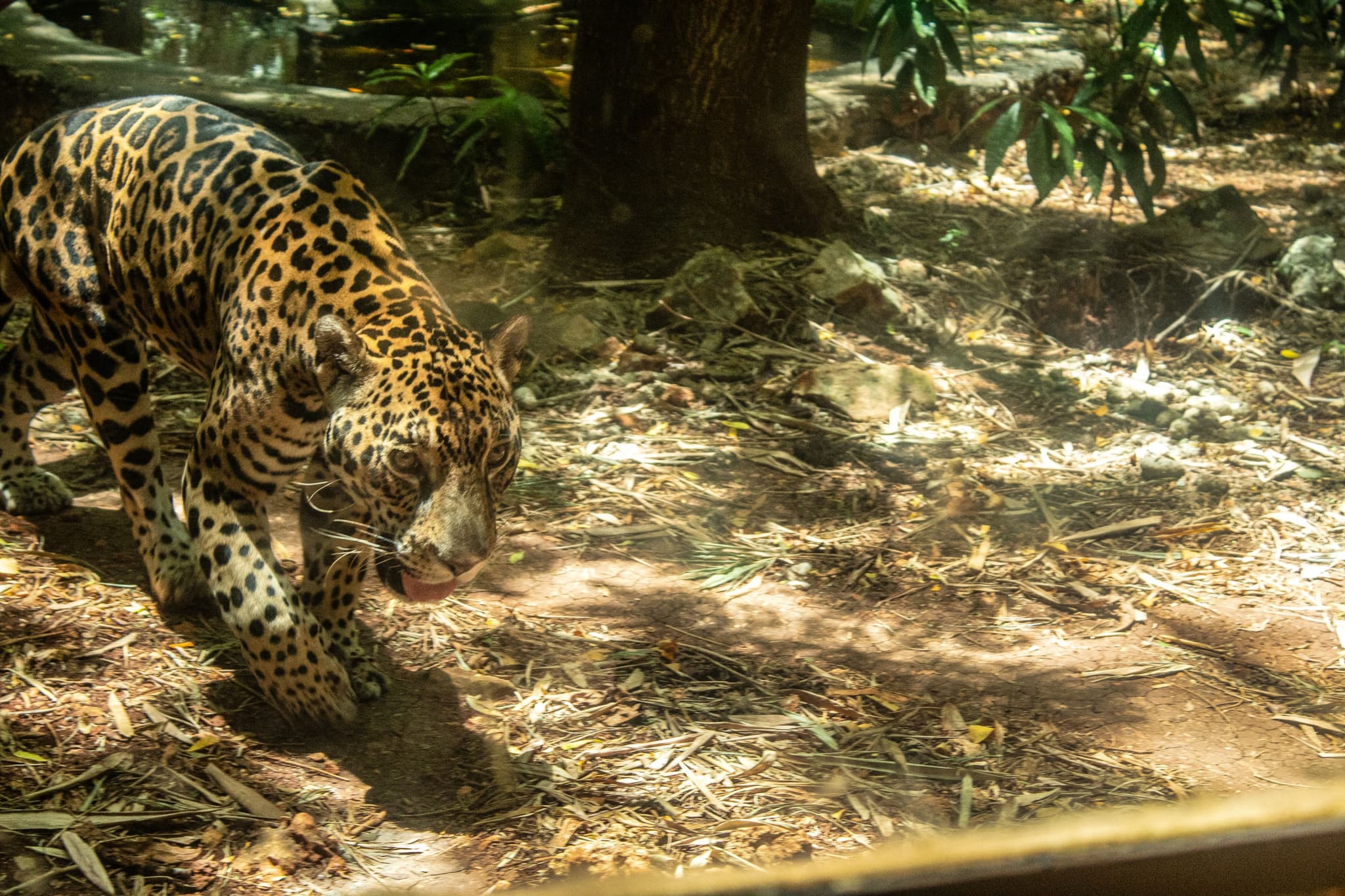
Gelasio has become used to seeing jaguars up close, so much so that he has given them nicknames: Carita, because he has a smiley face formed by his spots; El Chavo del Ocho, because he has an eight; Sid, because his spots resemble the sloth of the Ice Age; and Centauro, the alpha male. It recognizes them when it retrieves the information recorded by the cameras.
—They walk a lot, they move a lot with herds of white-lipped peccary. The jaguar always controls the species when there are many, otherwise imagine the herds of badgers there are. Imagine that one of those grabs a mile from you. Raccoon too. Like pigs, jaguars eat them.
These mammals, including the tapir, can eat the milpa of ejidatarios. Jaguars control populations of species that affect investment in the field. For this reason, the jaguar is the umbrella species of the jungle on which other animals and humans depend.
This journalistic investigation was developed in collaboration with the Global Initiative against Transnational Organized Crime (GI-TOC), through the Resilience Fund and the Observatory for North America. Its content was produced independently and does not necessarily reflect the opinions or positions of GI-TOC, the Resilience Fund, or the North American Observatory.
This work is published in partnership by Fábrica de Periodism and Causa Natura Media.


Comentarios (0)