
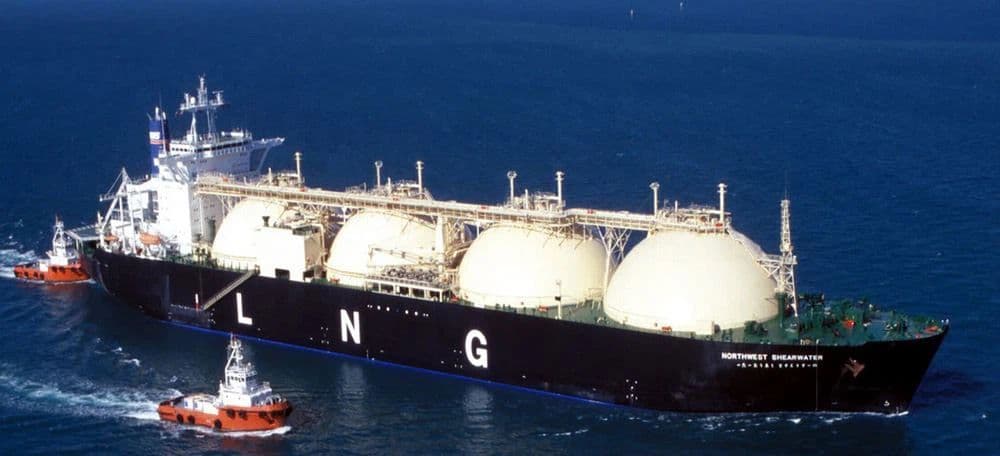
Amigo LNG ships could become a gateway for invasive species to the Gulf of California, putting at direct risk the biodiversity of San Vicente Island and Bird Island, fragile ecosystems with a high presence of endemic species and migratory birds that could suffer displacement or loss of habitat.
Ballast water and organisms attached to boats can move between regions and establish themselves in new ecosystems, which would affect the species that inhabit the area, warns the organization Our Future.
Nora Cabrera Velasco, general director and founder of Nuestro Futuro A.C., lists in an interview all the environmental effects related to the operation of the Amigo LNG Liquefaction and Storage Terminal in Guaymas, Sonora, which is being held in court temporarily, pending resolution of an amparo promoted by the organization.
Among the risks highlighted by Nora Cabrera are the permanent traffic of ships, collisions with cetaceans, the movement of fauna, dredging, sediments, water quality, greenhouse gas emissions and the introduction of invasive species.
“We have a project with a level of cumulative impacts,” he says.
Nora pays attention to the arrival of organizations from other regions by boat. “In order for ships to come level, they need to be loaded with water from where the ship comes from, they arrive at the place where they are going to load the gas and they have to release that water to reduce their weight and now carry the gas,” he explains.
With that water, organisms can travel and are later released into another ecosystem. There is also biofouling, through which species adhere to the structures of boats during their journeys.
“When they arrive with these waters, there is a very important issue of invasive species that causes very significant damage to ecosystems,” he warns.
Nora explains that Our Future documented this risk together with Equal Routes based on the report “The impacts of ballast water derived from the projected traffic of LNG ships in the Gulf of California”, prepared by Energy and Environmental Research Associates (EERA) in April 2026.
The study points out that increased traffic in LNG vessels will increase the volume and frequency of ballast water discharges in the Gulf of California. It also documents cases of invasive species associated with shipping in Mexico, including a colonial tunicate introduced through biofouling that has been linked to massive deaths of axe callus in Laguna de La Paz.
“There are studies that we are recovering through the report that we published together with the organization Equal Routes, where it is scientifically proven that these ships come with native or native species where they come from. When they reach the shores of another country, they invade those new places,” he says.
The authorization incorporates measures against invasive species
The risk is recognized by the National Agency for Industrial Safety and Environmental Protection of the Hydrocarbons Sector (ASEA) and is part of the conditions of Amigo GNL's environmental authorization.
The authority established that the Texas-based company Amigo LNG will have to implement preventive measures for the construction of the terminal, because equipment, materials, platforms and mooring systems will arrive by boat. And it links this obligation with the proximity of San Vicente Island, located 554 meters away, and Bird Island, 2.85 kilometers away.
The company must submit the measures one month before the start of the works, which are being held by a judge.
Another of the conditions it establishes is the prohibition of introducing wild or domestic plants, seeds and animals without authorization.
For Our Future, the analysis of the Liquefied Natural Gas terminal that is intended to be built and operated off the Gulf of California, a UNESCO World Heritage Site, must consider the transit of ships together with the other impacts associated with the terminal.
“We must not forget that the Gulf of California has an enormous level of biodiversity in fish, it is the second after Indonesia. It has a very high value in terms of the biodiversity of fish species, which is precisely what it would be important to take care of,” says Nora.
The organization also warns of possible effects on artisanal and coastal fishing.
The risk covers the entire Gulf of Mexico
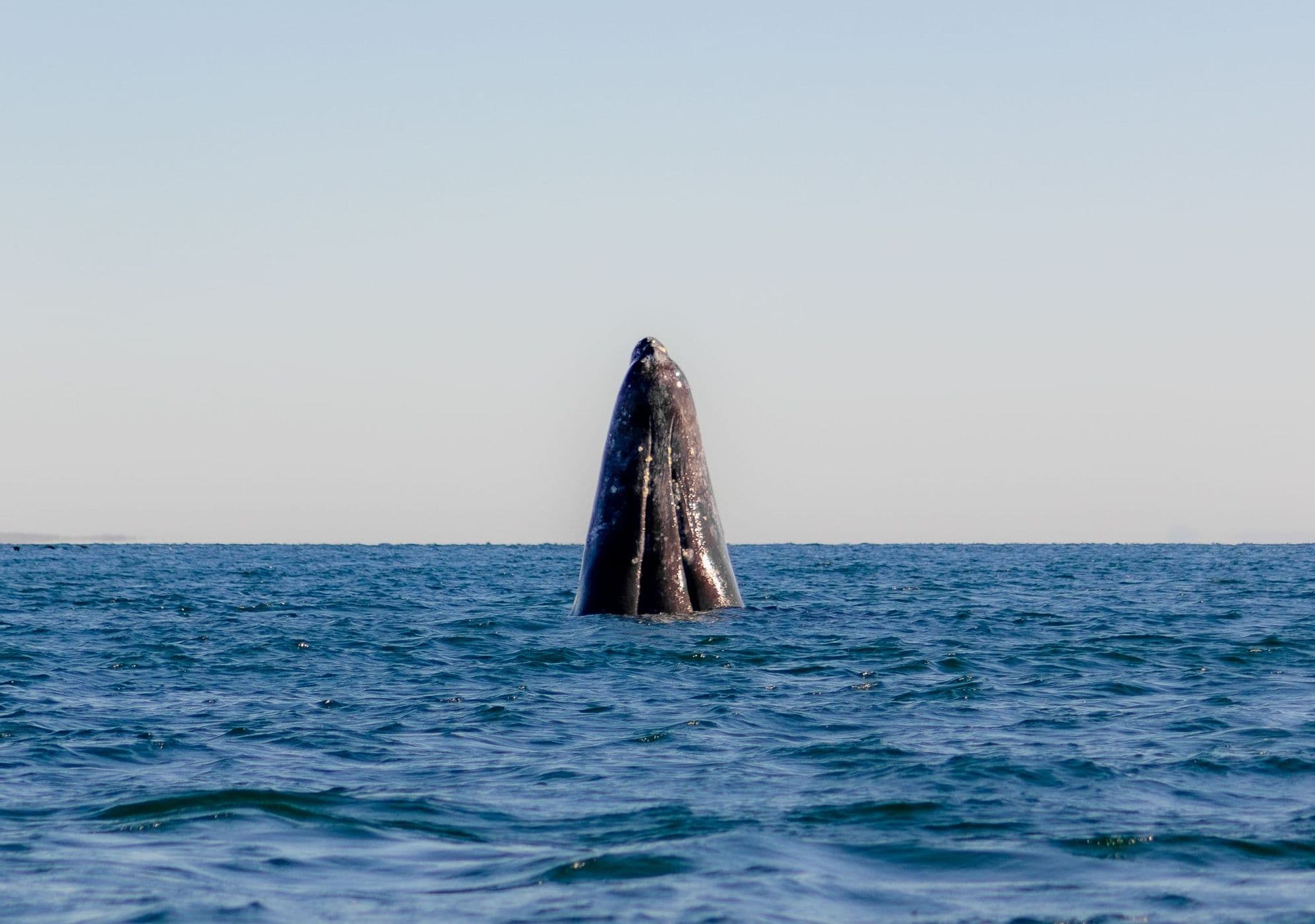
Mariana Domínguez, biologist and communication coordinator of Nuestro Futuro A.C., explains that the area where ships operate is part of an ecosystem with a wide diversity of species: whales, dolphins, seals, vaquita marina, thousands of invertebrates and hundreds of algae and microalgae.
Specifically, these are about 35 species of marine mammals, more than 4,000 species of invertebrates and more than 800 species of algae and microalgae. More than half of the national fishing takes place in its waters and the region has been recognized as a World Heritage Site by UNESCO since 2005, according to Domínguez.
“This is a very important region, biologically speaking, because it is home to 39 percent of the world's marine mammals and home to 80 percent of marine mammals in Mexico,” explains the biologist.
Vessels that would carry Liquefied Natural Gas would navigate this ecosystem. On their route, ships would take water in Asia and discharge it in Mexico before loading the gas.
“These waters that come from Asia contain thousands of microorganisms,” he says. Examples range from bacteria, fungi, small fish and mollusks.
An invasion that is difficult to measure
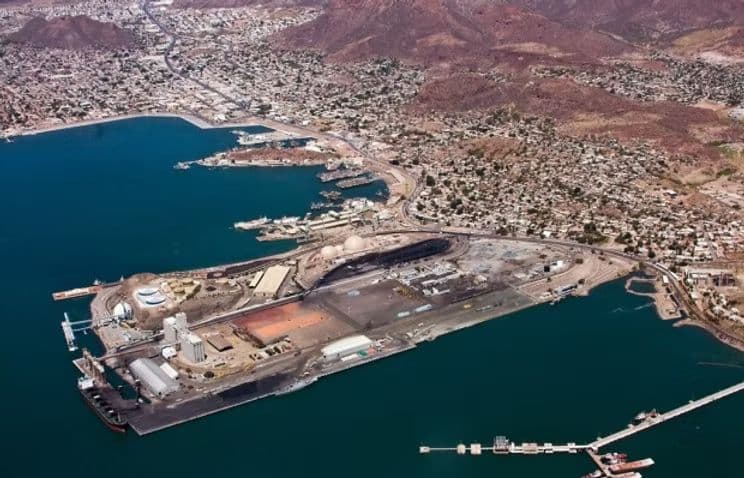
Invasive alien species can colonize an ecosystem and modify the relationships between the species that already inhabit it.
Domínguez explains that it is difficult to anticipate the magnitude of these changes because native species may not have response mechanisms to organisms with which they have never interacted.
“The issue with invasive species is that you can't measure how much they're going to affect because you don't know the resilience mechanisms that native species have, since they've never faced anything like that,” he says.
The consequences may include diseases, the displacement of native species, competition for food and space, colonization of new ecosystems, or the release of toxins and spores.
“It all depends on what species arrive; that's where you're going to really see the impact,” he says.
Domínguez points out that the elimination of microorganisms in a marine ecosystem in the expanse of the Gulf of California can be practically impossible.
The biologist cites as an example an invasive colonial tunicate that adheres to the axe callus, removes nutrients and can cause the death of populations. It also exemplifies the case of the green mussel.
Fishing is also linked to this risk. Sardines, shrimp, tuna and marlin are among the commercially valuable species that could experience population declines, diseases or displacement in the presence of invasive species.
“It would be like one of the biggest effects on the region,” he says.
Vessels over 300 meters
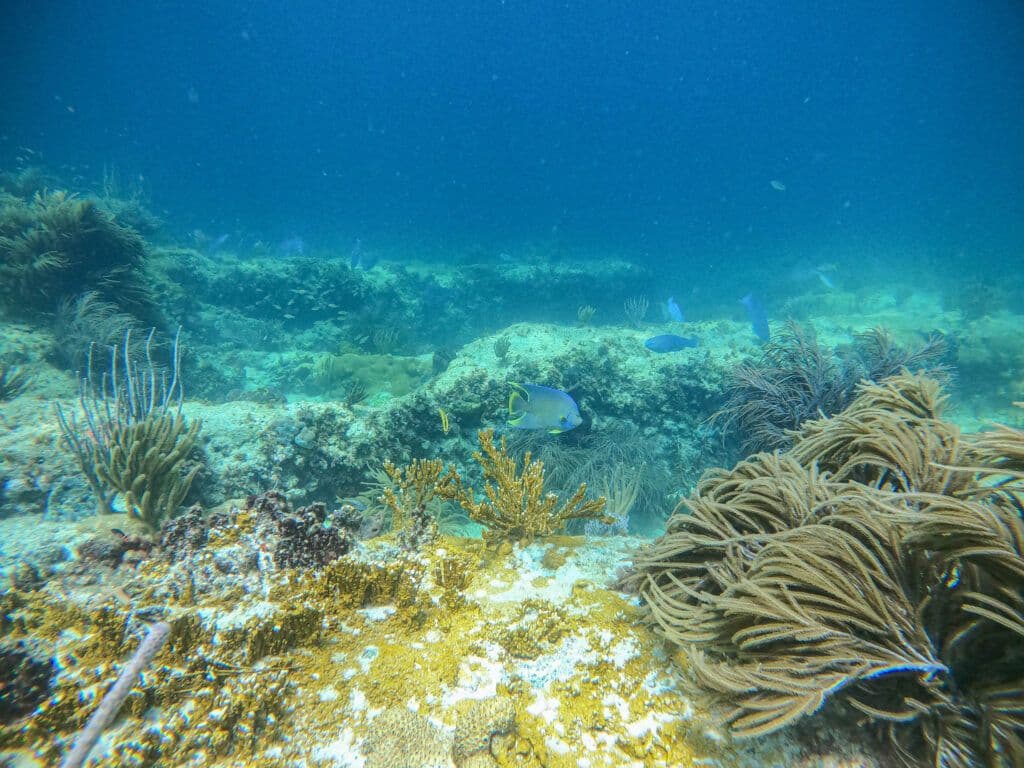
The Amigo LNG project involves the transit of large Liquefied Natural Gas vessels. “An unprecedented increase in nautical scale would begin to be allowed in the Gulf of California,” says Nora.
In view of this, Our Future encourages the Gulf of California to be declared a Critical Habitat for the reproduction, migration and feeding of cetaceans.
The proposal contemplates restrictions on the transit of methane tankers of more than 300 meters in length in the areas covered by this protection.
Mariana Domínguez points out the importance of an ecosystem where numerous species find food, shelter and migration routes.
“The Gulf of California is a region, compared to others in the world, that is very well preserved and protected. Whales arrive there to rest, it's a stopover in their migration process, turtles also nest there; many species of flora and fauna consider this region their home,” he says.
Meanwhile, Nora says that some environmental impacts may reach a point of irreversibility. “Not everything is restorable or repairable; there are impacts that become irreversible.”


Comentarios (0)