
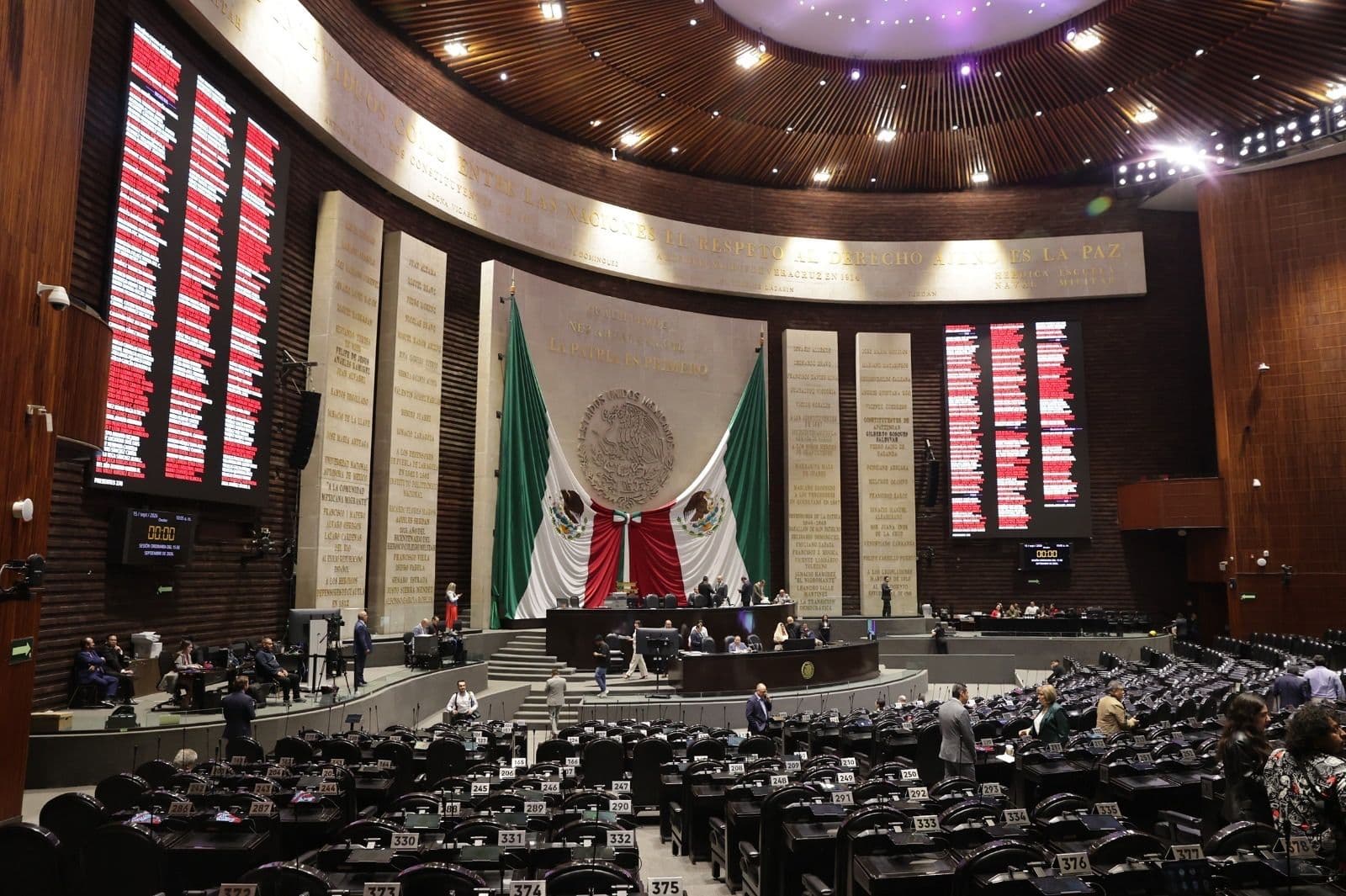
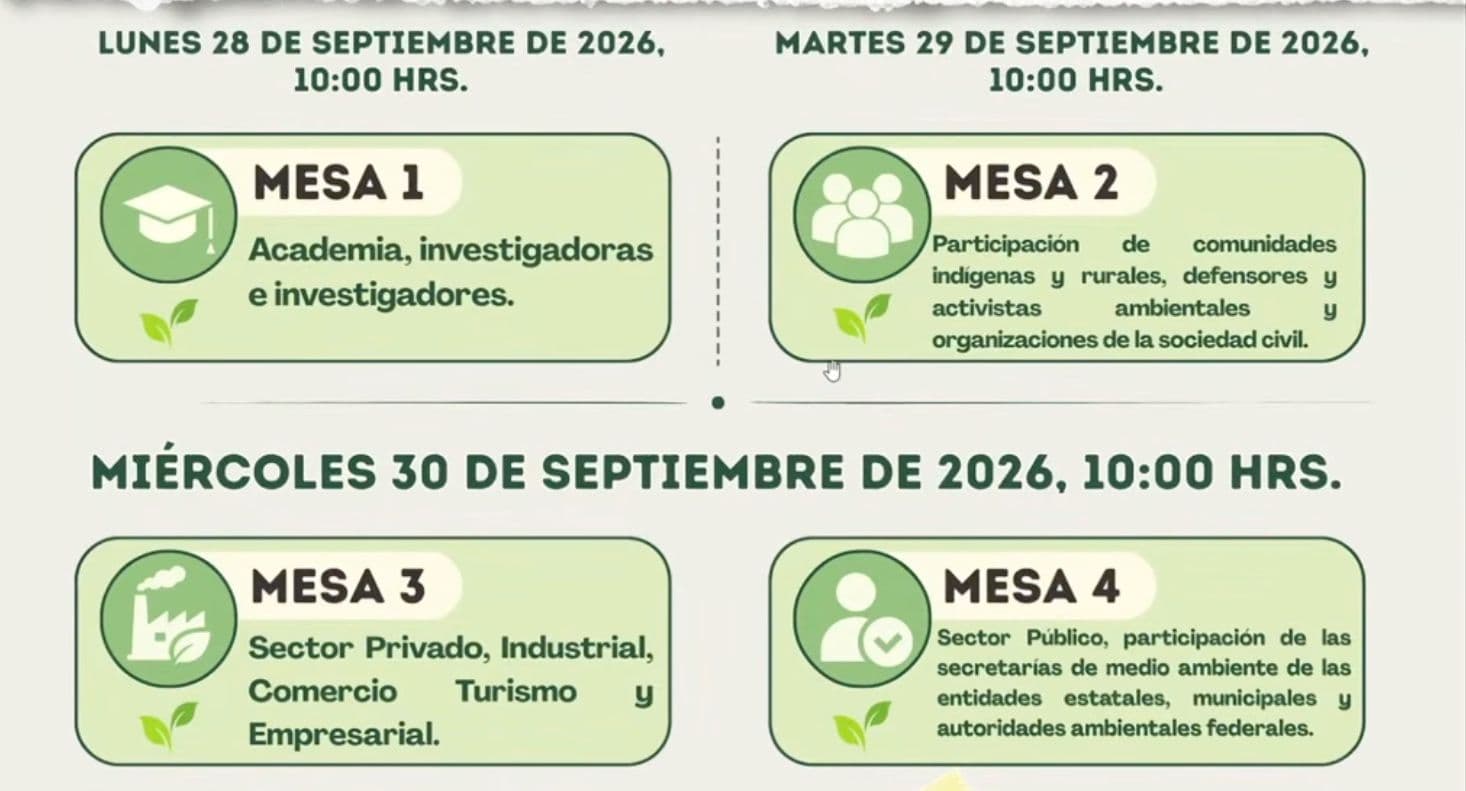
Four tables with interventions of four or five minutes divided by sectors over three days will be the open parliament that will take place on September 28, 29 and 30 in the Chamber of Deputies to discuss the reform of the General Law on Ecological Balance and Environmental Protection (LGEEPA) by President Claudia Sheinbaum. However, the previous reform process, from 1995-1996, lasted 18 months and covered a national journey.
Luis Fueyo MacDonald, president of the Interdisciplinary Center for Biodiversity and Environment A.C. (CEiBA), proposes a true open parliament with regional meetings with communities, indigenous peoples, academia, productive sectors, civil organizations and local governments, since it is an instrument that will govern the entire sector.
“The mechanisms of accelerated public hearings (...) with interventions of four or five minutes divided by sectors do not constitute a dialogue or a real open parliament,” says the environmental consultant.
Fueyo participated in the process of the last comprehensive reform of the General Law on Ecological Balance and Environmental Protection, which was published on December 13, 1996. It is the background he uses to establish a difference in the form of participation. That process, he says, included a national tour and a plural consultation.
“The environmental issue has been addressed by communities, academics, social organizations and business groups of all political positions,” Fueyo says.
It also proposes taking this exercise to regions far from the country's political centers, such as Baja California. “The LGEEPA is the framework law that regulates the entire environmental sector, so we demand that the legislative process not be done in haste or with simulation mechanisms.”
For Fueyo, the update of the LGEEPA must articulate a set of rules with current environmental instruments and rights, in addition to the international commitments that Mexico has assumed.
What is missing from the proposal?
The physicist for the UNAM believes that one of the main issues requiring review is the very object of the new law. The initiative contains 20 fractions about its purpose and, according to their analysis, they do not explicitly state the obligation to materialize the commitments derived from the Escazú Agreement regarding access to information, social participation, environmental justice and the protection of environmental defenders.
It also identifies problems in legal definitions. Some of them do not correspond to the rest of the text, while others maintain formulations that can generate different interpretations during their application.
Another point I ask you to pay attention to relates to legal principles. The initiative incorporates the precautionary principle and the pro natura principle in dubio. Fueyo points out that the incorporation of the precautionary principle requires a revision of its formulation because the proposed wording departs from the international formulation contained in article 15 of the 1992 Rio Declaration.
In this section, it proposes to incorporate other elements developed in the jurisprudence of the Supreme Court of Justice of the Nation since 2012, including the reversion of the burden of proof and decision-making based on the best available scientific evidence.
Access to environmental information is another of the points highlighted by Fueyo. Their analysis argues that the proposal maintains restrictions on full access to environmental impact studies and projects, with publication mechanisms that include the Ecological Gazette and local newspapers.
The participation of indigenous and Afro-Mexican peoples also requires express regulation. Fueyo argues that legislation must guarantee the right to prior, free, informed and good faith consultation, in accordance with Convention 169 of the International Labour Organization and article 2 of the Constitution.
With regard to environmental justice, he points out that the 2011 human rights reform made it possible to move from legal interest to legitimate interest as a way to defend rights. In their analysis, recent amendments to the Amparo Law and the Judiciary should be reviewed in the light of the standards established by the Escazú Agreement and the judgments of the Inter-American Court of Human Rights.
The substantive criticism, he explains, relates to the structure of the proposal. “The proposal lacks a common thread,” he points out, referring to the relationship between the object of the law, its definitions, principles, environmental instruments, participatory rights and compliance mechanisms.
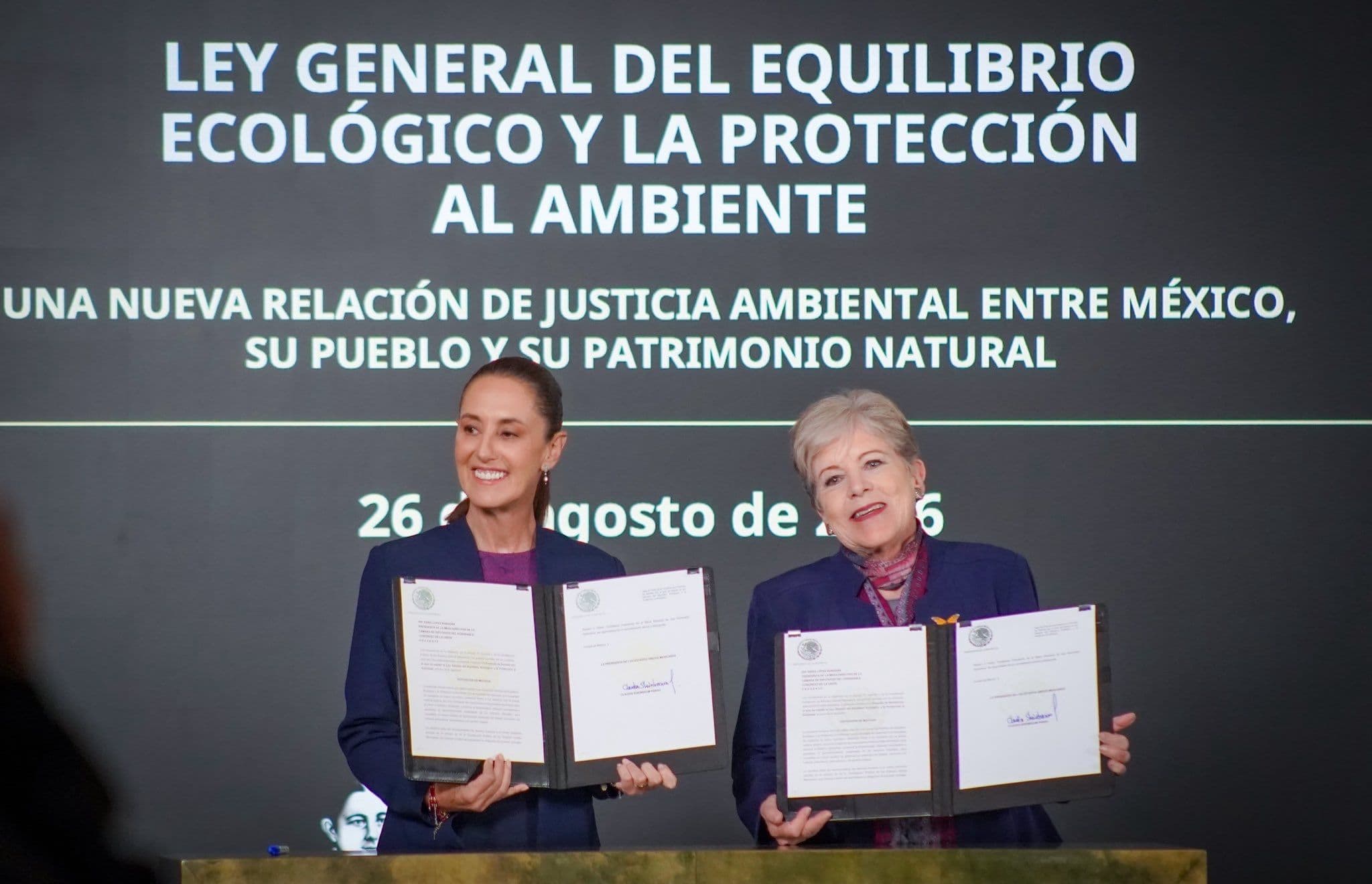
The reform that was announced as the General Law on Ecological Protection and Environmental Justice also responds to the changes that have occurred since the last comprehensive reform, in 1996. During this period, new environmental laws were created and scientific, community and international tools were developed that require articulation within the legal framework.
Among the regulations that need to be harmonized are the General Wildlife Act, 2000; the National Water Act, 1992 and amended in 2026; the General Law on Sustainable Forest Development, 2002; the General Law on Sustainable Fisheries and Aquaculture, of 2007; the General Law on Climate Change, of 2012, and the General Law for the Prevention and Integral Management of Waste, of 2004.
Fueyo identifies within the initiative several instruments that can expand the environmental policy framework. One of them is Strategic Environmental Assessment, a tool that, he explains, has been proposed for years by academics and civil society organizations.
The Other Effective Conservation Measures based on areas, known as OMEC, are also incorporated. These make it possible to expand conservation tools beyond Protected Natural Areas and take as a reference experiences such as Voluntarily Intended Areas for Conservation certified by the National Commission for Protected Natural Areas since 2009.
Another element is the explicit incorporation of the Escazú Agreement into the domestic legal framework. Mexico ratified this regional treaty, which establishes provisions related to access to environmental information, public participation and access to justice in environmental matters.
The initiative also proposes to review the title corresponding to inspection and surveillance, a part of the legislation related to compliance with environmental obligations.
Why is the LGEEPA a central law?
To understand the current discussion, Fueyo explains, it is first necessary to identify what it means for a rule to be a general law. Environmental regulations are comprised of legal provisions that establish measures, regulations and obligations aimed at protecting the natural environment and regulating human activities to avoid affecting ecological balance.
In Mexico, there are environmental provisions at different levels. At the international level, there are treaties that establish obligations for States. Mexico is part of instruments such as the Rio Conventions on Climate Change, Biodiversity and Desertification, the CITES Convention on International Trade in Endangered Species, the Ramsar Convention on Wetlands and the Montreal Convention on the Ozone Layer.
Within the country, the federal structure establishes competencies for the Federation, federal entities and municipalities. The LGEEPA is relevant because it establishes mandatory provisions for these three levels of government.
The first general environmental law was enacted in 1988. Before that time, there were federal laws related to different environmental aspects, mainly applicable to the Federal Government. These rules did not have the same reach over state and municipal governments.
The 1988 LGEEPA established a common framework of definitions, principles and criteria and distributed competencies among different levels of government. Based on this distribution, states developed their own environmental laws and municipalities established provisions within their areas of competence.
The law also created the framework for various environmental policy instruments. These include Ecological Spatial Planning, Environmental Impact Assessment, Protected Natural Areas, economic regulations and instruments, as well as provisions related to social participation, inspection, surveillance and sanctions.
In 1996, the first comprehensive review of the LGEEPA was carried out. This reform updated the legislation in accordance with the legal, economic, social and scientific knowledge of the time and accompanied the consolidation of environmental institutions at the different levels of government.
The current discussion occurs almost 30 years after that comprehensive reform, Fueyo points out. During this period, Mexico created new environmental laws, made international commitments and developed new tools for conservation, evaluation and participation, he warns.
For this reason, he believes that the reform must articulate this set of regulations and clearly establish the competencies, instruments and rights that are part of Mexican environmental policy.
“The LGEEPA is the framework law of the environmental sector,” Fueyo summarizes.
Its modification affects the way in which environmental competencies are distributed, projects are evaluated, the territory is ordered, natural areas are protected, regulations are applied, inspections are carried out and society's participation in decisions related to the environment is guaranteed.


Comentarios (0)