
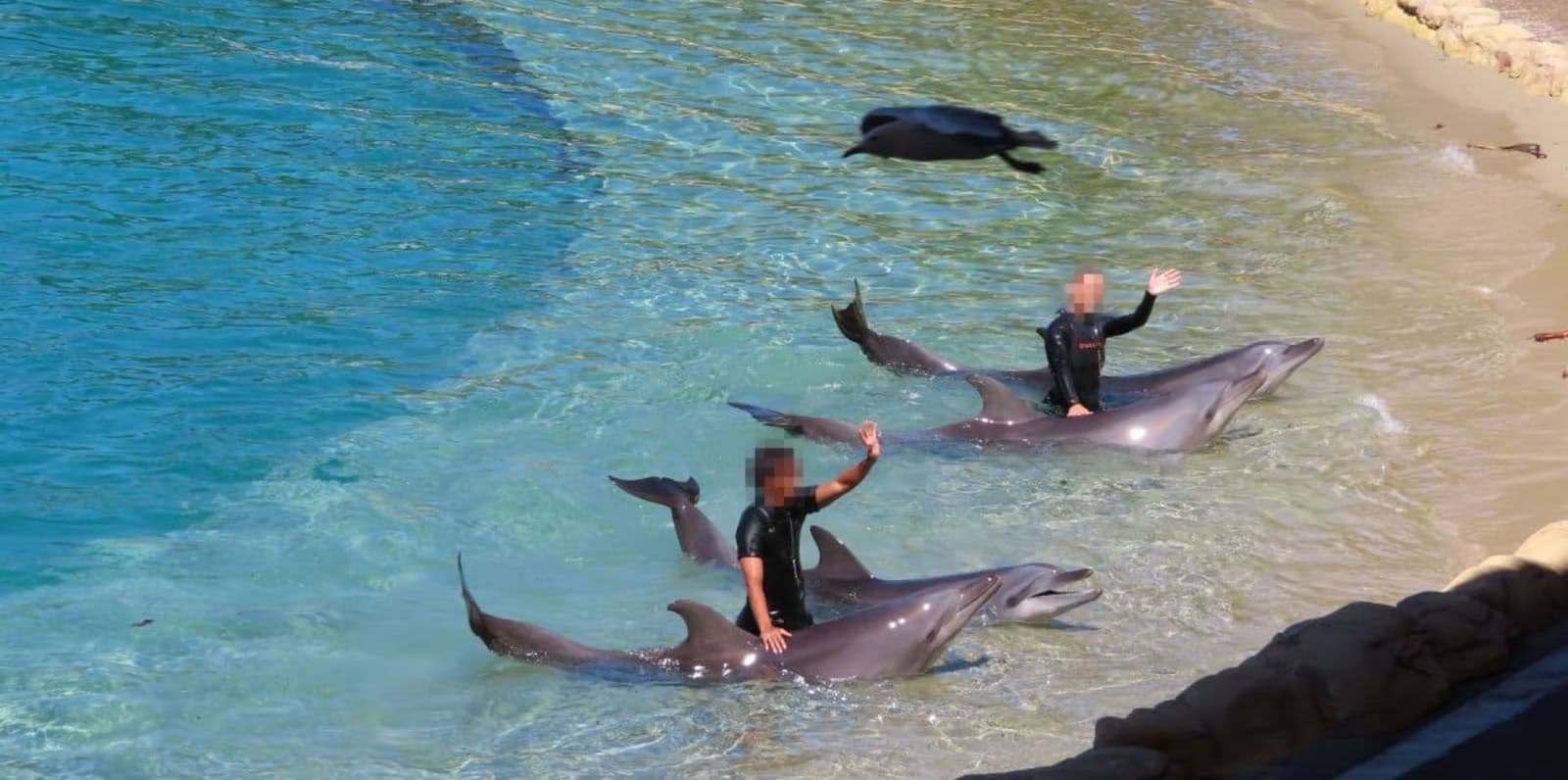
Gastrointestinal, respiratory, hematological, dental, eye, metabolic and dermatological problems, as well as tumors, are some of the conditions that Heather Rally, a veterinary doctor, documented in nine dolphins that remain at the Dolphin Discovery facilities in Cancun, after the park closed.
These are Solei, Oceania, Diego, Squalo, Flex, Apolo, Solomon, Satu and Mincho, who live with chronic diseases after years of “being used for human entertainment”, reports Empty the Tanks Mexico.
For this reason, the organization asks that they be transferred to marine pens in Isla Mujeres or Chankanaab, Cozumel, where they can continue under veterinary care. To this end, they have collected more than 64 thousand signatures on the Change.org platform.
All of this is happening at a time when the Supreme Court of Justice of the Nation (SCJN) is about to define the validity of the reform that banned the entertainment and captive reproduction of marine mammals for profit.
The highest court will review the amparo promoted by companies that had authorizations prior to the 2025 reform, which prohibited the use of marine mammals, such as dolphins, sea lions and orcas, among other species, in fixed or traveling shows.
The law teacher, Susana Evelia Ramírez Terrazas, director of the civil association Law Office, explains in an interview with CN Media that the protection of dolphins as animals subject to rights is at stake in this decision. “What we want is for ministers to know about animal rights so that from there they can make a fairer resolution.”
Va por su Derechos, Empty the Tanks Mexico and other organizations submitted an amicus curiae to the Court, that is, a letter to participate in this discussion, despite not being part of the trial.
For Susana, the amicus curiae “tends to be that part that, in this case, for the ministers of the Supreme Court of Justice provides experience of law and defense of the rights of other animals”.
“It's a legal strategy to tell them: 'You know what? What you are seeing and what you are going to solve also observe this part: that dolphins are marine mammals that should not be in captivity, '” he says.
The Mincho Law
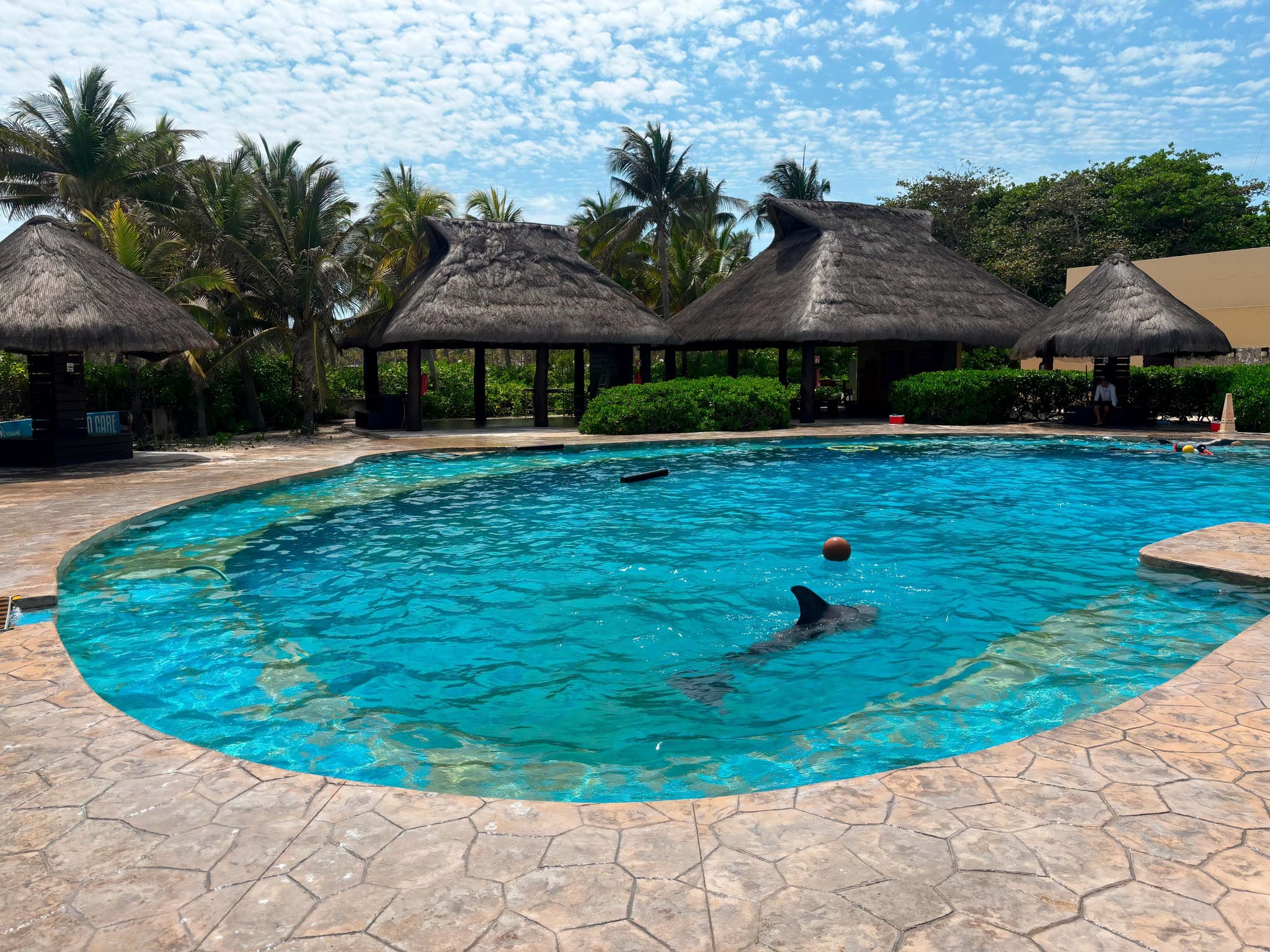
In November 2020, Mincho suffered a blow against a concrete slab outside the pool when he performed an acrobatic performance. According to environmental organizations, the accident was not reported to the authorities.
The veterinarian who treated Mincho indicated 15 days of rest. Two days later, the dolphin returned to participate in a show. At the time, he also had eye problems that had already been identified by the people responsible for his care.
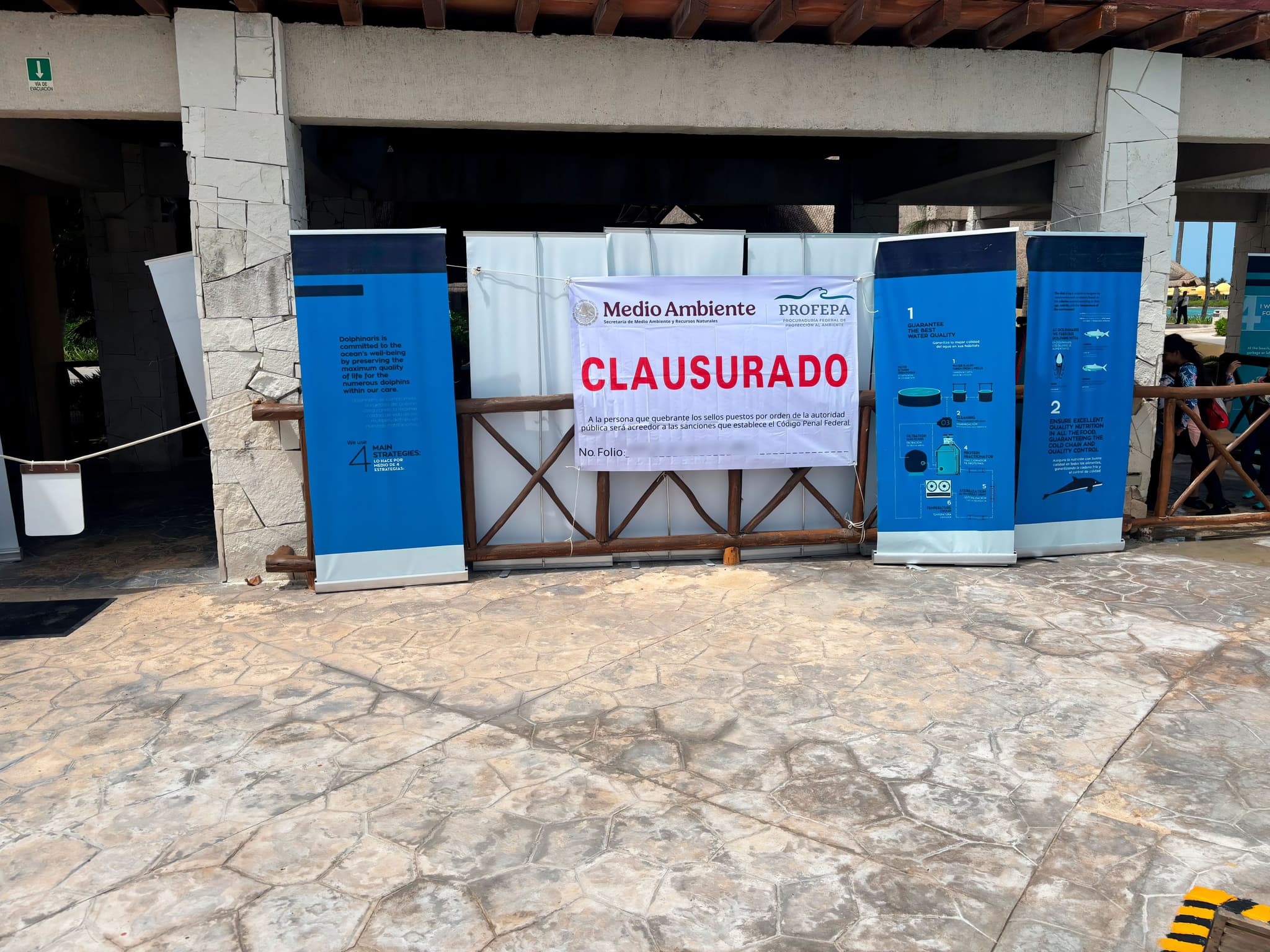
In 2025, a video of the accident began to be broadcast on social networks. The Federal Attorney's Office for Environmental Protection (PROFEPA) carried out an inspection of the establishment and documented several irregularities: unauthorized acrobatics, participation of specimens under medical treatment in activities without veterinary approval and a greater number of people than allowed during interactions. The inspection resulted in the total and definitive closure of the dolphinarium and a fine of 7.5 million pesos.
On July 16, 2025, a reform to the General Wildlife Act was approved to prohibit captive breeding and the use of mammals in fixed or traveling shows, known as the Mincho Law.
Susana Evelia Ramírez Terrazas explains that in December 2024, a constitutional reform amended articles 3, 4 and 73 with regard to animal protection and established, through transitory articles, a period of 180 days to draft a general protection law, which has not happened. While the 2025 reform of the General Wildlife Law, which amended, among others, Article 60 Bis, corresponds to another process. It is known as the Mincho Law.
This year, the debate reached the Supreme Court. The highest court is analyzing a controversy related to the 2025 reform. The law establishes new conditions for cetaceans and provides for their transfer to marine pens or open facilities with water exchange with the outside world. But dolphinariums took cover against the law.
The case reached the Plenary of the Court on July 1, 2026, when the ministers decided to directly review the amparo under review 173/2026. The companies argue that they had permits to work with dolphins before the law changed in 2025. The Court will have to decide if the new rules can be applied to those establishments. However, organizations are calling for compliance with Article 60 Bis.
In their amicus, they maintain that dolphins are sentient beings and consider them “subjects of law”. Since December 2, 2024, the Constitution prohibits animal abuse and establishes that the State must guarantee their protection, adequate treatment, conservation and care.
Among the promoters of the amparo against the Mincho Law is the company Convimar, dedicated to traveling shows with sea lions and dolphins, which had already filed an amparo before the Supreme Court for the prohibition of using animals in traveling shows, such as circuses.
In November 2017, the First Chamber unanimously denied the amparo and maintained the ban. The Court considered that constantly transporting animals to perform these shows can cause chronic stress, diseases and risks to their health.
Questions about inventories
The reform of July 16, 2025 states that captive dolphins must remain in marine pens. When the geographical conditions of a place prevent it, they can be kept in open facilities that allow the exchange of water with the outside world and establishments that already had authorizations must provide SEMARNAT with an inventory of the specimens they have in their care.
“The pens are like a kind of sanctuary where they have the coexistence of the sea. They will no longer have that limit of a diameter, of a pond where they are, but they will have a more natural space, according to their nature”, explains Susana.
The transitional regime gives those responsible for these animals up to 18 months after submitting the inventory to relocate the cetaceans in accordance with the new rules. But in a transparency response notified on November 24, 2025, the General Directorate of Wildlife (DGVS) reported that it was still “in the process of receiving” those inventories.
At that time, the DGVS reported 47 records of Wildlife Conservation Management Units and Farms or Facilities that Manage Wildlife with marine mammals.
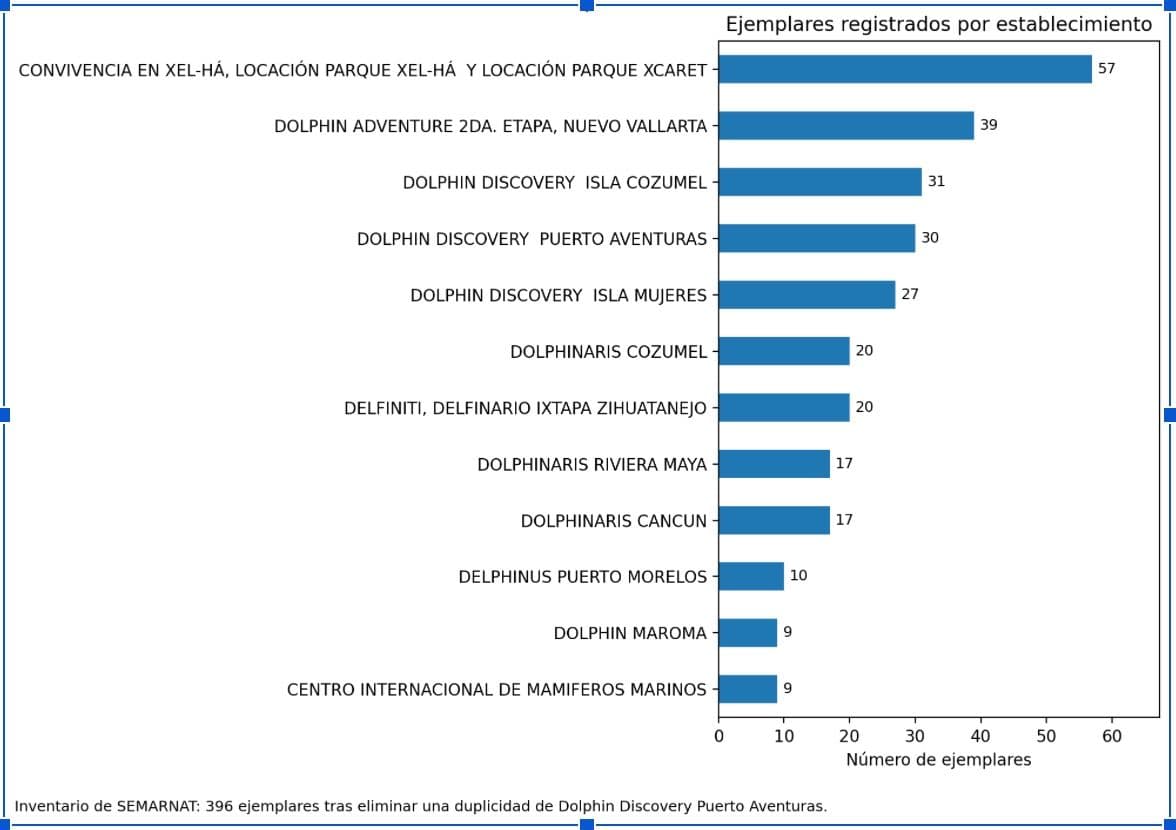
The inventory file provided by SEMARNAT to a public information response contains information from 33 establishments. The sum of his records amounts to 432 copies. Dolphin Discovery Puerto Aventuras appears twice in the file with the same establishment and authorization. When you delete that duplicate record, 396 copies are left.
In another response, notified on April 21, 2025, the DGVS reported that it does not have systematized information on the number of marine mammals, births and deaths in the requested terms. To consult these data, the agency refers to the files of each establishment.
In a transparency response, the DGVS also reported that after reviewing its files, it found no information on permits to capture dolphins for scientific or educational purposes, or on import or export permits for those purposes since 2012.
Meanwhile, SEMARNAT reported on June 18, 2025 that it agreed with Empty the Tanks to review the permits granted to zoos, aquariums and dolphinariums.
Meanwhile, in 2018, the SEMARNAT Transparency Committee issued resolution 254/2018, related to requests for information on dolphinariums, births and deaths of marine mammals. The DGVS requested to classify the complete files of TAGEPA S.A.P.I. de C.V. and Controladora Dolphin S.A. de C.V. The committee confirmed the classification.
In its 2025 response, SEMARNAT reported that this classification is still valid and that data on the number, births and deaths of marine mammals are not systematized for all establishments. The agency indicated that this information is found in private files.
Regarding the information available on the copies, Susana points out the importance of knowing their origin and trajectory. “So where does a small dolphin come from? Who is his mom? Who is his dad? Where did your parents come from? Where does that direct line come from? And where did those small mammals come from? Who are they?” , questions.
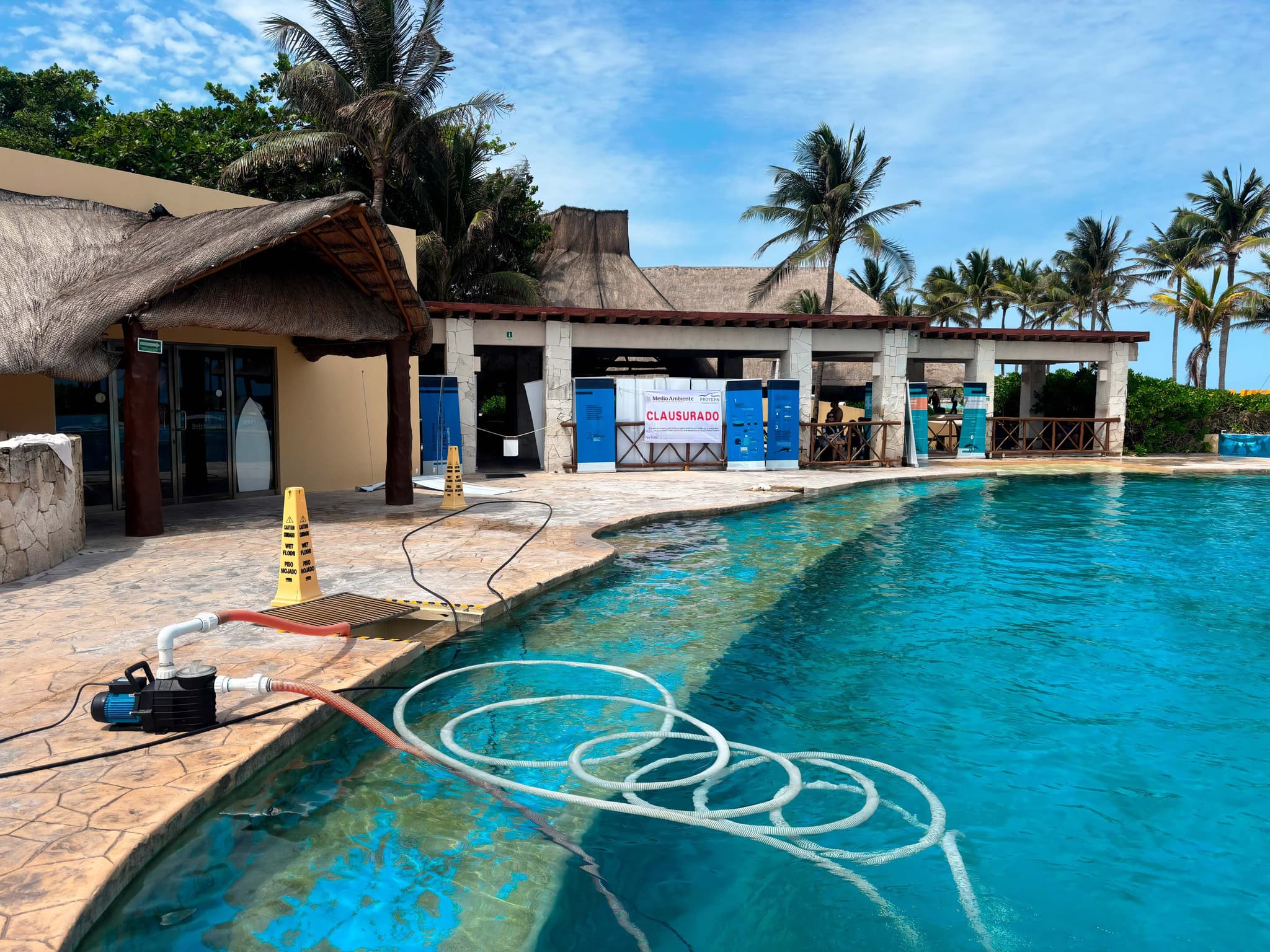
The transfer of the 9 dolphins is urgently needed
Susana says that the physical and behavioral situation of the nine specimens is part of the elements considered to plan their transfer. “Well, it's visible. The physical situation, the situation of their health, the situation of their stress, their stereotypies, their continuous exploitation are visible,” he explains.
“They cannot be conditioned to life in captivity. It wreaks havoc on their lives, in their emotional situation, in their psychological situation and in their physical situation. Irreparable harm is done to them, both to their psychology, their emotions and their physical state,” he adds.
As for the Supreme Court decision that is coming soon, Susana says that if she “votes against the dolphins, against their freedom, against their fundamental rights, we would have a very regrettable retroactivity in the law”.
While in the opposite scenario, “if the Supreme Court of Justice continues to be avant-garde, continues to apply the broadest protection, continues to advance in the protection of the rights of other animals, we would have a literal, important application never seen before by marine mammals”.


Comentarios (0)