

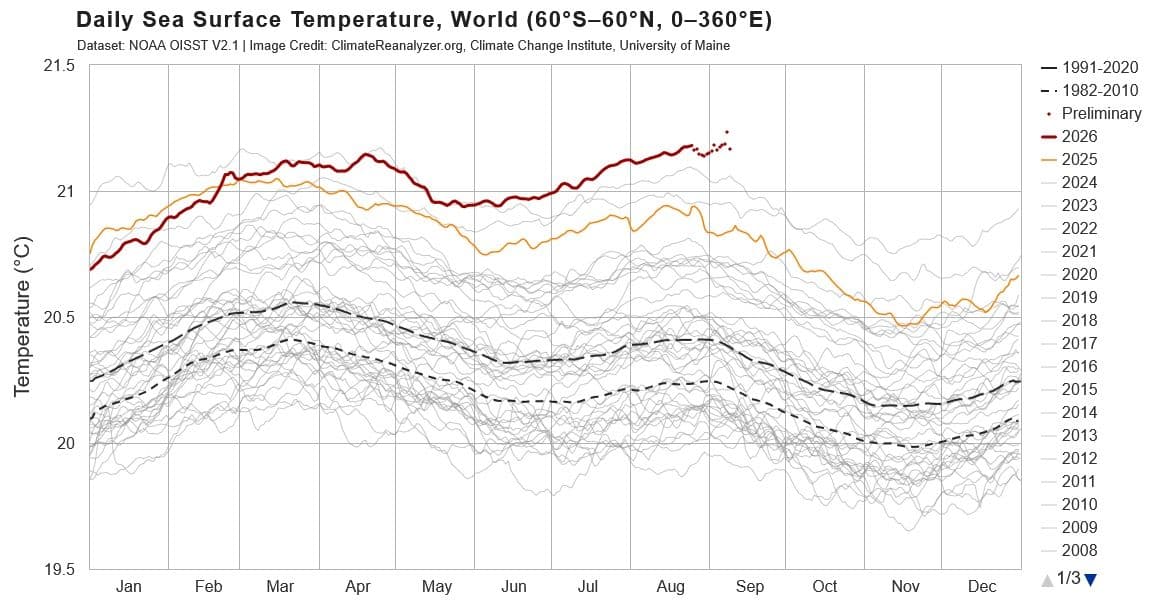
The ocean is going through one of the most persistent heat sequences recorded in recent years. For 100 consecutive days, the average daily sea surface temperature remained above the historical record for the same time of year, according to temperature data presented during an international conference on ocean warming.
The record corresponds to the temperature for each date of the year and not to the highest absolute temperature recorded in the ocean.
Climate scientist Zachary Labe, from Climate Central, explained during the question session that 2026 is not the first year in which gusts of this duration have been observed. In 2023, there was also a sequence of more than 100 days with record temperatures. The importance of the current streak is in the context in which it occurs. Ocean temperatures have remained at exceptionally high levels for several years and the phenomenon continues as a new episode of El Niño unfolds.
“The real driver of this record heat is climate change, the long-term trend,” Labe said during his presentation. More than 90% of the excess heat associated with the burning of fossil fuels and greenhouse gas emissions ends up in the ocean, according to their explanation.
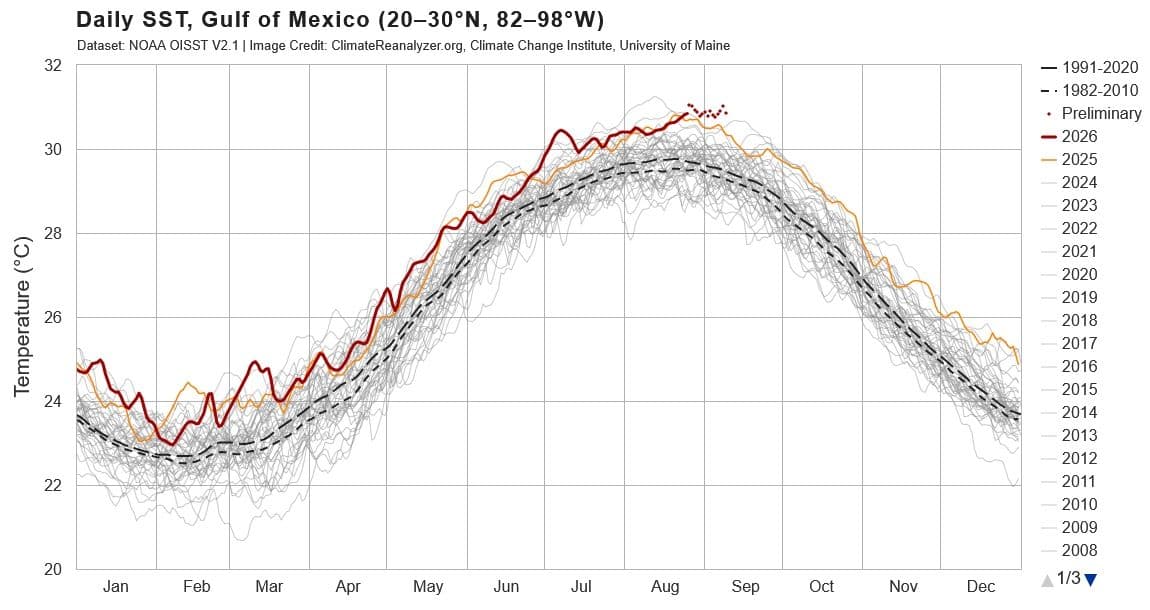
The Gulf of Mexico records record temperatures
Among the regions mentioned during the conference is the Gulf of Mexico. Labe showed a map of sea surface temperatures for the last three months and highlighted that the waters of the Gulf currently have record heat conditions.
“We can see record sea surface temperatures in the Gulf of Mexico right now,” said the scientist when presenting the regional data.
The data places the Gulf within a warming pattern that also affects other areas of the planet. Labe noted particularly warm conditions in the Mediterranean, the North Pacific and parts of the Indian Ocean. In some areas of the Mediterranean, surface temperatures were still above 30°C at the time of the conference.
The scientist explained that these temperatures have effects on marine ecosystems and economic activities related to the ocean. Among them, he mentioned fishing and tourism.
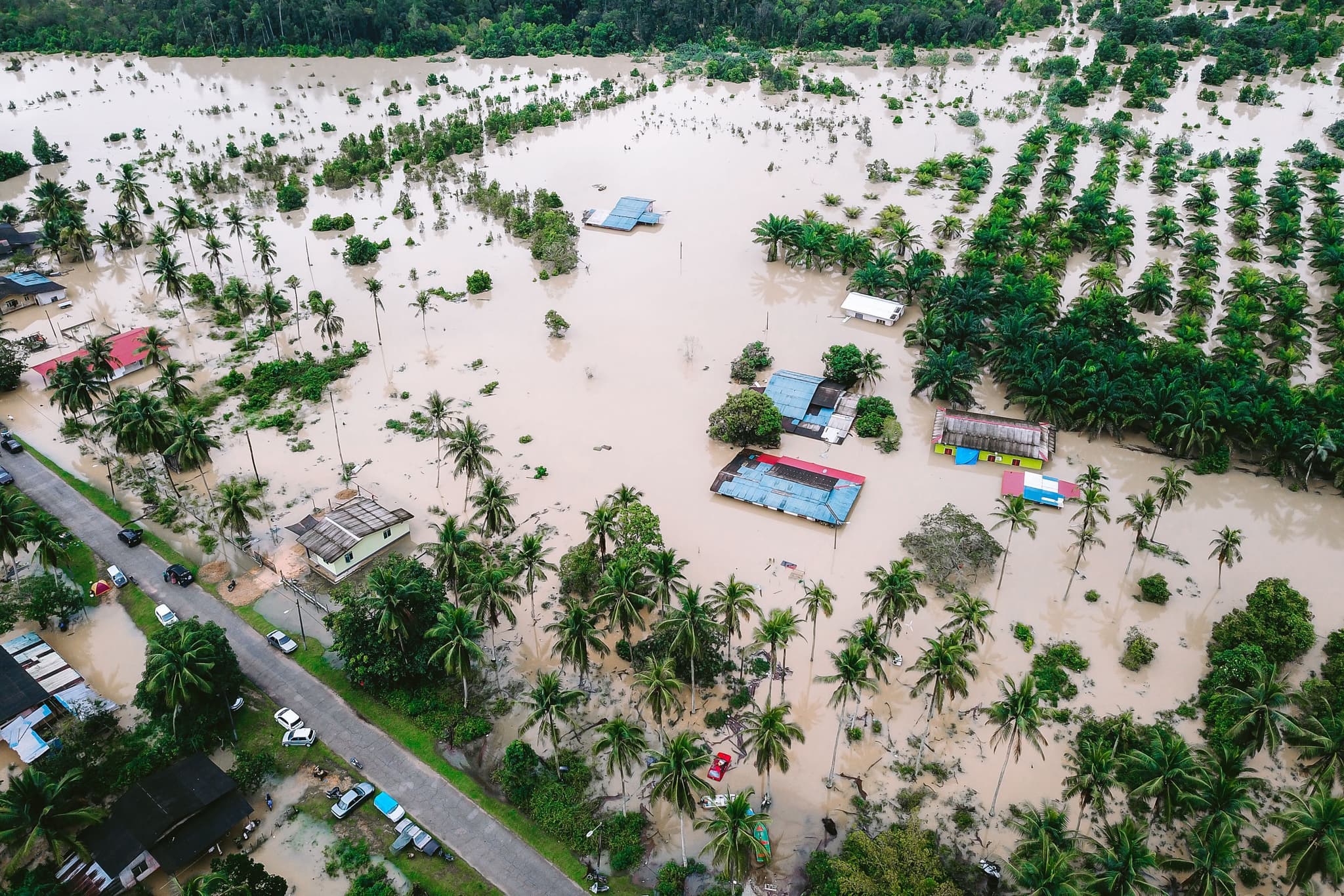
Warmer waters are also part of the conditions that scientists study to understand the behavior of tropical cyclones. Labe noted that rising sea temperatures can promote greater evaporation and higher rates of rainfall during hurricanes, in addition to increasing the risks associated with rising sea levels.
El Niño occurs over an ocean that is already warmer
The current episode of El Niño contributes to the warming observed in 2026. Labe explained that the heat distribution shows a particularly warm strip from the coasts of South America to the Pacific, corresponding to the El Niño phenomenon.
In the rest of the ocean, there are also multiple areas with marine heat waves. Tom Pickerell, global director of the World Resources Institute's Ocean Program, explained during the session how this phenomenon affects Latin America.
Under normal conditions, trade winds move warm surface waters toward Indonesia and Australia. Off the coast of Peru and Chile, this behavior allows cold, nutrient-rich waters to rise through the Humboldt current, a fundamental condition for fisheries in the region.
During El Niño, winds weaken and warm waters return to the east. The rise of nutrients decreases and conditions for fisheries change.
Pickerell explained that during intense episodes the impact can lead governments to temporarily stop fishing activity. The specialist cited an estimate from the International Monetary Fund (IMF) according to which a strong El Niño episode may represent an impact of close to 1% of the GDP of the Andean economies. “The big impact of El Niño in that region is on fisheries,” Pickerell said.
The effect also affects tourism. Warming waters can affect coral reefs and, with it, activities related to diving and other tourist services.
Warming modifies marine ecosystems
Researcher Claire Bergen, from the ICARUS Climate Research Centre at Maynooth University, explained that warming can change conditions for species. “Even a 1°C rise in sea temperature can have a significant effect on marine life,” he said.
In its research on four regions of the European seas, Bergen found increases attributable to climate change of approximately 2 °C in the two Mediterranean regions analyzed. In the Bay of Biscay region and the Iberian Peninsula, the attributable increase was 1.4 °C, while in the Celtic region it was 1.3 °C.
Extreme temperatures can cause the mortality of habitat-forming species, such as corals, sponges and macroalgae. The loss of these species affects the structure and functioning of ecosystems and can affect invertebrates, fish, seabirds and mammals.
“While on land we can install air conditioning to cool us down, the adaptation of seas and marine life is not that simple and is very limited,” Bergen said.
The researcher also spoke of the effects that high sea temperatures have on coastal areas. “High sea temperatures have been linked to heavy rain events, such as the floods in Valencia in 2024, and they also have the capacity to intensify the destructiveness of tropical cyclones.”
“There is a direct relationship between rising sea temperatures and the intensity of heat waves on land. The heat waves experienced during summer, particularly in coastal areas, are aggravated by high sea surface temperatures.”
Bergen explained that these conditions can also affect people's health due to an increase in wet bulb temperature. “The increase in wet bulb temperature in soil negatively affects human health, because a higher moisture content reduces people's ability to regulate their body temperature.”
“This really shows that sea temperatures are not confined to the sea: they affect marine life, the food and tourism industries, as well as people's daily lives.”
You may also like: The sea is eating away at a town in Oaxaca; the second community displaced by coastal erosion in Mexico
Displacement of species, another effect
The movement of species was one of the effects explained during the question session. Bergen noted that some fish with shorter life cycles can move to cooler waters.
In Europe, specimens that were previously found off Spain, Portugal or France have appeared further north, in waters of the United Kingdom and then towards Scotland.
This movement changes relationships between species and also affects seabirds, which can remain in their nesting areas while the species they feed on move to other regions.
Pickerell said that these movements also create challenges for fisheries management. He gave as an example the North Atlantic mackerel, whose distribution has shifted to waters off Iceland and Greenland.
The change in the distribution of the species changed the relationship between the countries that participate in its exploitation. According to Pickerell, the lack of agreements on new fishing quotas has contributed to the fact that the species has been overfished for more than a decade.
Ocean warming also has an economic cost
Tom Pickerell argued that prolonged ocean heat should also be analyzed from an economic perspective. “Prolonged ocean heat isn't just an environmental issue; it's an economic shock,” he said.
The specialist explained that the ocean supports activities related to food, employment, trade, tourism and energy.
He estimated that, if the ocean were considered a national economy, it would represent between 2.5 and 3 trillion dollars a year and hundreds of millions of jobs. This estimate does not incorporate other services provided by the ocean, such as climate regulation, coastal protection and carbon storage.
During the first half of 2026, marine heatwaves affected approximately 82% of the global ocean, according to Pickerell.
For the specialist, countries need to consider together the different changes that are taking place in the ocean. The rise in sea level, acidification, the movement of species and changes in fisheries are all part of the same system.
Pickerell explained that countries also face changes in species distribution and a reduced capacity to predict where fishery resources will be in the future.
Ocean warming occurs along with other chemical changes. During the conference, Pickerell explained that the ocean absorbs carbon dioxide from the atmosphere. When reacting with seawater, this CO2 forms carbonic acid and decreases the availability of carbonate for organisms that build calcium carbonate shells or structures, such as corals, mollusks and crustaceans.
The specialist noted that the change in pH may seem small when looking at only the figure. The scale is logarithmic and, according to its explanation, the change represents an approximate 30% increase in acidity. The change already has economic effects in some regions.
Pickerell mentioned as an example the transfer of oyster farms from Alaska to Hawaii.
Don't miss: Adapting to survive: fishermen facing climate change in Baja California Sur
The ocean can also provide solutions
The conference also addressed the possibilities of reducing emissions from activities related to the ocean. Pickerell mentioned the decarbonization of shipping, marine renewable energy and changes in food systems as part of existing alternatives.
“People can make conscious decisions, but ultimately we need to reduce emissions. That's the key.”
He estimated that ocean-related solutions could provide up to 35% of the reductions needed to achieve the goal of 1.5°C by 2050.
For Pickerell, the ocean plays a central role in climate and economic policies. The protection of marine ecosystems, the adaptation of fisheries and the development of technologies to reduce emissions are part of this relationship.
The conference closed with an idea that the three specialists developed from different angles: the 100 days constitute an indicator of a larger trend. “The fact that interests me as a scientist is not the number 100, although I admit that is what makes the headlines. The important thing is that we have seen such consistent record warming. A difference between 99 and 102 days isn't going to change much in terms of impacts. What matters is this extended period of record heat that we continue to see this year and in previous years, as part of a long-term trend.”
The data presented during the conference thus show an ocean that maintains exceptionally high temperatures while El Niño continues to develop. In the Gulf of Mexico, this situation is already reflected in record surface temperatures. For Latin America, specialists noted particularly relevant effects for fisheries, marine ecosystems and economic activities related to the ocean.


Comentarios (0)