
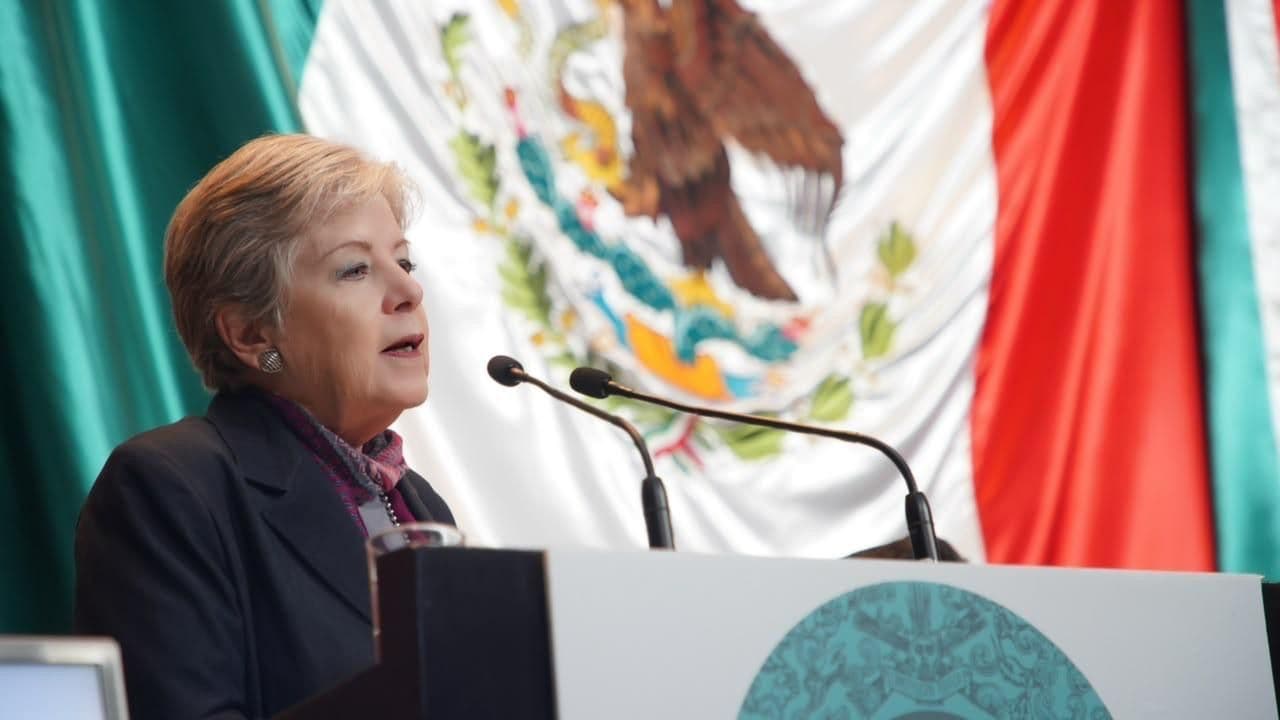
On the first day of public hearings on the initiative to reform the General Law on Ecological Balance and Environmental Protection (LGEEPA), opposition deputies and researchers warned of setbacks in the project, while Secretary Alicia Bárcena acknowledged that part of the reform has caused “confusion”.
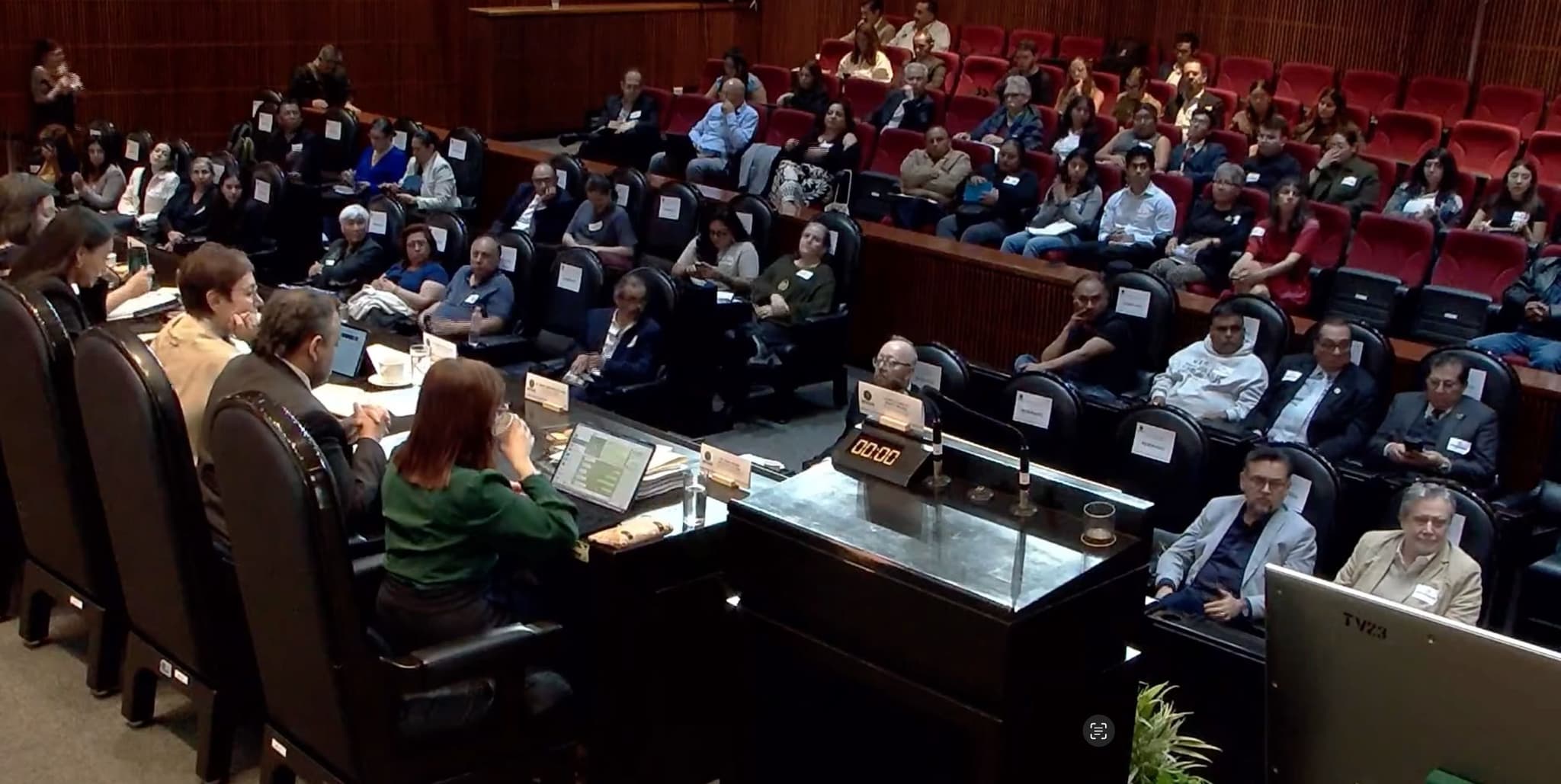
In the Legislators Hall of the Republic in the Legislative Palace of San Lázaro, the first of three days was held this Monday, September 28, during which the reform of President Claudia Sheinbaum will be debated, which seeks to repeal the LGEEPA and create a new environmental law with the name of the General Law on Ecological Protection and Environmental Justice.
On behalf of the academy, Jesús Enrique Pablo Dorantes, founder of the Mexican Academy of Environmental Impact, A.C. (AMIA), described the Strategic Environmental Assessment (EAE) as a “distortion” in the reform, “which is given an equivalence to replace the Environmental Impact Assessment”.
“The EAE compares development options, while the Manifestation evaluates projects with exact coordinates. The EAE does not carry out biotic inventories of endangered species, it does not model discharges or runoff, nor does it guarantee the participation of communities,” he explained.
Daniela Pedroza Paez of the Institute of Ecology of the National Autonomous University of Mexico (UNAM) also pointed out that it is “a technical and legal error”, in articles 28 and 54, that the intention is to make the two instruments equivalent. “It's a risk that these items will remain and must be removed.”
“Another risk seems to us is that, in Article 53, they are allowing the presentation of an MIA after the start of a work. This completely detracts from the purpose of the instrument and threatens our right to a healthy environment,” he said.
Meanwhile, Congresswoman Irais Virginia Reyes of the Citizen Movement Tower noted that her party is also concerned that, although the Strategic Environmental Assessment is an advance that civil organizations have requested for decades, “the initiative is designed in a way that could replace and not complement the Environmental Impact Manifestation.”
“It's a risk that could weaken prevention, weaken public participation and open up spaces of discretion,” said Reyes de la Torre.
In addition, he stressed that in the initiative, public consultation “becomes optional”, that is, it ceases to be an obligation and becomes a discretionary decision, which contravenes the Escazú Agreement.
“The possibility of regularizing works initiated without authorization is maintained, which contradicts the preventive principle and rewards the fait accompli,” he added.
Mauricio Limón de la Barra Mexicana, Bar Association, said that the initiative does not contemplate improving the Environmental Impact Assessment and leaves out the opportunity to harmonize it with the Escazú Agreement. “It's the great forgotten one,” he said.
“Precisely where participation is most needed, the Executive withdraws it,” he said and showed a presentation highlighting cases such as national infrastructure programs, plans and projects and those considered strategic for the government.
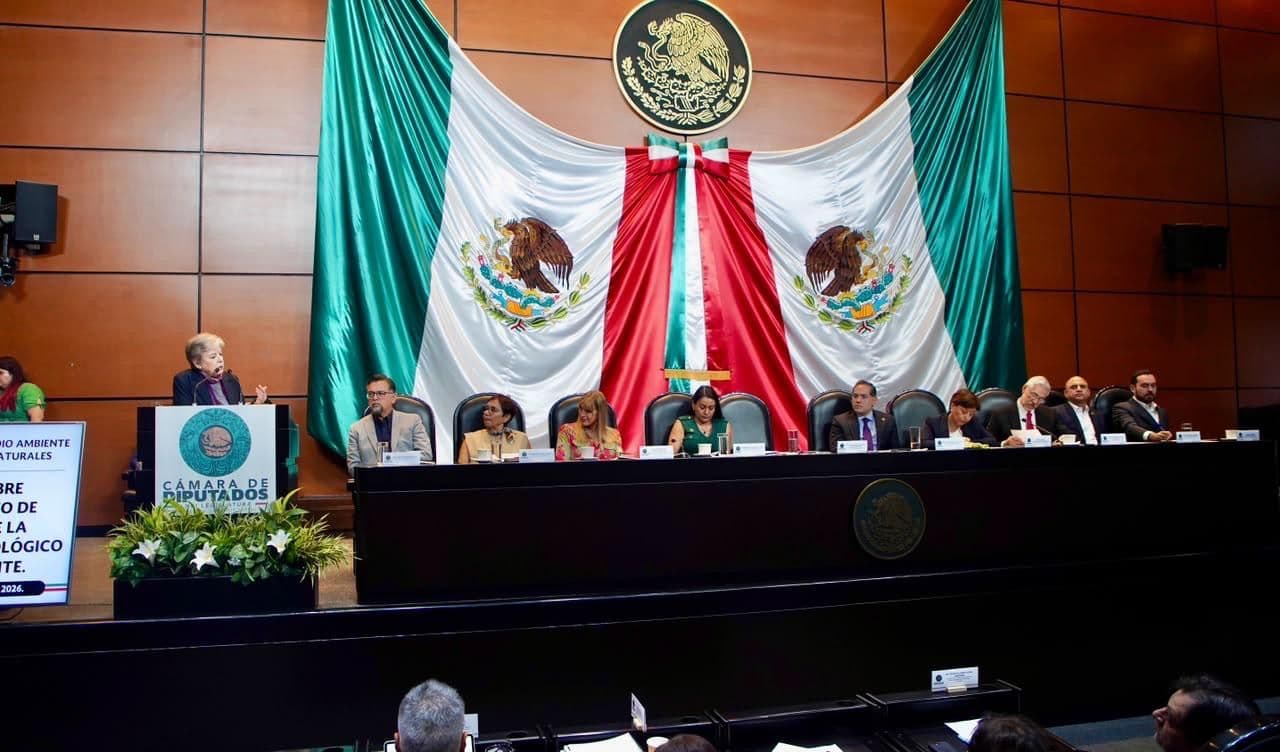
At the beginning of the hearings, Alicia Bárcena Ibarra, Secretary of Environment and Natural Resources, said that the reform seeks to modernize the legal framework to “achieve an inclusive law that is up to the challenges faced by Mexico.” However, he admitted that the introduction of Strategic Environmental Assessment, which applies to policies at the macro level, has caused confusion, while the Environmental Impact Assessment focuses on individual projects and works.
“The Strategic Environmental Assessment has caused confusion, it is a tool for preventive planning, but it does not replace the Environmental Impact Statement. Each project has to be evaluated at its fair value, each project, but having a strategic planning vision is also important,” he said.
“No one is replacing environmental justice, on the contrary, the role of Profepa is being strengthened. Profepa must be the great instrument that helps us to achieve environmental justice,” said Bárcena. “Give it more teeth,” he finished off.
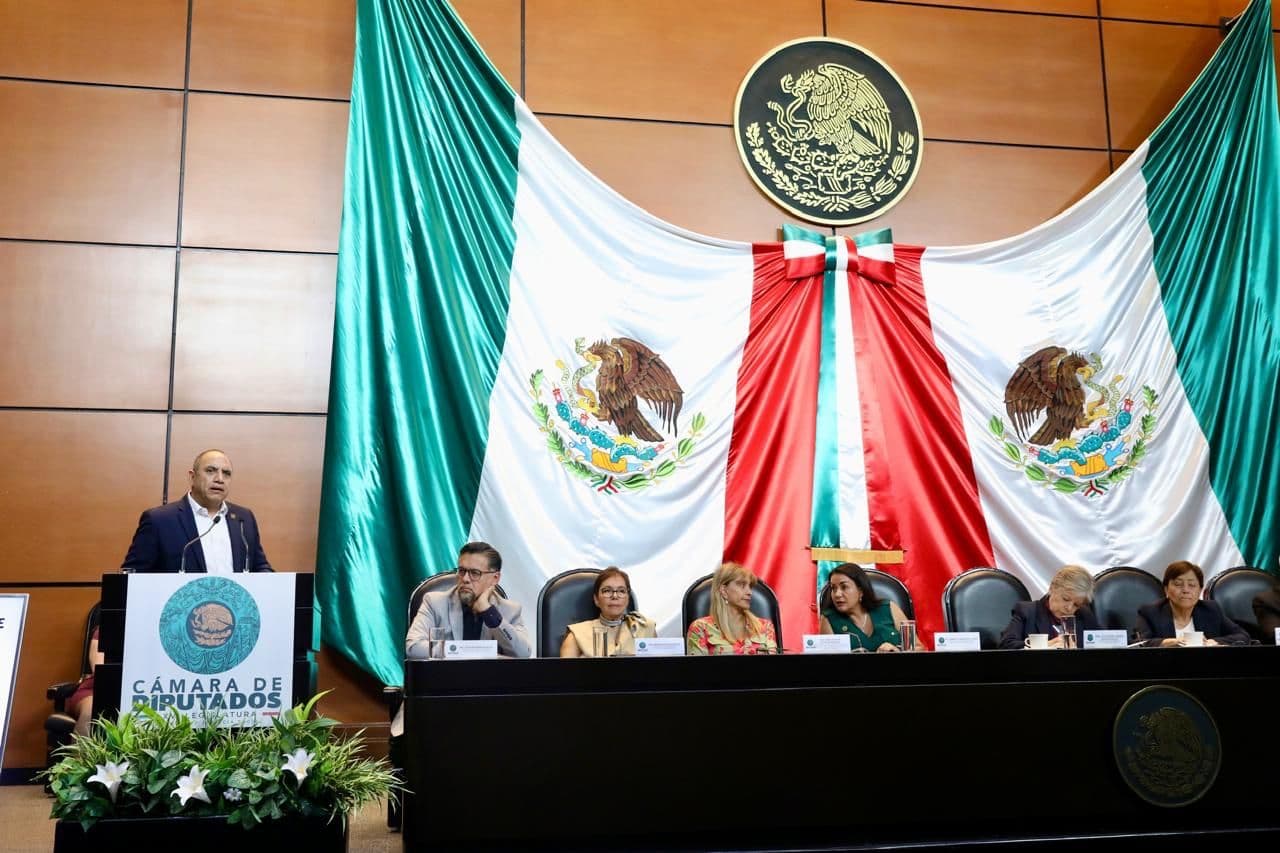
There are concerns about non-compliance with the Escazú Agreement
For these public hearings, which will take place from September 28 to 30, more than 130 specialists, civil society organizations, indigenous communities, environmental defenders and activists, and members of the private industrial, tourism and business sectors registered. The first round table, this Monday, September 28, was attended by academics and specialists.
During his speech, Bárcena highlighted five central points of the reform that seeks to modernize the LGEEPA, which dates back to 1988 and which had a subsequent comprehensive reform, in 1996. It involves updating the regulatory framework to adapt it to international standards; guaranteeing the effective right to a healthy environment and recognizing the Escazú Agreement, which positions the right to access information, participation and environmental justice; the modernization of tools such as Strategic Environmental Assessment; legal certainty and creating sustainability criteria.
“Because climate change has already reached us and although the country is committed to mitigating climate change emissions, we have a responsibility to adapt. We are losing coasts, sea levels are rising, we are losing beaches, so we are interested in recovering this and that is restoration,” said the head of SEMARNAT.
“We also want to promote care for environmental defenders, protection. Care for those who care for us. Because we also know that they are at risk,” he added.
For their part, the participating academics and specialists considered that the reform presents advances such as the recognition of environmental defenders, the incorporation of pollinators and ecological restoration areas. However, some called for public audiences to be decentralized and truly plural, with regional tables, with young people and a gender focus. Most emphasized what the law is neglecting or what causes concern and could involve risks.
Claudia Brindis Zavala of the Council of the United Nations (UN) Harmony with Nature program and founder of the Council of Guardians of Nature, said that the reform, like the law it seeks to update, continues to have a “utilitarian approach”, based on “the benefit it brings to people” and does not “recognize its intrinsic value”.
“I propose that nature be explicitly recognized as a subject of law, together with ecological balance,” he said.
“With regard to indigenous peoples and Afro-Mexican communities, I propose to replace the standard of prior, express and informed consent with the most protective one: free, prior and informed consent, in articles 16 and 175, and to extend 239 to explicitly guarantee access to information, public participation and access to justice in accordance with the Escazú Agreement.”
Ximena Ramos Pedrueza, representative of the Office in Mexico of the United Nations High Commissioner for Human Rights, shared that there is concern about compliance with the Escazú Agreement. “On the subject of Strategic Evaluation, there is no clear process for the participation of all sectors and since it is a public policy, it must be included.”
“Likewise, civil society, communities, have called for strengthening the Environmental Impact Assessment on the issue of participation, but we are wasting that opportunity by not establishing that participation and public consultation should be mandatory,” he said.
“We don't have all the resources we need”
Secretary Alicia Bárcena indicated that the environment does not have the necessary economic resources it requires. “We know that it's a sector that doesn't have, perhaps, all the resources we require,” he said.
“I hope that the deputies will help us a lot,” Bárcena told the deputies about the budget package for the next year that is being discussed in Congress.
In this regard, academic Jarumy Méndez, professor at the Universidad Anahuac Oaxaca and Secretary of Environment and Climate Change at Somos México, criticized that in the transitory period of the reform she says that “it will not have a single additional weight”.
“It creates new obligations without new money and the money that does exist is mislabeled. The government calls the construction of trains climate change. A third of the climate change budget goes to railway infrastructure,” he exemplified.
“This law protects everything, but it doesn't fund anything. What is not budgeted is not protected,” he concluded.


Comentarios (0)