
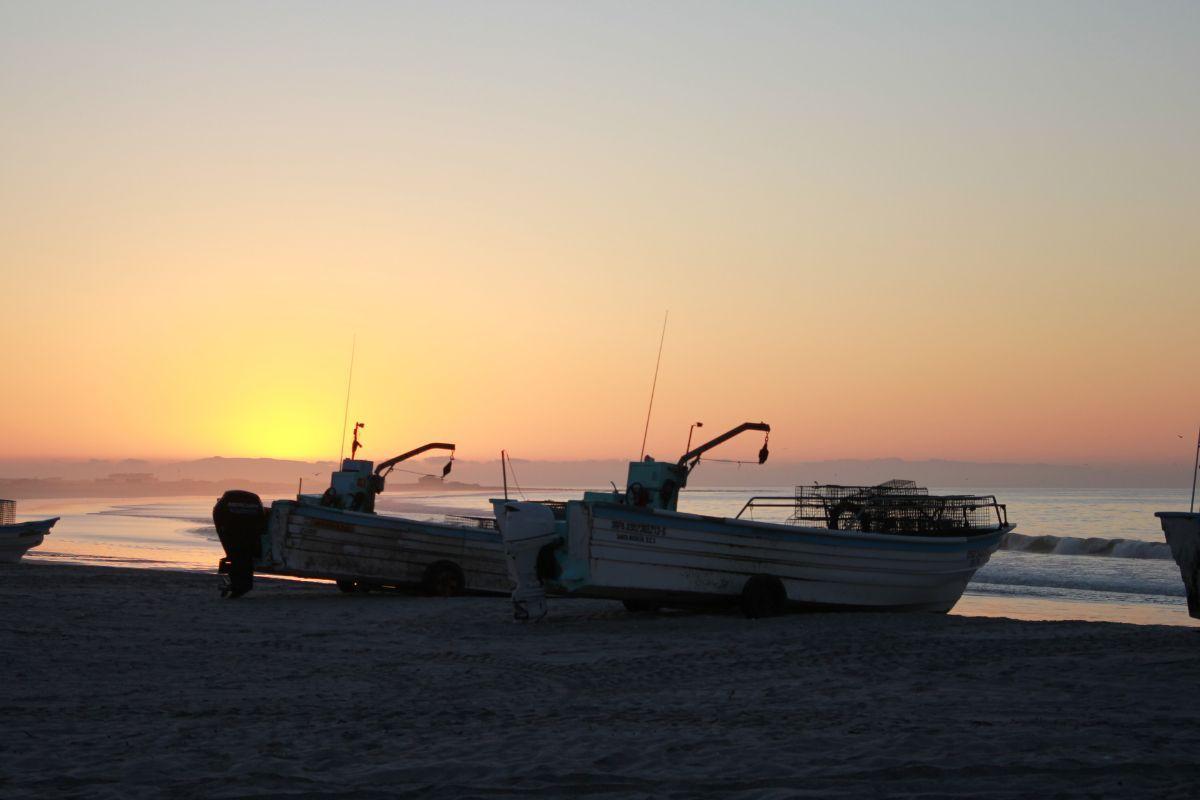
The first signs appeared on the shore of the beach: dead fish. Later, abalone and snails appeared on their backs in areas near the coast and the locusts were concentrated in tidal pools, small accumulations of water that are trapped in rocks when the tide goes down. Something wasn't right.
Fishermen from Punta Abrejos, a fishing community on the Pacific coast of the Baja California Peninsula, decided to send divers to survey the seabed to confirm that there was a massive death of species.
The samples taken to the laboratory showed an important clue. When the organisms were placed in water with good oxygenation, they managed to recover. Everything pointed to a red tide or harmful algal bloom, a phenomenon associated with the massive proliferation of microalgae that drastically reduce the oxygen available in the water and affect marine fauna.
Every minute was decisive in saving the product on which the entire community survived. That is why fishermen, children, wives, daughters-in-law and grandchildren organized to rescue and transfer to safe areas the organisms that could still survive. The effort managed to save some of the fish production, but the losses were still severe.
The red tide spread from Punta Abreojos to Asunción Bay and caused a reduction of close to 80% in abalone production that season, one of the most valuable species for cooperatives in the region.
“It didn't collapse to the degree of not having abalone, but to the degree of taking action,” said Eduardo Enríquez, secretary of the board of directors of the Punta Abrejos Cooperative Fisheries Production Society, which brings together 96 active members.
Although it was not the first time that a red tide had occurred, this crisis in 2017 became a warning about the future.
A changing ocean
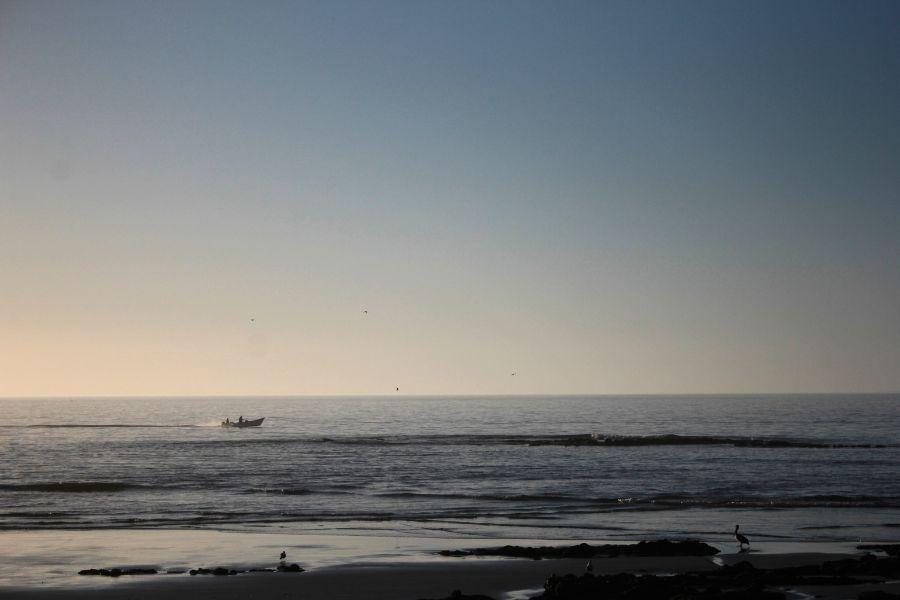 Fishermen from the Punta Abrejos Cooperative go out to work. Source: Daniela Reyes.
Scientists agree that climate change is modifying the physical and chemical conditions of the ocean.
On the Mexican Pacific side, the main problem is the increase in sea temperature, which decreases the concentration of oxygen in the water, creating conditions for extreme events such as red tides and more intense hurricanes.
“A warming trend has been observed, particularly in recent years. The sea has fewer and fewer cold anomalies, but at the same time it has more warm anomalies,” explains David Petatán, head of the oceanography department at the Interdisciplinary Center for Marine Sciences (Cicimar) of the National Polytechnic Institute (IPN).
That warming affects the ocean's primary productivity, the base of the marine food chain. As a result, many species seek deeper waters or migrate to cooler latitudes.
“Primary productivity is key to the fertilization of the ocean, the food of the sardine, and the sardine is the staple food of the chain. The impact of these changes on ecosystems is a cascade, let's put it that way: something as simple as this results in effects such as the mortality of species,” said Leonardo Vázquez, an independent consultant with 20 years of experience in environmental, marine and climate change.
In Baja California Sur, anglers are already seeing these changes on a daily basis. Some tropical species appear more frequently for which they are not allowed to capture, while others disappear from the area or become more difficult to capture because they move to greater depths.
“The high temperature is causing fish to disappear from the catch zone, they struggle harder to get them out or you can't get them out because it's completely out of the art of fishing,” said Héctor Reyes, research professor in the Academic Department of Marine and Coastal Sciences of the Autonomous University of Baja California Sur.
In the North Pacific region, the central part of the Baja California peninsula, the increase in sea temperature is causing red tides with a negative effect, as they occur in productive areas, in large areas and for a long period of time.
This causes the death of species with little capacity for movement that, not withstanding the conditions, die, such as abalone, hedgehogs and snails. As well as the movement of species of great commercial importance such as the lobster that goes further and further north to colder waters.
“Abalone is one of the most profitable fisheries that the cooperative has, but at the same time it is also one of the fisheries where we need to be most careful,” said Enríquez.
The reduction in production due to extreme events means less income for the cooperative. To deal with this, Enríquez points out that he has to make administrative adjustments such as reducing the number of boats at sea, instead of making teams of two people, making them of three to reduce operating expenses, as well as taking out the product when it is at its best value.
Reyes points out that when an extreme phenomenon occurs, there is no policy to help fishermen deal with it. “There is no specific resource. People are supported, but it's out of good will, there's nothing systematic,” Reyes said.
However, thanks to the Oceanographic Monitoring Network initiated by the Regional Federation of Cooperative Societies of the Baja California Fishing Industry together with Stanford University and the organization Community and Biodiversity, North Pacific cooperatives can identify extreme phenomena in time to monitor their evolution and act in advance to prevent economic losses.
Petatán, together with a research group, are currently identifying the main climatic and non-climate stressors, as well as the adaptation measures that coastal communities in Baja California Sur consider viable.
With the results, they will create an atlas of climate change and technical data sheets for each species to analyze the changes in their distribution if the temperature continues to advance, as well as the social impact it would have depending on the economic dependence of the communities. The idea is that all this is reflected in the Baja California Sur State Climate Change Program, which is currently being updated.
Adapt despite uncertainty
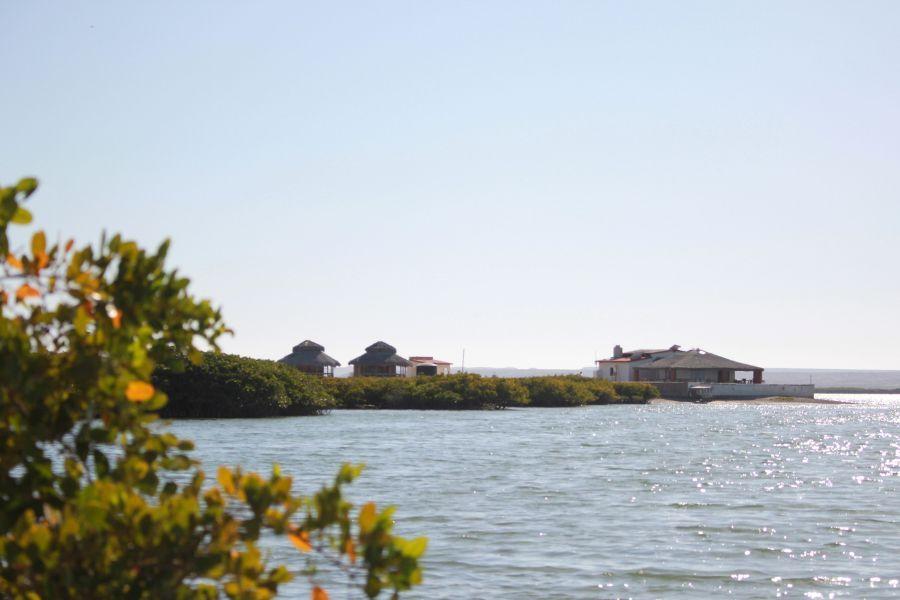 Cabins and restaurant of the Punta Abreojos Cooperative in Campo René. Source: Daniela Reyes.
Fishing communities depend on resources whose abundance, distribution and availability are increasingly difficult to predict. Faced with this scenario, adaptation ceases to be an option and becomes a necessity to survive.
“What climate change brought is a very large level of uncertainty. Now in all projections there must be risk management. The thing with climate change is that risk management is so impressive that none of the scenarios work. So, you have to think about how you're going to move. If you can move fast, you can adapt quickly,” said Ortiz.
For example, after the abalone crisis, the Punta Abrejos cooperative understood that depending on a couple of fisheries was a risk, so since then, a diversification process began to reduce its vulnerability.
One of the strategies was to strengthen oyster cultivation, an activity that has existed in the community since the 1970s. They have also promoted tourism projects with cabins, sport fishing, kayaking and diving.
At the same time, they seek to obtain greater economic value from other species that were not as important as verdillo before, a fishery to which they are incorporating post-harvest management techniques to access markets that pay better prices.
“Our vision has been more about fishing less, but selling it better,” explains Enríquez.
In this way, they went from extracting 1,200 tons of greenfinch per year, to the 700 that they currently extract. The logic is to obtain the best possible value from the captured product if capture volumes decrease due to environmental factors.
They also cultivate abalone for repopulation and to help the natural environment recover. “We haven't recovered yet, that's the reality, but we're in that process,” Enríquez said.
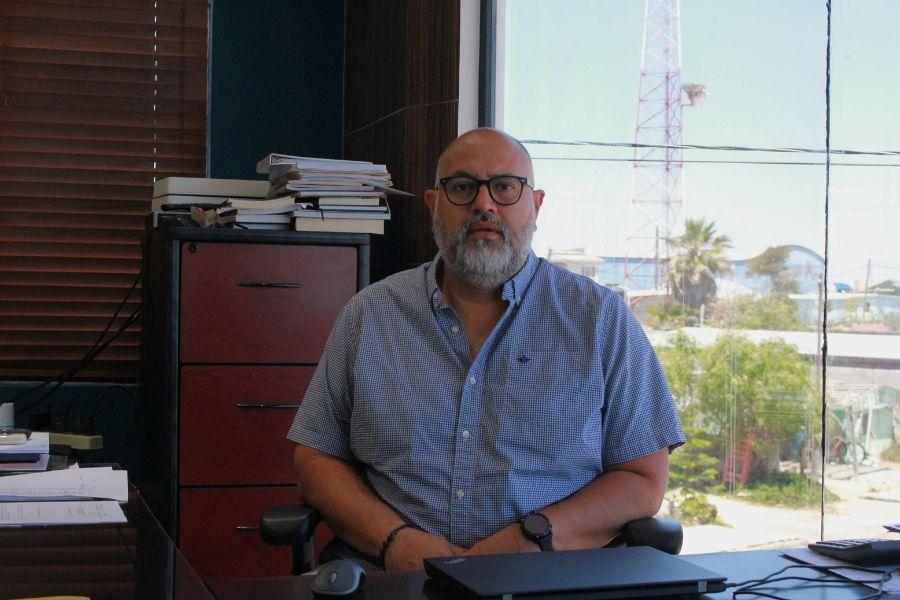 Eduardo Enríquez, secretary of the board of directors of the Punta Abrejos Cooperative Fishery Production Society. Source: Daniela Reyes.
In the case of the Punta Abrejos cooperative, they have been able to adapt to the new climate conditions with many complications, however, there are other cooperatives that are less favored than them.
Rafael Ortiz, director of the oceans program at Environmental Defense Fund (EDF) Mexico, warns that the capacity to adapt does not depend solely on fishermen, but that there are structural problems that increase their vulnerability and the difficulties to adapt.
In addition to climate threats, there are historic deficiencies in education, health, infrastructure and access to finance.
“The most vulnerable sector is coastal fishing. Our coastal communities in Mexico have already arrived with a very strong debt on the basic level of rights, with high vulnerability because they don't have the basics: education, health, infrastructure, and so on,” said Ortiz.
For this reason, specialists, organizations and authorities are working to build climate adaptation plans for the fishing sector. These instruments seek to guide public investments, strengthen monitoring systems and develop faster response mechanisms to extreme phenomena.
In Baja California Sur, the state government and various organizations are already collaborating in the development of a State Climate Action Plan for fisheries and aquaculture, as was done in Sinaloa and Yucatán.
“Strangely enough, fishermen are very adaptable to any change in situation, but the entire development ecosystem around them is not. That's where we have to work to make the adaptation process easy and fast,” said Ortiz.
The idea is that these plans help to label budget and personnel to act strategically with communities in the face of the effects of climate change as soon as possible. The state plan for Baja California Sur is under construction with the state government and the intention is that it will be published before the end of the current state administration (2027).
“Recently, the cooperative entered into a difficult process, both economically and with low production. But we said, there are two, we reemerge or we stay there. We have to understand the nature part, we have to play with the external part of how markets are moving. If we know how to adapt, I see a lot of future in it,” said Enríquez.


Comentarios (0)