
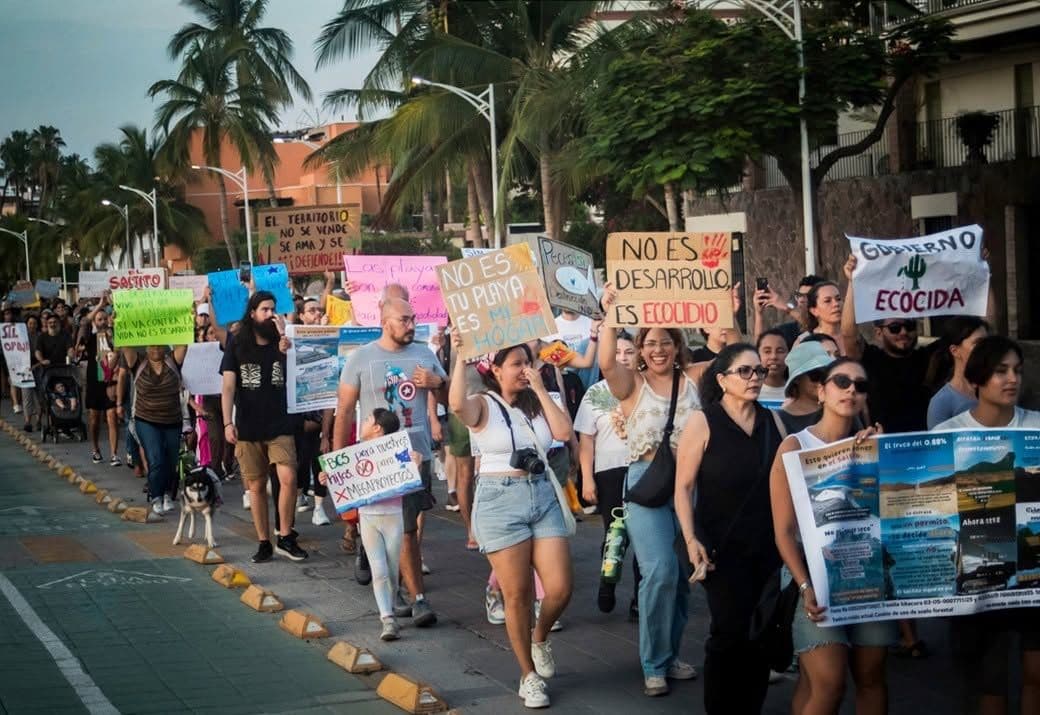
What began with the dissemination of an environmental file ended up becoming a citizen movement in defense of El Saltito, a coastal area located north of La Paz, Baja California Sur, where it was intended to build a tourism project for which it is necessary to change the use of forest land on 109,622 hectares. The movement has brought together civil organizations, specialists, academics and residents of La Paz.
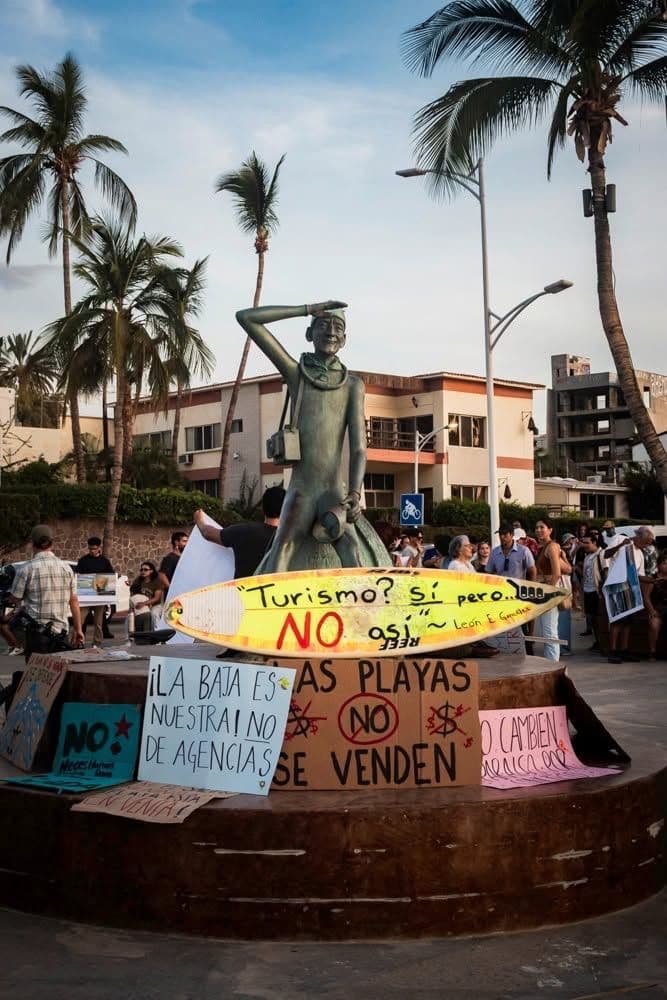
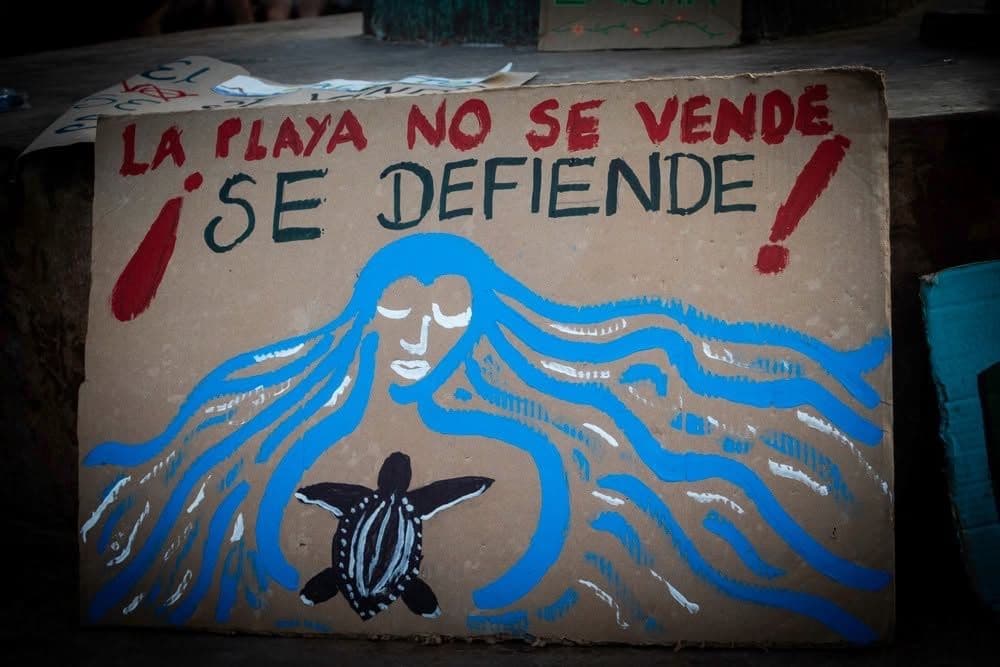
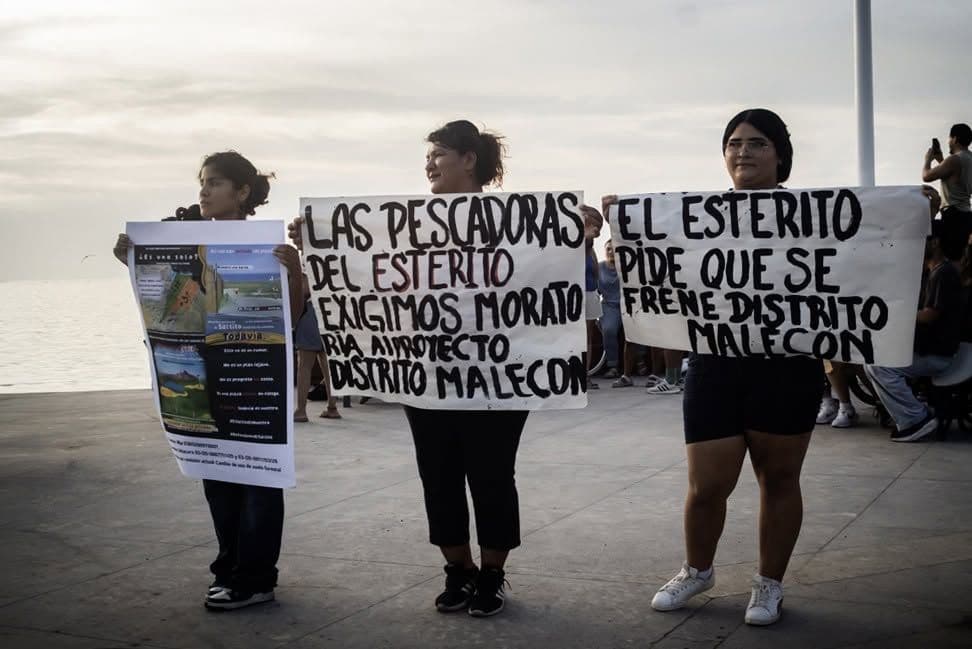
The most recent demonstration occurred last Saturday, July 25, when dozens of people marched along the boardwalk to demand that the Ministry of Environment and Natural Resources (Semarnat) deny the permission requested for El Saltito Second Stage, a development that includes residential lots, a hotel and part of a golf course.
However, the mobilization did not come about spontaneously. Over the past few weeks, organizations such as Cómo Vamos La Paz, Es Mi Playa, BCSicletos, CERCA BCS, Contain La Paz, Inga, the Initiative for the Seas and Coasts of Mexico (IMCM), Ponguinguiola and the UABCS Social Sciences Collaborative for Sustainability launched a campaign to inform citizens about the content of the environmental file, call for public participation and ask Semarnat to reject the change in forest land use.
You may also like: Civil society initiatives in La Paz fight for a clean sea of ghost networks
The file that detonated the organization
According to information released by the organizations, the procedure, currently under evaluation, would make it possible to disassemble 109,622 hectares of native vegetation to develop tourism infrastructure.
During the pronouncement made at the march, the participants pointed out that the technical study presented by the promoter itself recognizes the presence of approximately 110,000 plants, of which 31,800 are cacti, including about 17,400 cardones, in addition to 880 biznagas, classified as threatened species by NOM-059, and two species of lizards under some protection category.
“On the coast of El Saltito, less than 20 kilometers from La Paz, there is a mountain that took centuries to grow. Semarnat is currently evaluating a land use change permit on forest land that would authorize the razing of 109,622 hectares of that forest to make residential lots, a hotel and part of a golf course. It's not a vacant lot,” was part of the message read during the mobilization.
The participants also questioned the compensatory measures proposed in the study.
“What is offered in exchange is to reforest 30 hectares and accommodate dry branches in another five; less than one hectare restored for every three destroyed, on an ecosystem that does not return within a human lifespan.”
They also expressed doubts about the viability of species rescue.
“They promise to rescue cacti to replant them on surfaces currently devoid of vegetation, soil, shade and water. They don't present a single survival figure to support that promise.”
Read: The exclusive beach business in La Paz, BCS
“People organized themselves”
For Gabriela Ramírez, coordinator of the Territory of How We Are Going La Paz, citizen mobilization was born after the file began to circulate publicly.
“People were organized based on information about a process that is currently under review, which is the change in forest land use that Semarnat is reviewing. Let's hope it won't be approved. As soon as this information began to be disseminated, citizens organized themselves and today they are calling to speak out against this type of project.”
Ramírez explained that, although the development has an environmental history of more than 15 years ago, the procedure was recently reactivated.
“Although they have an Environmental Impact Statement more than 15 years ago, there had been no news that the project would be reactivated. Now they are taking the next steps and, if the land use change is approved, the following would be authorizations before the City Council; that is, to materialize this project”.
He added that the dissatisfaction goes beyond the specific case of El Saltito.
“As we have seen on networks and as we are seeing it with the people we are meeting, this is to speak out against this type of project, not just El Saltito.”
Among the demands made by the organizations are that Semarnat denies authorization for forest land use change, that the State Forest Council of Baja California Sur and the State Technical Committee for Land Use Change (COTECUS) issue a technical opinion against it, and that development be comprehensively evaluated.
“That development be evaluated completely, not in slices; it's called the Second Stage for a reason,” they said during the statement.
A project with a background
The controversy surrounding El Saltito didn't start this year. The development dates back to 2008 and 2009, when Semarnat evaluated the first manifestations of environmental impact for a tourist complex in the area.
Now, the procedure that keeps organizations and citizens on alert corresponds to a request for a change in forest land use, considered an indispensable step for the development of the project.
Don't miss: Protect Balandra with less than 300 pesos a day
The position of the City Council
While citizen mobilization continues, the City Council of La Paz reported that there are no municipal procedures related to the project.
The general director of Integral City Management, Kenia Cervantes, assured that the municipal government has not received requests for licenses or permits and confirmed that the Department of Environment issued a negative opinion during the consultation process carried out by the federal authority.
“At the City Council we have not received any request for processing and we don't have any history of any procedure, license or permit. There is no authorization.”
The official added that the City Council requested official information from Semarnat about the status of the procedure and that, according to the information received, there would be a possible withdrawal of the procedure by the sponsor, although she clarified that this information must be confirmed by the federal agency.
“They inform us that even, well, we would have to confirm it with them, but the information we have is that there would be a withdrawal on the part of those who request the land use change project.”
Until press time, Semarnat had not publicly reported a definitive resolution on the file or officially confirmed the alleged withdrawal mentioned by the City Council.


Comentarios (0)