

The Federal Expenditure Budget Project (PPEF) 2027 proposes a real reduction of 27.57% in resources allocated to the adaptation and mitigation of climate change, in a context of extreme weather events whose intensity and frequency affect the national territory, according to the Observatory on Climate Crisis and Public Budget in Mexico.
Transverse Annex 16 (AT16) would have 160,120 million pesos for the next fiscal year, a reduction of almost 30% compared to what was allocated in 2026. In addition, 34% of the resources in the annex are concentrated on the Railway Infrastructure program for cargo and passenger transport, on the grounds that public transport reduces fuel consumption and greenhouse gas emissions.
“This is equivalent to 16 times more resources than the set of programs aimed at protecting forest ecosystems, protected natural areas and dealing with natural disasters,” says the Climate Crisis Observatory.
The annex contains a total of 51 budgetary programs, of which five concentrate 80% of resources, such as railway infrastructure. Among them is also Sowing Life with 25.29%; infrastructure for drinking water, sewerage and sanitation, 8.48%; comprehensive and sustainable water management, 6.29%, and economic hydrocarbon infrastructure, 6.02%.
The rest of the programs that make up AT16 share 20% of the budget. For the Observatory, this distribution raises the need to review the relationship between resources counted as climate expenditure and actions that contribute to national adaptation and mitigation goals, since the programs that receive the highest allocations “do not necessarily contribute effectively” to the fulfillment of those objectives.
The distribution by branch shows that Infrastructure, Communications and Transportation would concentrate 34% of AT16 resources; Environment and Natural Resources 31%; Welfare 25% and Pemex 7%.

Meanwhile, AT16 incorporates resources for 2027 related to the Nationally Determined Contribution (NDC 3.0), which establishes a reduction goal of between 364 and 404 million tons of carbon dioxide equivalent by 2035.
It also includes a new axis of security and climate change, in addition to components related to loss and damage, cross-cutting climate policy and an enabling environment that includes funding, technology and capacities.
Within this structure, 83.5% of the resources correspond to mitigation actions, while 9.65% are allocated to adaptation, 6.43% to the enabling environment and just 0.44% to loss and damage. For this reason, organizations highlight the need to finance the latter category to address climate impacts that exceed the capacity of communities to adapt.
In contrast, without considering a transfer of 81.103 million pesos that the Ministry of Energy will make in favor of Pemex, the public company's budget amounts to 678.7 billion pesos, considering programmable and non-programmable spending. This amount is equivalent to 6.8% of the total national budget planned for 2027, compared to 1.5% represented by Transverse Annex 16.
“This budgetary distribution shows a discrepancy between the discourse that the Government of Mexico brings to international spaces, such as the United Nations Framework Convention on Climate Change (UNFCCC), where it has presented more ambitious goals in terms of mitigation and adaptation, and the budgetary effort actually aimed at ensuring effective compliance with these goals, which in practice continues to promote an energy model based on fossil fuels that deepens the climate crisis,” say those who make up the observatories such as Oceana, Cemda, Greenpeace and Fundar.
In addition, they point out, there is still a lack of specific climate change indicators for cross-cutting actions. This absence makes it difficult to determine the concrete contribution of resources labeled within AT16 to meeting climate objectives.
In general, the budgetary decline has implications for the country's capacity to respond to extreme events and strengthen socio-environmental resilience, the observatory warns in its analysis of the economic package.
In addition to the reduction in the budget, there is the elimination of gender-related programs. The proposed AT16 for 2027 excludes programs P059 and S319, aimed at substantive equality and women's well-being, which were included in the fiscal budget of 2026.
You may also like: The ocean accumulates 100 days of record heat; the Gulf of Mexico records unprecedented temperatures
Energy transition, just 0.36% of resources
PPEF 2027 proposes 20,289 million pesos for Transverse Annex 15 (AT15), corresponding to the National Energy Transition Strategy.
The amount represents a real increase of 9.61% compared to 2026, although it is equivalent to only 0.36% of the resources of the transversal annexes and places AT15 in the penultimate place by amount.
The AT15 budget is also concentrated on a few programs. Almost 89% is found in railway infrastructure for cargo and passenger transport, with 43.26%; economic electricity infrastructure, with 34.76%, and administrative support activities, with 10.89%.
The Observatory states that this distribution makes it necessary to identify what proportion of the resources counted as an energy transition is effectively aimed at transforming the energy system, reducing emissions and accelerating a just transition.
In addition, the National Energy Transition Strategy (ENTE) remains unpublished. The decree published in March 2025 established a maximum deadline of 365 calendar days to issue it. The lack of this instrument makes it difficult to establish a route with which the correspondence between energy planning and the budgetary resources of the AT15 can be evaluated.
The AT15 also includes resources for Pemex equivalent to 5% of the total of the annex. PPEF 2027 plans to finance energy transition projects included in the company's Strategic Plan 2025—2035.
The observatory points out that the available public information on this plan focuses on hydrocarbon exploration, extraction, processing and exploitation activities, as well as the associated infrastructure.
Faced with this scenario, the organizations propose that the Congress of the Union review the allocation of climate resources to ensure their verifiable relationship with the goals of the NDC, establish indicators for cross-cutting actions, strengthen adaptation programs and ensure the incorporation of gender and human rights approaches in climate policy.
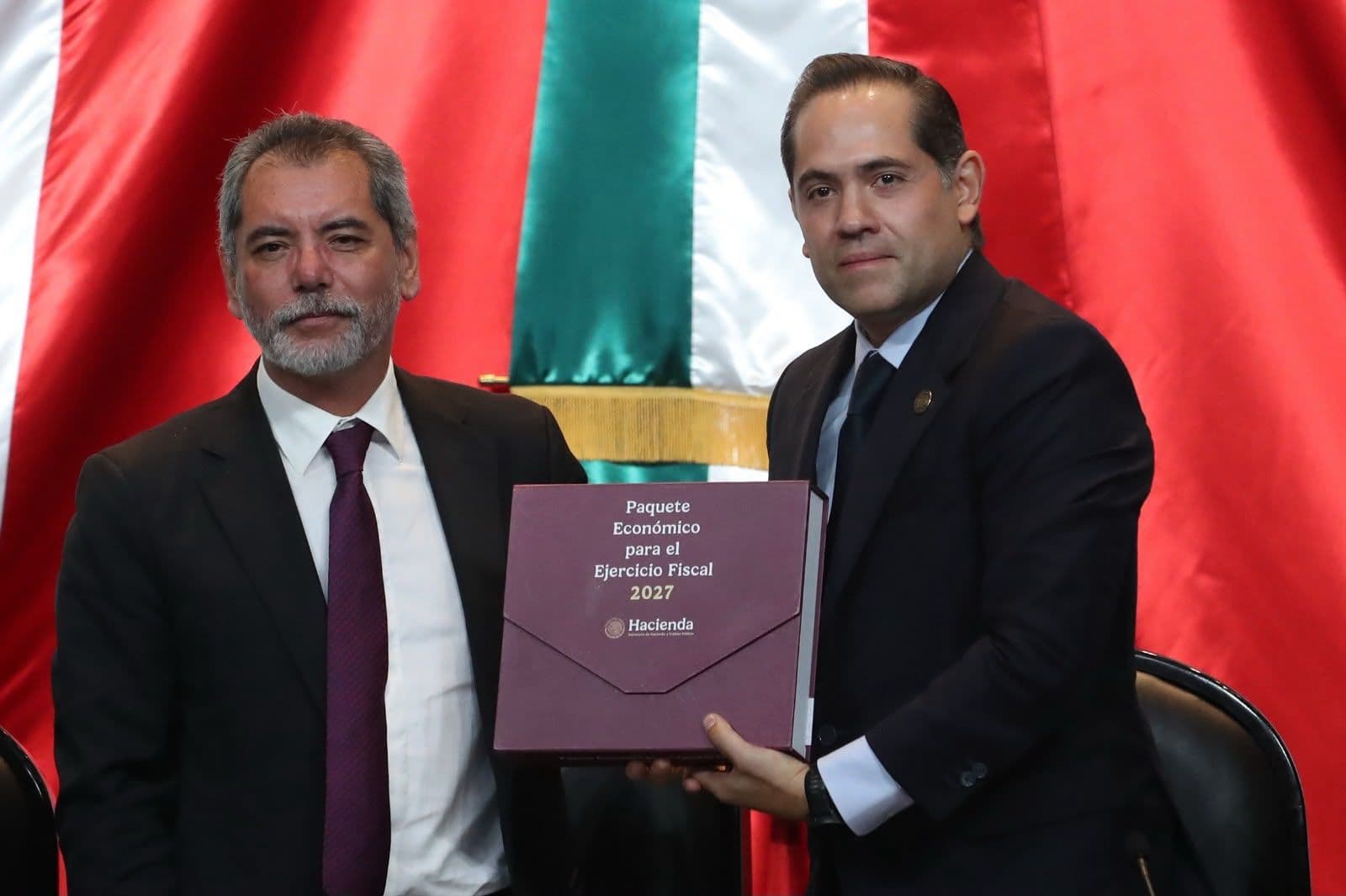
After the delivery of PPEF 2027 on September 8, the Chamber of Deputies will begin the analysis and discussion of the project. While the Revenue Act must be approved by the Chamber of Deputies no later than October 20 and by the Senate on October 31, the Expenditure Budget, whose approval corresponds exclusively to the lower house, must be approved no later than November 15.
Don't miss: Pozo Krem-1: Six months of an unending tragedy in Veracruz


Comentarios (0)