
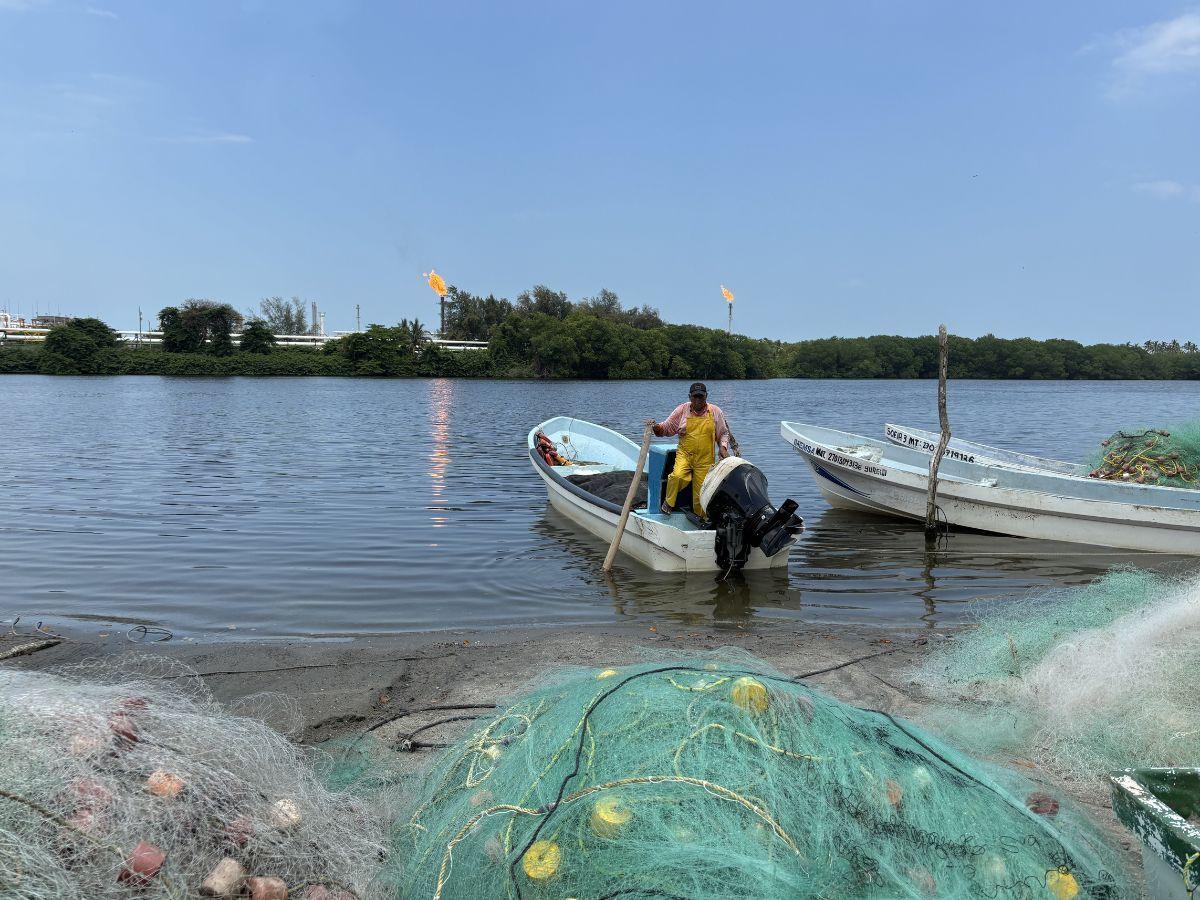
Gulf spill, insecurity, absent tourism and fishing in crisis.
You are an inhabitant of Paraíso, you breathe a strong smell of gas every day, as if the burners of thousands of stoves were completely open. Inside and outside your house you can hear a sound equivalent to the turbines of hundreds of planes. There are days when you don't even hear your family talking and they shout to hear each other a little. Every now and then you feel vibrations on the streets, your neighbors have cracked windows and walls.
At what point did this happen if you used to breathe clean air and your place to live was quiet? Yes, there is an answer for this and that was when the Olmeca Dos Bocas Refinery arrived.
Your house is in one of 44 localities, five urban and 39 rural, in the municipalities of Paraíso and Comalcalco, considered as areas of direct influence of the project, according to the Social Impact Assessment.
Four years ago your environment was different. You breathed clean air, tourism was your main source of income, you saw how your neighbors, restaurant owners, couldn't get enough; seafood, all sold out and above all, they lived without fear. And before you had refinery processing plants near your house, there was immense coastal vegetation, everything was green and you could find birds of various species, reptiles and mammals.
Now a memory full of nostalgia remains of all this.
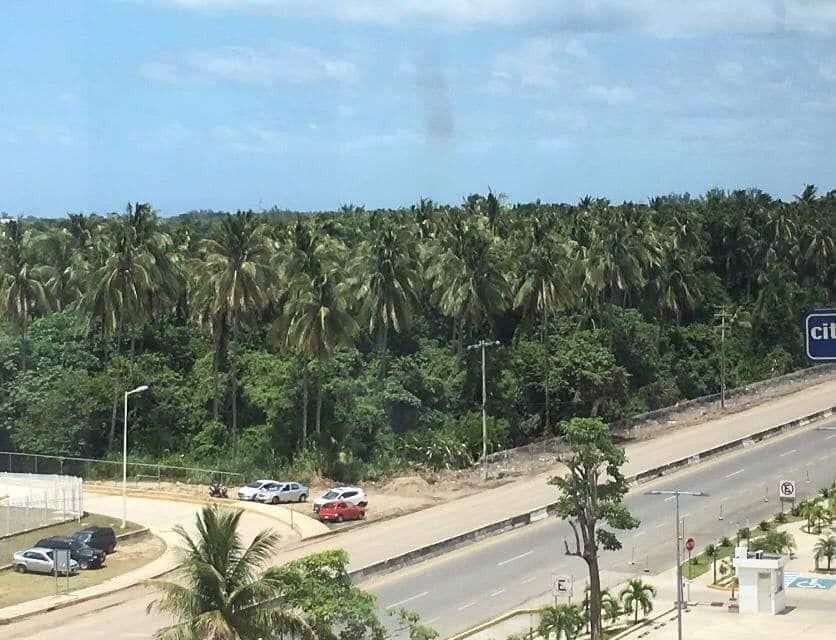 It's the land before the Refinery. Photo: Jalpa Uncensored News.
An oil spill was recently detected since February, according to the Marine Hydrocarbon Detection and Monitoring System and in places like Puerto Ceiba, the chapapote did not arrive or not as a thick black spot in the water.
Joaquín Madrigal Olán, of the Federation of Cooperative Societies for Fishery and Aquaculture Production El Faro, F.C de R.L, recognized the direct and indirect damage to thousands of fishermen and families who depend on fishing, and who have been forced to suspend their work, losing their main source of income.
Added to this is an equally serious indirect impact: the lack of clear and timely information, which is discouraging the consumption of seafood, even those that come from unaffected regions.
This situation is impacting retailers, distributors and restaurants, particularly during one of the most important seasons of the year, such as Holy Week, when the consumption of fish products increases.
 Some of the splash waste on the beaches of Tabasco. Photo: Fishermen from Tabasco.
Disinformation is causing a drop in demand, even for those who operate in apparently pollution-free areas.
Faced with this scenario, fishermen call on the authorities to precisely delimit the affected areas, based on technical evidence and constant monitoring
They also consider strengthening public communication, clearly differentiating between affected and unaffected areas, to avoid unnecessary impacts on the market and, above all, to include the fishing sector in working groups, technical or interdisciplinary groups coordinated by the Federal Government, that address actions to remedy this impact.
The conversation
The news that dominates the conversation in Paraíso today is the oil spill in the Gulf of Mexico.
As the days went by, the oil stain began to spread along the Gulf coast, mainly affecting the coasts of Veracruz and Tabasco.
By the end of the month, the environmental disaster already covered more than 600 kilometers of coastline.
 Fishermen organized themselves to pick up the splash. Photo: Fishermen from Tabasco.
While the Federal Government announced the creation of an interdisciplinary group to investigate the origin of the spill and determine its scope, basic questions persisted in coastal communities: where did the crude oil come from? if the leak had been contained? Who would be responsible for the damages?
Without a doubt, these figures, more than 600 kilometers of affected coastline, take on another dimension when the problem occurs in front of your house and the sea you look at every day begins to look different.
Holy Week without tourists
It's the first Monday of the Holy Week vacation, one of the busiest tourist seasons on the Mexican coast and Paraíso was no exception years ago.
At this time, restaurants tend to double tables, the waterfronts are filled with visitors and fishermen find one of the best times of the year to sell their products. This time it's not like that.
Paradise is seen with few people. In places like Puerto Ceiba, El Bellote, Barra de Tupilco and the town of Chiltepec, which receive hundreds of visitors every year during these days, the activity is almost non-existent, with two or three families distracted by the national news arriving.
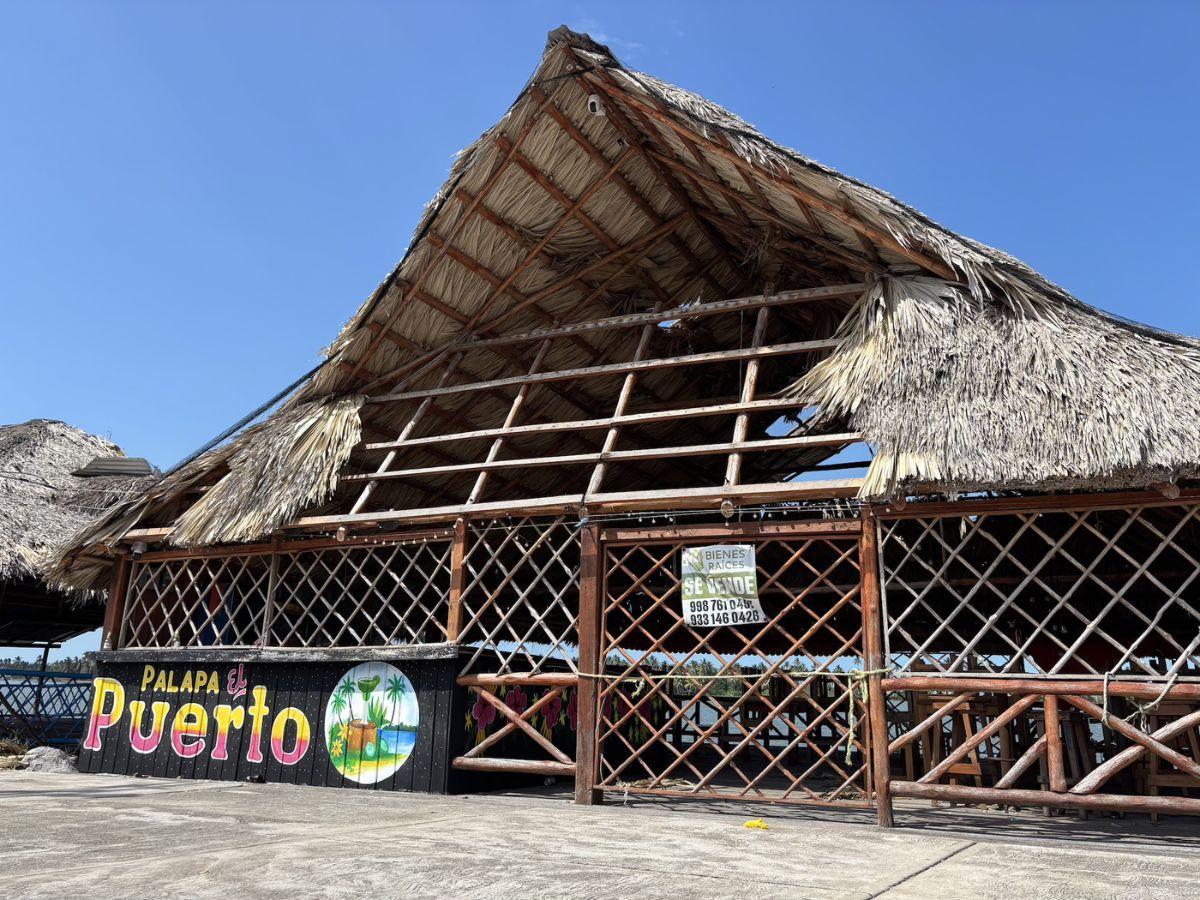 Businesses closed in the middle of the Holy Week season. Photo: Itzel Chan.
Restaurants with empty tables. Shops open, but with little movement. Boats that didn't go out and those that did, return without knowing where they can sell what they catch. On the roads, oyster women finish off their bags at 20 pesos per kilo.
Some of the drop in economic activity, residents say, has to do with uncertainty.
In the absence of clear information about the extent of the spill, versions began to circulate warning that all Tabasco beaches and fish products were contaminated, without official studies to confirm the version.
In this confusion, the perception of risk ended up hitting local economies squarely.
“Our dissatisfaction is that we have had pollution for a long time and our dissatisfaction is because there is no one who gives us the necessary attention and support, such as to study the waters, the oyster banks, wherever we are. The truth is, we ask for support from the appropriate authorities to support us so that we can have a better income for our families,” said Álvaro Wilson de la Cruz, president of the Andrés García Cooperative Fisheries Production Society, in the community of El Bellote, representing 379 members.
For many inhabitants of Paraíso, the problem did not start with the splash, the environmental and social deterioration dates back years.
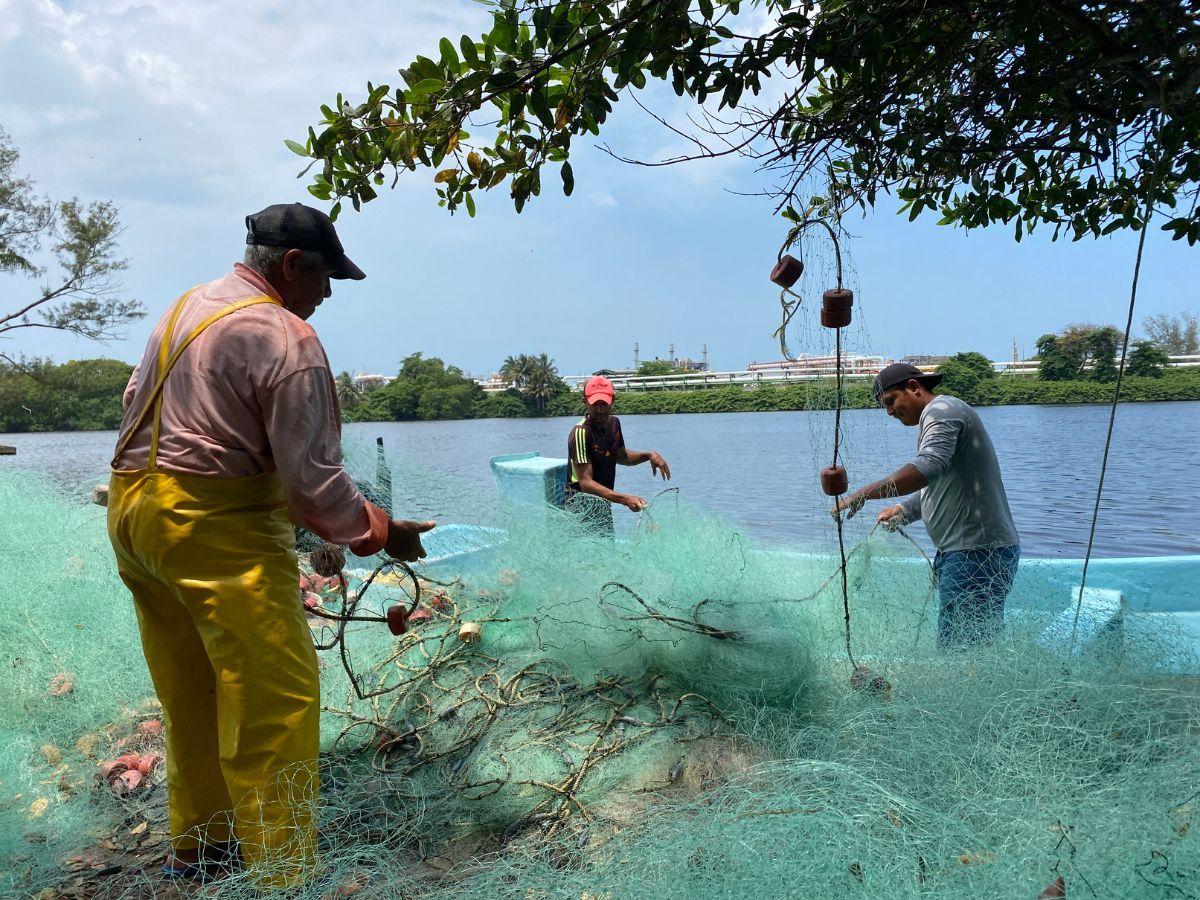 Fishermen work behind the Refinery's backs. Photo: Itzel Chan.
The bonanza that happened too quickly
Many place the turning point in 2019, when construction began on the Olmeca refinery in Dos Bocas, a few kilometers from the city.
At first it was a boom because workers arrived from different states and countries such as China, the demand for housing rent increased, restaurants, hotels and businesses opened. For several years the local economy revolved around the work and less than a decade later the picture is different.
There are squares with empty premises, unfinished buildings, businesses that closed after the initial boom.
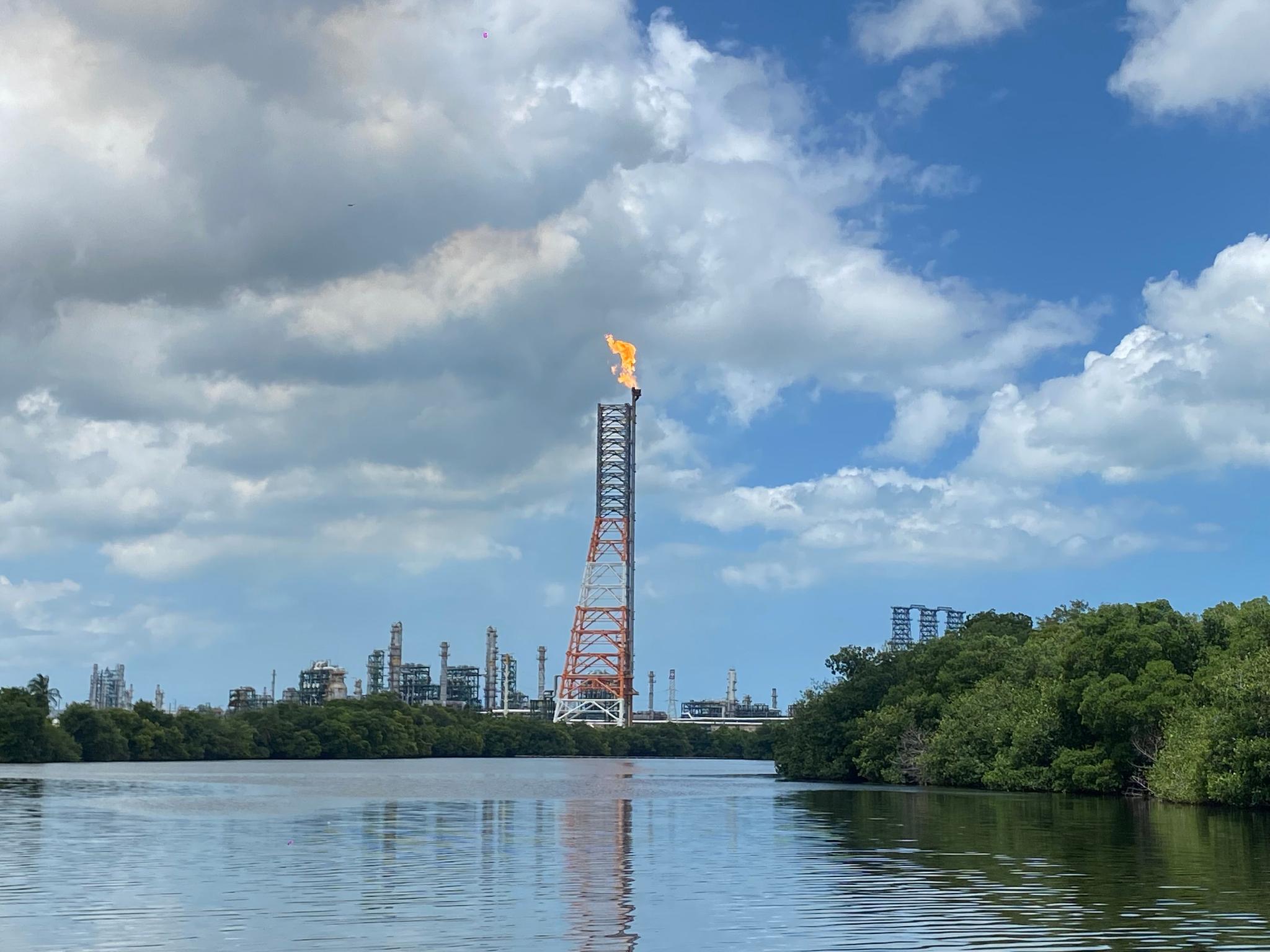 The Refinery is in the middle of the entire community. Photo: Itzel Chan.
In the community of Nuevo Torno Largo, a few kilometers from Paraíso, the contradiction can be seen clearly.
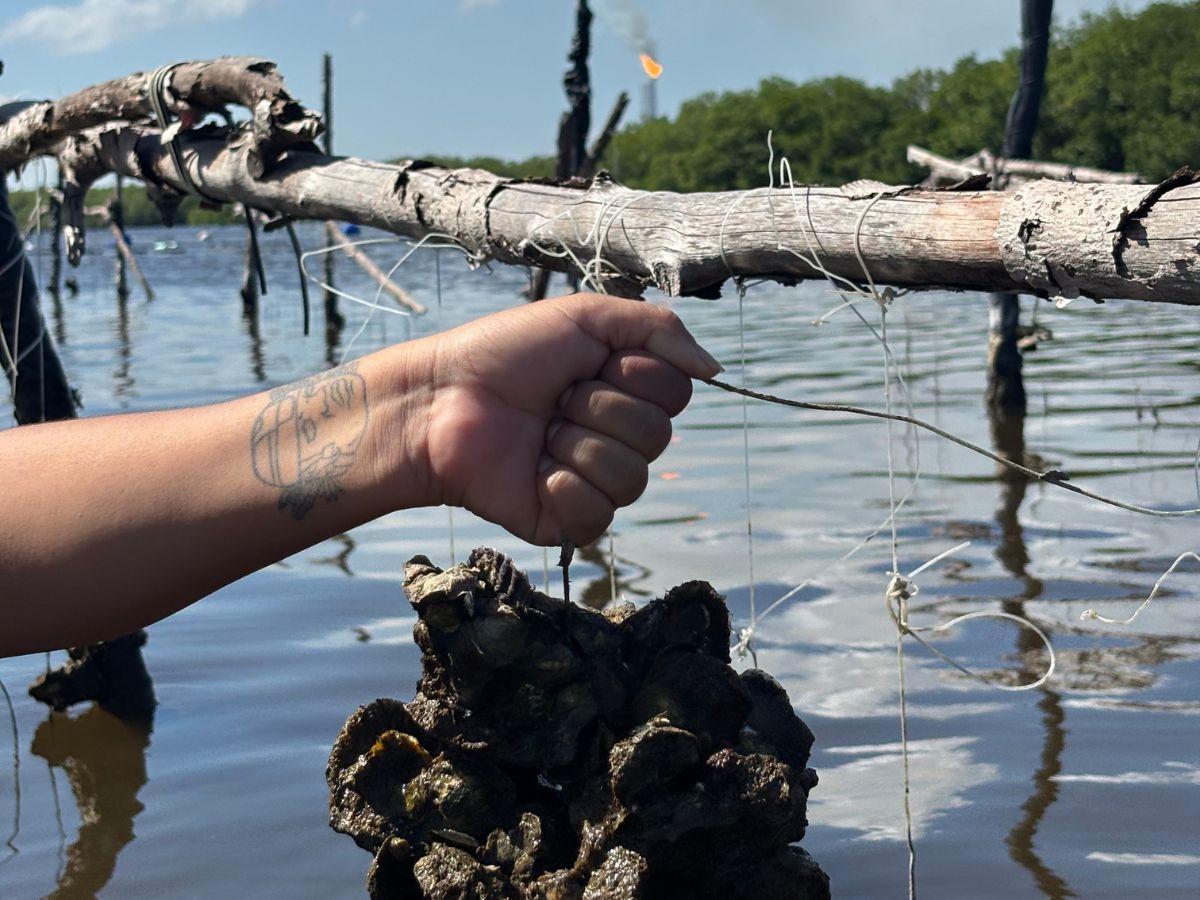
Don Saúl, 60, has a small palapa with tourist services in front of the coastal lagoon. Crossing the water, industrial lighters are raised, which burn gas day and night.
From the beach, from the lagoon, from the center of the community you can see the flame.
Don Saúl works in activities related to the refinery, although he is now thinking about retiring. He says that working for the project leaves him a specific salary on a regular basis, but he recognizes that his location means “a time bomb” for the community.
Less oyster, more uncertainty
For anglers, in addition, the situation has become increasingly difficult. Álvaro Wilson recalls that oyster production in the region has fallen dramatically in recent years.
Before, he says, oyster banks could produce hundreds of thousands of pieces per week. Today the quantities are much smaller.
“Today at least we deliver 60, 80 or a maximum of 100 thousand and sometimes, as he says, that is with effort. The Mecoacán Lagoon has dropped to 20 or 30% of capacity and we are four cooperatives in the Lagoon that have a soil oyster permit. These four cooperatives have a thousand people and if all of us get into the lagoon, we're going to finish it. That's why we ask for support from the competent authorities to help us to repopulate the lagoon,” he said.
It is overexploitation, pollution, changes in currents or alterations in the lagoon system. But the truth is that there are no recent studies that allow us to understand precisely what is happening.
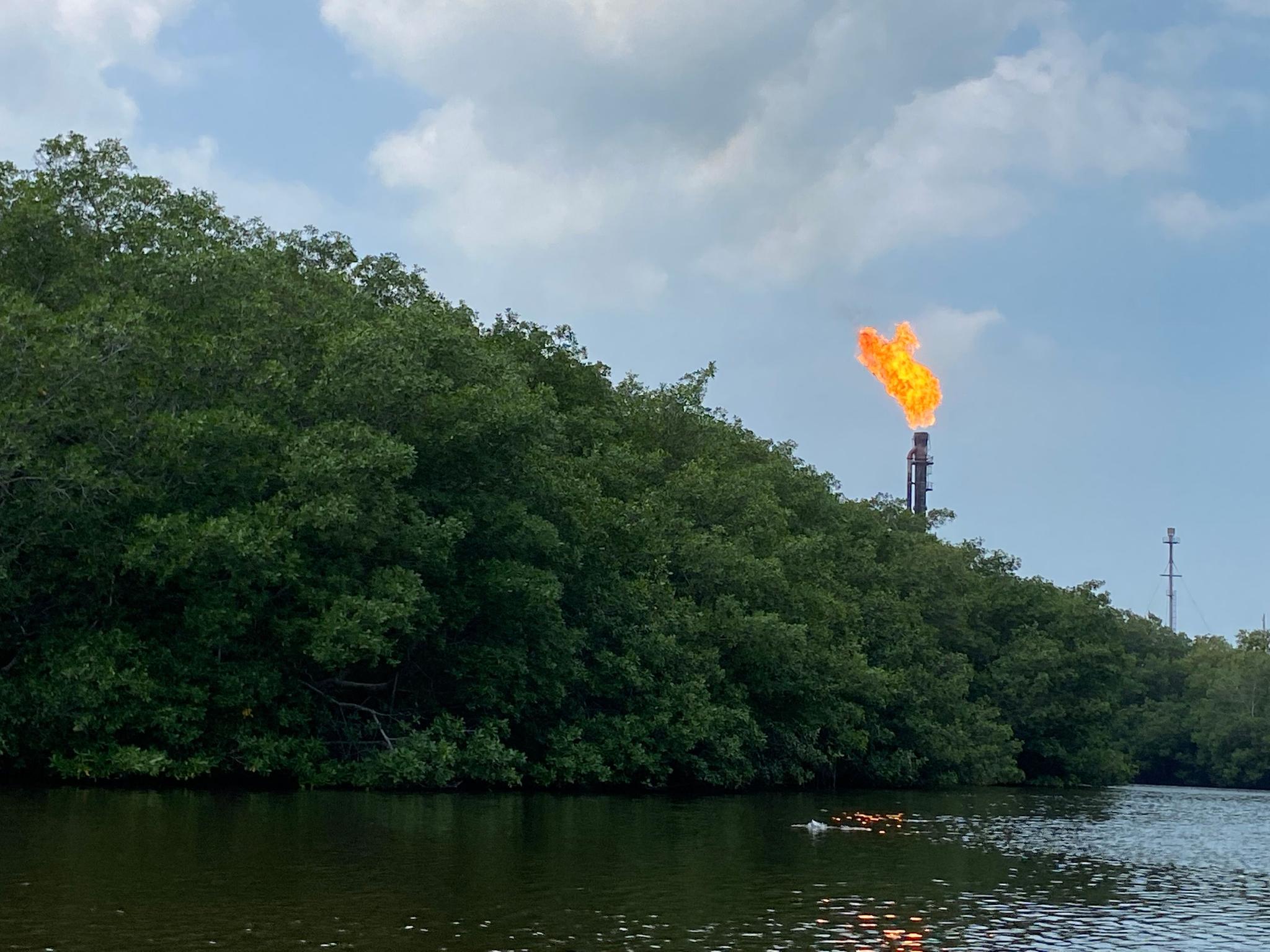 The traces of the Refinery can be seen from the mangroves. Photo: Itzel Chan.
“Today we are looking at this spill that is here on the coast of Tabasco and part of Campeche. A spill that is affecting, but that today they minimize it because what they say is that there is no. It hasn't arrived here, but in the Cupilco bar there is, but everyone turns a blind eye and the environment is the one that is hoarding all the pollution,” he said.
According to him, for some time now, fishermen have requested environmental diagnoses and oyster restocking programs to recover natural banks.
In addition to the drop in production, there is now the indirect impact of the spill, because the crisis is also being experienced on dry land.
“I am addressing President Claudia Sheinbaum, I am addressing the governor and I am addressing the municipal president of Paraíso. We need to talk, we need them to come to see that the fact that what we say is not a lie, that is, we do not have the tourism that we were really waiting for for our families to be beneficiaries. We need a plan B,” said Horacio Wilson Naranjo.
At the wooden tables of the fishing cooperative, women who have been part of an invisible activity in the economy of the sea meet every morning.
Women are oyster cutters
They wake up very early and in addition to their household chores, they meet at the fishing cooperative and organize to extract and shell the oyster.
Some accompany their husbands to fish for other species such as liseta, snapper, sea bass and oysters.
They observe that there are no longer as many species as before and those that they manage to remove can no longer find a place to sell their product.
They ask the government for stroke prevention programs, even more financial support because what they have now is not enough because it is given to them annually and they have school-age daughters and sons of different grades.
Sometimes, they explain, they have had to divide what little they achieve. Two mojarras for a family of five. When the money is not enough, the women in the village themselves help each other because they lend themselves rice, beans or noodles to complete the day's meal.
“There are families that go to sleep as they woke up, without eating. Sometimes they have had to share two mojarras between a family of five, just to name one example. They don't have economic alternatives,” said Rosalinda Montejo de la Cruz.
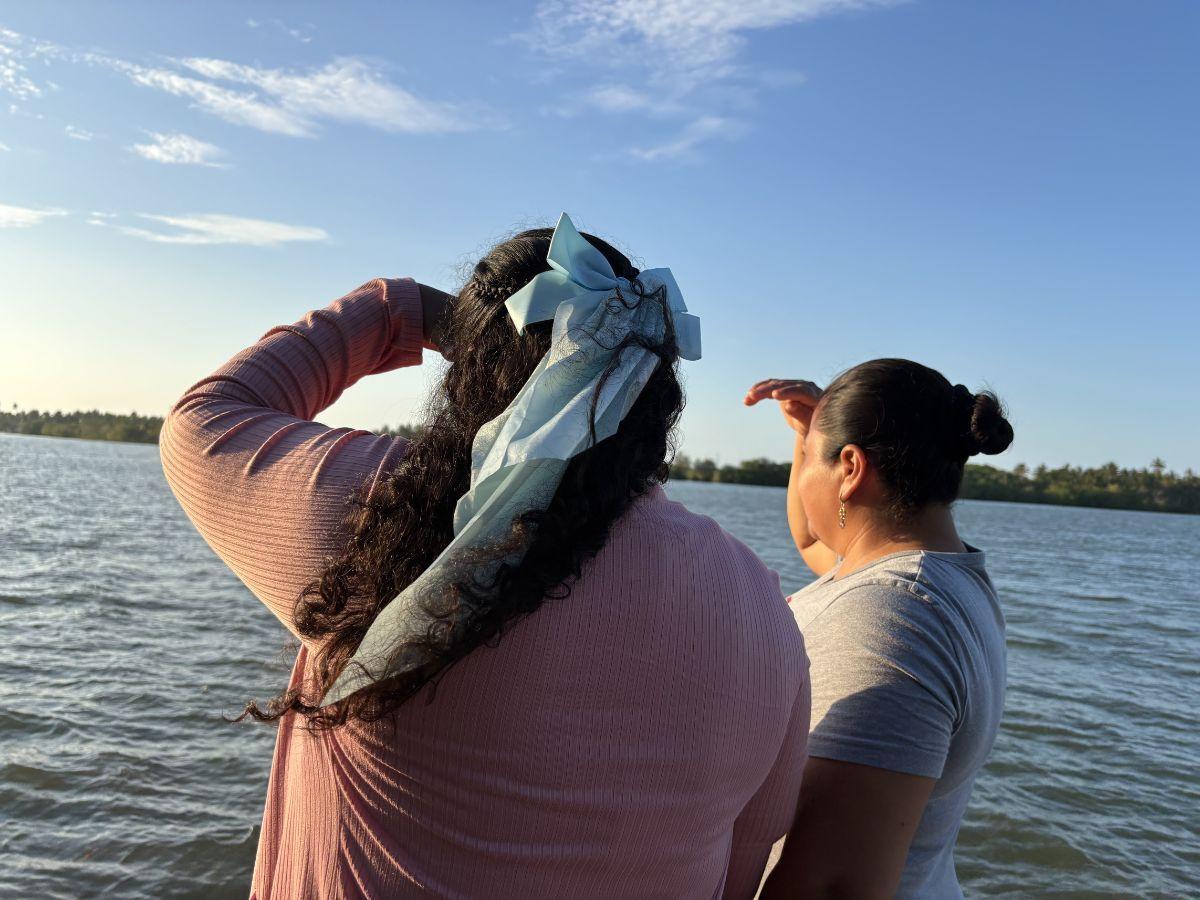
Two of the women oyster cutters in Tabasco. Photo: Itzel Chan.
They are calling for spill prevention programs, environmental diagnostics and also temporary employment programs to support families when fishing stops. Many have school-age children and say that current support is insufficient.
They say they have become used to the strong smells, constant noise and vibrations that are sometimes felt on the ground.
Between pollution, the fall in fishing and the increase in crime, life in Paraíso became uncertain.
“Nobody leaves after six in the afternoon,” he says. For them, the municipality lives in permanent tension.
Oil in exchange for oil
Although the water appears to be clean in some areas, fear among consumers has reduced sales.
Miguel Ángel Carrillo, a fisherman and merchant in the area, says that Lent is usually one of the strongest seasons for the sale of fish and seafood. But this year the opposite happened.
“The truth was that sales did affect us. It has even affected us in tourism, restaurants, everything. All because people think that seafood is contaminated,” he said.
In some cases, anglers have had to keep product in freezers or sell it at a lower price.
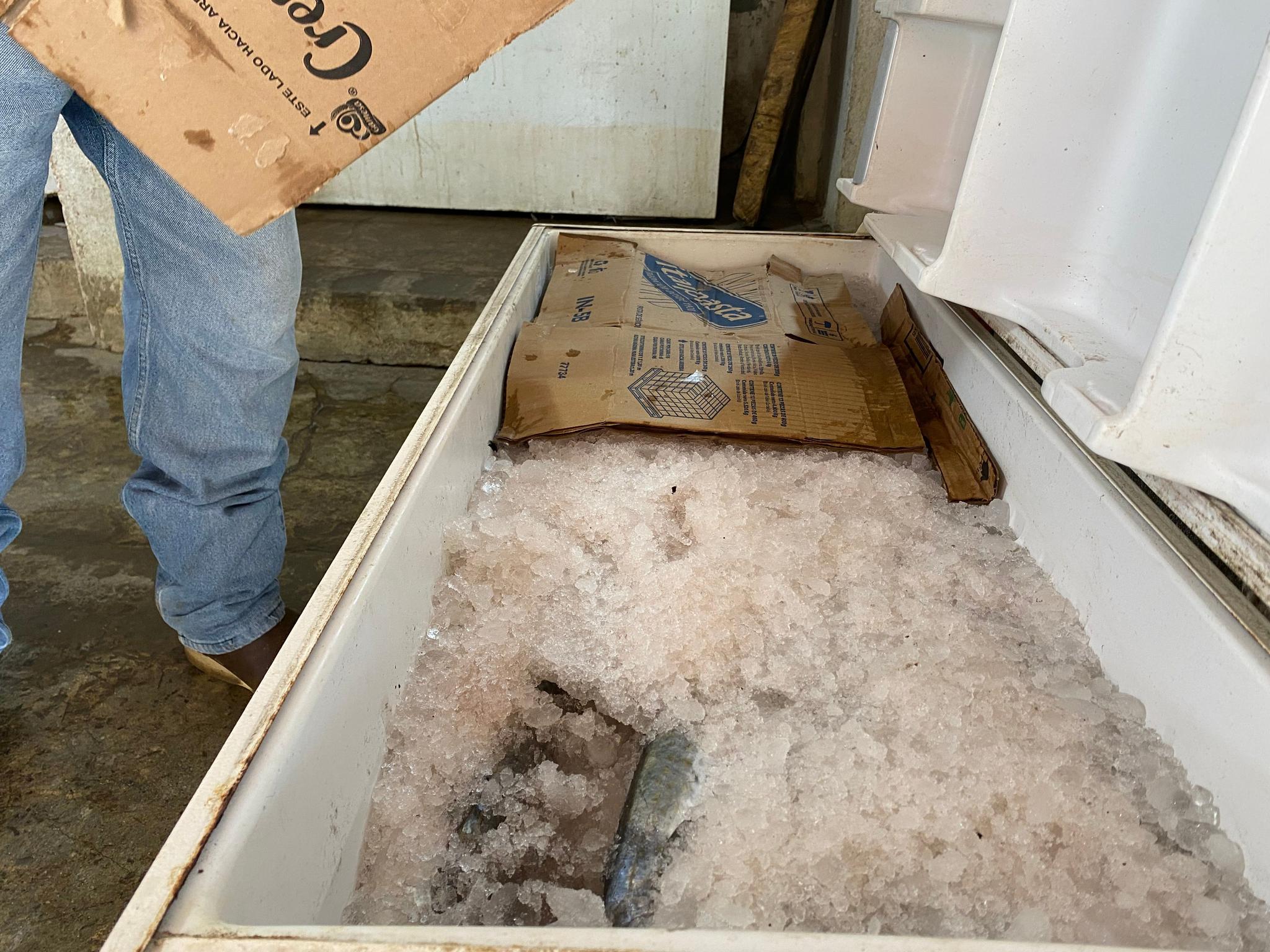 Refrigerators full of ice and fish products this season. Photo: Itzel Chan.
Rufino Lara Wilson says that although not all communities have had direct contact with the oil spill, the perception of the spill has affected the entire region.
“What affects us producers is that markets are closed. And they are closed because of the contamination that is already known, but for example now that the chapapote has not arrived, still no one arrives and the producer is just turning around with his product; he has no market to sell it because he lives on that,” he said.
Impacts on health
In southeastern Mexico, there are babies who start life prematurely, underweight or with malformations. It is the result of an industrial practice that burns day and night: the burning of fossil gas in lighters.
A study prepared by CartoCrítica and the Mexican Center for Environmental Law (CEMDA) documents what communities have reported for years without being heard, and that exposure to these emissions is associated with serious effects on the health of newborns in states such as Tabasco, Veracruz, Campeche and Chiapas.
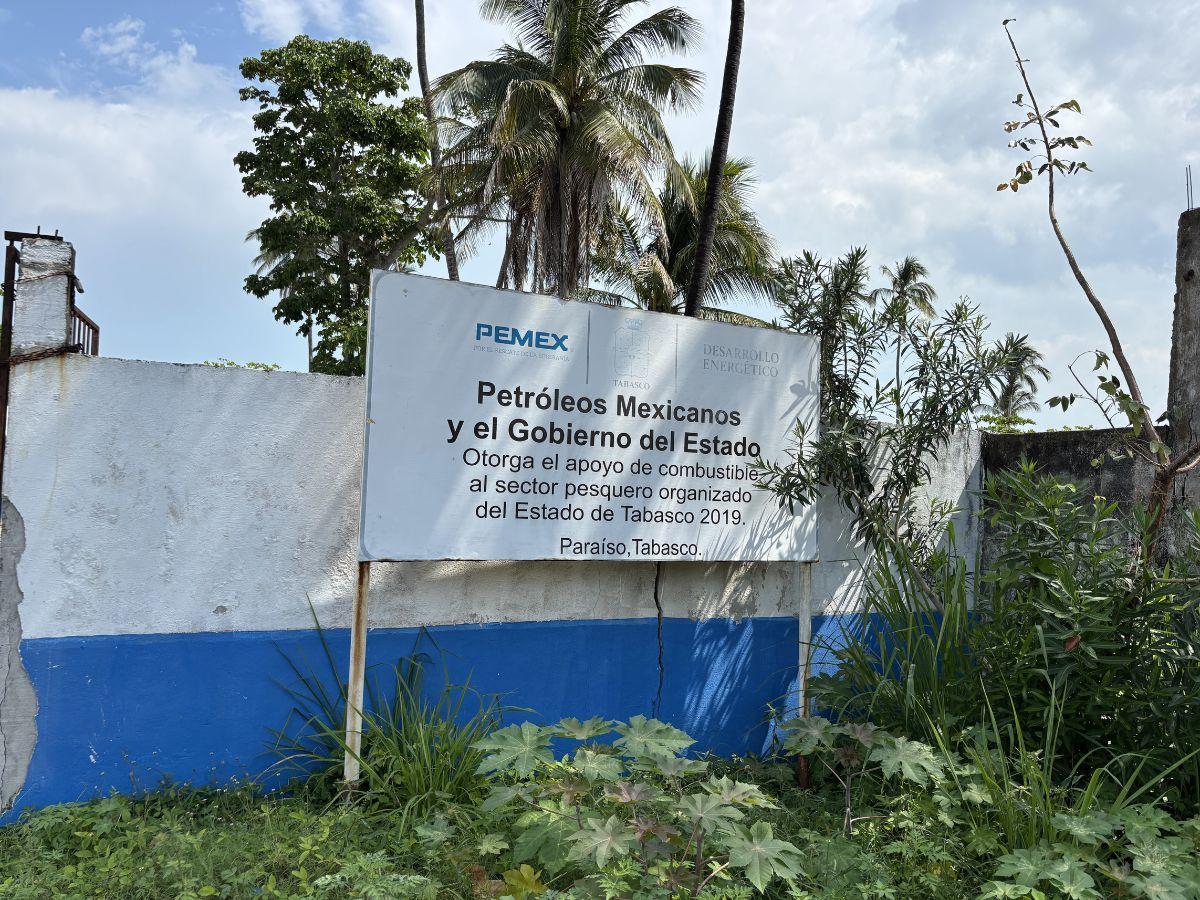 Pemex provides annual support to fishermen. Photo: Itzel Chan.
In areas with high exposure to lighters, the risk of chromosomal anomalies increases by 87% and that of congenital malformations by 84%. Added to this are premature births, underweight and smaller height at birth. The impact occurs even before the first breath.
“This isn't an assumption: it's data. Gas burning has been sick since before birth. Communities that live near lighters cannot continue to be treated as slaughter areas,” warned Manuel Llano, from CartoCrítica.
The combustion of gas at these sites releases highly toxic pollutants such as benzene, fine particles, methane and sulfur oxides, substances linked to respiratory and cardiovascular diseases, cancer and alterations in fetal development. However, the practice continues as part of the current energy model.
More than 80% of gas burning in Mexico is concentrated in the Southeast, a region where rural communities, many of them indigenous, live close to oil infrastructure without access to information, constant monitoring or effective protection mechanisms.
In this context, territories become zones of sacrifice because they are spaces where the cost of energy development is measured in bodies, diseases and vulnerable children.
* This article was written by Itzel Chan, who covers coastal communities thanks to the support of the Report for the World program .


Comentarios (0)