
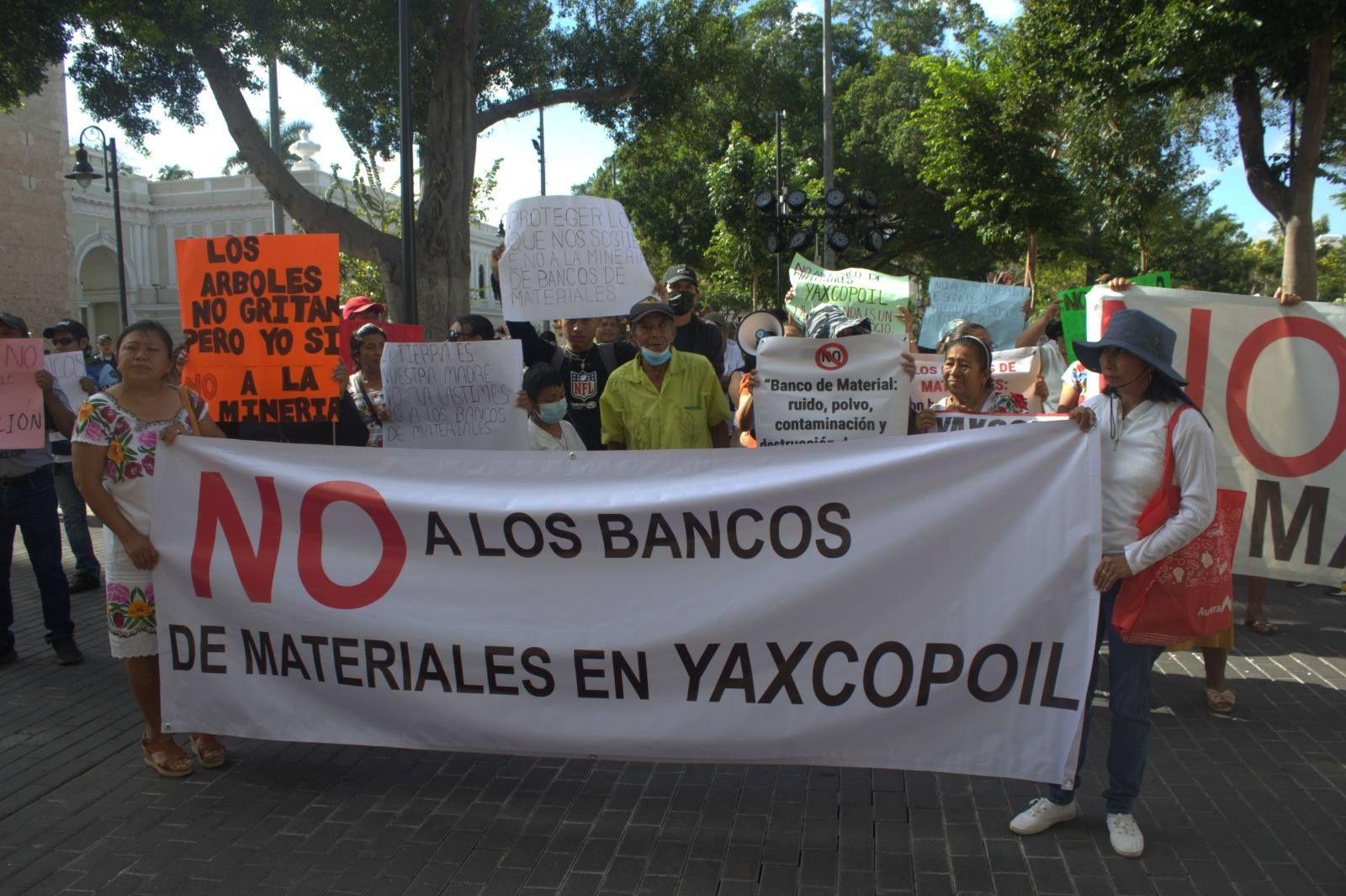
Throughout the state of Yucatán, dozens of material banks, which are sites where limestone, sascab and other aggregates are removed, operate to supply the growing construction industry. Behind this activity, which feeds roads, subdivisions and megaprojects, there is a problem that is advancing and that is environmental degradation, the irreversible transformation of the territory and, increasingly, community resistance.
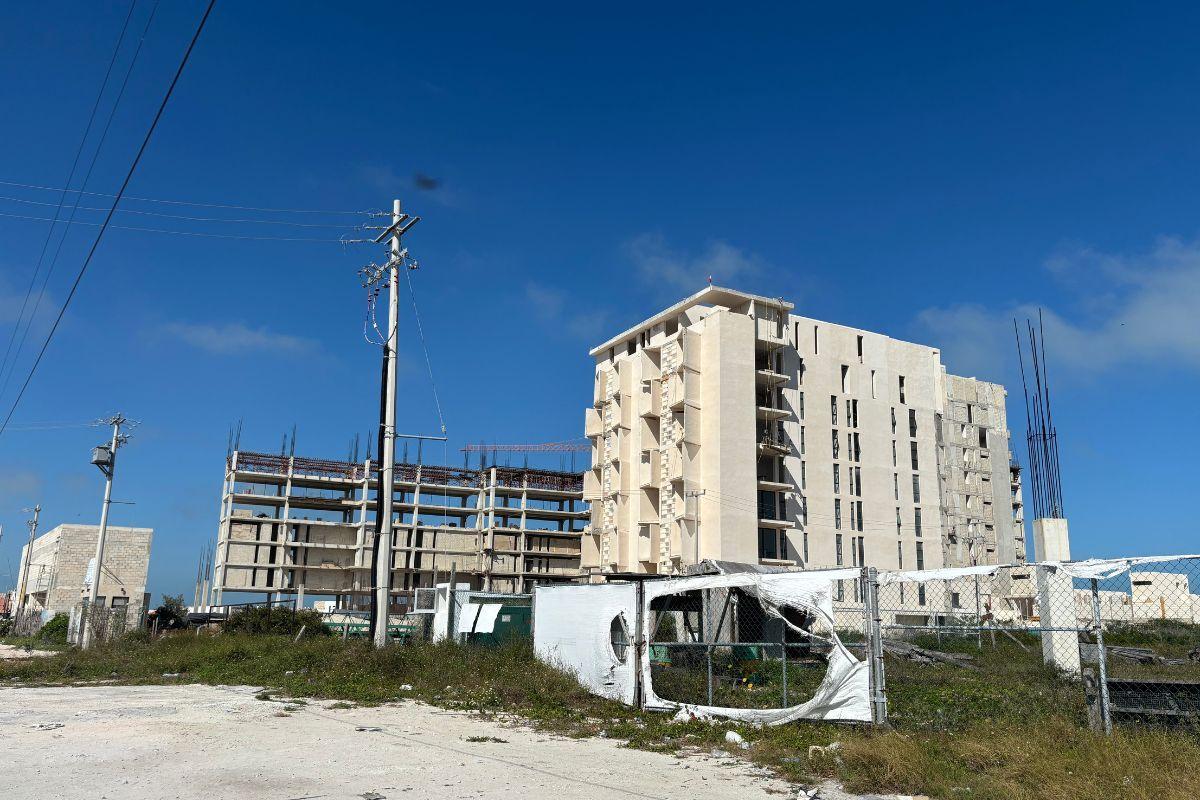
According to the National Institute of Statistics and Geography (Inegi), the metropolitan area of Mérida doubled its urban area in two decades, going from just over 21,000 hectares in 2000 to more than 42,000 in 2020. This growth has been accompanied by more than 300 real estate developments, mainly to the north of the state.
The executive vice president of the Mexican Association of Real Estate Professionals (AMPI) AMPI, Claudia Pérez Aguilar, indicated that these 300 real estate developments are active, that is, they are houses, apartments, offices or warehouses currently occupied, for sale or rent.
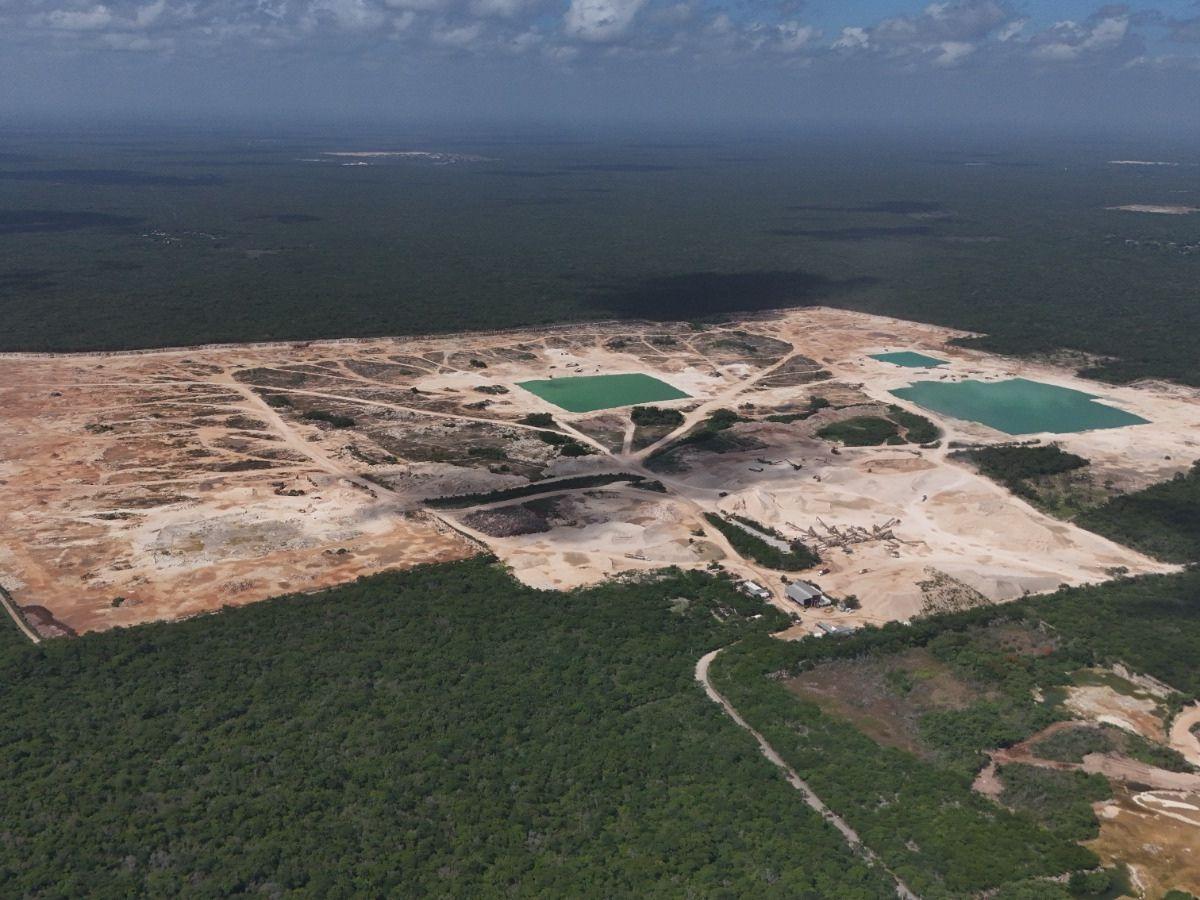 Material banks usually occupy large areas. Photo: Patricio Eleisegui.
In August 2023, there were 203 newly built projects and in just one year another 100 were added, according to an AMPI record.
In addition to residential buildings, the industrial sector is currently expanding in the city, especially in the metropolitan area that borders the municipalities of Umán and Kanasín, 30 minutes and 20 minutes from Mérida, respectively, Pérez Aguilar said.
Another impact of the Mayan Train
Since the start of the Maya Train project in 2018, the extraction of stone material in the Yucatan Peninsula has intensified rapidly. From that period to 2025 alone, more than 60 concessions were granted for material banks in neighboring Mayan communities, which has resulted in a problem that today goes beyond the local dimension and is configured as a regional crisis.
“From that moment on, people reported the damage, mainly explosions,” explained Alberto Velázquez.
From then on, communities began to organize to make visible the impacts that until now have not received a comprehensive response from the authorities.
According to Velázquez, the affected communities are concentrated in the same area, particularly in the south of the metropolitan area of Mérida, where the proliferation of material banks has transformed the territory.
“In recent years, the number of dump trucks carrying stone material has been impressive. This growth responds to greater demand driven by infrastructure projects, urban expansion and real estate developments,” he said.
Extraction involves deforestation, soil erosion and possible damage to the water table, as excavations progress until water is found. Added to this are direct impacts on quality of life and houses have already been found with structural damage due to explosions, air pollution, constant noise and stress on the population, especially in children and the elderly.
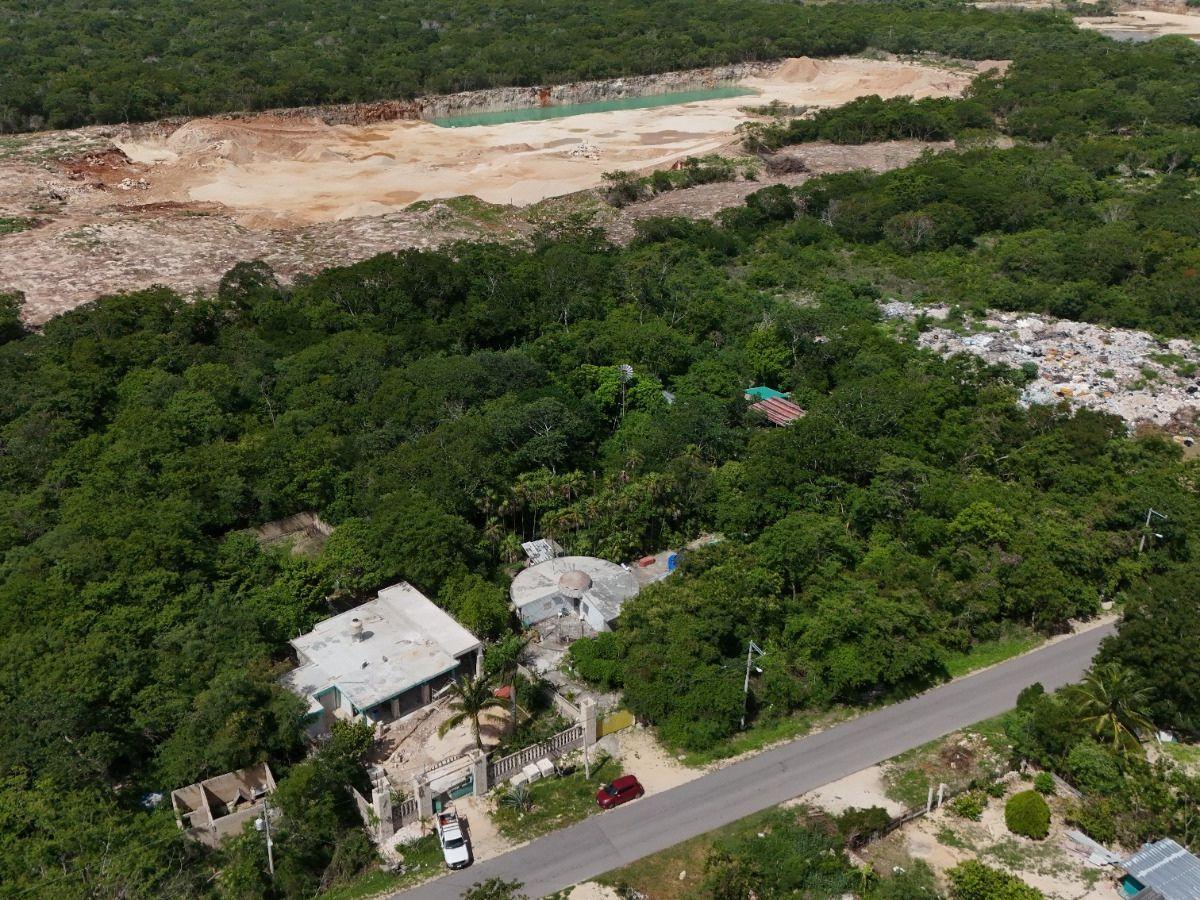 There are towns very close to material banks. Photo: Patricio Eleisegui.
In towns such as Ixil and Tepakán, cracks in houses and weakened roofs have been documented. Wildlife has also been reported and, in some cases, damage to biocultural heritage, such as cenotes and archaeological remains.
Despite the magnitude of the problem, many of these activities operate without adequate indigenous consultation processes.
“None of these banks has a consultation process in accordance with the rights of peoples,” Velázquez points out, which represents a violation of the self-determination of the Mayan people.
Although some companies have Environmental Impact Statements, irregularities such as changes of ownership, unauthorized expansions and lack of state oversight to ensure compliance with established conditions have been documented in practice.
Faced with this scenario, communities from different municipalities have begun to articulate themselves in a network to demand a stop to the expansion of non-metallic mining. Among their main demands are the cancellation of permits, the recognition of the problem as a socio-environmental emergency and the repair of damages.
In some cases, land defenders have been reported by extractive companies, adding a risk component to community defense.
“What they're saying is clear and they say we don't want mining anymore and we want our voice to be respected,” Velázquez concludes.
Records from the Ministry of Environment and Natural Resources (Semarnat) show dozens of extraction projects with a Manifestation of Environmental Impact (MIA), especially in municipalities such as Umán, Conkal, Kanasín and Hunucmán.
In Conkal, real estate growth has advanced along with extractive banks close to housing areas. In Uman, one of the main industrial centers, there are Sascab banks linked to infrastructure and industrial parks. In Kanasín, urban expansion occurs alongside extractive areas where regulation is weaker. And in Hunucmán, pressure on the territory is intersected with industrial and tourist activities.
The MIAs recognize impacts such as the removal of low forest, dust emission, noise, alteration of the relief and possible risks to the aquifer, one of the most fragile systems on the peninsula.
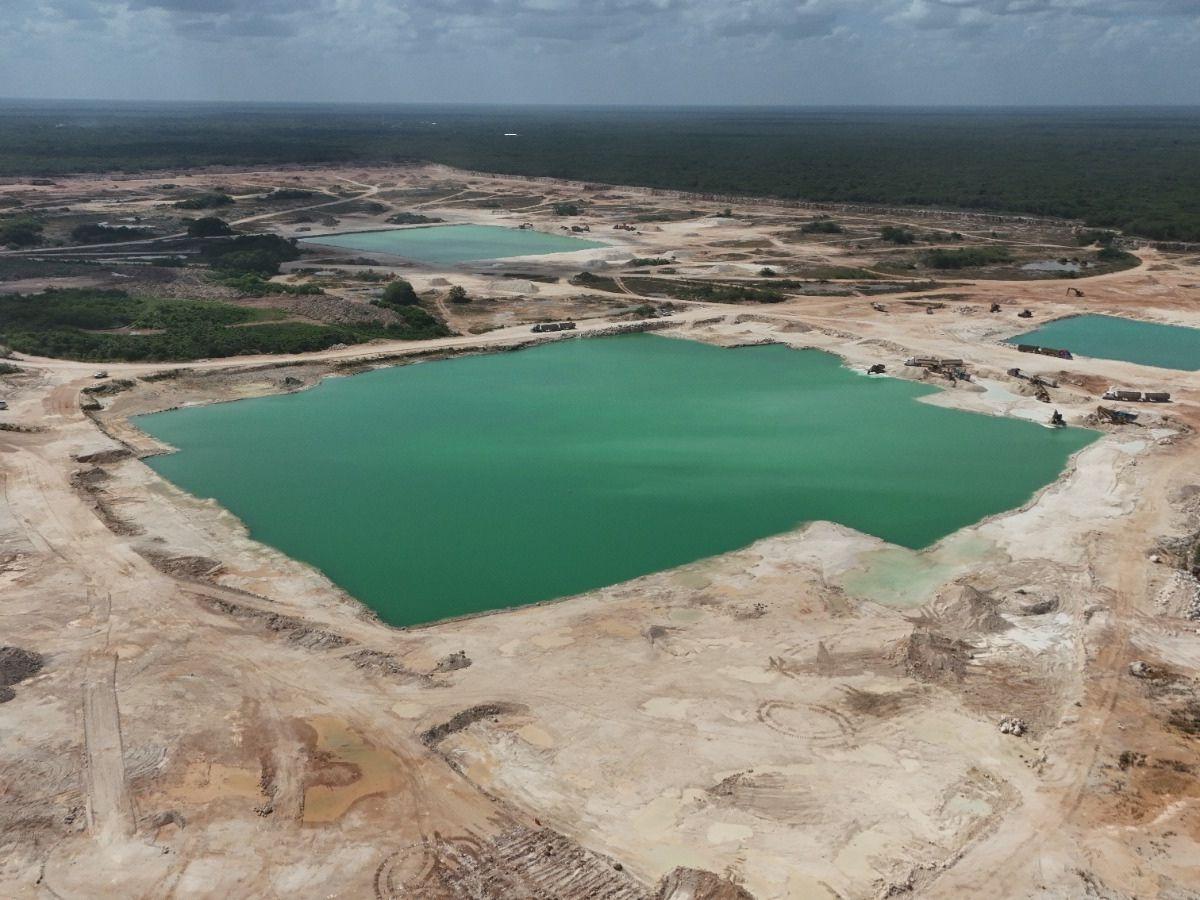 Companies usually reach “the vein”, that is, when they touch water. Photo: Patricio Eleisegui.
The territory responds
Faced with this context, Mayan communities from police stations in Mérida and Umán announced the formation of a Network of Peoples against Mining, with the objective of denouncing and confronting the socio-environmental impacts of stone banks.
Among the towns that make up this network are Xcucul Sur, Tebec, Hotzuc, Yaxcopoil, San José Tzal, Ticimul, Noc-ac, Cheuman, Petecbiltun and Texán Cámara.
The communities indicated that these extractive activities have generated environmental damage, health problems and safety risks.
Those who live in these territories report constant explosions that generate fear, especially in girls and boys, suspended dust that affects their health, permanent dump truck traffic that jeopardizes mobility, structural damage to homes due to detonations.
Added to this is the clearing of the forest, the displacement of fauna and possible damage to the archaeological heritage, as in the case of Yaxcopoil.
Profepa faces operational restrictions to monitor large areas, which have led to complaints about banks operating without visible permits or without complying with environmental conditions.
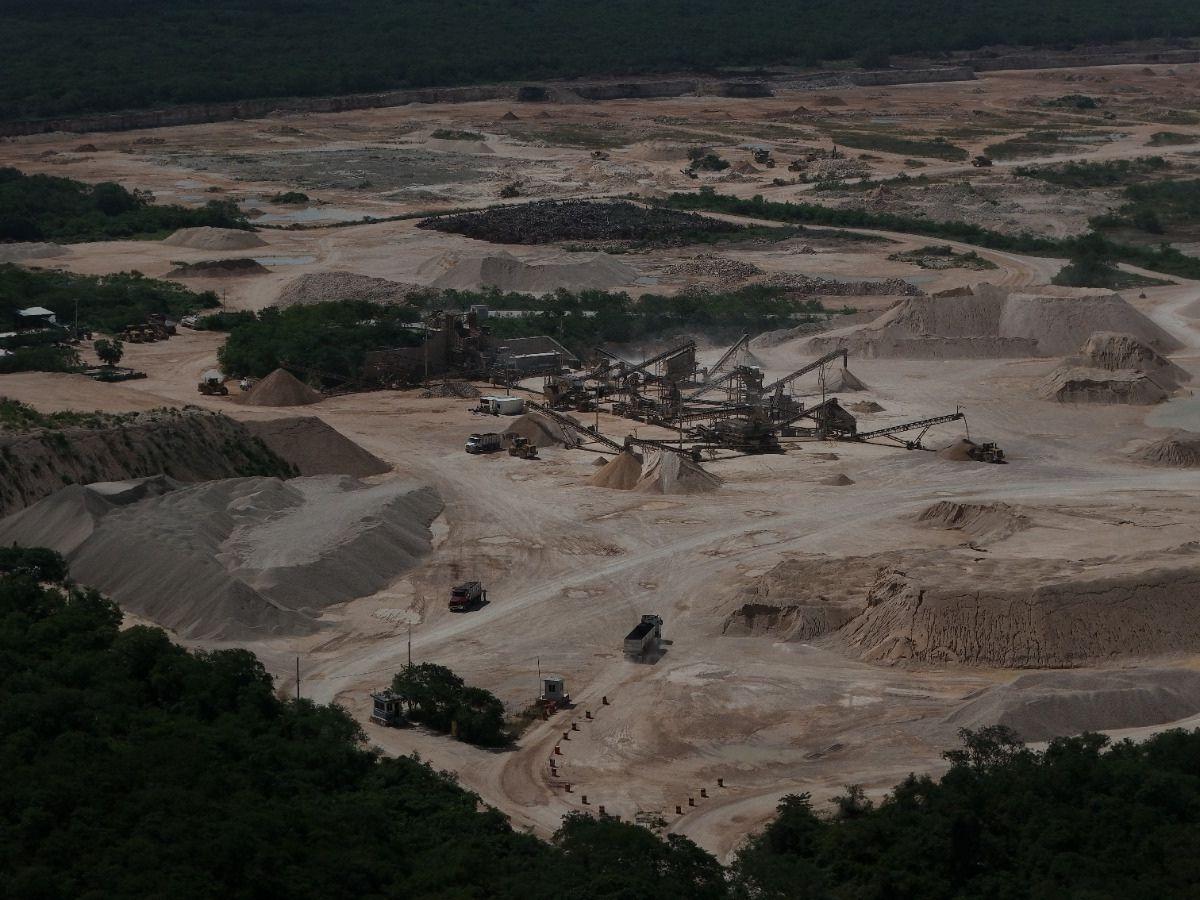 The material benches are large in size. Photo: Patricio Eleisegui.
An environmental and social debt
The MIAs state that material banks must have closure and restoration plans. In practice, many are abandoned, converted into environmental liabilities.
Faced with this, the Mayan peoples have raised their demands:
Stop the authorization of new extractive projects
Recognize the socio-environmental emergency in the region
Ensure comprehensive repair of damage
Addressing health problems
Repair damaged homes
Restore forest, air and water
Respect autonomy and self-determination
“As Mayan people, we have already decided that we don't want mining in our territory,” concluded Rosario Cú, a resident of one of the affected communities.


Comentarios (0)