
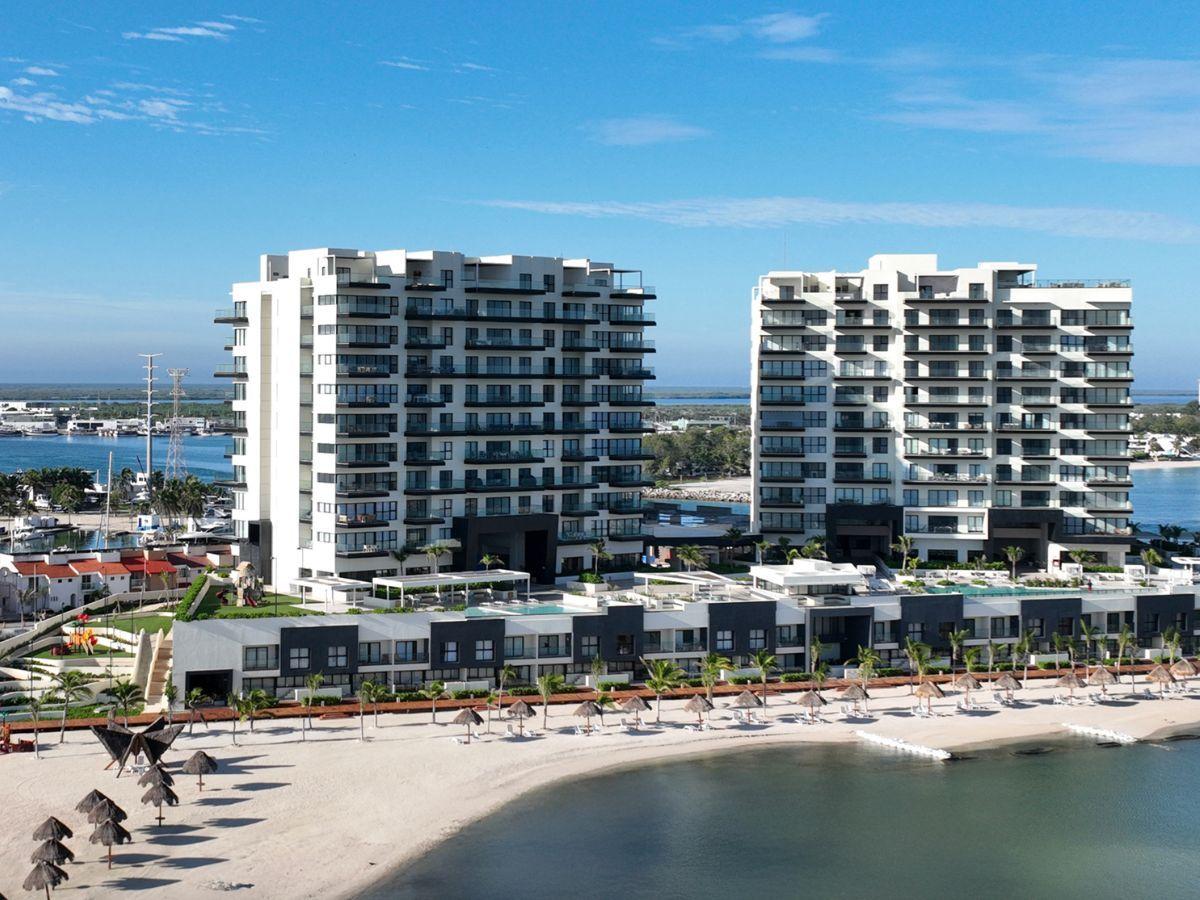
The arrival of new nautical developments on the Yucatecan coast ignites concerns about the environmental future of Progreso, one of the coastal municipalities that in recent years has faced accelerated transformations linked to tourism, real estate expansion and maritime infrastructure.
In this context, the “Yucatán Marina Club” project was recently presented, promoted by managers from R4 and Mazza Capital, who described it as a development that seeks to “redefine the relationship between the sea, housing and tourism” in the entity.
The complex will be located inside the shelter port of Yucalpetén, about 40 kilometers from Mérida, and will cover more than 55 hectares. The plan includes a marina with capacity for more than 250 boats in water and 300 on land, in addition to residential areas, shops, apartments, a pedestrian promenade and public spaces.
With an estimated investment of 8 billion pesos, the project was presented as the first nautical residential complex with marina and commerce in the state.
During the presentation, businessmen and architects assured that it will have environmental, oceanographic and soil mechanical studies that support its technical viability.
Its components include artificial channels that will connect residential lots, amenities and shipping areas, under a scheme that, according to its developers, prioritizes navigability, safety and the relationship with the coastal environment.
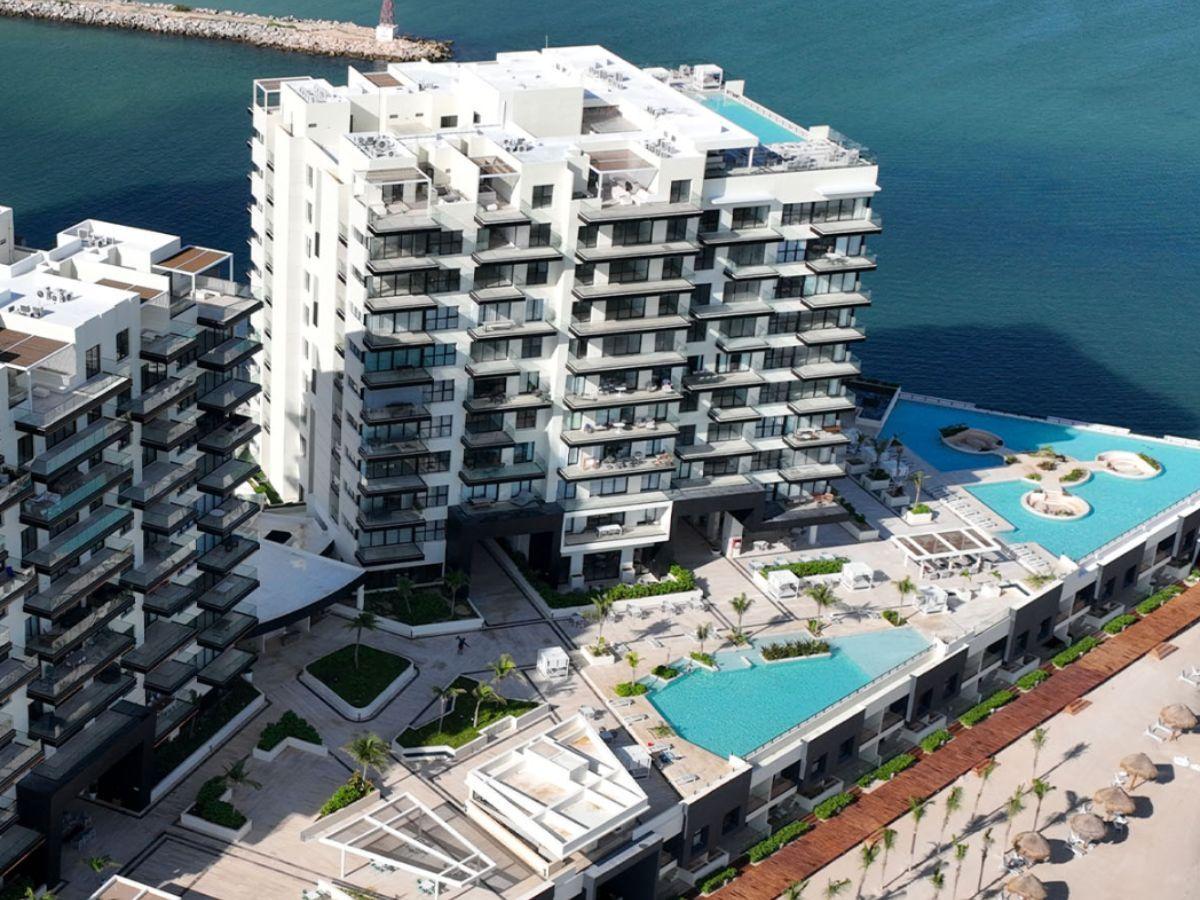 It is estimated that this is what housing towers will be like. Photo: Yucatán Marina Resort.
The plan also includes a pedestrian promenade in front of the marina with shops and gastronomic offerings, as well as a corridor called “Paseo Manglares”, designed as a path between green areas to connect public and private spaces within the complex.
The proposal incorporates a flagship restaurant within the Club House, a market focused on local products, as well as a comprehensive center for maritime activities that includes a sailing and sailing school, boat rental, wellness area, swimming pool, event room and specialized services related to nautical activity.
The developers have indicated that the project seeks to consolidate a residential and tourist model associated with “marina living”, a trend that is expanding in different coastal areas of southeastern Mexico.
Academics warn of accumulating pressures on the coast:
Academics who specialize in coastal issues warned that the Yucatecan coast is already facing increasing environmental pressures derived from the increase in small and large scale real estate developments.
Eduardo Batllori Sampedro, a researcher at the Center for Research and Advanced Studies (Cinvestav), in the Department of Human Ecology, noted that the region has gone from a model of dispersed summer housing to high-density vertical complexes that demand large amounts of water, energy and services in a vulnerable coastal strip.
He warned that one of the main risks for the coast is the availability of water and the advance of aquifer salinization, rising sea levels, a phenomenon that could be intensified by climate change and increased extraction to supply new tourist and residential developments.
“Nowadays, when we do water balances at the level of geohydrological zones and considering the concessions granted, there is no longer as much water availability,” he explained. He also warned that the decrease in water recharge can affect coastal ecosystems, cenotes and species that depend on underground flow.
Batllori added that real estate expansion on the coast increases the generation of waste and wastewater in municipalities that are still lagging behind in treatment and final disposal infrastructure.
“Many coastal towns, as well as inland, lack functional water treatment plants and continue to rely on septic tanks, leading to aquifer contamination and affecting water quality on beaches,” he said.
The academic argued that with the arrival of larger-scale projects, it will be necessary to strengthen urban and environmental regulation on the Yucatecan coast, in addition to reviewing the carrying capacity of the most vulnerable areas.
“We are taking away the natural defense we have against inclement weather and that is going to work against us,” he warned, referring to the loss of coastal vegetation and the risks associated with hurricanes, erosion and rising sea levels.
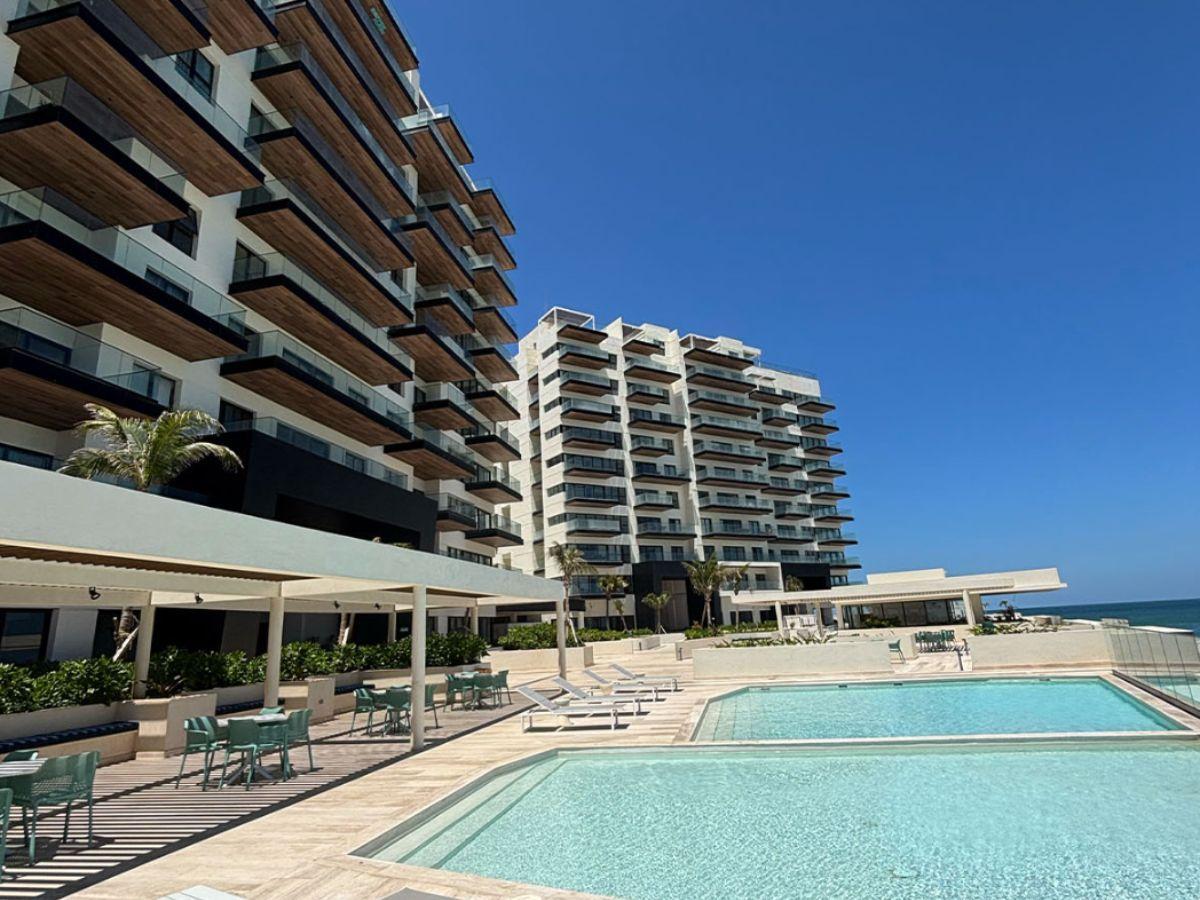 Large-scale projects are increasingly being planned on the Yucatecan coast. Photo: Yucatán Marina Resort.
It's not the only new marina:
The boom in nautical and residential projects is not limited to Yucatán Marina Club, because to this offer is added the Yucalpetén Resort Marina project, a luxury real estate and tourism development promoted as “the new lifestyle of the Yucatán coast”, focused on residential tourism, nautical experiences and high added value.
The complex includes a residential area comprised, in its first phase, of 139 apartments, 13 penthouses and 25 villas with luxury finishes, in addition to having views of the sea, canals and private marina. The development also projects a beach club, a shopping village and a marina with capacity for boats over 40 feet.
According to information released by the developers, SIMCA, Kaua Real Estate and Desur, the project will include more than 40 amenities, including pools, gym, spa, restaurants, bars, business center, event room, valet parking, concierge, elevators to the beach and recreational areas for families and children.
Lack of comprehensive planning on the coast:
For Christian Appendini, a researcher at the Engineering and Coastal Processes Laboratory of the Engineering Institute of the UNAM in Sisal (LIPC-II), one of the main problems in Yucatán lies not only in the size of the developments, but also in the lack of comprehensive planning for how to grow on the coast.
The specialist recalled that erosion problems in communities such as Chelem are not recent and began even before the current boom in tourist and residential complexes. He explained that small or large buildings can generate impacts if there are no studies, regulation and coordination between authorities, developers, residents and non-profit specialists.
“Not necessarily because a large hotel or a large residential area arrives we are going to have negative effects; they may be small developments. The problem is that there is no planning and people build however they want,” he said.
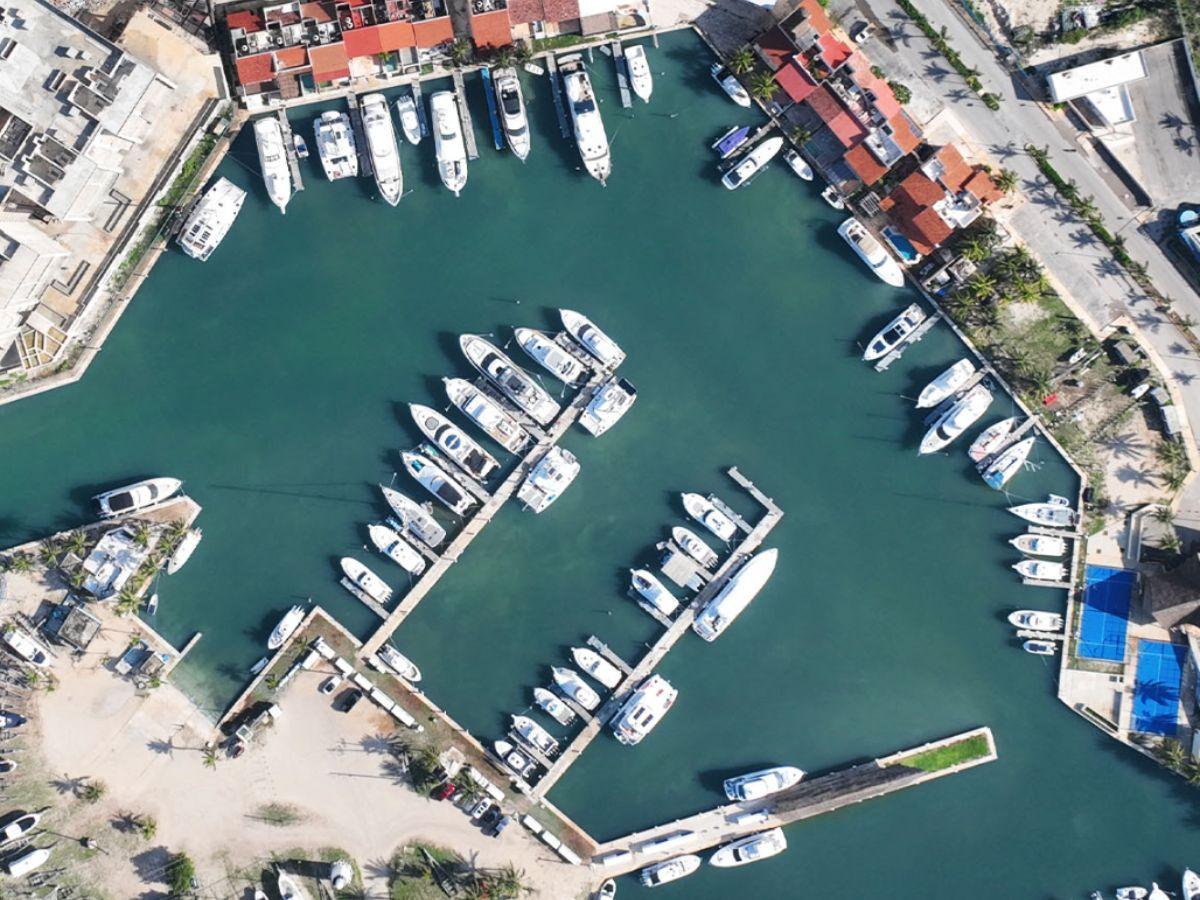 Marinas are also projects that have impacts on the Yucatecan coast. Photo: Yucatán Marina Resort.
Appendini warned that many coastal damages are addressed in isolation, when coastal dynamics work as an interconnected system. For this reason, he considered it necessary to establish coastal management units that make it possible to study and fully service different sections of the Yucatecan coast.
He also mentioned that the lack of adequate technical studies remains a recurring problem, as some developers minimize or avoid this type of analysis until they face erosion or loss of beach on their properties.
“Developing on the coast is one of the things that can't be done just like that,” he warned, insisting that projects must incorporate long-term planning, serious studies and coordination mechanisms between governments, communities and the private sector.
In turn, Paulo Salles Afonso de Almeida, researcher at the Coastal Engineering and Processes Laboratory and the National Laboratory for Coastal Resilience (coordinated and led by the UNAM), commented that the environmental situation of the Yucatecan coast must be analyzed in a context where the effects of climate change (more and more storms, rising sea levels), the seasonal variation in sea level (+/- 15 cm every year; a phenomenon not taken into account in almost any coastal development design) and the accelerated growth of infrastructure and urbanization in coastal areas.
The specialist explained that the gradual rise in sea level, together with more intense meteorological phenomena, as well as the destruction of beach vegetation, increases the vulnerability of beaches, dunes and settlements close to the coast. Added to this is the expansion of real estate and tourism developments in a state that is experiencing a strong urban and demographic boom.
Salles considered that one of the main challenges remains the effective application of environmental and urban regulations, as well as the in-depth technical review of manifestations of environmental impact. To this end, he believes that it is essential to update and enforce the POETCY, as well as to update the Urban Development Plans (PDU) and the Ecological Management Programs in the narrow coastal strip of Yucatán. Without this, it will be impossible to update the various regulations necessary for developments to direct their efforts to sustainable and resilient designs.
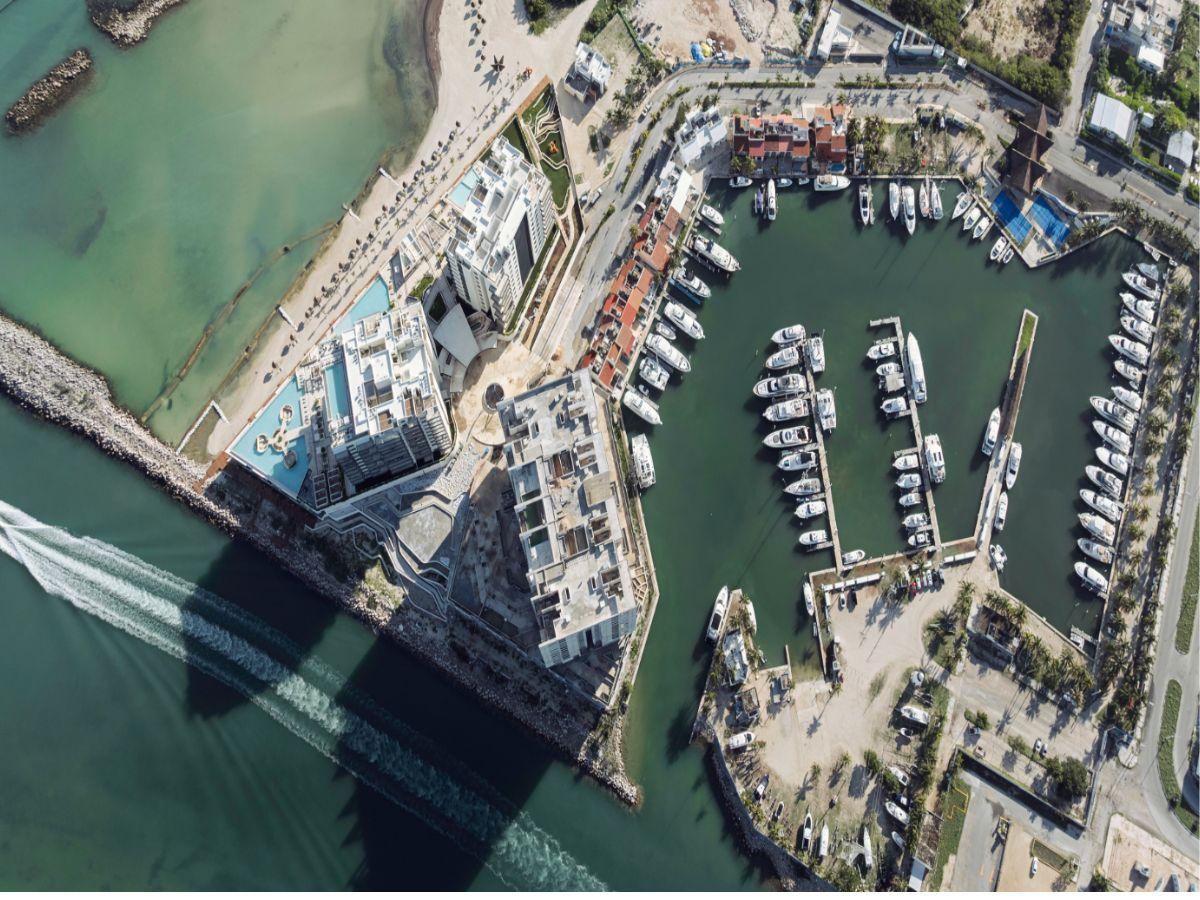 In Yucatán, there is already a niche for these projects. Photo: Yucatán Marina Resort.
He also warned that different coastal areas of Yucatán have chronic erosion and beach loss, a situation that responds both to natural processes and to accumulated human alterations along the coast. The most critical case is in Chelem, where not only do the breakwaters of the port of Yucalpetén interrupt the natural flow of sand from East to West - as in all shelters - but the “shadow” generated by the high altitude port generates coastal transport gradients that result in more accelerated erosion than in other coastal towns in the state.
The researcher emphasized the importance of conserving dunes and coastal vegetation, because they function as natural barriers against storms, waves and hurricanes. In the multiple cases where there are no longer dunes to conserve, it is still possible to design comprehensive solutions that allow the gradual recovery of dunes that can then be vegetated.
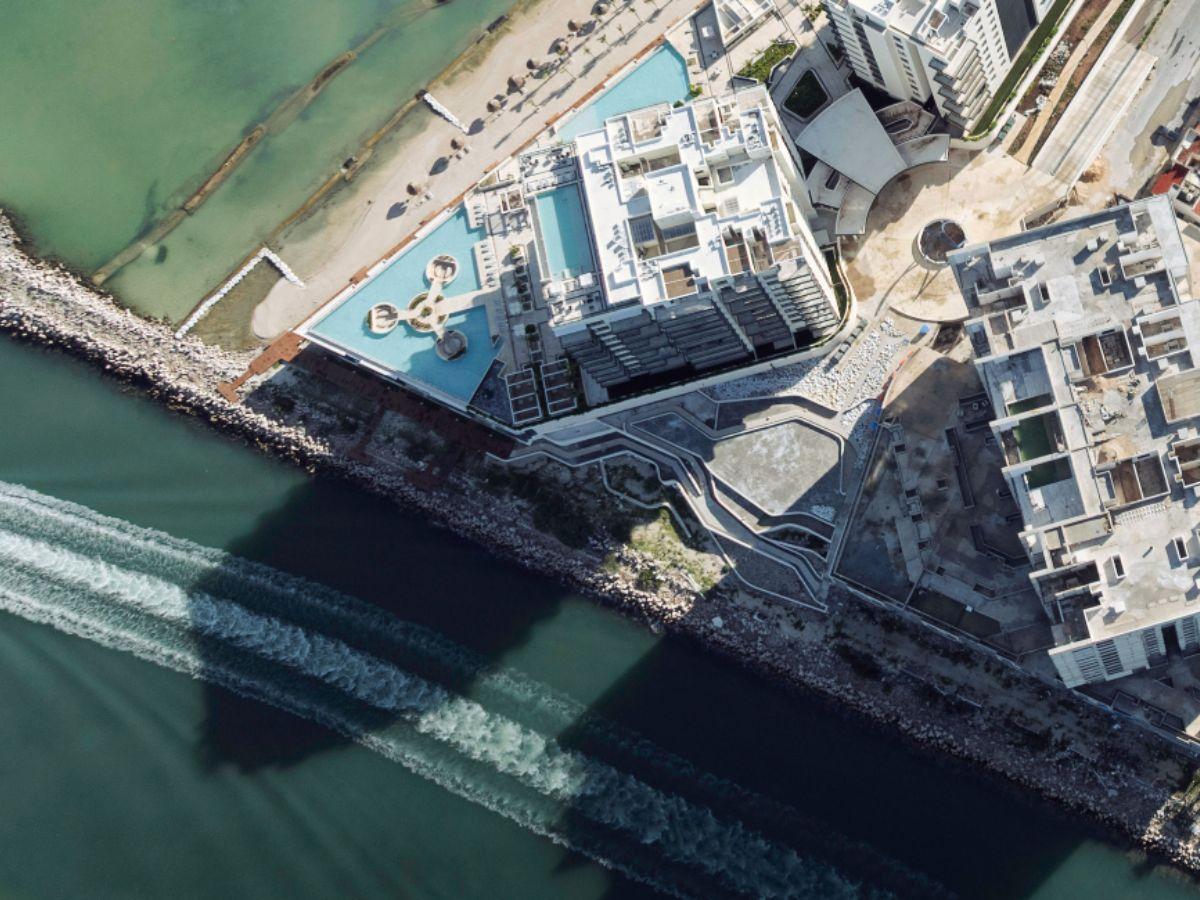 The worrying thing about these projects is the size. Photo: Yucatán Marina Resort.
He pointed out that what cannot continue to happen is that the supposed solutions are partial, only for a few residences, instead of there being coordination so that the funds that the owners are willing to invest, complemented by other state, federal and/or international funds, are channeled to the design of comprehensive solutions.
Partial solutions quickly recover small strips of coastline, but almost immediately they cause significant damage to neighboring properties, and an epidemic of individual implementations ends up generating. That's the last thing the coast needs to rebalance, and on the contrary, it only increases the problem.
“Addressing these problems will require coordination between authorities, the scientific community, residents and the private sector. Yes, we are on time,” he said when questioned about the possibility of strengthening coastal regulation, although he insisted that it will be necessary to update territorial planning instruments and build mechanisms for dialogue between different actors involved in the development of the Yucatecan coast.
The inhabitants are witnessing the changes in their coastline:
Causa Natura Media requested an interview with Roger Góngora García, Undersecretary of Investment, Trade and Industry of the Secretariat of Economic Development and Labor (Sefoet), who publicly participated in the presentation of the “Yucatán Marina Club”; however, there was no response.
As new developments advance along the Yucatecan coast, residents of Progreso say that the changes in the coastline have been visible for several years.
Mario Canto, a fisherman and resident of the port, pointed out that in different coastal areas the sea has been gradually gaining ground.
“Many houses that used to have a good beach margin now have the sea above them,” he said.
He indicated that sites such as Chicxulub, Chelem and Chuburná show increasingly obvious signs of coastal erosion.
“The advance of the sea is becoming more and more notorious,” he said, recalling that even on the Progreso waterfront, work has already been done to recover part of the beach.
Although he considered that the problem currently affects mainly homes located on the waterfront, he warned that preventive measures will need to be implemented before the damage increases in the coming years.
“For now, they must carry out a preventive project, because right now it doesn't directly affect all of us, but as the years go by, it will have to be carried out,” he said.
* This article was written by Itzel Chan, who covers coastal communities thanks to the support of the Report for the World program .


Comentarios (0)