
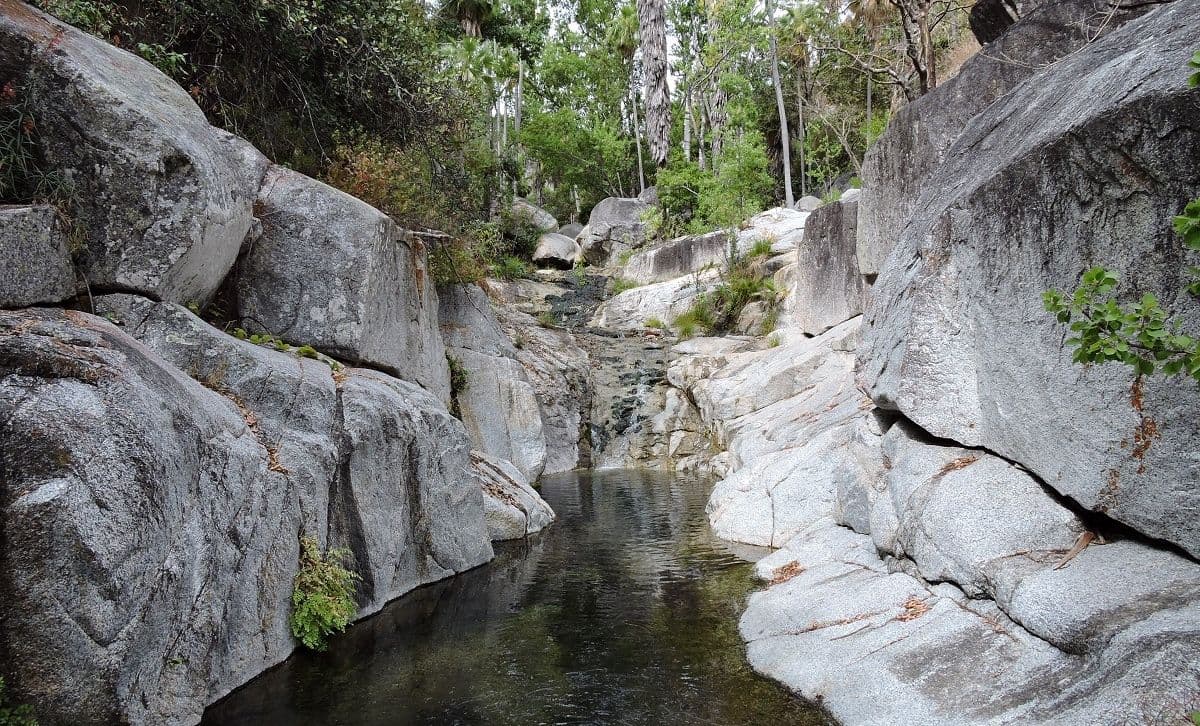
Between massive clearing and unauthorized helicopter entry, the Brotherhood in Harmony association is trying to intervene in the La Laguna Biosphere Reserve, in Baja California Sur, which is located within a Protected Natural Area. But this is not the first time that the association wants to build in Sierra La Laguna, a key area for water collection for the state.
The association has promoted three files with different projects. The project, called “Sanctuary of Tío Checo”, was the first, later it presented the “UMA CEICA” proposal and, months later, a third project called “Integral Restoration of Facilities for the Preservation and Monitoring of the Sierra La Laguna Biosphere Reserve” entered.
For this reason, environmental organizations warn of the association's insistence on carrying out developments in a strategic area for water supply and which contemplates the deforestation of almost 90,000 square meters of native vegetation.
The Citizens' Front for the Defense of Water and Life maintains that the protection of the Sierra is directly related to the supply of water for La Paz and Los Cabos.
Both the “Santuario del Tío Checo” project and the “UMA CEICA” project contemplated a monthly consumption of approximately 75 cubic meters of water supplied by pipes. The Mexican Center for Environmental Law (CEMDA) considered that this scheme represented additional pressure in a region with an aquifer in deficit. While for the third project, “Integral Restoration”, they are already proposing rain collection, wastewater treatment and dry sanitary systems.
The “Sanctuary”, in a 90-hectare polygon, was administratively discarded in February 2026 and did not obtain environmental authorization. The second one requests exactly the same property as Tío Checo, although it modifies the distribution of the works and increases the area of intervention.
The third, which set off alerts for its impacts, is planned within the Sierra La Laguna Biosphere Reserve, an Area of Importance for Bird Conservation (AICA), a Ramsar Site and habitat for species protected by NOM-059-SEMARNAT-2010, such as the Xantus hummingbird. For this project, an intervention of 454,144 square meters is intended.
Currently, the “UMA CEICA” files, with code 03BS2026U0029, and “Integral Restoration”, with code 03BS2026U0030, appear before SEMARNAT with the status “Suspended for additional information”. In the case of the third project, the suspension has been registered since September 8, 2026.
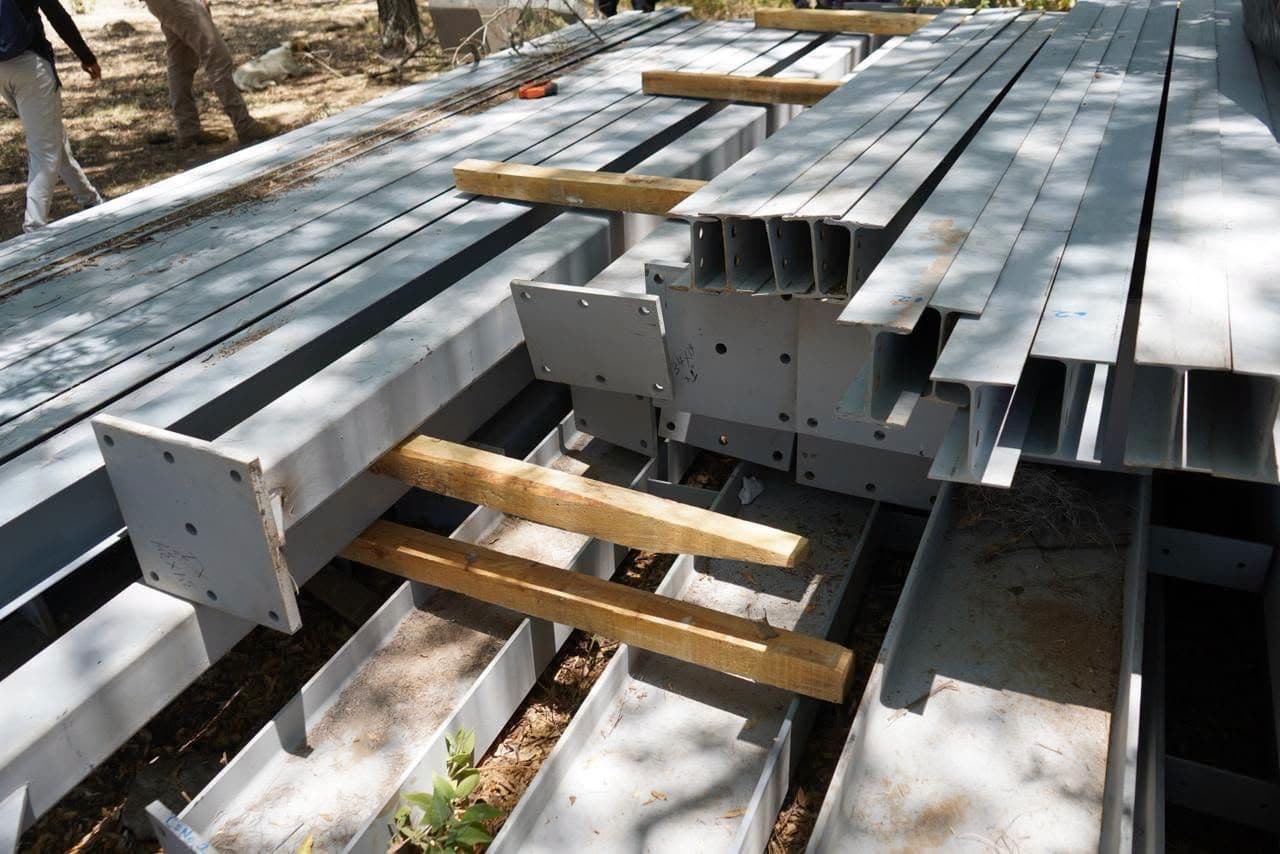
Don't miss: They denounce flights to introduce steel beams to the Sierra La Laguna Biosphere Reserve
The attempts at Brotherhood in Harmony
Brotherhood in Harmony A.C. wanted the “Sanctuary of Tío Checo” project to be developed exactly in La Palma, San José del Cabo, on the remnant of lot 5 of the rustic property called “San Miguelito”.
The project envisaged a total area of 90 hectares. Within this polygon, educational, administrative, research and veterinary care facilities were planned, as well as a vivarium laboratory, aviaries, controlled and isolated habitats, parking, internal roads, wastewater treatment plant, photovoltaic infrastructure and a heliport.
The Environmental Impact Manifestation also considered accommodation for volunteers and staff, with 15 rooms, in addition to facilities for researchers and specialists.
The project estimated an investment of 100 million pesos, a useful life of 30 years and an authorization period of 10 years for the preparation and construction phases.
Among the species registered in the area were species subject to protection in accordance with NOM-059-SEMARNAT, as well as vegetation corresponding to low deciduous jungle and sarcocaule scrub.
The file 03BS2026TD002 was submitted to SEMARNAT on January 22, 2026. The procedure was dropped. In the resolution, the Ministry of Environment noted deficiencies in the information presented that prevented a comprehensive evaluation of the project.
Among the authority's comments were aspects related to the description of the works and activities, as well as insufficient information on some of the facilities contemplated.
In particular, the authority noted that it did not detail the reagents or substances that would be used in the laboratories or the processes or analyses that would be developed in them. He also noted inconsistencies in the way in which some works were incorporated into the project documentation and noted deficiencies in the connection with applicable environmental regulations.
With this, it determined that the information presented did not allow for the necessary elements to carry out the corresponding environmental assessment. Therefore, it did not obtain an environmental authorization.
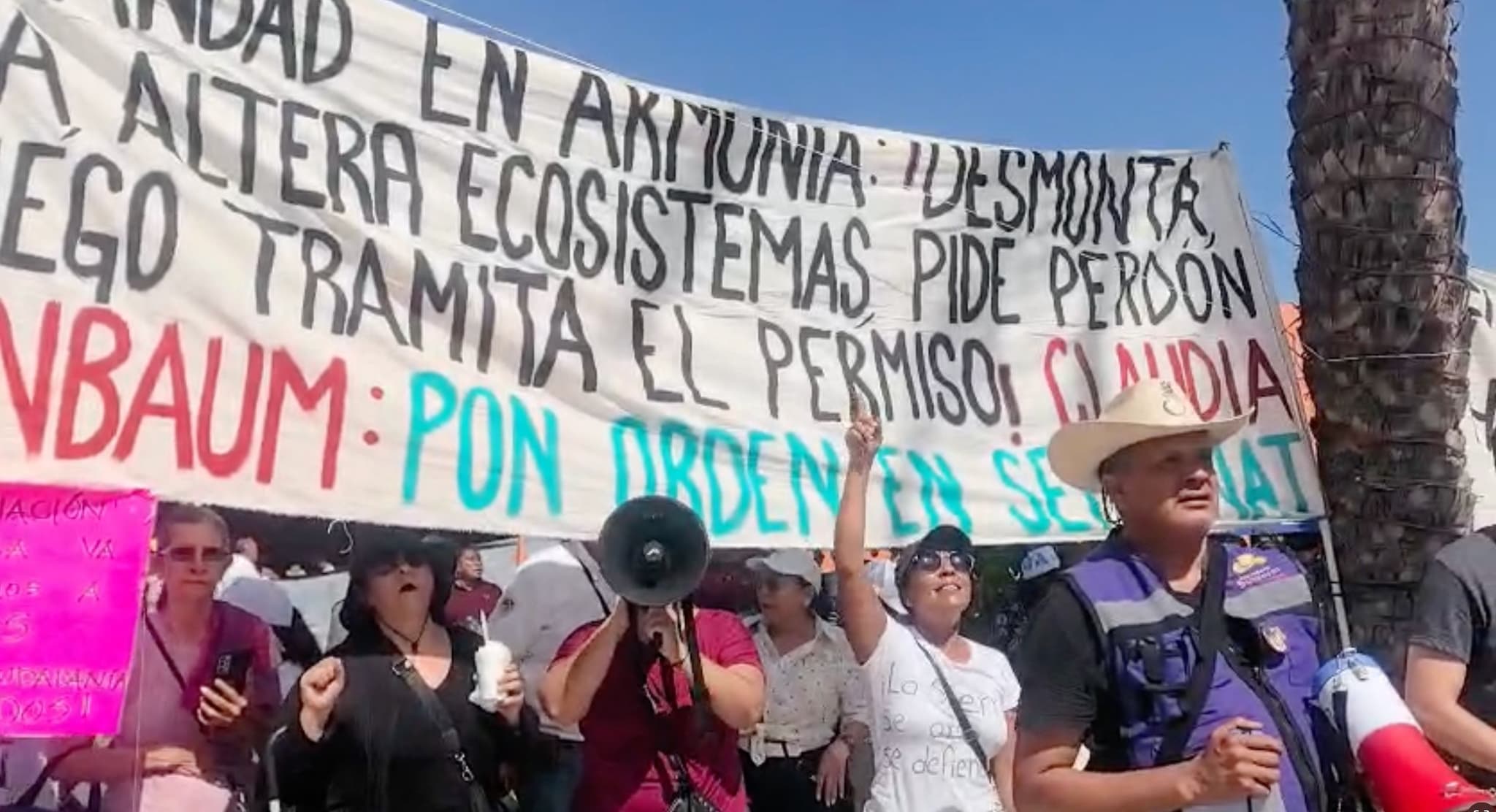
You may also like: “Damage , ask for forgiveness and then process the permit”: Rain of complaints marks Semarnat meeting for works in Sierra La Laguna
Water, vegetation and fauna, the questions to the first project
In addition to the documentary deficiencies pointed out by SEMARNAT, environmental organizations questioned different components of the project.
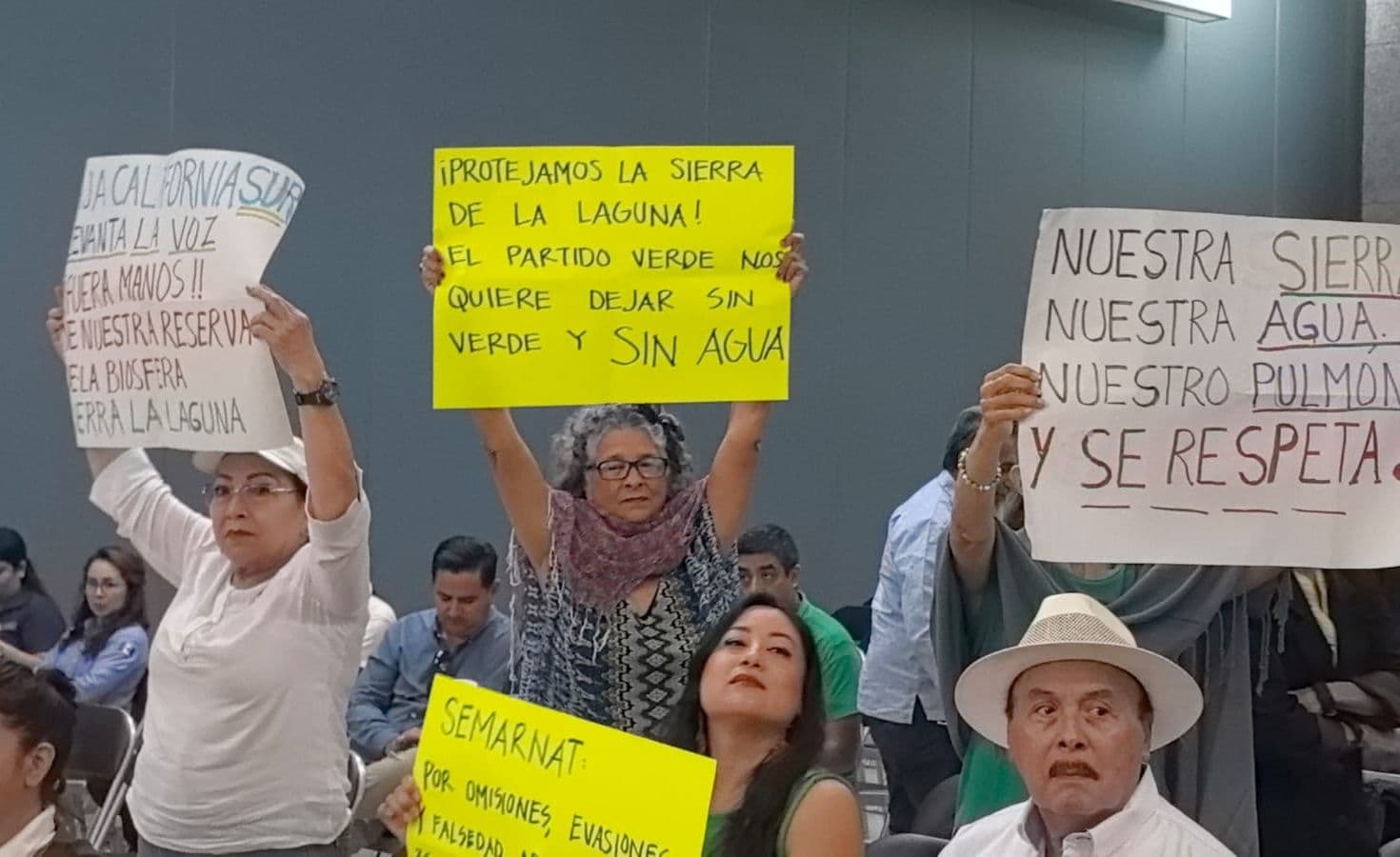
CEMDA asked SEMARNAT to discard the project and pointed out questions related to the environmental assessment modality, the removal of vegetation, the introduction of species and the supply of water.
One of the points was made by specialist Jorge del Ángel, quoted by CEMDA, who questioned the intention to introduce species such as berendo, bimaroon sheep and white-tailed deer in the Sierra de la Laguna.
According to the organization, these species do not naturally belong to this ecosystem and could compete with native fauna for food and space.
Local ranchers and environmental organizations also questioned the planned clearing of the project. It was intended to remove approximately 90,000 square meters of native vegetation to develop infrastructure that included a heliport.
Months later, Brotherhood in Harmony entered a new project: the “UMA CEICA (Center for Environmental Education, Research and Conservation)”. A project that is located at the same eight coordinates that delimited the polygon of the “Sanctuary of the Czech Uncle”.
The difference is in the distribution and size of the works. While Tío Checo contemplated a construction area of 7,973.51 square meters, CEICA plans an installation area of 23,743.69 square meters. This represents an additional 15,770,18 square meters of intervention compared to the first project.
The new file includes four main buildings, with a total built area of 9,355.66 square meters, in addition to five multipurpose areas, access, parking, an esplanade, water supply facilities, treatment plant and 18,873.61 square meters of internal roads.
The project also contemplates a forest land use change area of 45,949.55 square meters and recognizes 10,968,93 square meters of previously disassembled area, incorporated into the proposed intervention. Unlike Tío Checo, the heliport is not included in the CEICA documentation as part of the facilities.
The project focuses on a Wildlife Conservation Management Unit, with management, reproduction and conservation activities for wild deer, as well as environmental research and education.
It also maintains elements present in the previous project, such as an estimated investment of 100 million pesos, a useful life of 30 years, water consumption of approximately 75 cubic meters per month, wastewater treatment, use of electrical energy and the possibility of incorporating photovoltaic generation.
The file was entered on July 1, 2026 and went to public consultation. The corresponding period ended on August 19. Currently, file 03BS2026U0029 appears with the status “suspended for additional information”.
Until now, the public information consulted only allows us to identify that status. There is no requirement issued by SEMARNAT specifying what additional information was requested from the sponsor, so it is not possible to specify, on a documentary basis, what are the points that the authority asked to clarify, supplement or correct.
Unlike the Tío Checo Sanctuary, environmental questioning at CEICA focuses mainly on the surface it intends to intervene, the change in land use, the roads, the management of wild deer and the location of the property in an area considered to be of hydrological importance.
Elizabeth Ramirez, a member of the Association Rescue of Peoples, Traditions and their Economy, called for a review of the Environmental Impact Manifestation and asked to clarify the purpose of reproducing deer, the destination of the specimens and the possible effects of the installations on biodiversity and soil.
“It's not good that they come to impact the area, our nature, when our flora and fauna are in complete balance; we want them to be respected,” he said.
Read: Complaints about projects in the Sierra La Laguna Biosphere Reserve are handed over to Sheinbaum
A third file, now inside the Reserve
On July 7, 2026, Brotherhood in Harmony entered a third project before SEMARNAT, called “Integral Restoration of Facilities for the Preservation and Monitoring of the Sierra La Laguna Biosphere Reserve”.
Unlike the two previous projects, this one is planned within the Sierra La Laguna Biosphere Reserve. The total area of intervention indicated in the Environmental Impact Manifestation is 454,144 square meters, distributed in seven components.
The main one is the so-called MS-01, a new facility of 314,994 square meters dedicated to research, rest, kitchen, sanitary services, terraces and storage. The rehabilitation of an existing structure of 100 square meters, identified as MS-02, is also contemplated, in addition to five sanitary modules of 7.83 square meters each.
The proposal incorporates solar panels, rainwater collection, wastewater treatment, dry toilets and raised structures built with treated wood.
The MIA suggests that the facilities would serve as support for surveillance, research and conservation activities, as well as for personnel from the National Commission for Protected Natural Areas (CONANP) and specialists.
However, during the public information meeting held on September 1, the location of some facilities with respect to the sub-areas of the Reserve, the institutional relationship with CONANP, the mechanisms for the entry and removal of materials and the differences between the information contained in the MIA and the presentation used during the meeting were questioned.
One of the questions was asked by Mario Sanchez, from CEMDA, who pointed out a difference between written documentation and presentation regarding the MSN-01 and MSN-05 health modules: in the MIA one appears as a new construction and the other as rehabilitation, while in the presentation the description was inverted.
Faced with this statement, Johana Sermeño, representative of the promoter, responded. “It may have been a mistake, really, it could have been a finger error, but at the end of the day, we're going to clarify it, we're going to clarify it to SEMARNAT.”
During the same meeting, questions were also asked about the relationship between this project and the other files promoted by Brotherhood in Harmony. The representative of the promoter said that there is no relationship between the projects.
The relationship with CONANP was also questioned. In response, the sponsor pointed out that there was not yet an agreement with the Commission and that, if environmental authorization was obtained, appropriate steps would be taken.
The file was also questioned for aspects related to logistics for transporting materials to the area, including the removal of structures and materials by helicopter. The sponsor pointed out that this process was under way and being finalized. In addition, evidence of dismantling, felling and excavations for foundations was documented.
For all these reasons, associations ensure that Brotherhood in Harmony projects continue to be characterized by a lack of public information about these requirements and by inconsistencies that have been pointed out during their environmental assessment processes.


Comentarios (0)