
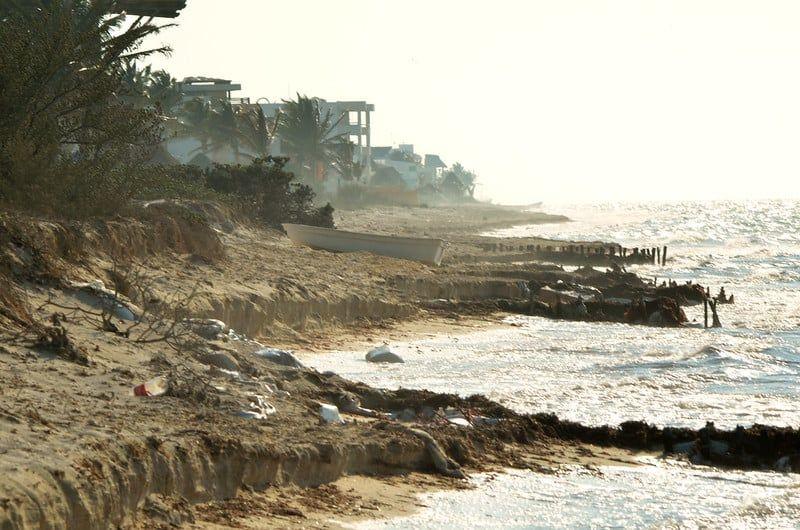
Previously, in this area of the beach there was more than 10 meters of sand. Today, the waves hit directly the shores of some houses built on the coastal strip of the municipality of Progreso. The construction of the Altura Port is identified as one of the main causes of erosion by specialists who warn that with its expansion, the situation could worsen.
In the municipality of Progreso, Yucatán, the economy has been closely linked to port development, since the Port of Altura consists of a viaduct that was established in the sea to allow boats with a draft of up to 34 feet to dock.
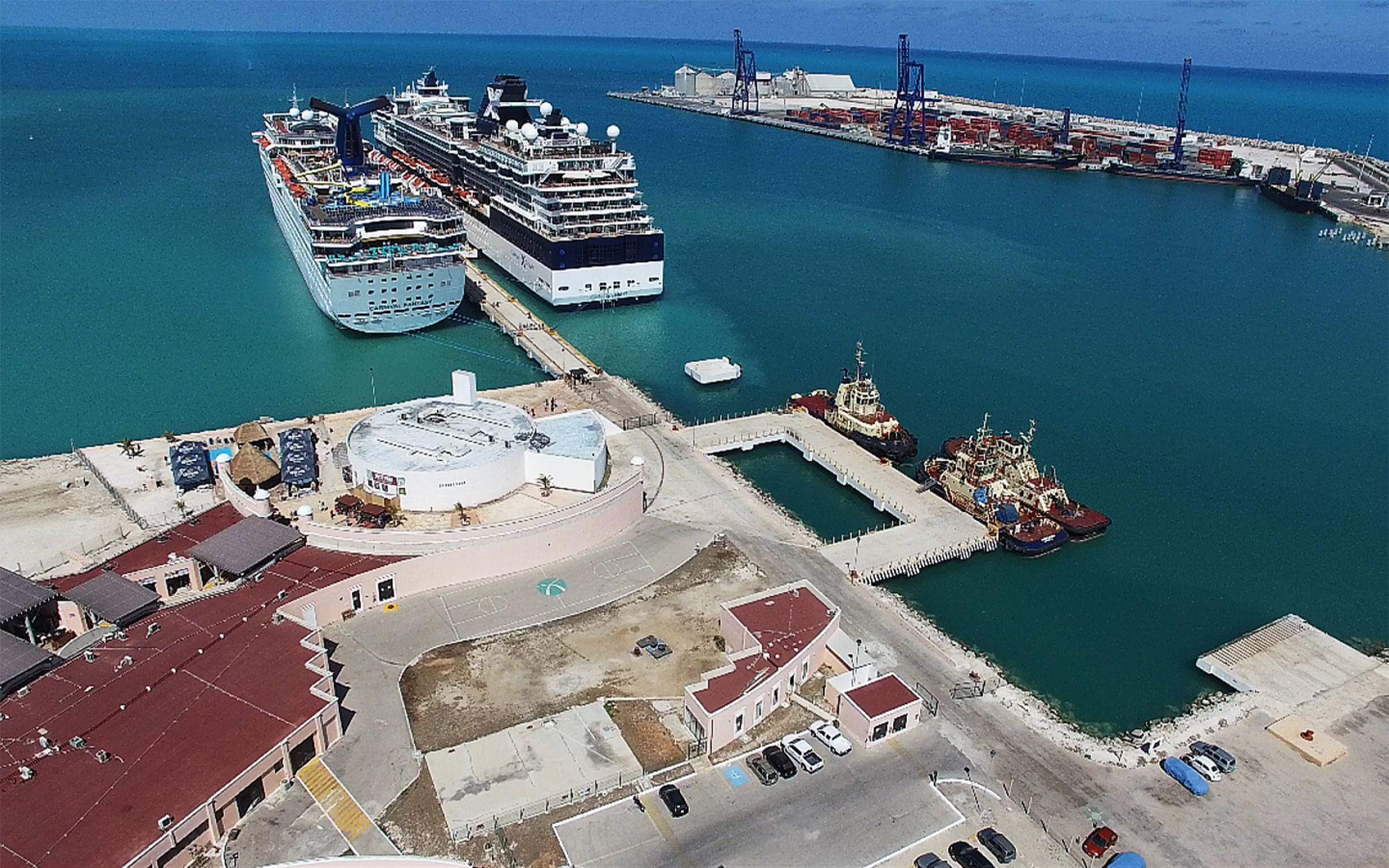 Port activity has been important for the state economy in recent years. Photo: State Government.
Officials in the economic and tourism sector in the state have stated on several occasions that this Altura Port functions as a strategic center for the logistics of exporting and importing goods in the Yucatan Peninsula.
The work has two bridges, one connects to the Intermediate Terminal, which is the building of the National Port System Administration (Asipona) and the other allows the transit of cargo units and light vehicles to the terminal, according to information provided by the State Government.
Both have a four-lane, five-kilometer-long viaduct, built on infill and protected by concrete breakwaters. From there, goods are exported and imported and distributed throughout the peninsula and nearby regions.
In 2021, the State Government and the Integral Port Administration (API) of Progreso announced the modernization and expansion of the Port of Altura, with a projected investment of 12 billion pesos from state and federal resources.
The expansion includes dredging the canal, increasing operational capacity and the construction of new specialized platforms and terminals. According to the governor of Yucatán, Joaquín Díaz Mena, the dredging corresponding to the first phase of expansion and modernization of the Port de Altura de Progreso is now 90% complete. To date, the amount of one million 363 thousand 393 cubic meters of material has been removed.
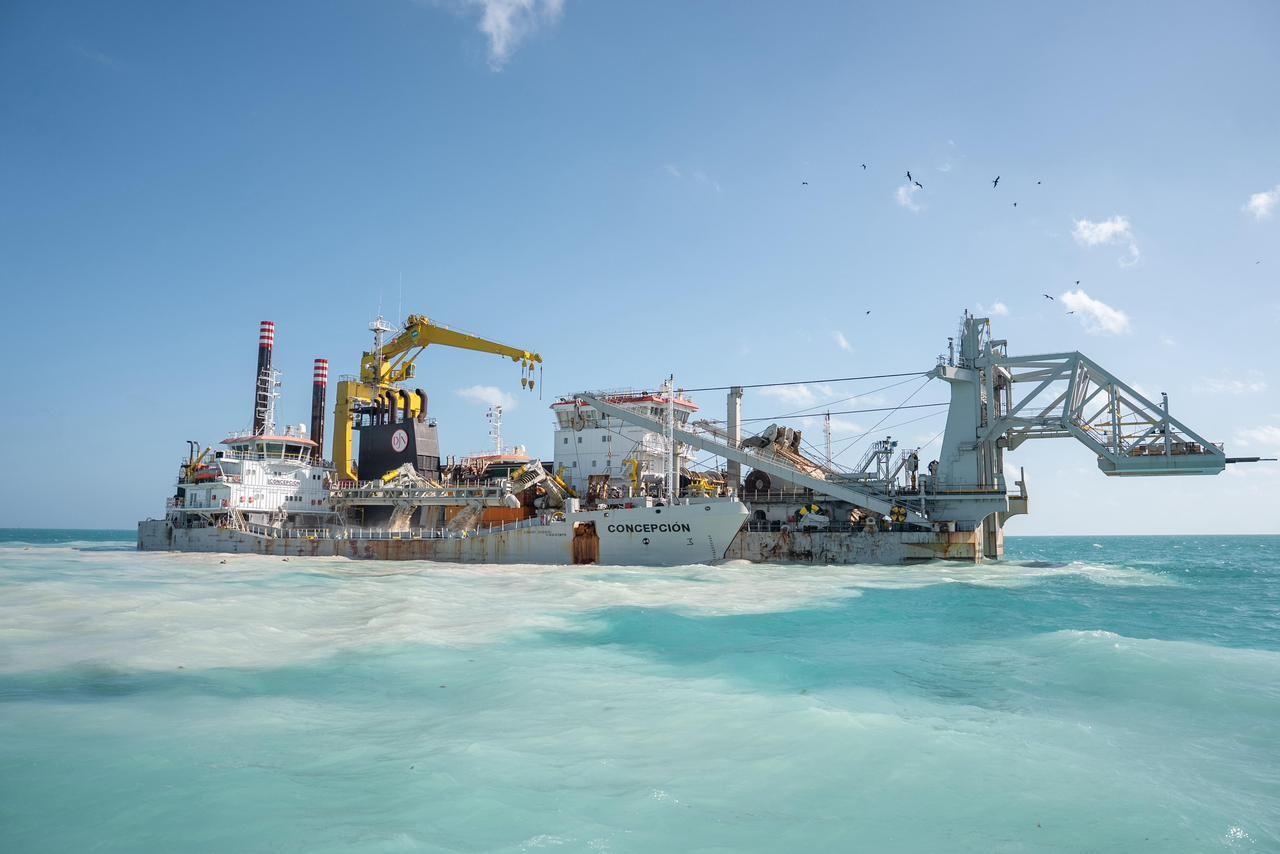 The works for the expansion of the Port of Altura show progress. Photo: State Government.
What we don't talk about
Alfonso Aguilar Pereira, research professor in the Department of Marine Biology of the Autonomous University of Yucatán (UADY), explained that coastal degradation has occurred since 1980, when a section of several kilometers offshore was incorporated into the Port of Altura to create artificial platforms for port operation.
One of the most affected areas is Chuburná Puerto, a community in the municipality of Progreso, and although geotubes and temporary structures have been placed in front of the boardwalk, Aguilar Pereira pointed out that these measures are short-term palliatives, since sand is lost again if natural sedimentary flow is not restored.
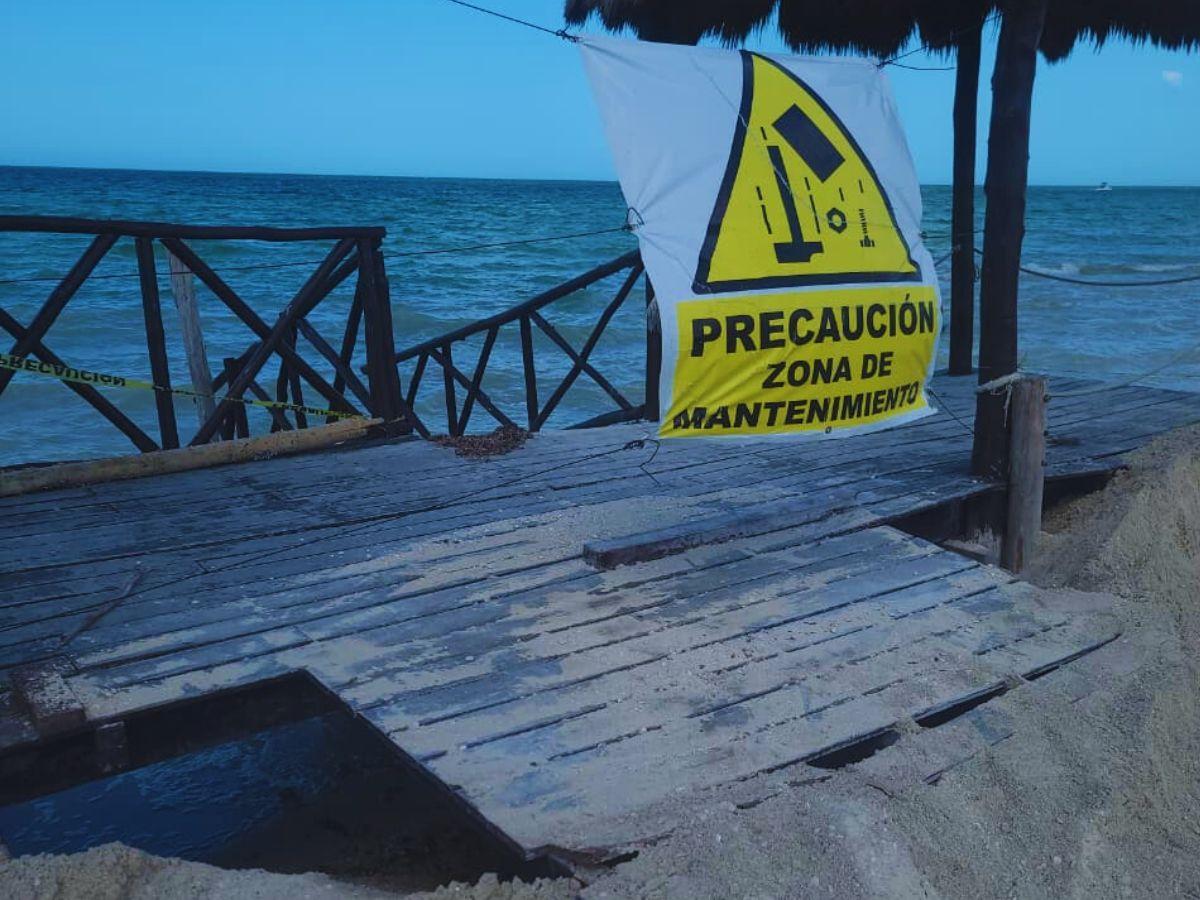 There are areas where the sea can already be seen inland. Photo: Gaby Burgos.
The new phase of expansion, which includes dredging and the creation of new platforms, has reactivated social and environmental concern. Aguilar Perera warned that impact studies have not comprehensively evaluated the cumulative effects, that is, the sum of the historic impact of the port plus the new projects planned.
“Dredging is extremely invasive, it destroys the habitat because it is excavated from the bottom and until now it has not been revealed which organisms are being sucked and that has adverse biological consequences. It's not just sand that they extract, there are corals, rocks, invertebrates, crustaceans, mollusks, fish, so an ecological balance is broken,” he described.
In addition to the damage to marine organisms, the researcher pointed out that the expansion of the Altura Port will cause displacements in coastal currents.
“Since the construction of this work, it caused damage that was reflected in coastal erosion, and now with the next phase of the project, the situation will worsen. The government has handled this as an important economic point because it will increase the arrival of merchant ships and based on that they are accelerating the approval of the Environmental Impact Manifestation,” he added.
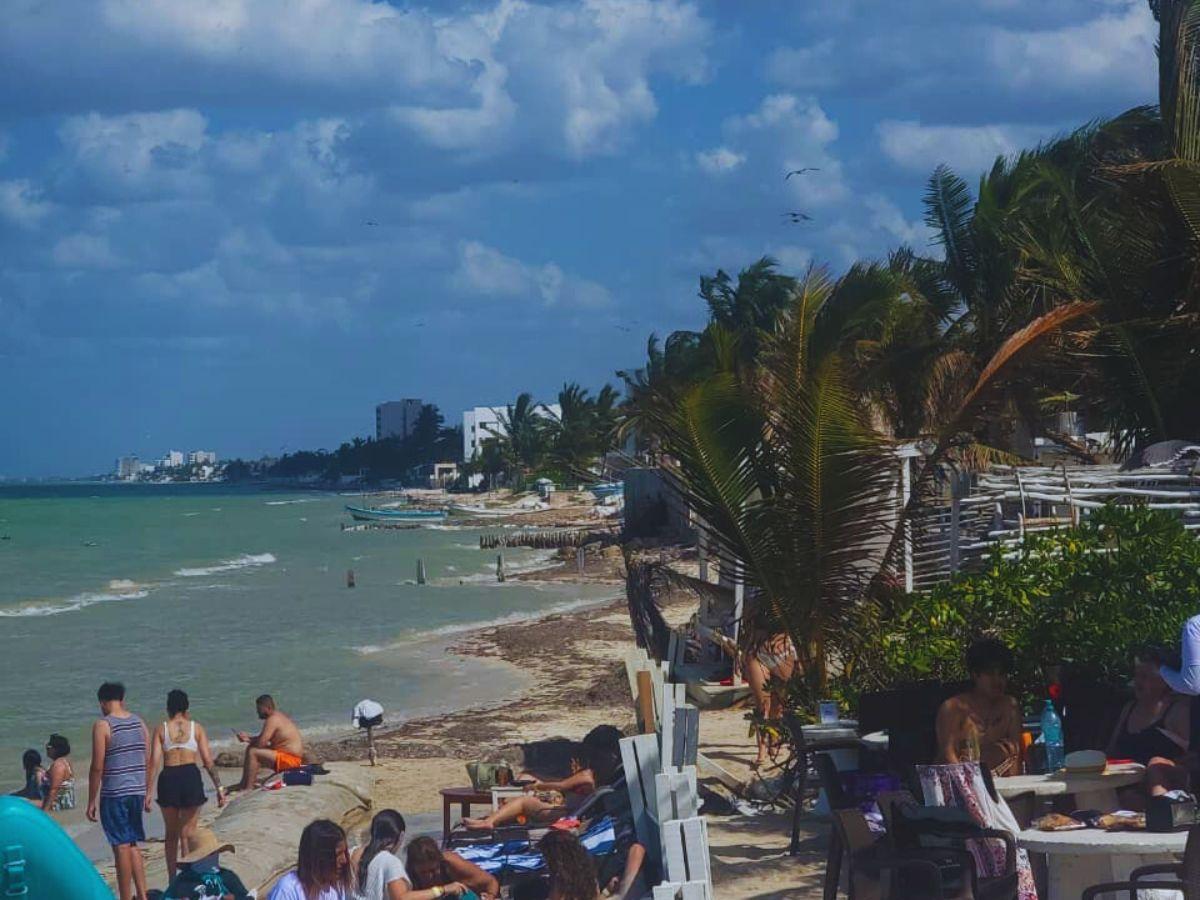 The tourist area of Progreso is already being affected by erosion. Photo: Gaby Burgos.
Chelem is also among other areas highly affected by erosion, and there its inhabitants are already witnessing the reduction of their beaches.
“Every summer we spent it on the beaches, we spent all our holidays there and there was actually a lot of beach, that is, a lot of sandy terrain, now the truth is that there are no longer many spaces where you can lie on the sand, there are a few places left, but isolated,” said Mariana Góngora, a resident of the port of Chelem.
The mayor of Progreso, Erick Rihani, assured that the City Council works in coordination with the State Government to protect the boardwalk and face the effects of coastal erosion, a phenomenon that affects the peninsula.
He also reported that a beach restoration program is being promoted and that in police stations such as Chuburná, a coastal dune recovery project is being developed, particularly in the part of the beach, where actions are being reinforced to conserve this natural barrier.
He stressed that in Chicxulub Puerto a mangrove restoration program is being implemented that covered more than 10 hectares last year and that this year the goal is to expand an additional 20 hectares. He explained that these measures seek to prevent the sea from continuing to “wash” the sand and protect the coastal strip.
“The sand from the dredges in Sisal is being donated to the municipality for strategic relocation as a protection scheme for the Malecón. It's a constant battle, but we're not willing to lose it,” he said.
While the official speech presents the expansion of the Port of Altura as a strategic project for the state's economic growth, the federal resolution itself on environmental impact, issued by the Ministry of Environment and Natural Resources (Semarnat) documents risks that reveal the effects on coastal communities.
In letter SGPA/DGIRA/DG-06180-21, the General Directorate of Environmental Impact and Risk (DGIRA) recognizes that with the construction of the platform “significant impacts will be generated to the coastline adjacent to the Port of Altura de Progreso”.
The same resolution admits that there are beaches such as Chuburná and Chelem that have suffered beach surface losses since the construction of infrastructure in Puerto de Altura, and it is even stated that erosion problems have been observed 7 kilometers from the Progreso pier.
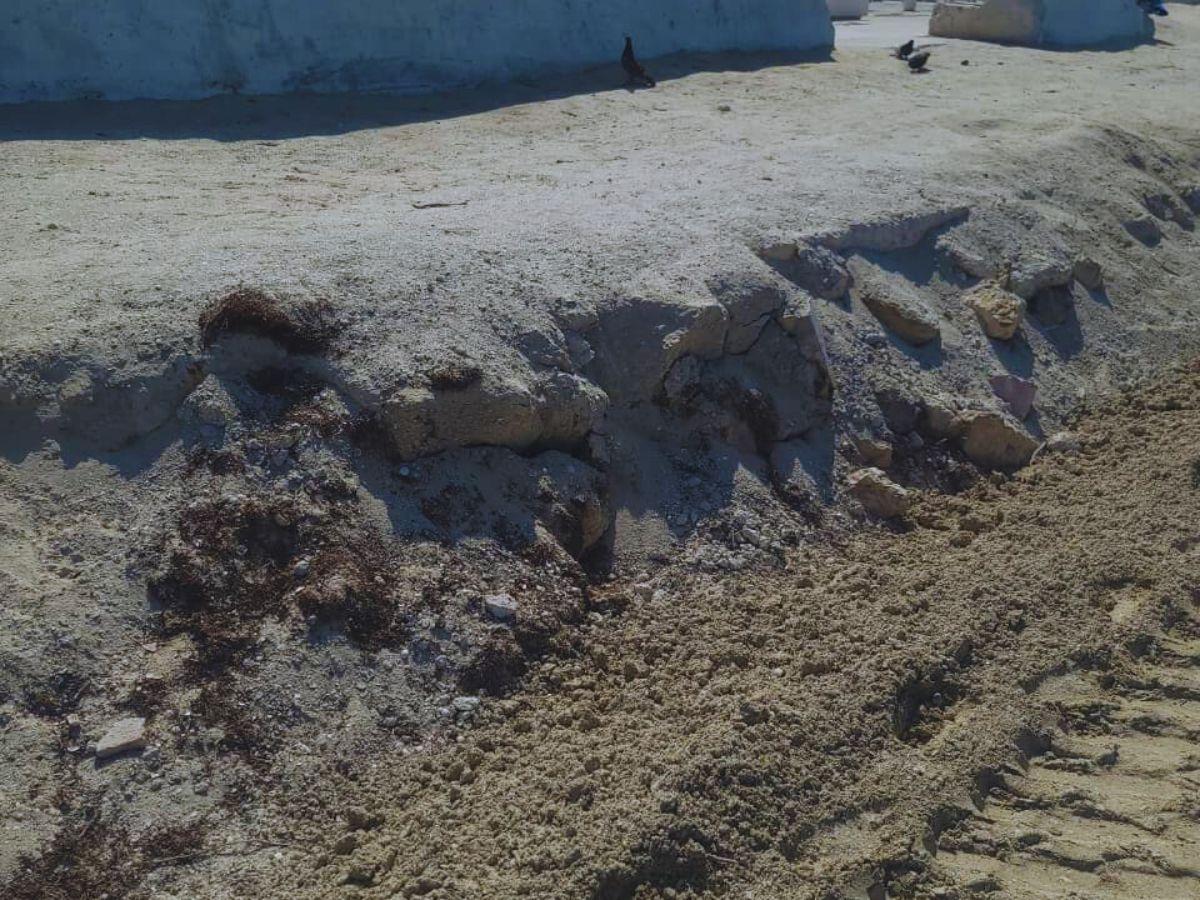 There are long stretches where degradation is observed in this way. Photo: Gaby Burgos.
Despite these technical recognitions, the project was authorized conditioned on the implementation of monitoring programs and the possible presentation of coastal protection alternatives to avoid processes of destabilization of the coast in terms of erosion, that is, the authorization was granted even though the environmental authority itself recognizes significant impacts, cumulative effects and documented history of beach loss linked to existing port infrastructure.
“There are studies that indicate that the structure has drastically modified coastal hydrodynamics, interrupting the coastal transport of sediments, on the beaches of Chuburná and Chelem. Therefore, this Administrative Unit considers it appropriate that in order to have a more reliable technical and environmental support, it will be necessary to analyze the baseline of the coast, analyzing everything from the beaches of Chuburná to the Port of Chicxulub, which will allow us to identify the general behavior of the coastline, due to the construction of port infrastructure”, reads the document.
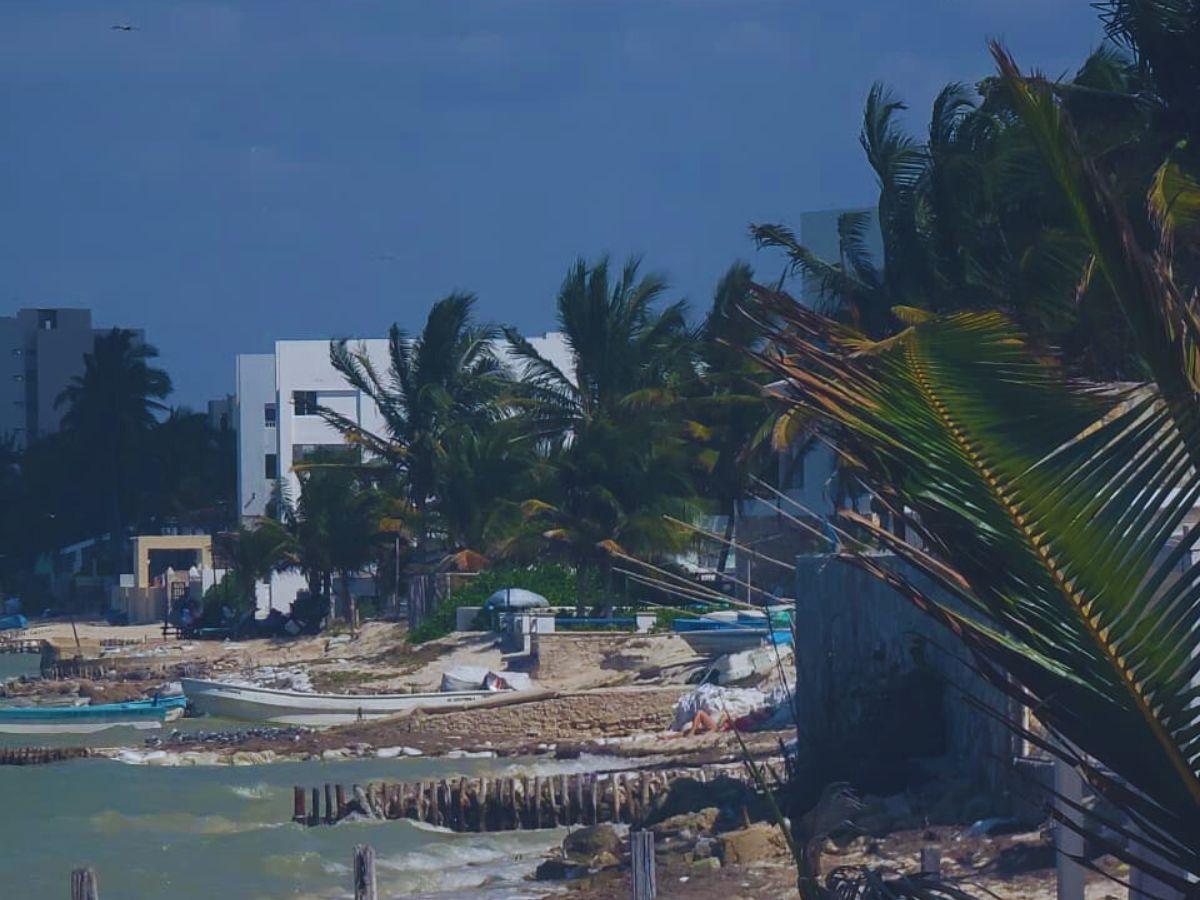 Fishermen even have nowhere to place their boats anymore. Photo: Gaby Burgos.
Regional pressure and sand deficit
Researcher Gabriela Mendoza González, from the Institute of Ecology of the National Autonomous University of Mexico (UNAM), explained that the entire Yucatecan coast faces high pressure due to erosion, although specific factors are involved in each area.
“The entire Yucatan coastal strip is currently under high pressure. Despite the fact that the beach is highly rated. Building around this ecosystem, without any type of regulation or protection, means that in the state we already have sand deficits,” said Gabriela.
The Directorate of the Federal Maritime Terrestrial Zone (Zofemat) of Progreso was asked for information on the number of houses directly affected by erosion in the municipality, but the agency reported that there is still no census.
A regional study on coastal erosion estimated that between 1980 and 2019 the peninsula's coastline receded by up to 19 meters at some points.
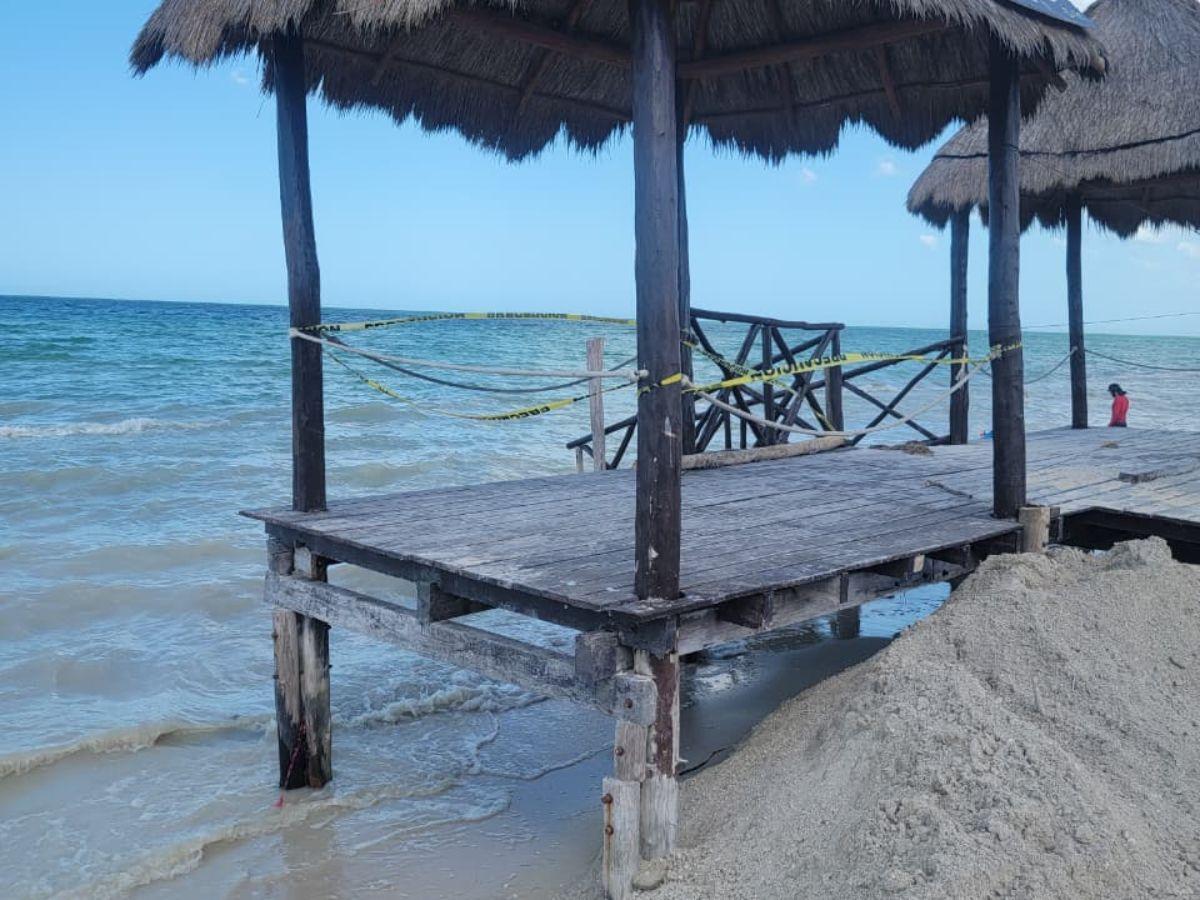 Infrastructure intended for tourism is already affected by the advance of the sea. Photo: Gaby Burgos.
For her part, Brenda Cardozo Miss, researcher at the Faculty of Social Sciences of the Autonomous University of Campeche, in the study “Progreso, Yucatán: Challenges and Opportunities in the Conservation and Development of its Coastal Zone”, carried out together with other colleagues, has documented that rising sea levels and erosion are among the most latent threats to the Progreso area. Low-lying, flat areas close to the coast can be flooded, affecting infrastructure and local communities.
Faced with this scenario, he stated that one of the strategies to mitigate risk is to promote the restoration and conservation of mangroves and coastal dunes as natural barriers against waves and erosion, as well as the protection of seagrass meadows that stabilize sediments.
“One of the key strategies is risk monitoring and assessment, which involves the implementation of early warning systems to detect changes in sea level and extreme events, as well as hydrodynamic modeling studies to predict flood and coastal erosion scenarios,” they said in the study.
The commissioner of Chicxulub Puerto, José Artemio de la Cruz May, confirmed that erosion has worsened to the point that waves rub against the walls of some houses.
In some areas, the space between the sea and houses is just one meter. As the years go by, he notices that the stretch of beach continues to shrink.
“The truth is getting more serious, and tourism has also been affected because visitors come and there is no longer anywhere they can settle,” he said.
* This article was written by Itzel Chan, who covers coastal communities thanks to the support of the Report for the World program .


Comentarios (0)