
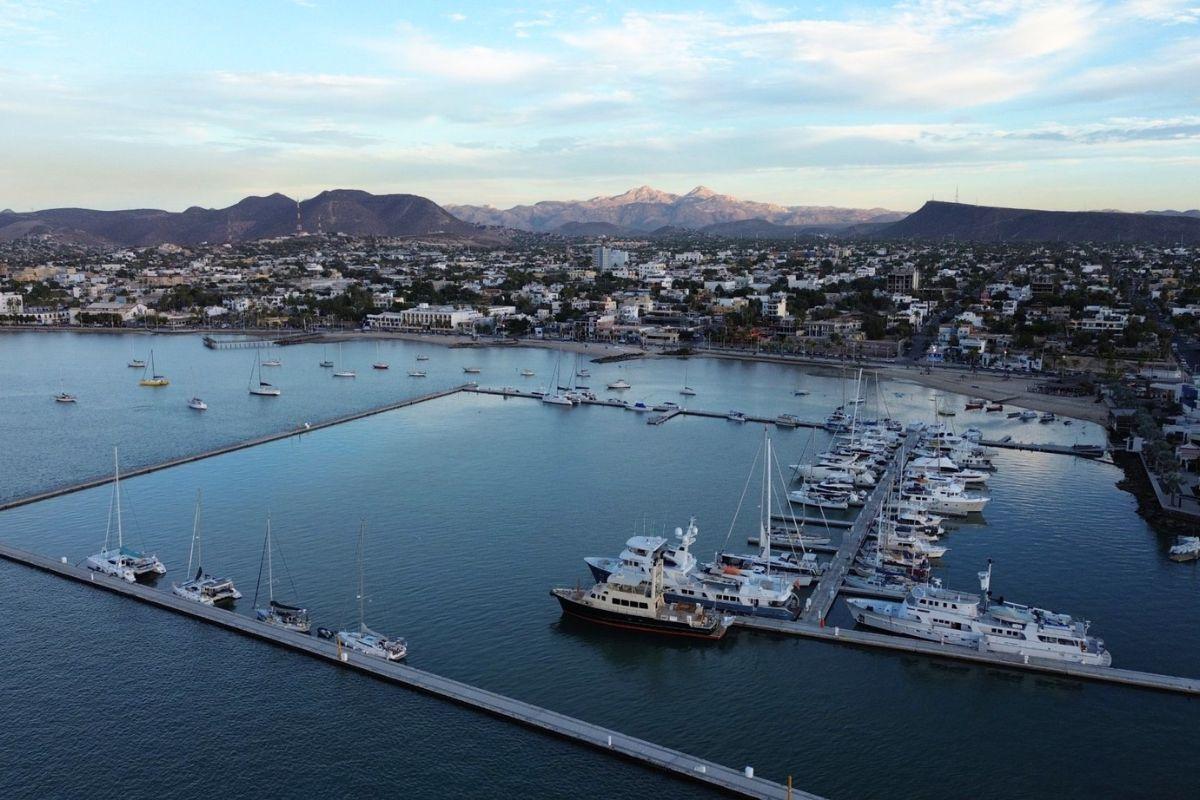
On December 11, the Congress of Baja California Sur approved the collection of the right to environmental sanitation that applies in Los Cabos to the rest of the municipalities of the state: Mulegé, Comondú, Loreto and La Paz.
This right requires, as of January 1, the payment of a tax for the acquisition of real estate and for the rental of lodgings, boats and vehicles, which will be collected by municipalities and managed by a public trust.
The environmental sanitation tax is a tourist contribution that is applied in Mexican destinations such as Quintana Roo and now in Baja California Sur, with the objective of taking actions that preserve sustainable development, restore ecological balance and protect the environment.
“These are actions to recover the functional conditions of an ecosystem or species, and even not only to recover them, but to create conditions in which they can be sustained,” explained Mario Sánchez, Cemda's northwestern regional director.
In accordance with the tax law of these four municipalities, and with the value of the Measurement and Update Unit (UMA) in effect since February 1 ($117.31 pesos), users must pay $82 pesos per room per night occupied in hotels; $234.62 pesos per reservation on lodging platforms; and $58 pesos per day for the rental of vehicles and boats.
During 2026, the City Council of La Paz estimates to raise between 8 and 12 million pesos, according to Jassiel Enríquez, municipal treasurer, on March 19, during a meeting with local businessmen at the National Chamber of Commerce, Services and Tourism (Canaco) La Paz.
However, the implementation of the tax in La Paz comes amid disagreements on the part of service providers and proposals from organizations such as the Mexican Center for Environmental Law (Cemda) to form an open trust and prevent it from being perverted or managed discretionally, as has happened with other trusts.
For this article, Causa Natura Media requested an interview with the deputies Guadalupe Saldaña of the National Action Party and Guadalupe Vázquez Jacinto of the Morena Party and president of the Committee on Fiscal and Administrative Affairs in the Congress of Baja California Sur, however, they did not materialize until the time of publication.
Transparent Trust
Service providers must make the payment on the 17th of each month through a portal, and the City Council will transfer the resources to the account of a public trust, a legal-financial instrument that the State creates to manage resources for specific purposes.
“Trusts with public resources are a black box, they are very complex and we have many areas of opportunity in governance, in the way in which decision-making bodies are composed. I think that complexity has not been fully resolved. It's not a bad figure on its own or not very transparent, but it can be perverted. The issue is how the bodies are formed, how decisions are made and how transparent they are,” said Sánchez.
Once the money is raised, the trust committee will evaluate the projects that will be executed with those resources.
Tentatively, the La Paz committee will consist of the municipal president, the municipal treasurer, the municipal trustee and the director of Integral City Management; as well as representatives of the Autonomous University of Baja California Sur and the heads of the Business Coordinating Council, the Canaco and the Association of Hotel and Tourism Companies (Emprhotur) of La Paz, Enríquez said.
“In the governing bodies of trusts, there are mostly government people. There is not much voice from organizations or other sectors. There should be citizen representation of those who are being subject to the payment of the tax. And in decision-making there must be votes that allow balancing, but without paralyzing,” Sánchez added.
Faced with this suggestion, Enríquez expressed his willingness to add more actors to the committee and to formally receive other suggestions and projects to be financed.
“We will have the right legal instruments to ensure proper functioning, accountability and transparency. There will be regulations, guidelines and manuals; subcommittees will be formed depending on the actions to be carried out; we will meet monthly, provide financial reports and report what the projects are and how much money is in the bank accounts,” he explained.
Sánchez added that the open trust could begin with a public call for its formation, so that the process is transparent and all committee sessions are public.
“The opening request is to show that work in trusts can be done differently and to begin this type of open trusts, where citizens can have information in almost real time and digitally monitor the sessions,” he proposed.
Disagreements in the hosting industry
Although the tax was approved in December 2025 and came into effect in January 2026, most service providers in La Paz learned until the meeting with the municipal treasurer that they should withhold this tax and cover the payment for March.
Therefore, one of the main disagreements is that they must absorb the cost of the tax, since it is not feasible to modify the price of previously confirmed reservations.
“For all those reservations that were made before this new tax came out, what's going to happen? I'm going to have to absorb the direct cost. The ideal would have been for them to give at least six months to organize us,” said David Gutiérrez, from the El Moro Hotel, during the meeting.
This tax is in addition to 4% on lodging charged by the state government and 16% of Value Added Tax (VAT), so they also point out that it will make the destination more expensive and affect the viability of the business.
“If this right to environmental sanitation is applied as is, many jobs are going to disappear. For example, cheaper Airbnb accommodations could disappear. It's a reality,” said Cristina Torres, host of digital platforms in La Paz, who added that this will affect users, hosts and the entire network of services that support these accommodations.
Other disagreements include the responsibility of service providers to act as tax collectors; and the disproportion between charging hotels and digital platforms.
Currently, the law is already in force and any amendment would involve reforming the municipal tax laws, so the collection of the tax is imminent. Given this, Torres and Cari Geraldo, also the host, consider it positive that their guild is represented on the trust committee, since it could be one of those that contribute the most to the collection in La Paz.
Use of resources
One of the issues that raises concerns both at Cemda and among the hosts is the type of projects that will be financed with these resources.
The law states that the proceeds will be used for sustainable development, the preservation and restoration of ecological balance and environmental protection. However, Sánchez pointed out that it is limited to a list of actions such as improving public space; conservation and maintenance of beaches; public lighting; wastewater treatment; water purification; and improving mobility.
“It is not specified whether these actions derive from studies or from identified environmental needs, which may generate controversy over possible double taxation. In other words, it is assumed that other taxes already cover these services,” he explained.
“None of the hosts are opposed to paying, because we recognize that tourism has an environmental impact, but it is a law that has no studies to support it. That's the problem with legislating like this: it generates a lot of injustice and inequality,” Torres said.
To solve this, Sánchez proposed carrying out a study of environmental sanitation needs or resuming priorities based on territorial analysis and Protected Natural Areas (ANP).
Among the possible actions, he mentioned attention to clandestine garbage dumps, restoration of degraded areas, cleaning and surveillance of streams, removal of stranded vessels, restoration of mangroves and improvement of environmental quality.


Comentarios (0)