
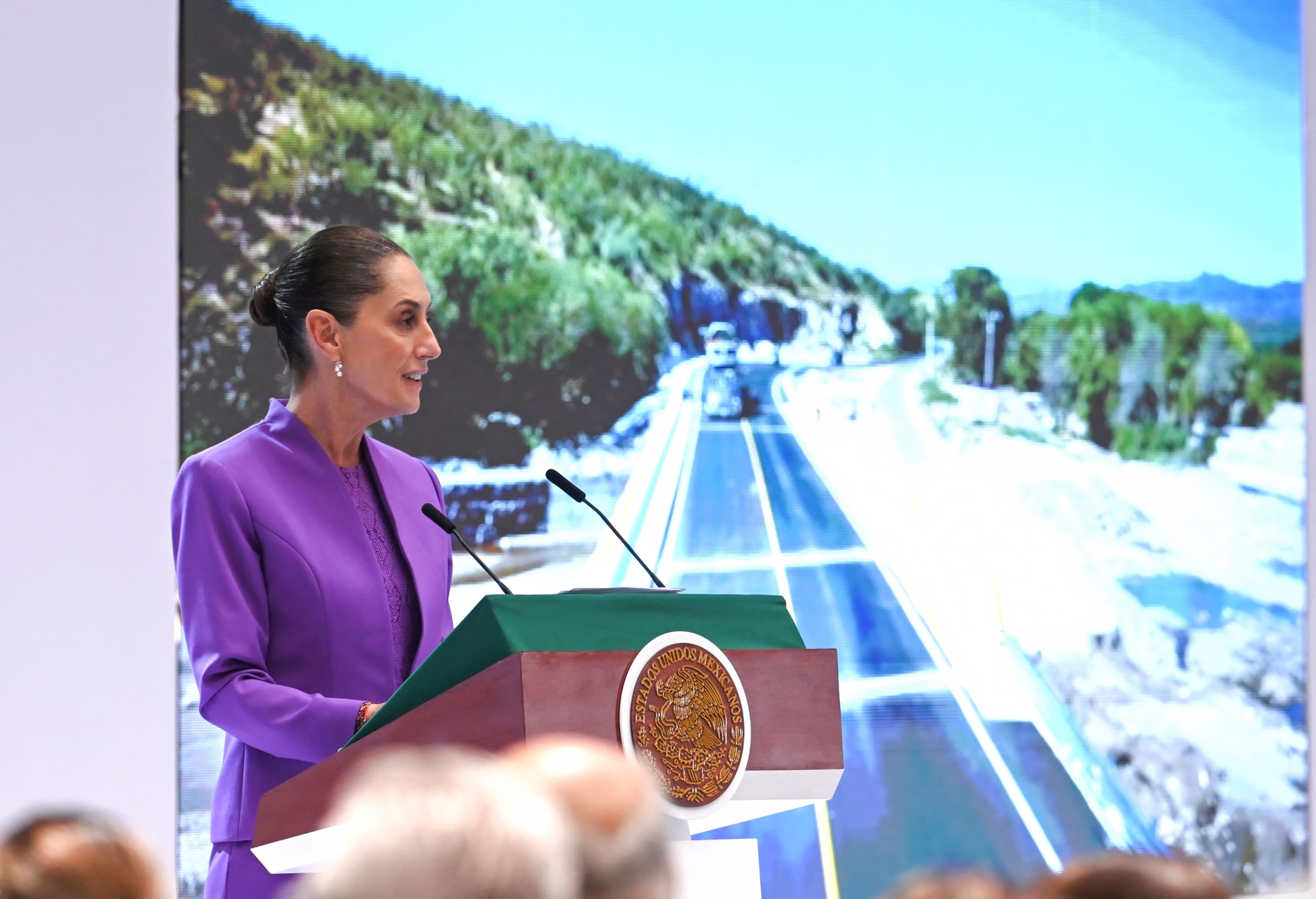
Water, river sanitation, energy transition and biodiversity conservation were some of the environmental issues included by President Claudia Sheinbaum in her Second Government Report.
In terms of water, Sheinbaum highlighted the comprehensive reform of the National Water Act published in December 2025. During the report, he noted that water came to be recognized as “a human right and a resource of the nation”.
Since the reform, he said, more than 5 billion cubic meters of water were recovered, a volume that, according to his estimate, is enough to supply more than 90 million people for one year. It also reported the delivery of 12,346 concession titles to communities, small and medium-sized producers, as well as the allocation of water to municipalities that previously had to pay for it to individuals. As an example, he mentioned Mexicali and Tijuana, where, he said, they now have direct concessions from the National Water Commission.
River sanitation occupied another section of the report. The president said that the first phase of work is under way on the Atoyac, Lerma-Santiago and Tula rivers, with the construction and rehabilitation of 23 treatment plants and 282 kilometers of collectors. The works include the removal and cleaning of channels and the construction of public spaces.
In the case of the Atoyac River, the National Human Rights Commission (CNDH), in its Recommendation 10/2017, documented effects on human rights resulting from the pollution of the Atoyac and Xochiac rivers and their tributaries.
The Fray Julián Garcés Center, one of the organizations that has accompanied communities in the basin, has maintained as a demand comprehensive compliance with this recommendation and the monitoring of environmental and health impacts.
In addition to these works, there are sanitation actions in the Tijuana rivers, in Baja California; Nogales, in Sonora, and La Sabana, in Guerrero.
Also read: Chuburná fights to save the dunes of a real estate project
In hydroagricultural infrastructure, Sheinbaum reported the modernization and technification of more than 250,000 hectares in 19 irrigation districts in 15 states. According to the report, these works will increase the productivity of the field and release water for human consumption.
The report also reported 17 strategic water projects with the objective of “guaranteeing the human right to water and reducing the risk of flooding”. Among them are works for the Eastern Zone of the State of Mexico and the Metropolitan Area of the Valley of Mexico, both with a reported increase of 40 percent. The completion of 200 kilometers of Healthy Water trunk networks for La Laguna, in Coahuila, was also reported.
The list presented during the report includes dams such as El Novillo, in Baja California Sur; the Campeche aqueduct; the Acapulco Transforms With You program, with drinking water, drainage, sanitation and flood prevention; the second line of the Guadalupe Victoria aqueduct, in Tamaulipas; a new aqueduct for the city of Colima and the Tunal 2 dam in Durango, among others.
“With the objective of guaranteeing the human right to water and reducing the risk of floods, 17 strategic projects are being promoted,” said the president during the report.
Sheinbaum added that, with coordinated resources between the three levels of government, 24,000 drinking water and drainage works are being carried out in 2,183 municipalities in the country.
Don't miss: Semarnat keeps liquefied natural gas projects in Sonora under evaluation
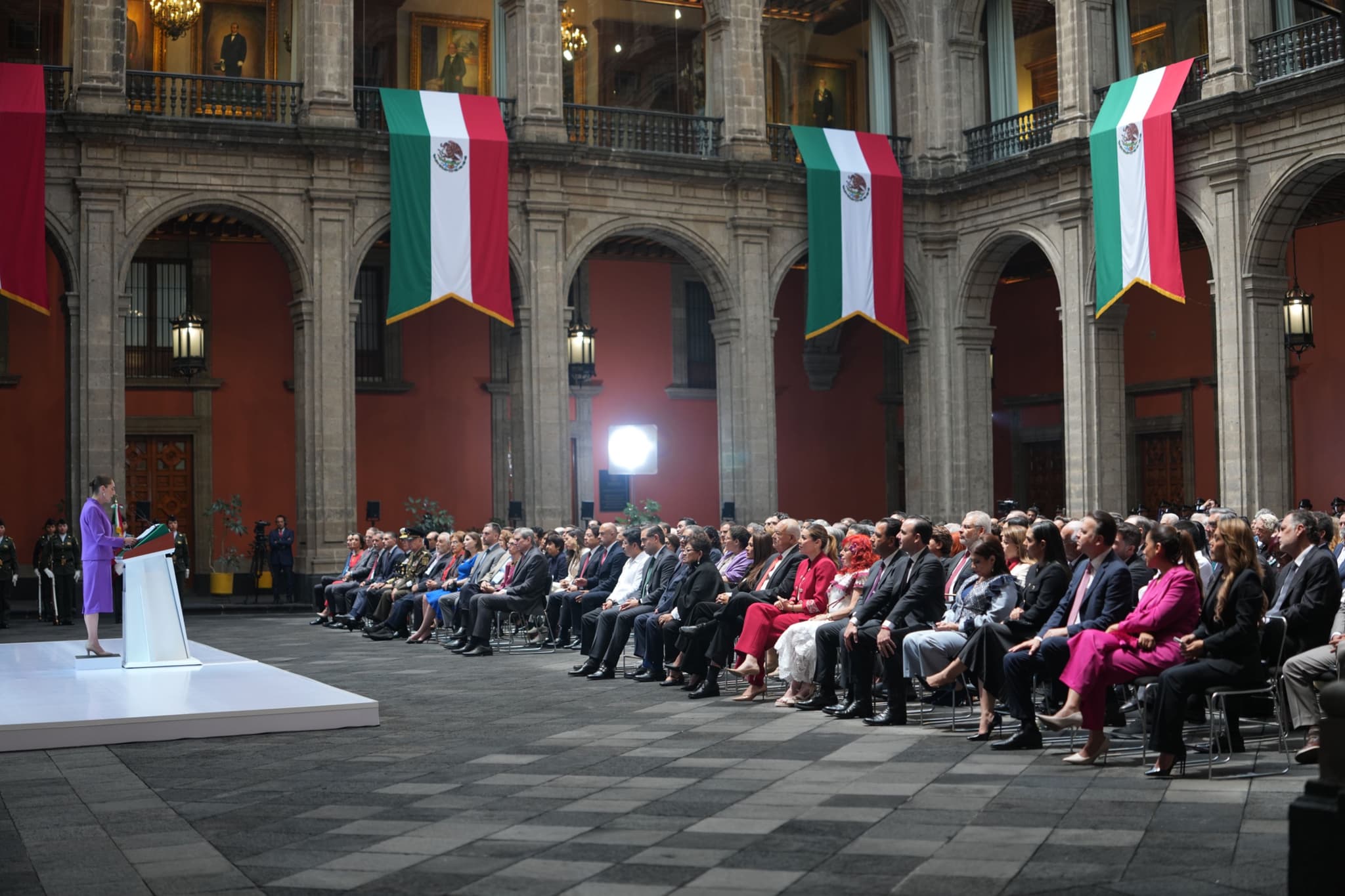
Native corn, reforestation and environmental monitoring
Agricultural biodiversity appeared in the report through the program “From corn is the root”. Sheinbaum noted that 600,000 farmers participate in producer groups to improve seeds using traditional methods. Among the objectives of the program, which is part of Sembrando Vida, he mentioned increasing productivity, ensuring self-consumption, achieving a fair price for corn and conserving the genetic biodiversity of the different breeds of native corn.
As part of the report, Sheinbaum reported the participation of 445,000 people in Sowing Life. With the program, he said, actions are being developed for the production and establishment of native and endemic species linked to the restoration of ecosystems. By 2026, the establishment of nearly 300 million plants of more than 230 native and endemic species is planned, as part of a restoration strategy in 21 ecosystems.
With regard to the National Reforestation Days 2026, there is a goal of 6.6 million trees and plants and one million seeds in 32 thousand 184 hectares in the 32 entities. The strategy envisages producing and planting 1.5 billion plants, trees and seeds between 2026 and 2030.
However, data from Global Forest Watch, a platform of the World Resources Institute, record a cumulative loss of 5.4 million hectares of tree cover in Mexico between 2001 and 2025, equivalent to 10% of the tree cover recorded in 2000. In 2025, 220,000 hectares of natural forest were lost. The platform distinguishes between tree cover loss and cover gain, so the loss figure does not in itself represent a net balance of forest area.
The environmental component also appeared in the scientific innovation projects presented during the report. Among the 20 strategic projects mentioned above is a “metaoceanic climate monitoring and civil protection system”, together with observation satellites, the Kutsari project for semiconductor design and the Quetzal unmanned aerial vehicle.
Read: The sea is eating away at a town in Oaxaca; the second community displaced by coastal erosion in Mexico

Unconventional gas and energy
Sheinbaum reported that the government formed a plural committee of experts from different public institutions and disciplines to analyze the viability of exploiting unconventional gas in Mexico.
During the report, he said, as he had already anticipated on the morning of August 6, that the group's first conclusion was to establish a ban on the exploitation of unconventional gas in the Tampico-Misantla basin “so as not to harm communities and natural resources.” The president added that the conclusion will be respected by the government. He also reported that the availability of water in the deep subsoil of the Burgos basin is being studied.
In terms of energy, the president promised that by the end of the six-year term, an additional 32,000 megawatts will have been added to the National Interconnected System and that the share of renewable energies will increase from 24 to 38 percent.
During the first two years of government, he reported the completion of six combined cycle plants, with a combined capacity of 3,000 megawatts, as well as the rehabilitation, modernization and repowering of eight hydroelectric power plants.
In February 2026, he added, the private sector was called upon to participate in power generation projects through mixed investment schemes with a proportion of 54% public and 46% private. Subsequently, 38 projects were approved with a total generation capacity of 8,025 megawatts and more than 2,500 megawatts of storage, with an investment of 10,600 million dollars.
The Federal Electricity Commission also initiated, according to the report, an investment plan of more than 244 billion pesos to modernize and expand transmission and distribution networks. Through the Energy Justice Plan, 20,377 electrification works were carried out for the benefit of more than 600,000 people in 13,000 remote communities. The goal set by Sheinbaum is to achieve 99.9 percent electrification by 2030.
In distributed solar generation, the president announced the installation of 5,000 photovoltaic panels for homes in Mexicali and announced the expansion of the program.
The report did not include a specific reference to liquefied natural gas projects that are under evaluation and judicially arrested in the Gulf of California and that involve Sonora and Sinaloa. These are Saguaro Energía and AMIGO LNG. This, despite the fact that the Congressional Standing Committee approved on August 19 a call for Semarnat and the Security, Energy and Environment Agency (ASEA) to continue their comprehensive review.
It may interest you: “Whales or gas?” : 90,000 firms demand that JPMorgan and Santander abandon a project in the Gulf of California


Comentarios (0)