
By Alejandra Vargas
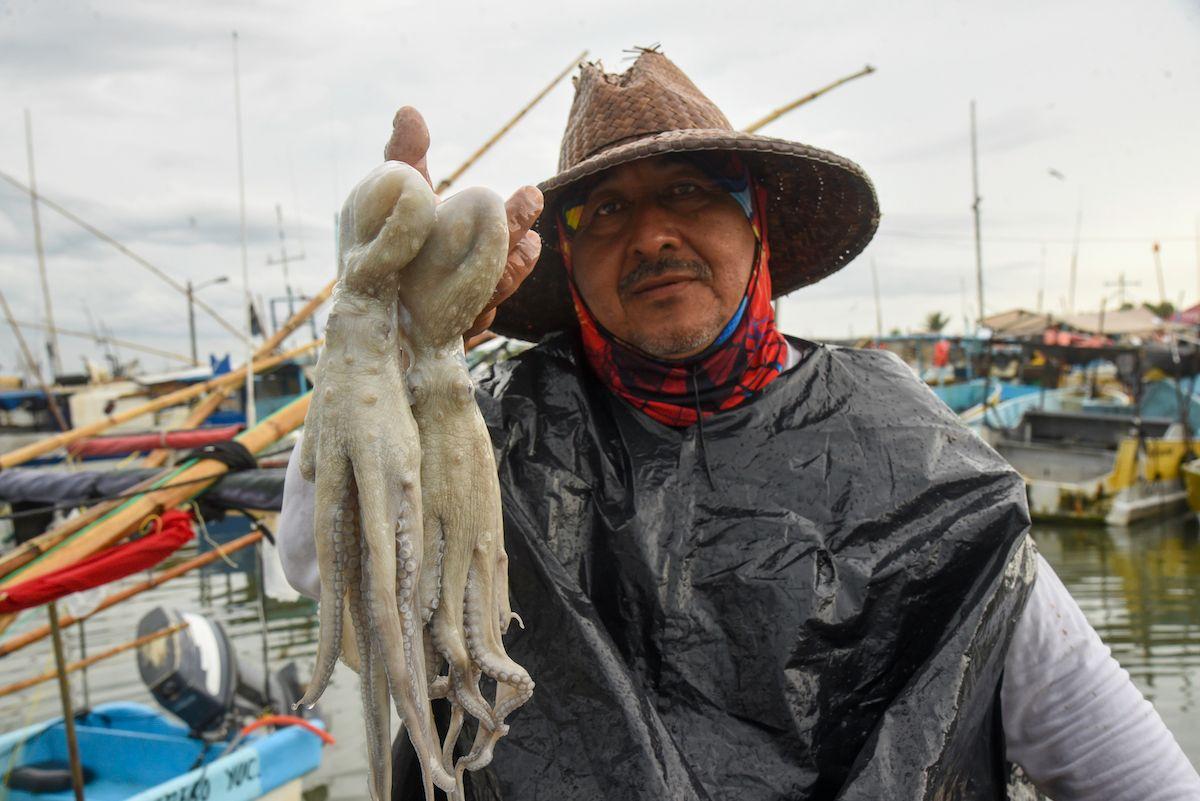
The Yucatan Continental Shelf is home to the Mayan octopus (Octopus maya), a species endemic to the region and one of the state's main fisheries. However, fishermen report that it is becoming increasingly difficult to catch it.
Its scarcity is largely attributed to poaching, but climate change would also be influencing octopus behavior.
Since 2014, Dr. Carlos Rosas, professor of the Multidisciplinary Teaching and Research Unit of Sisal at the National Autonomous University of Mexico (UNAM), has been studying how the warming of the sea is forcing octopus to migrate to cooler waters, in addition to affecting their reproductive cycle.
Those most affected are coastal fishermen who must increasingly go further into the sea in search of their livelihood.
Impact of temperature on octopus reproduction
One of the most important findings of Doctor Rosas's studies relates to the effects of thermal stress on the reproductive cycle of the Mayan octopus.
The thermal sensitivity of octopuses, explains the expert, varies depending on the time of their life in which they are found. Individuals of reproductive age and embryos tolerate between 22 and 26°C, which are ideal temperatures for the reproductive cycle to work.
On the other hand, juveniles, i.e. those that have not yet reached the maturity to reproduce, are a little more flexible since they tolerate temperatures ranging from 20 to 29 °C. However, tolerance does not depend only on the absolute temperature, but on the time that the octopus stays there.
When the reproduction cycle takes place outside the ideal temperature ranges, both females and embryos undergo thermal stress that has direct consequences on the quantity and quality of the embryos.
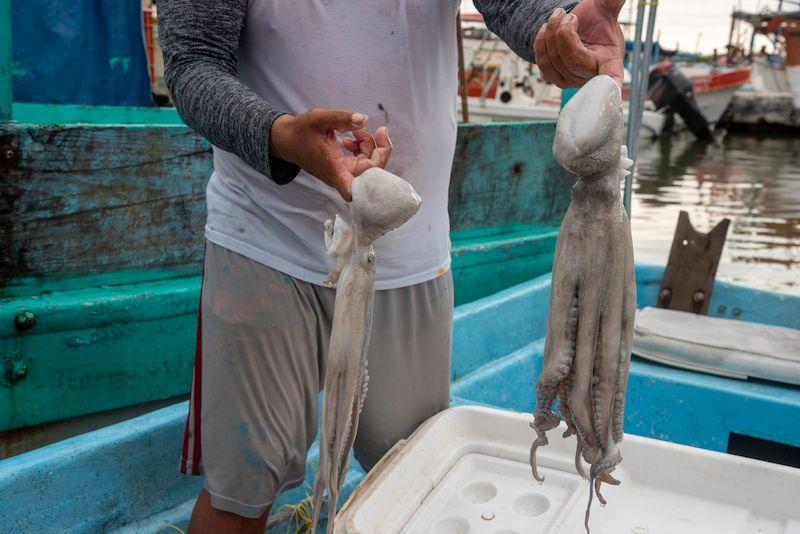
Riparian fishermen are the most affected by the movement of octopus to cooler waters. Photo: David Rico.
In controlled experiments carried out in the laboratory of the Sisal Unit, in Yucatán, it was demonstrated that juvenile specimens that come from embryos developed under optimal conditions can withstand 28 to 30 °C for up to 20 days. But if the juveniles come from embryos that were exposed to thermal stress, that tolerance margin is drastically reduced to about eight days.
According to Rosas, sea temperatures in areas such as Campeche remained above 28°C for several months between 2017 and 2019, while Sisal recorded 30°C during May, June and July 2024.
Through a series of experiments initiated more than a decade ago, the Sisal Unit laboratory has verified that both females and males subjected to high temperatures during reproduction have significant consequences on their ability to generate viable offspring.
According to Rosas, a stressed female may have two problems: producing fewer viable eggs or not laying any. In fact, laboratory studies have documented cases where out of 2000 eggs spawned, only 100 embryos were viable.
The fact is that when seawater heats up, the female transfers free oxygen radicals to the embryo, which are toxic substances that cause deformities in the embryo.
“If the water is very hot, the female produces more radicals. They are put on the embryo and it cannot be born”, explains the scientist. Then the females begin to migrate to colder waters”, explains the scientist.
The reason why the embryo cannot be born, the professor points out, is that, given the heat, they grow with malformations and their ink sac mixes with the circulatory system.
In a research article published in the scientific journal Plos One, researchers from the Sisal Unit explain that embryos incubated at 30°C showed changes in the body, such as smaller arms and difficulty breathing due to mitochondrial dysfunction.
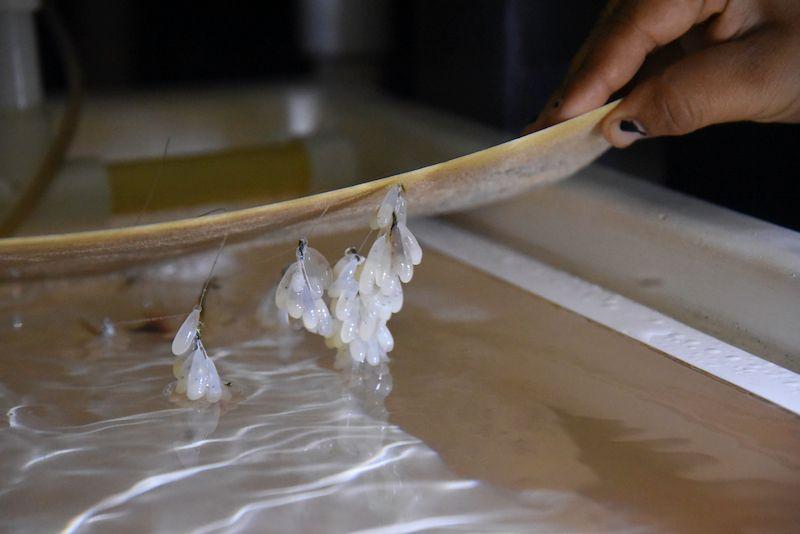
In the laboratory of the Multidisciplinary Teaching and Research Unit of Sisal of the UNAM, they have fertilized octopus eggs to see their development under ideal conditions and under thermal stress. Photo: David Rico.
On the other hand, when males are thermally stressed, their sperm cells deteriorate and their fertilization capacity can be reduced by up to 50% or more. So, even if the female is in colder waters, if most of the males are damaged by thermal stress, the eggs may not receive adequate fertilization.
The cumulative effect of this heat stress on reproduction means that, even if thermal conditions improve in a year, the consequences of the previous year persist.
“If the water is very warm one year, reproduction for the next year won't be as good even if the temperature conditions are ideal,” Rosas says. In other words, “the entry [to the sea] of [new] individuals will be low because last year's females experienced thermal anomalies that led to a lower production of embryos, deformations and, therefore, there will be fewer children for fishing”, explains the researcher.
The scientist points out that this phenomenon has not yet been documented in wild populations, since almost all knowledge comes from laboratory experiments. However, it indicates that they have managed to capture thermally stressed females from the sea.
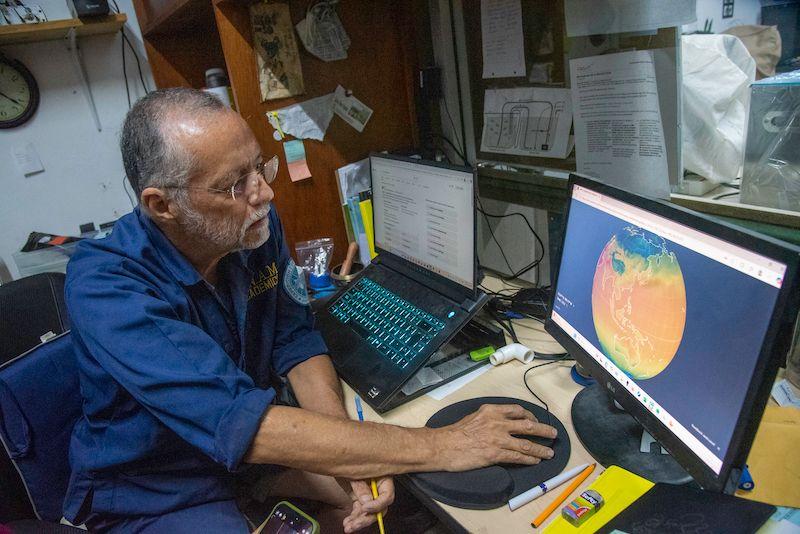
Dr. Carlos Rosas's research suggests that the warming of the sea is affecting the reproductive process of octopuses in Yucatán. Photo: David Rico.
Marine heat waves and their role in octopus behavior
The phenomenon of marine heat waves would be one of the most important factors in the movement of octopus in Yucatán. But this behavior is not exclusive to octopuses, says Dalila Aldana, a researcher at the Center for Research and Advanced Studies of the National Polytechnic Institute (Cinvestav).
“Aquatic species, when they feel warm, do the same thing we do when we seek shade. They move to where the water is cooler, they change places, they move away from the coast or they go to deeper waters.”
Aldana warns that the Caribbean Sea and the Yucatan Peninsula already record temperatures of 30 to 31 °C in summer, values that were thought to reach up to the year 2100, demonstrating the speed with which warming is happening.
In this context, Dr. Eduardo Batllori Sampedro, also a Cinvestav researcher, warns that one of the main challenges in understanding the magnitude of the phenomenon is the lack of constant monitoring.
“The problem is that there is no permanent monitoring to identify what the variation in sea temperature has been in Yucatán or the peninsula, there are only a few records of specific moments and they are regularly a thesis.”
Batllori points out that the available information shows a sustained increase in temperature in the Gulf of Mexico, with averages that in winter are close to 26°C and rise to 28°C in summer.
These waves are not simply temporary temperature spikes. Unlike in the past, heat peaks are not returning to their base levels now. The sea warms up and from there new peaks are generated, meaning that the water temperature increases gradually.
The situation is aggravated by the weakening of the sea currents that previously helped to regulate temperature. In particular, the Atlantic Current, which flows from east to west and which enters through Quintana Roo, helped to cool the entire coast until it reached the border of Yucatán and Campeche.
“Before global warming, this current worked to cool water. Now, with climate change, marine currents change, winds change, things are becoming more intense. When there is a heat wave, this current is not enough to cool this octopus distribution area,” Rosas points out.
In years without heat waves, such as 2025, the current works properly again and conditions improve. But climate change is altering these patterns: heat waves are more frequent, intense and long-lasting.
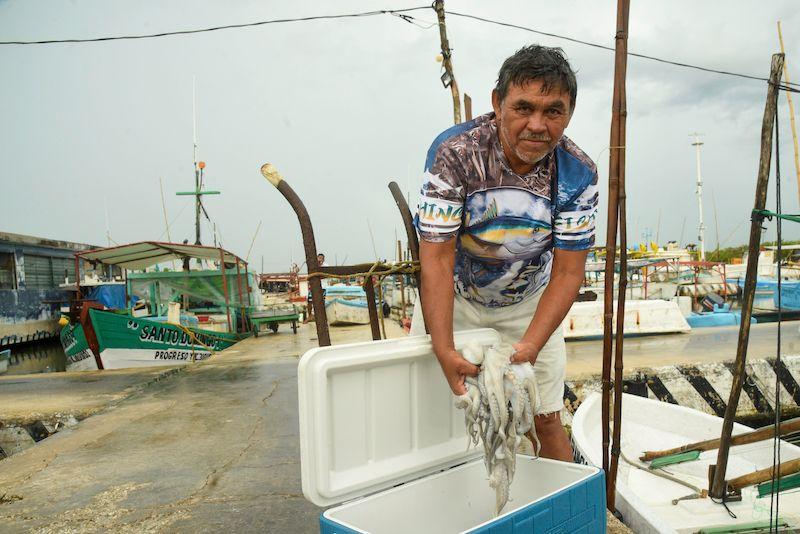
Manuel Quijano Aguirre, fisherman from Progreso, Yucatán. He points out that the start of the octopus catch season started slowly in Yucatán. Photo: David Rico.
Where do octopuses go?
Although it is not yet known exactly where octopuses migrate when thermal conditions are unfavorable, it is certain that they remain on the continental shelf where there is hard soil and food. However, being further away from the coast, it is difficult for coastal fleets to access.
“It will cost coastal residents more money to be able to catch octopus, because they will have to go farther away. That's more fuel, more equipment and also more risk,” Rosas points out.
Octopus fishing is the third most important fishery in Mexico. According to the National Fisheries Charter, an average of 37,000 tons are caught each year, of which Yucatán contributes 72% to the country and 30% of the continent's total octopus production.
According to the National Aquaculture and Fisheries Commission (Conapesca), catch volumes from 2015 to 2024 remained above 20,000 tons. However, while 36,965 tons were caught in 2018, 13,784 tons were caught in 2020.
This year, the octopus season began on August 1 in Yucatán. The start was slow, according to the fishermen. In the first few days they didn't find octopus and in the middle of the season the situation improved a little, although not as expected.
“We riverside people are thronged [badly] because we are grabbing 10 to 20 kilos. The larger fleet is doing well because they go deep inside and they also go to Isla Contoy,” says Moisés León, a fisherman from Progreso.
León explains that in order to find octopus, he now has to go up to 10 miles out to sea. And while sometimes the octopus comes closer, the dynamic has changed. Years ago I could catch them near the shore and now not only do they have to go out to sea, but they have had to get away from the community: before they fished in front of Progreso and now they are going to Telchac Puerto or San Crisanto.
For his part, the fisherman Francisco Canché comments that they used to find octopus on Isla Cervera, the colloquial name of the remote terminal of Puerto de Altura, 6.5 kilometers from the coast.
“Now we have to go about 10 or 11 miles to find octopus, and not very large; those that are nearby are 400 grams. To find bigger octopuses, you have to go a lot deeper,” he says. In addition, the octopuses are between seven and eight meters deep, but years ago they were more on the surface, he says.
In the opinion of scientist Carlos Rosas, better communication is needed between the academy, the government and the fishing sector to create strategies for the benefit of the most vulnerable fishing sector. That way, he says, public policies could be created that provide better conditions for coastal fishermen so that they can cope with climate change.
“We have enough information to be able to predict what is going to happen next year. This is an advantage. With the models of different institutions, it is possible to make predictions of what is going to happen. For example, last year when there were heat waves, I said that at the beginning of this year there would be little octopus, and that was the case, but nobody pays attention to us.”
*This note is part of a collaboration between Mongabay Latam and Causa Natura Media.


Comentarios (0)