
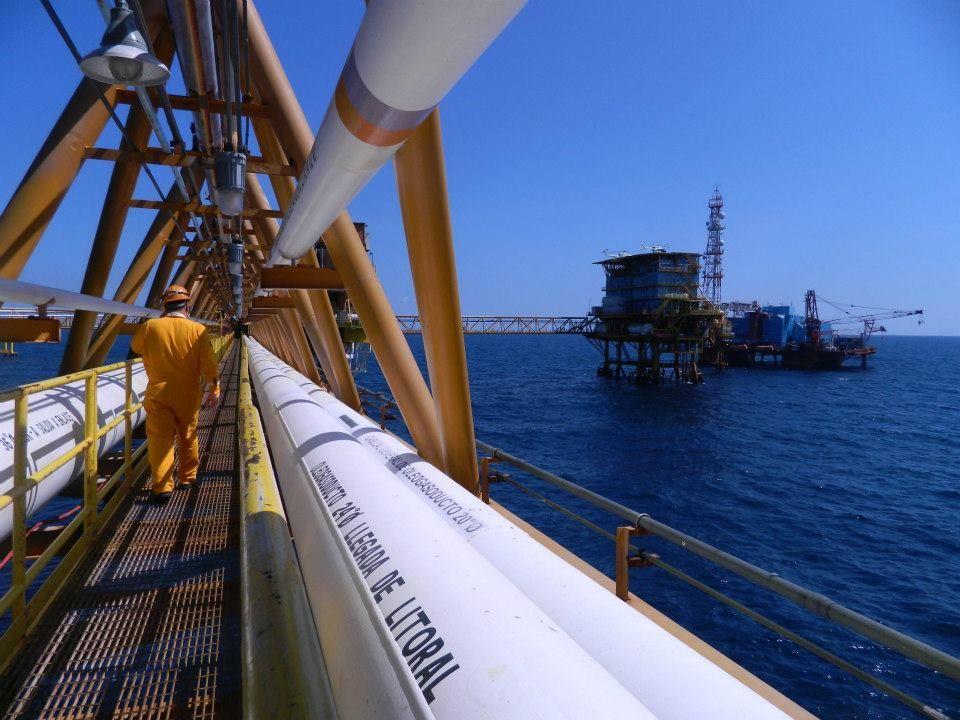
Although the federal government assured that the oil spill in the Gulf of Mexico is under control, fishing communities in Tabasco and Veracruz, together with more than 40 civil society organizations, have reported that environmental and economic damage continues without effective and comprehensive reparation and that Petrleos Mexicanos (Pemex) is still not fully responsible.
Almost three months after the incident, whose responsibility was recognized by Pemex on April 16, fishermen and residents of different localities say that compensation has not reached all the people affected and that many communities remain outside official support schemes.
In a joint position, civil organizations pointed out that the dismissal of three officials related to the management of the spill “punishes lies, but not environmental damage,” in addition to questioning the lack of clear information about the magnitude of the pollution and its impacts along more than 900 kilometers of the Gulf of Mexico coastline.
The groups recalled that the federal government itself recognized that the leak originated in Pemex's Old AK-C pipeline due to a loss of mechanical integrity. However, they reported that the incident was denied by operational areas for several days and that the main valve was not closed until eight days after the leak was detected.
In addition, they criticized the fact that until now there has been no public and reliable calculation of the total volume of hydrocarbon spilled.
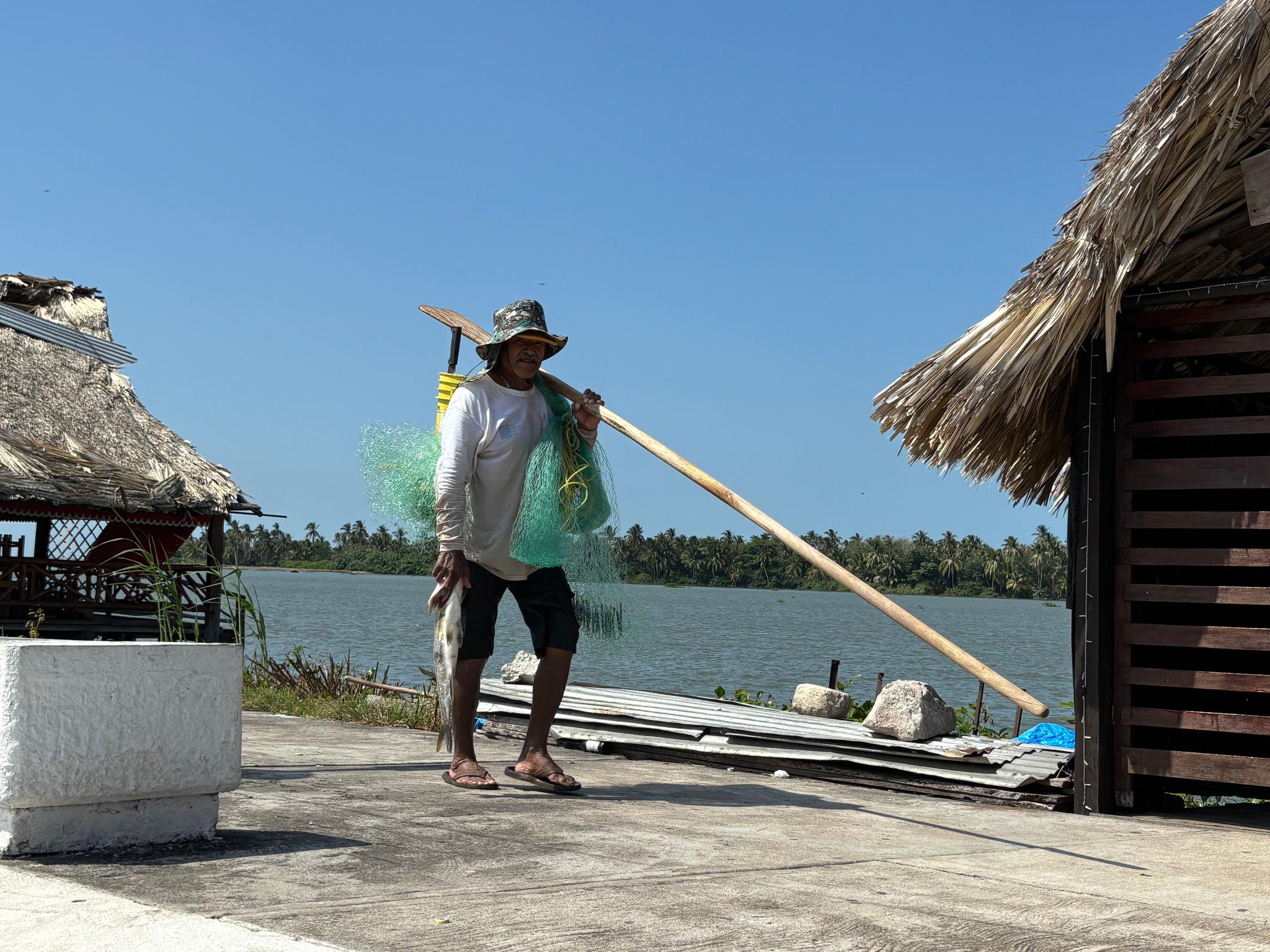 The majority of Tabasco fishermen reported being excluded. Photo: Itzel Chan.
Effects on coastal communities:
The Oceana organization recently visited Las Barrancas, Veracruz, where it found that several affected families have not been included in the reparation programs and that a lack of coordination persists between the responsible institutions.
In that community, fishermen reported that the nets have been out of the water for weeks. Inhabitants said that personnel from the Federal Attorney's Office for Environmental Protection (Profepa) carried out tours and concluded that there was no damage because they did not find any remains of a splash on the beaches.
However, the community maintains that the authorities left out of the analysis the economic losses resulting from the stoppage of fishing during Holy Week, one of the busiest commercial seasons.
The situation is also replicated in El Bosque, Tabasco, considered the first community recognized as being displaced by climate change in Mexico. There, fishermen say that since the spill they have faced difficulties to market their products, as buyers stopped buying fish from the area.
In addition, a large part of the people affected are not registered in the official registers required to access government support, which has left many families without an institutional response.
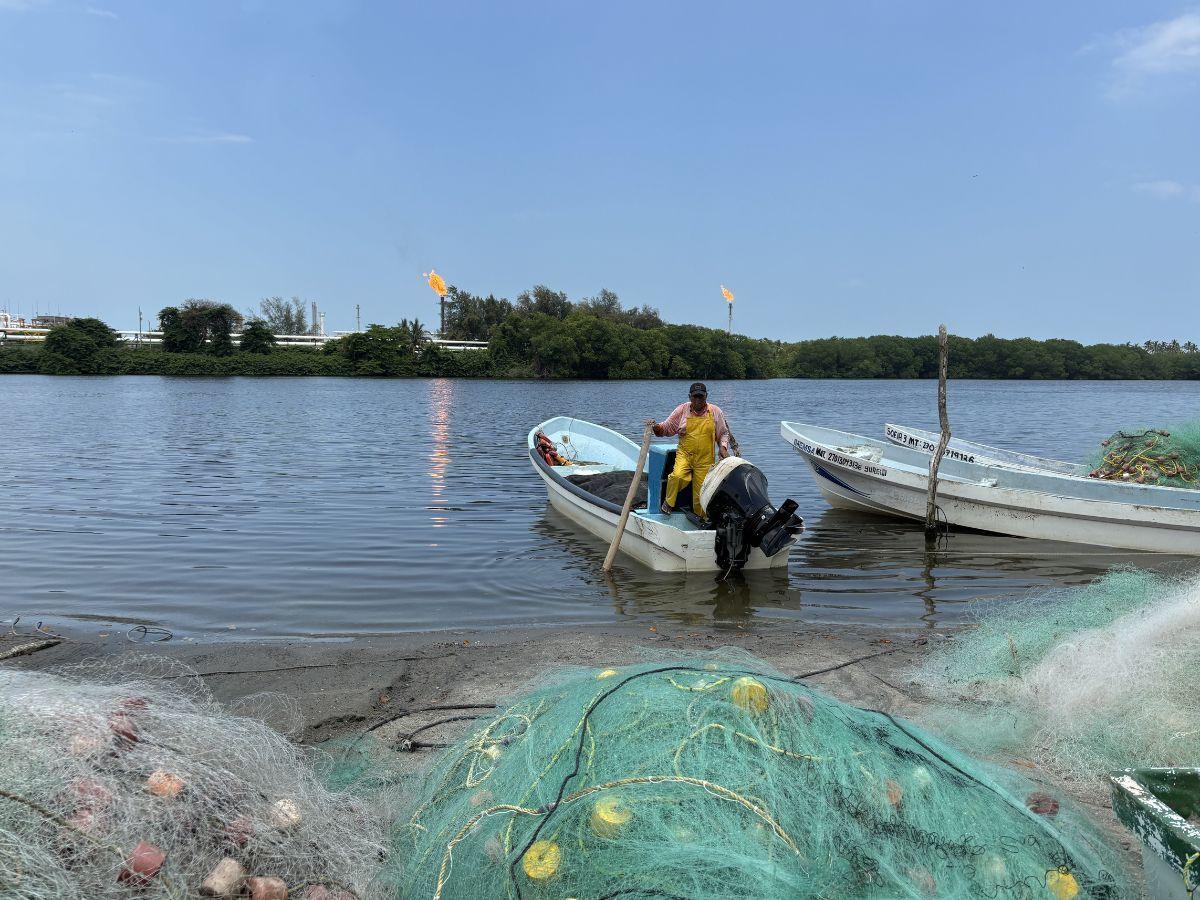
 Fishermen indicate that they have not been able to distribute their products. Photo: Felix Márquez, Oceana.
The Barrancas and El Bosque also share other problems related to the climate crisis, such as coastal erosion and rising sea levels.
“I sleep with the sea on the back of my neck,” said an inhabitant of Las Barrancas, describing their vulnerability to the advance of the ocean and extractive activities.
In El Bosque, fishermen also reported that the growth of oil infrastructure has profoundly changed their activities. They pointed out that vessels linked to Pemex cross fishing areas, break nets and move schools to increasingly distant areas.
“They have left us in the dust because they don't care for us, they don't support us, and those boats they have, they know that those boats pass through where we fish, they affect them and put their lives at risk and they break their nets,” said a fisherman from the community.
These complaints were joined by Álvaro Wilson de la Cruz, president of the Andrés García Cooperative Fisheries Production Society, in El Bellote, Tabasco, who represents 379 members and confirmed that support has not reached all the people affected.
“To date, nothing. They had promised that they would give us 15,000 pesos in support of the spill, but they gave nothing more to what is Cárdenas; here in Paraíso they didn't give anything,” he said.
Fishing communities stated that the promised support included 2,879 people in Tabasco; however, they say that it was only distributed in areas close to Cárdenas, leaving out towns such as Paraíso and Centla. He also commented that in Veracruz, where major damages were reported, only about 800 people would have received financial compensation.
“Imagine what the area is like, it's like 600 kilometers of coastline and supporting 800 people, where will you believe?” , he said
In addition to the lack of compensation, fishermen reported delays in providing annual fuel support, a necessary resource to continue their activities.
 In the coastal area of southeastern Mexico, this is not the first time they have been affected by an oil spill. Photo: Felix Márquez, Oceana.
They demand transparency and support:
Civil organizations also pointed out that the total cost of responding to the spill has not been made transparent either, despite the deployment of more than 3,000 elements, ships, aircraft, drones and containment and cleaning tasks.
They also considered the support announced by the federal government to be insufficient, which includes 30 million pesos for fishing cooperatives and individual payments of 15,000 pesos for affected fishermen.
They indicated that these resources do not replace comprehensive damage repair or compensate for the loss of income of fishing communities, in addition to leaving out the effects on ecosystems such as mangroves and reefs.
 Marine species have been directly affected: Photo: Félix Márquez, Oceana.
For Oceana, the spill evidenced a structural problem in the way in which these types of environmental emergencies are addressed.
“The spill not only contaminated the sea, it evidenced a system that leaves out those who live from it. Today, the support rules are designed to recognize beach spots, not the actual loss of income or the daily impact on communities,” said Nancy Gocher, director of Public Policy and Advocacy at Oceana.
The organizations also reported delays in the delivery of environmental justice, stating that one month after the legal complaints were filed, they have not yet been admitted, limiting the access of communities and indigenous people to legal defense mechanisms.
 Fishermen demand that there be comprehensive reparation for the damage caused. Photo: Felix Marquez, Oceana.
They demanded that the federal government and Pemex publicly report the total volume spilled, make the cost of remediation transparent, specify the amount that the company must assume and present a comprehensive environmental restoration plan with clear goals and monitoring mechanisms.
“This spill must mark the end of hydrocarbon expansion and abandon plans to exploit deep waters where the impacts of a spill would be greatest. It's time to turn to a development model where fishing, communities and ecosystems are the center and not the cost,” Gocher concluded.
* This article was written by Itzel Chan, who covers coastal communities thanks to the support of the Report for the World program .


Comentarios (0)