
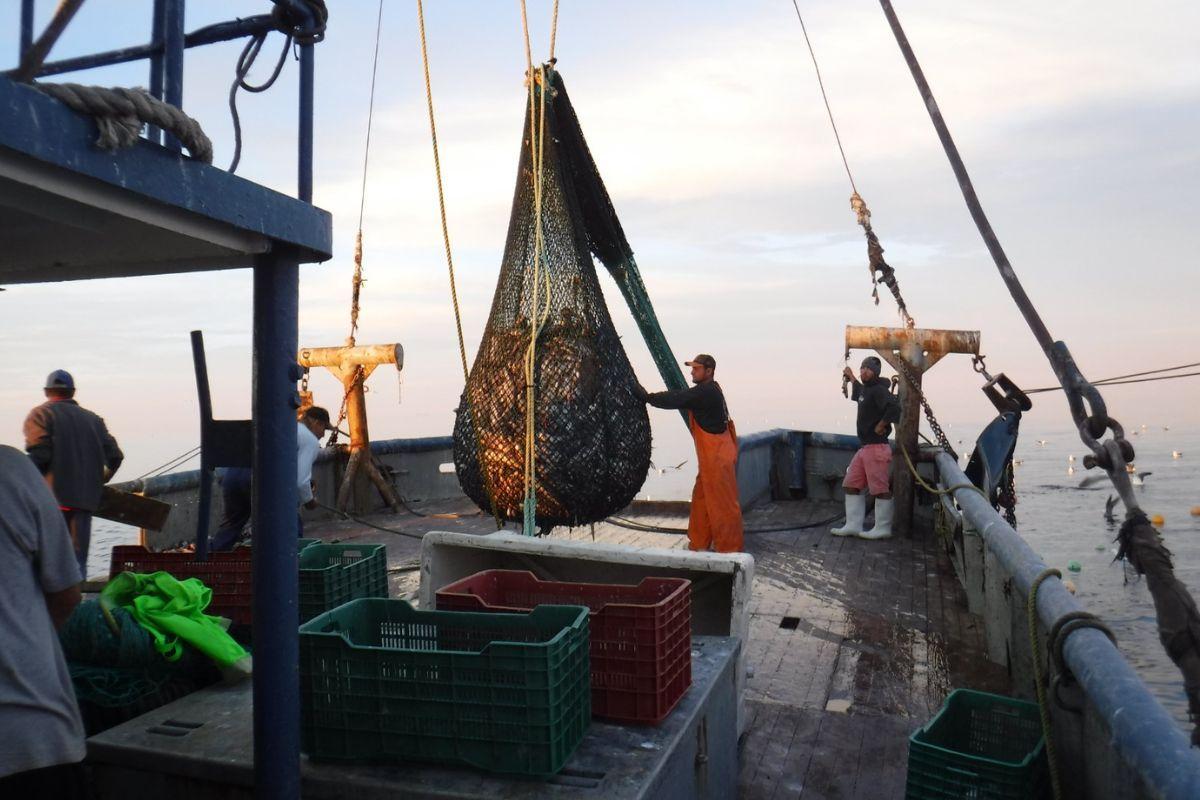
Shrimp boats in the Upper Gulf of California, in northwestern Mexico, incidentally caught hake, but saw no value in it until shrimp fishing began to decline in 2014 due to the elimination of fishing subsidies and low levels of production and market prices.
Producers began to look for other species so as not to rely so much on shrimp fishing. At that time, they turned to hake, which quickly went from being one of the main species in the region. However, that interest increased pressure on this fish population and could lead to overexploitation if the authorities do not regulate it.
“We saw this fishery as an opportunity because it was new and we wanted to organize it from the beginning so as not to overexploit it as has happened with other species,” said Irma Cervantes, a hake producer in Guaymas, Sonora. “That has always been our feeling: we don't want to go from having a healthy fishery to putting it at risk,” added Claudia Higuera, another producer from Guaymas.
The rise of hake has been marred by bureaucratic obstacles that have prevented this fish from the rocky bottom from having an official standard, a regulation necessary to eventually access preferential markets that reward sustainability. However, the fishermen have not crossed their arms and the fishery is experiencing a revolution in its practices in the Upper Gulf that already brings them benefits.
From 2015 to 2018, Conapesca, hake producers in the region, the academic sector and the Environmental Defense Fund (EDF) Mexico held meetings through which they constructed the Official Mexican Standard NOM-020-SAG/PESC-2019, a legal instrument that aims to regulate hake fishing.
This NOM institutionalizes a program of observers on board the vessels that fish for this white fish and makes the catch quota mandatory, which is the maximum amount that each vessel can catch per year.
Conapesca committed to publishing the NOM since 2018 to take effect, but it has not done so, so this regulation is not mandatory for the government or for fishermen. “Without the NOM, there is no legal instrument that is mandatory and that the authority has to enforce. There is no way to impose a penalty on them for not complying,” said Juan Quimbar, head of the hake project at EDF Mexico.
Northwest hake producers have undertaken a process to promote sustainable hake fishing since 2014 and are currently candidates for international certification from the MSC, which guarantees sustainable and traceable fishing, but they will not be able to obtain it until Conapesca publishes the NOM, since one of the criteria evaluated by the MSC is the governance of the fishery.
“For certification, we need the governance part to be covered, because certification cannot exist when there are no clear rules and the rules are determined by the standard. However, we can't do more because we have had a lot of meetings and Conapesca made a commitment to publish it but it hasn't complied,” said Cervantes.
Once the NOM is published, producers believe that this will allow them to sell hake in more markets and will be able to have a more profitable project. In addition, they aim to implement the same process that they have undergone with hake to other fisheries such as chano and curvina.
“There are other species in which we can replicate the hake model and it would be much easier to replicate it and thus ensure that the fishery survives. We want fishing activity to survive,” said Cervantes.
The journey to achieve sustainable hake fishing
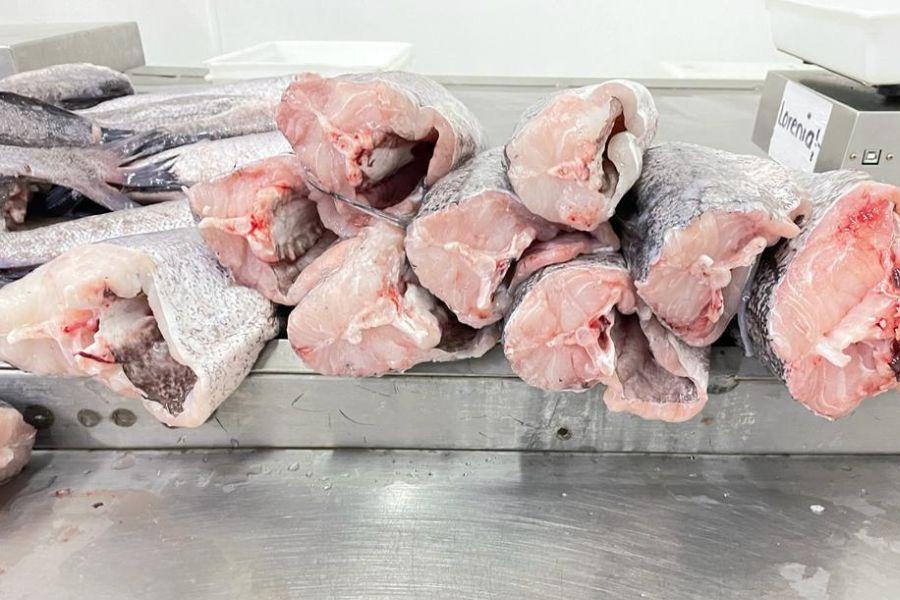 Hake in a processing plant. Source: EDF.
Obtaining the MSC standard would be the reward of a long journey undertaken by a group of 12 hake producers, who since 2014 have promoted orderly and sustainable fishing, with the help of EDF Mexico.
As a team, the first action they implemented was to create a Consultative Committee in 2015 and a Technical Group in 2017 where producers, academia, government and civil society organizations collaborate. In addition, they created the on-board observer program, which from 2015 to 2023 monitored hake fishing.
Catching hake uses the same method as shrimp: a medium-height boat with two trawls on its sides, and which is known for having a high volume of incidental fishing. However, through the observer program, they found that catching hake has an accompanying fauna of 6%, of which 4% is exploitable, according to Quimbar. “It's actually a very clean fishery and that encouraged us to continue,” he added.
After this, in 2018 they managed to have hake included in the National Fishing Charter and that specific permits were granted for the capture of this species.
“At that time, hake had no specific management and was caught through a general scale permit, which is an aggregation of all the scales that are not in a commercial fishery. Our first achievement was to disaggregate the scale permit and that already allows it to have a particular management. Now if you want to take advantage of hake, you need to have specific permission,” said Quimbar.
However, this group of producers wanted to go further and guarantee environmentally and socially sustainable fishing, so they started a Fisheries Improvement Project (FIP). This has meant a radical change in the management of hake fishing.
Instead of letting the hake fall from the nets onto the deck of the ship, what they do is place containers with cold water, then they pass them to work tables, and instead of piling them up in the cellar, they place them in containers, thus preventing the product from being mistreated.
“I feel like it hasn't been that difficult because with all these changes you're going to have better results in what comes next. By having a good quality product, you are going to sell it better and you will be above the others,” says Higuera.
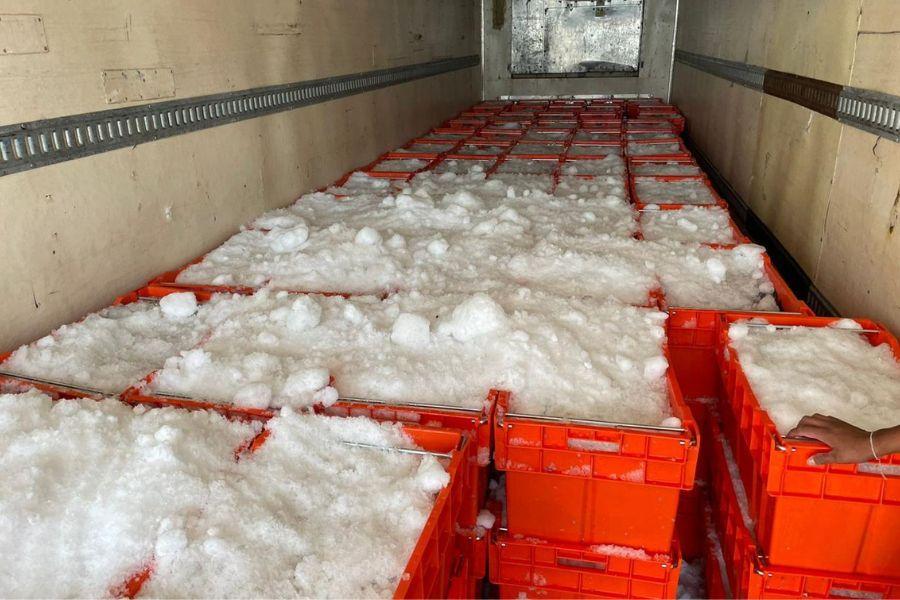 Hake stored in containers in the warehouse of a shrimp boat. Source: EDF
With the new practices, producers have managed to get paid up to 24 or 26 pesos per kilogram of hake, because it is a higher quality product.
All these efforts have also led them to obtain the highest possible rating for an FIP in 2025, the obtaining of the Transition Assistance Fund Award granted by the MSC in 2024 and a healthy population of hake, since every year an evaluation of the stock of the species is carried out.
“Right now they are handling an estimate of around 200,000 tons in stock. More or less the annual catch rate is like 15% of biomass,” said Quimbar.
At least 480 people who work as crew members on vessels in the Upper Gulf depend on the hake fishery, regardless of the rest of the production chain, which includes transporters, processing plants and marketing plants.
After all this journey, producers hope that the authority will publish the NOM so that they can access the MSC certification, reach new markets and all their efforts will be recognized as an example of fisheries management at the national level.


Comentarios (0)