The Gulf of California Platform is a collaborative training process that seeks to articulate science, community action, public policies and funding to guide the transformation of the region in the coming decades.
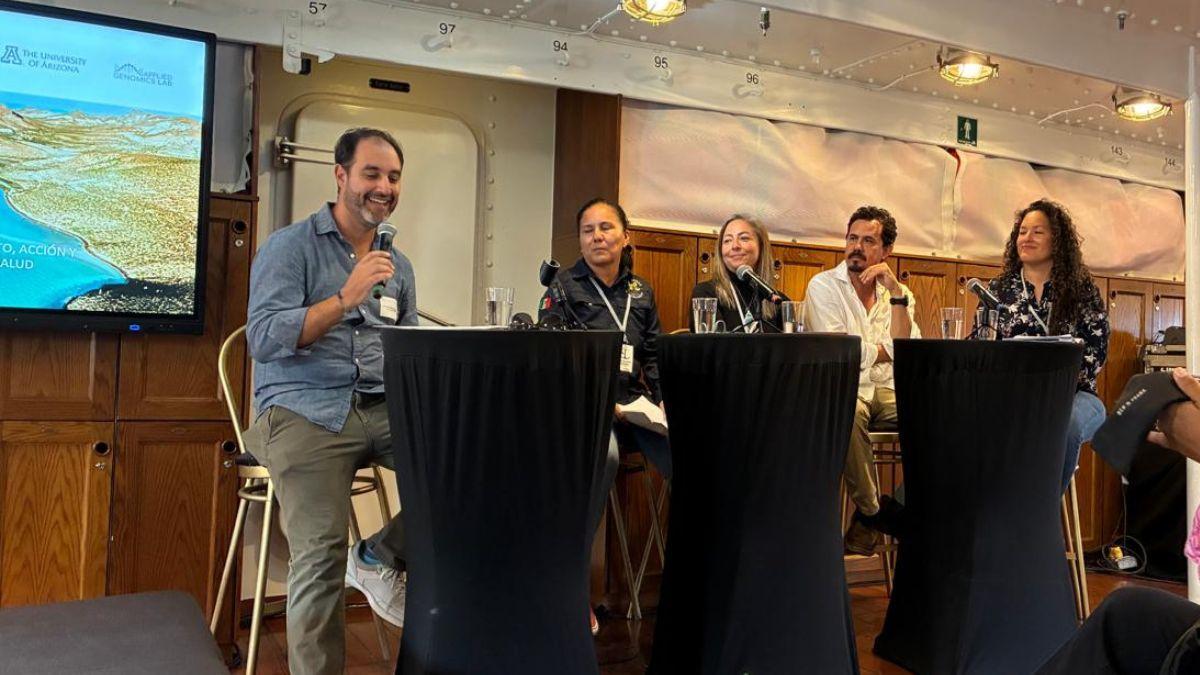
This is how Alejandro Castillo of the Alumbra Innovations Foundation described it during a panel held on November 25 aboard the Norwegian ship that visited La Paz as part of the scientific and social expedition called One Ocean Expedition.
Castillo explained that the effort comes from the need to build a form of collective leadership.
“What is needed is not a single political leader, but all the people sitting at a table, working daily to influence public policies,” he said.
The Platform aims to become that space: a framework that allows communities, civil organizations, academics and government agencies to align in the search for a healthy future for the Gulf of California.
A process without a fixed path, but with already defined elements
According to Castillo, the Platform advances in three lines. The first is the creation of a set of shared indicators to measure the state of the Gulf based on the Ocean Health Index (OHI).
“We need to have a set of shared indicators to say: are we making progress or are we going backwards,” he explained. These indicators cover; biodiversity, water quality, social conditions, fishing, tourism and regional economy.
The second line is funding. Castillo indicated that two funds are being designed: one philanthropic and the other catalytic, to make it possible to invest in environmental and social regeneration actions.
“Philanthropic funding is not going to be enough and we are going to need other types of capital to make investments in the region and that help to regenerate,” he said.
The third line—the most complex, according to their evaluation—is collective action. “How do we unite or integrate different sectors (organizations, communities, government and academia) in a space where we can work together to achieve these changes,” he said.
Multi-actor platform: science, community and government
The panel included researchers, civil servants and community leaders invited by Innovaciones Alumbra.
Adrián Munguia, researcher and academic partner in the Ocean Health Index (OHI), said that the science required by the region must answer the questions of those who live in the Gulf.
“The key is to ask actors directly what their information needs are and what gaps prevent them from making better decisions,” he said.
He added that tools such as the OHI allow science, government and communities to “have a common language” to identify advances, setbacks and information gaps.
Liliana Gutiérrez of the Initiative for the Seas and Coasts of Mexico emphasized the need to connect three areas: public policy, spaces for multi-actor collaboration and grassroots social movements. He explained that in his organization they consider communities as the center of the system that orders other actors.
From the territory, Marta García, a member of the Guardianas del Estero El Conchalito, recounted the historical tensions between communities and external actors, and the importance of local voices being heard without impositions. He pointed out that these spaces “impose”, but that their presence is necessary to express demands that were ignored for years.
Government participation was led by Cristina González, head of the Secretariat of Environment and Natural Resources in Baja California Sur, who explained that the institutional challenge is to rebuild trust.
“The basis has to be to build trust, especially from the government, because citizens stopped believing in institutions.”
He added that multi-actor platforms allow science, organizations and communities to tell agencies what they need and increase their citizen participation.
Castillo noted that the process has a long-term horizon. “I think we're going to see the results by 2050,” he said. The objective is to build social structures and agreements between actors that make it possible to execute action plans, attract investment and sustain processes of environmental regeneration with continuity.
The next step, he said, is to scale the conversation beyond Baja California Sur.
“A lot has happened in Baja California Sur, but how do we scale this to Sinaloa, Sonora, Nayarit and Baja California. We are at that stage of seeing the full future of the Gulf of California,” he said.
At the close of the panel, Castillo called for harnessing the strength of the different social sectors and focusing them on the Gulf of California.
The visit of the Norwegian ship as a space for articulation
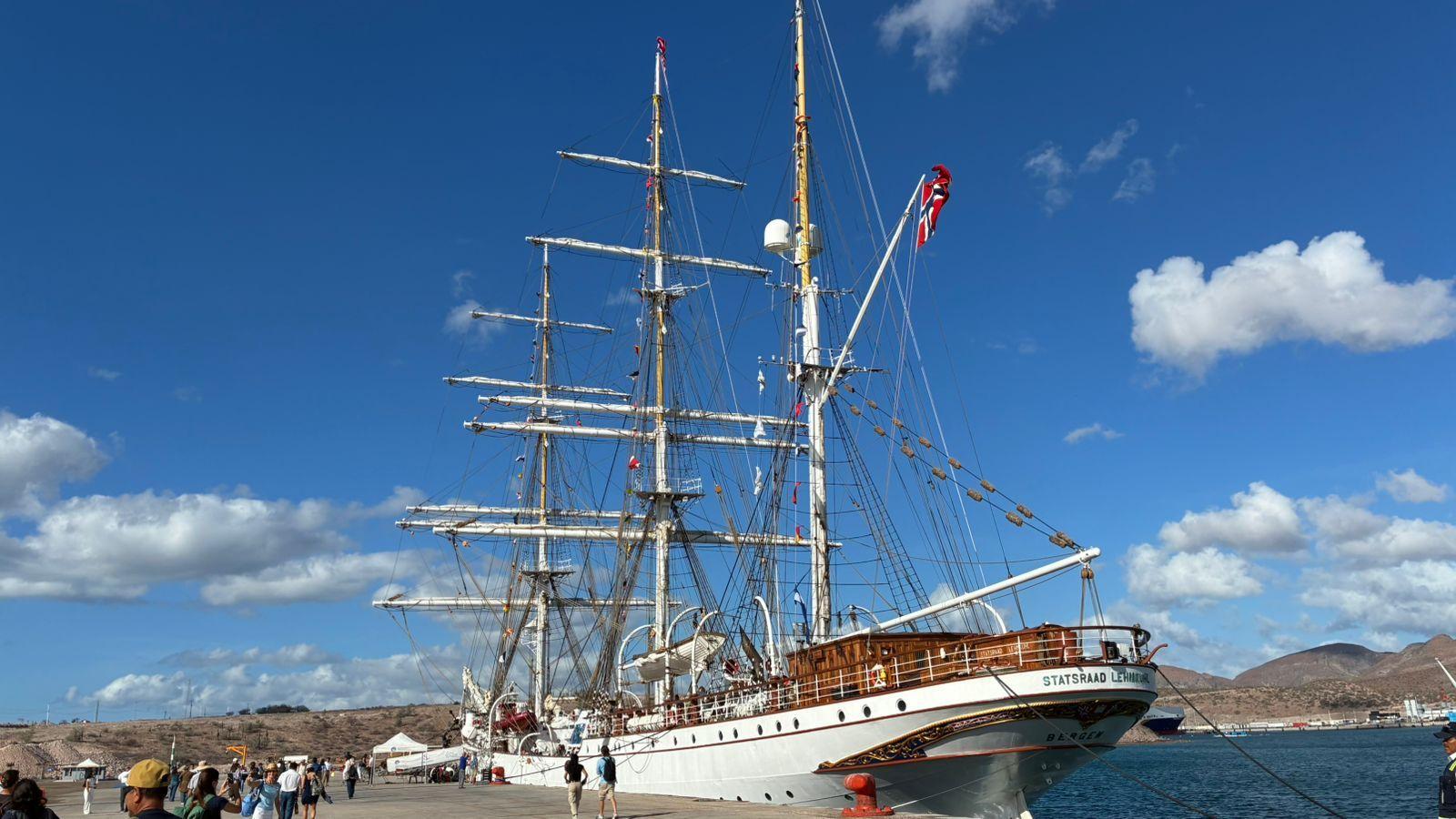
The panel where the Platform was shared was held aboard the Norwegian ship Statstraad Lehmkuhl, which visited La Paz on November 24 and 25 after a trip between Ensenada and Baja California Sur.
Castillo said that, prior to the panel on the Platform, others were held on green ports, decarbonization of maritime transport, regenerative aquaculture and the relationship between terrestrial and marine water.
The last panel sought to open a conversation about the elements that should be integrated into the framework of the Gulf of California Platform and lay the groundwork for its consolidation.
Comentarios (0)