
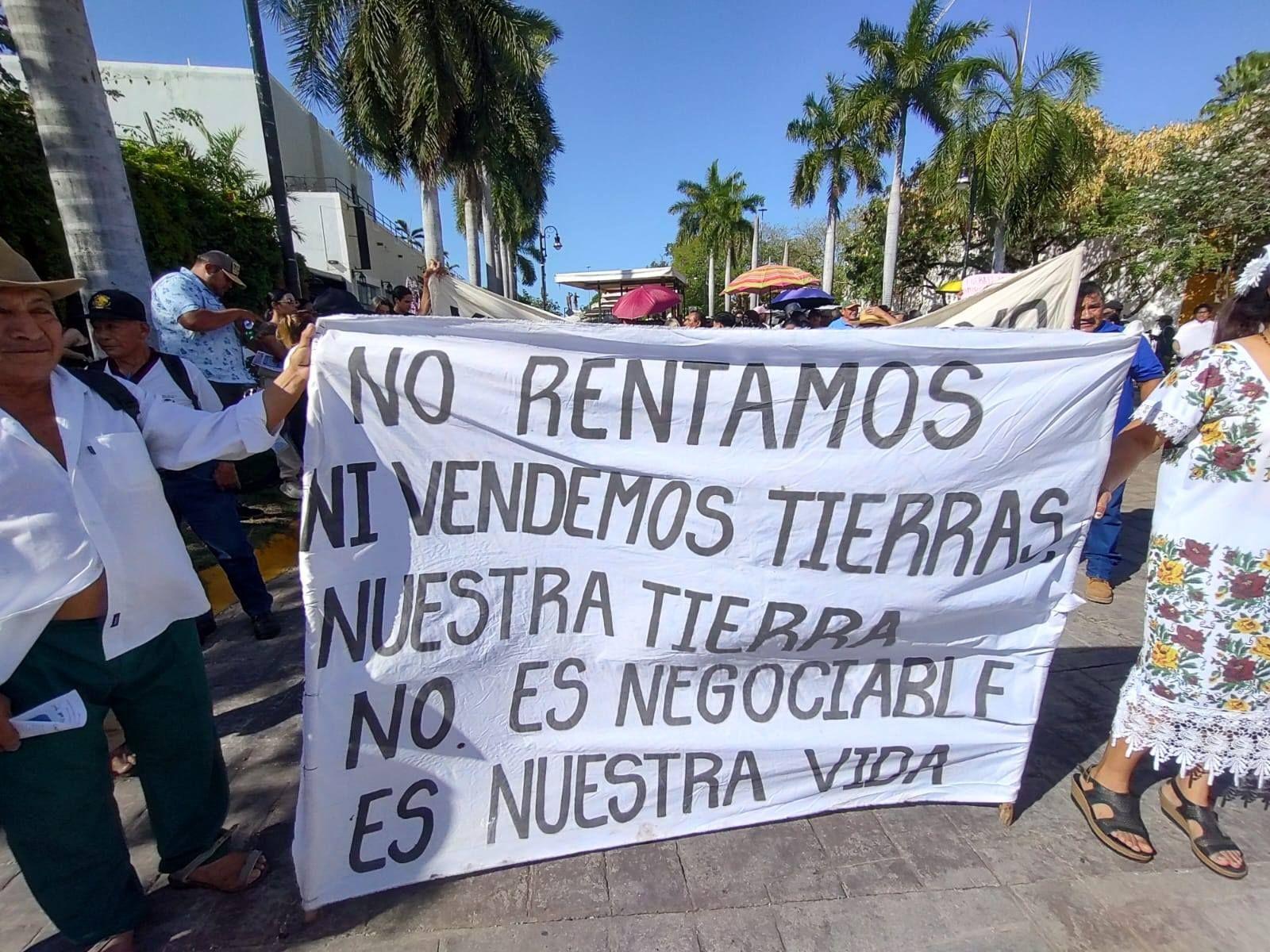
I recently went to do fieldwork in an area of Tekax. Inhabitants reported clearing for the establishment of monocultures. The atmosphere, rather than anger, was one of tension and constant vigilance. When a van approached the place, someone said in a low voice: “Surely they are coming to demand those who are watching”, worst of all, they were going to complain to them, the owners of the land.
In Yucatán, peace is presumed. Safety is presumed. Peace of mind is presumed. But in the state's Mayan communities, coasts, mountains and streets, the real question is: safety for whom?
While local authorities and the business sector sell themselves to the state as “the safest in Mexico”, there are land defenders, journalists, academics and activists who experience another reality in the midst of surveillance, veiled threats, criminalization, the fabrication of crimes, emotional exhaustion and silent institutional violence.
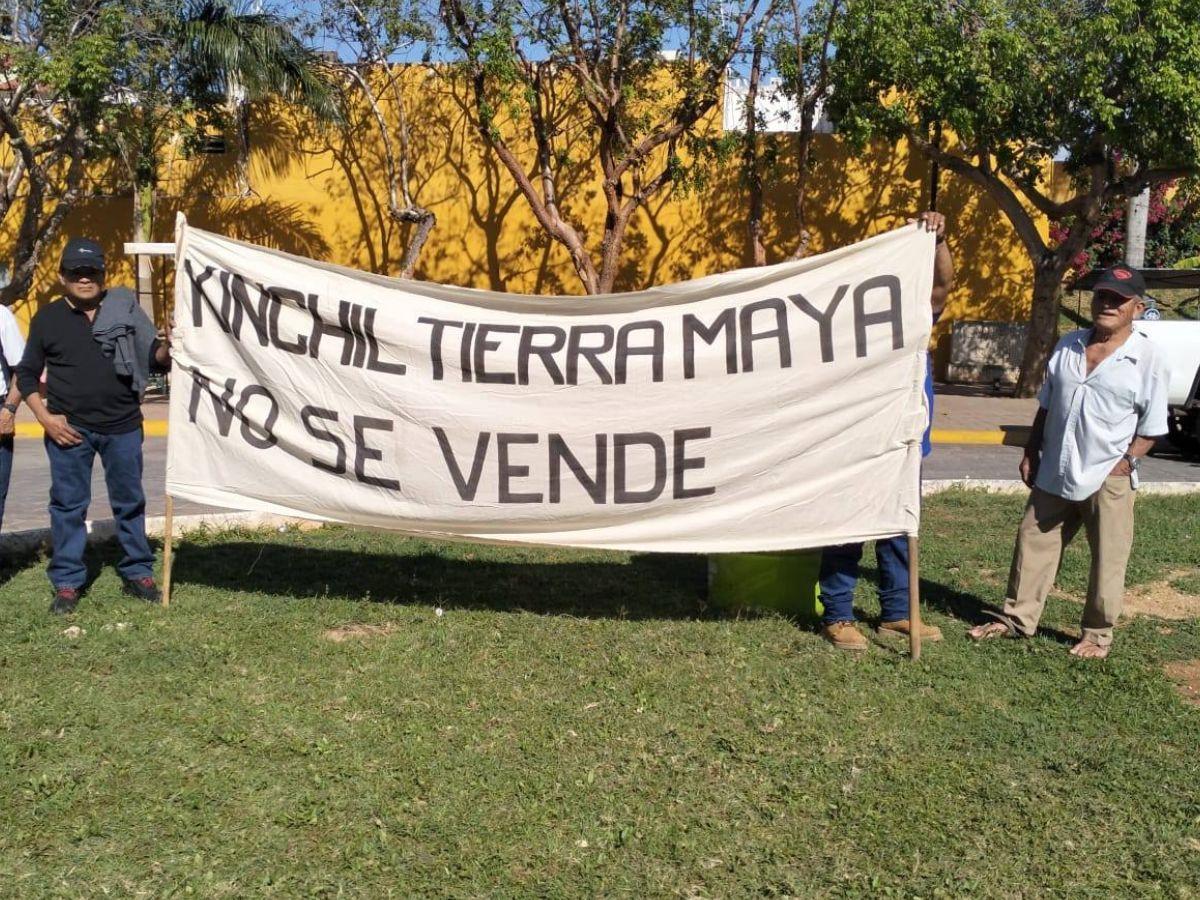 Demonstrating in Yucatán becomes risky. Photo: Santa María Chi.
Activists have already said it: in Yucatán there are no bullets or disappearances, but violence operates from offices, prosecutors, courts and official speeches.
Thus, hundreds of people are being built research kits, disproportionate accusations, arbitrary arrests and smear campaigns, mainly for those who make economic or political power uncomfortable.
International organizations have already warned about this phenomenon. An Amnesty International report noted that Mexico disproportionately uses the criminal system against land and environmental defenders, and placed Sitilpech, Yucatán, among the emblematic cases of criminalization for protesting against polluting megaprojects.
The document warns of something particularly serious, which is the use of ambiguous crimes such as “mutiny”, “obstruction of public works” or “attacks on communication channels” to prosecute community leaders and dismantle social movements.
As hard as it is to believe in Yucatán, protesting can lead to criminal prosecution.
There are the cases of Sitilpech and Chapab, communities that for years have reported environmental and health impacts related to the pig industry. Another example is Santa María Chi, where residents have questioned pollution and the effects derived from agro-industrial megaprojects. In Ixil, residents and defenders have denounced criminalization processes in the midst of disputes related to real estate and land projects.
In the latter area, three land defenders were recently linked to prosecution for the crime of dispossession following complaints filed by real estate entrepreneurs. Organizations and communities have indicated that the case reflects a pattern of criminalization against those who defend the collective use of land in the face of real estate development.
 In spite of everything, Mayan communities continue to defend their territory. Photo: Santa María Chi.
In many of these conflicts, protesting people end up facing accusations of “road obstruction”, “damage”, “attacks on communication routes” or even crimes that seek to be equated with kidnapping.
Protesting can cost you your freedom
What is worrying is the judicialization of communities and the normalization of this mechanism, which punishes those who block the passage, but companies identified for pollution, environmental devastation or violations of collective rights are rarely investigated with the same speed.
The Center for Justice, Democracy and Equality (CEJUDI) has warned that reducing social protests in Yucatán to isolated events would be to ignore a long history of repression and silencing.
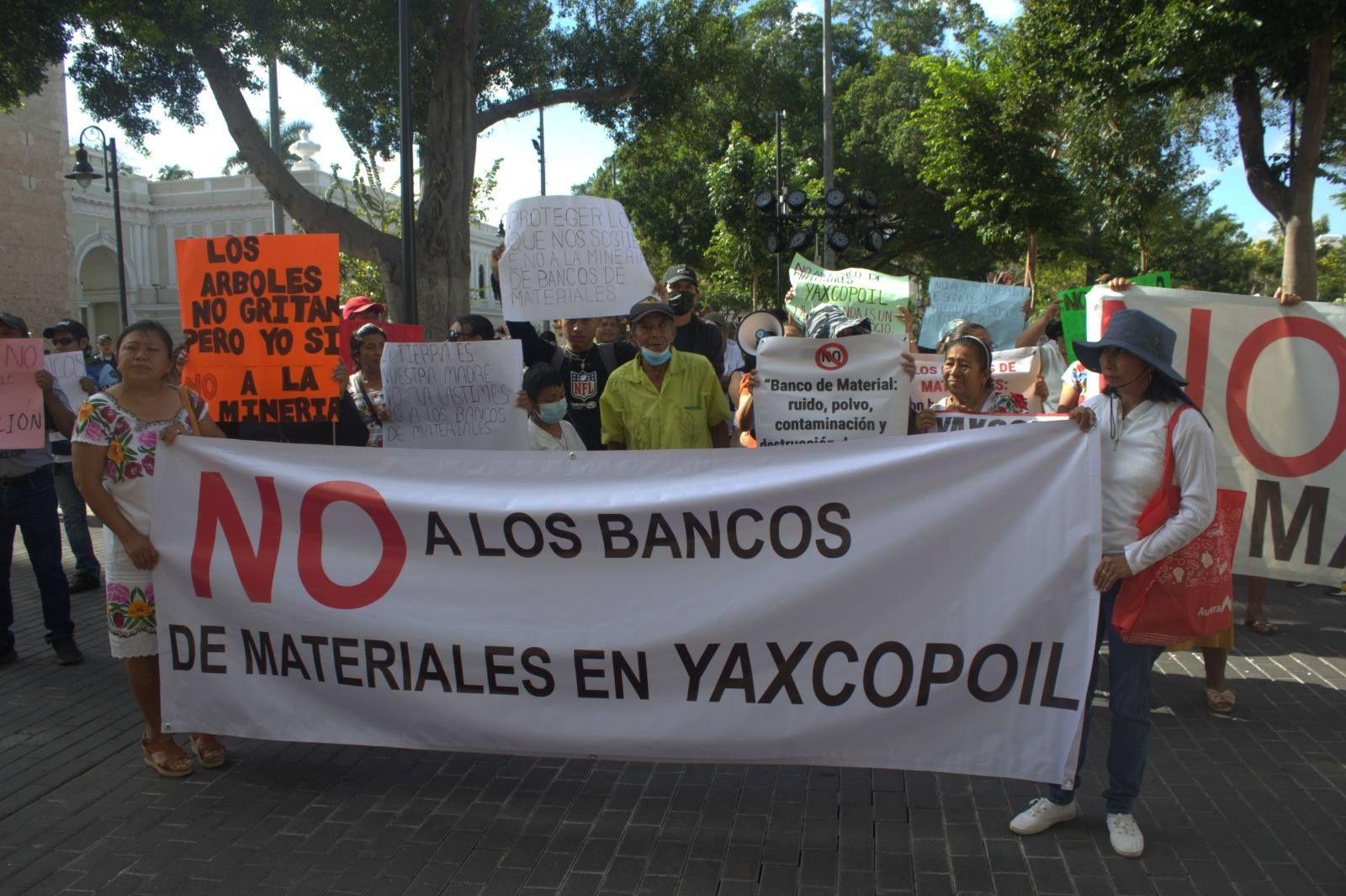
 It is the community organization that prevents more megaprojects from invading their territory. Photo: Santa María Chi.
The organization recalls cases such as the eviction in Chablekal in 2016, when residents who tried to prevent the eviction of an older adult were suppressed with tear gas and physical violence; or the feminist #28S protests in Mérida, where authorities responded with criminal complaints for damage to property.
In February 2023, residents of Sitilpech who were protesting against a pig farm reported being surprised and suppressed during the early morning hours by members of the Ministry of Public Security.
Days later, at a solidarity protest in Mérida, four demonstrators were illegally arrested. For CEJUDI, these events are part of a worrying pattern where the authorities respond with criminalization rather than dialogue.
Meanwhile, journalists covering socio-environmental conflicts face digital harassment, attempts at intimidation and institutional isolation.
 The press has had to organize to prevent complaints of defamation from the private sector. Photo: We Are Journalists.
Academics or journalists are exempt
I recently requested interviews at the National Autonomous University of Mexico (UNAM) and was surprised to learn that academics who research environmental impacts are discredited or pressured to remain silent.
Also, activists are labeled as “radicals”, “enemies of development” or “generators of conflict”.
Journalistic work in Yucatán is going through a crisis marked by institutional violence, legal insecurity and job insecurity.
In 2022, the organization Article 19 documented 50 attacks against the press in the state, positioning it as the second state with the most attacks on journalists in the country.
In this context, the collective We Are Journalists emerged, integrated as a defense and support response to aggressions carried out mainly by public security corporations and municipal authorities. In addition to demanding guarantees for the exercise of journalism, the collective has promoted the elimination of so-called “crimes against honor”, legal figures used to criminalize and limit the work of journalists and communicators.
All this happens in a state where the official discourse insists that “nothing happens” here, but it does happen, it does happen when a Mayan community has to unite to protect its water, its mountains or its territory in the face of projects with enormous economic power.
There, security forces appear earlier to remove demonstrators than to deal with complaints of environmental damage.
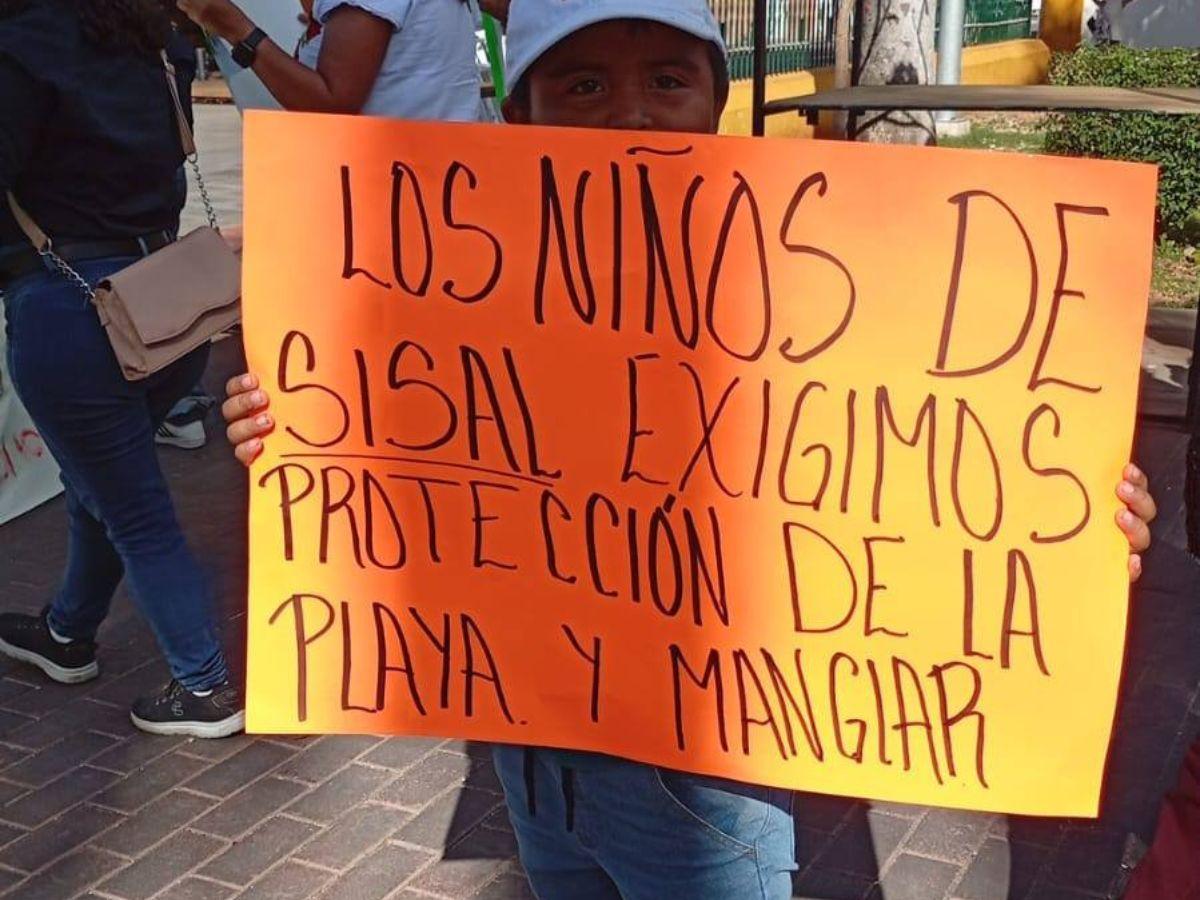 Girls and boys also go out to march to look after their homes. Photo: Santa María Chi.
Wilberth Alfonso Náhuat Puc, municipal commissioner and representative of Santa María Chi, recently reported that he has been facing criminal prosecution for more than three years stemming from a peaceful protest against a pig company accused of environmental pollution. He stated that while the community was being treated “as a criminal”, federal authorities ended up closing and dismantling the reported farm due to environmental damage and health risks.
The question it poses is why is the criminal prosecution still in force against those of us who defend life?”
While there is criminalization for those who defend the territory, the more real estate, energy, agro-industrial and tourist expansion advances in Yucatán.
* This article was written by Itzel Chan, who covers coastal communities thanks to the support of the Report for the World program .


Comentarios (0)