
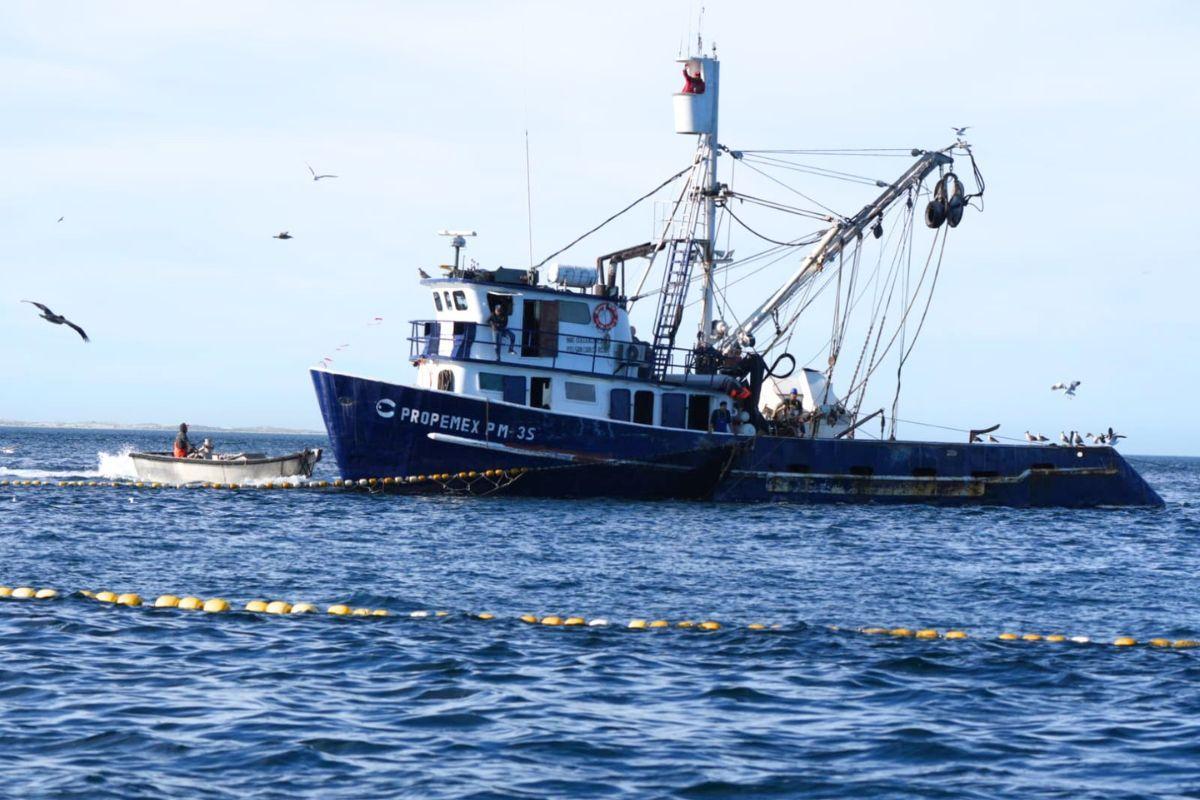
A group of tourists were crossing Magdalena Bay, a 50-kilometer bay in the north of Baja California Sur. On their journey, they observed gray whales, dolphins and sea lions, until they found five industrial ships that threw their nets in the form of fences into the sea to capture sardines and other smaller pelagic animals.
It was February, the period with the highest presence of gray whales in the area. They observed some sea lions and whales near the nets; presumably one of the wolves was trapped in them, a fact that coincides with a stranding recorded days later.
Unlike other islands, such as Cedros Island, which make up the Pacific Islands Protected Natural Area of the Baja California Peninsula, Magdalena Bay has only the terrestrial portion of its islands and islets protected but not its marine area; therefore, there are no restrictions on industrial seine fishing.
Even tourist service providers have reported the presence of fishing boats using trawls in the bay, a fishing gear prohibited by the Official Mexican Standard NOM-002-SAG/PESC-2013 in all bays, lagoons and wetlands in Mexico.
What should be a sanctuary for species faces the contradiction of being, at the same time, a strategic area for industrial fishing.
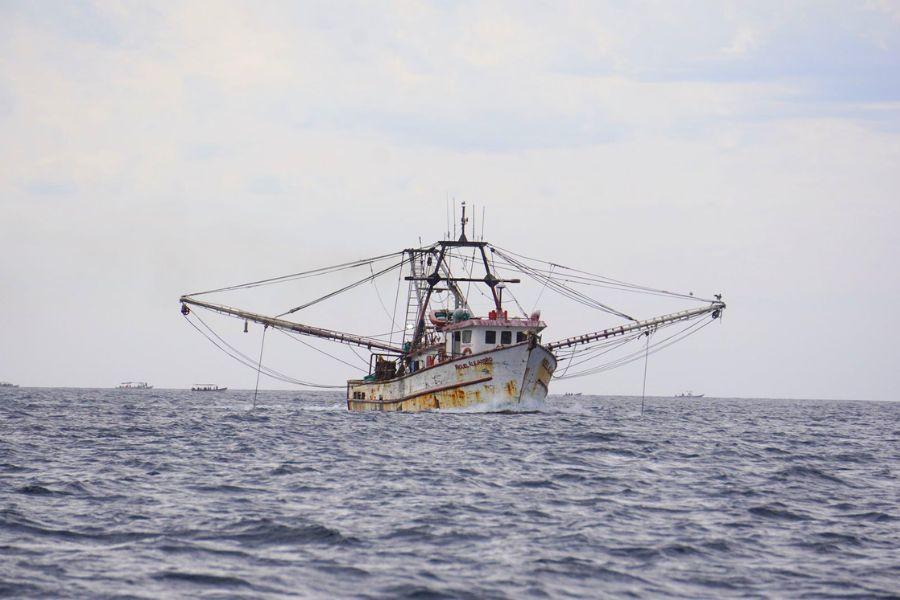 Trawler entering Magdalena Bay. Source: Blue Bay Project.
A key ecosystem without marine protection
Magdalena Bay is an area rich in biodiversity due to its mangroves and estuary, which has been attractive for ecotourism. Visitors enjoy mangrove walks, sport fishing and the sighting of migratory and resident birds, as well as gray and humpback whales.
With the migration of the sardine to the bay, the sighting of its predators, such as marlins, golds, dolphins and sea lions, has also been taken advantage of. This has attracted international tourism, according to Mariel Bravo, a diving instructor and tourist service provider.
Despite the fact that the NOM-131 states that you cannot fish during whale watching, Lorena Viloria, a research professor and member of the Marine Mammal Research Program (Primma) of the Autonomous University of Baja California Sur (UABCS), pointed out that the standard does not clearly specify which areas the restriction applies to.
“The whales make a migration of 12 thousand kilometers, arrive tired and find themselves with the sound of engines from giant ships interfering with their communication, and fishing, taking away their food. It's worrisome, really. It's a lot of pressure,” said Jorge Rodríguez, founder and chief operating officer of the Blue Bay Project environmental project in Magdalena Bay.
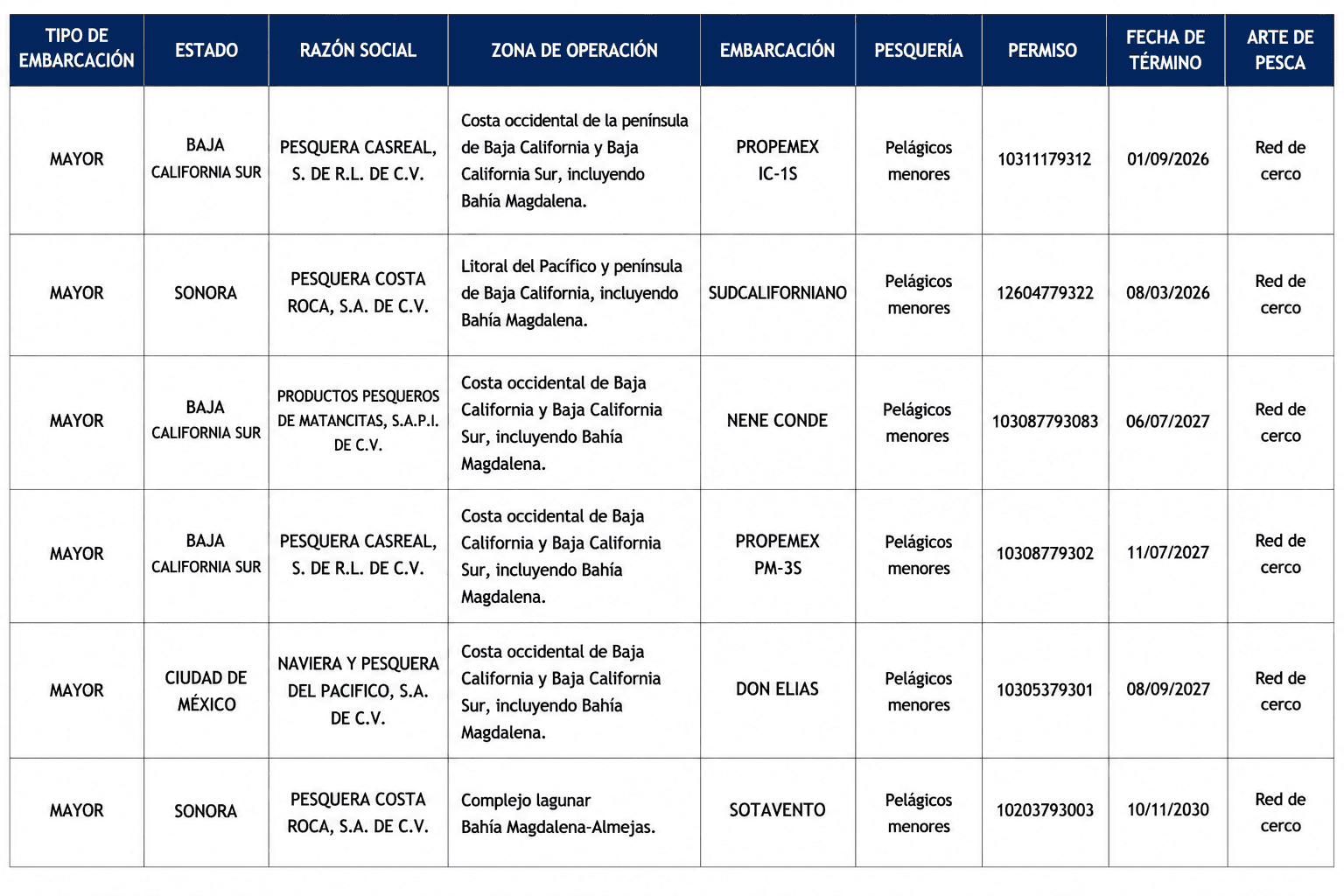
According to open data from Conapesca, updated up to December 2025, six larger vessels are authorized to operate within the area.
“The Magdalena archipelago has the peculiarity that it is only terrestrial, that is, it does not include the marine part. Therefore, all activity that has to do with fishing extraction is the responsibility of the National Fisheries and Aquaculture Commission (Conapesca),” explained Jesús Porras, director of the Pacific Islands Biosphere Reserve of the Baja California Peninsula.
 For tourism service providers, this situation reflects a contradiction between the ecological importance of the area and the authorized activities in it.
“Magdalena Bay is a critical resting and breeding area for gray whales and we don't understand how it is possible for such invasive industrial fishing activities to be authorized in an area that would be a sanctuary for gray whales. It is a key ecosystem for coastal fishing and sustainable tourism. Industrial fishing is clearly a direct negative interaction with megafauna,” Bravo said.
According to the gray whale monitoring carried out by Primma of the UABCS, the species is going through a worrying moment due to climate change, and factors such as poorly carried out tourism that harasses whales and the noise of boats, whether tourist or fishing, increase stress on the species.
For example, in 2026 they did not register a single female calf in the López Mateos channel; in 2025 Mexico broke its record with 97 dead whales on its shores, while of 500 photo-identified whales, 170 were in poor body condition. In addition to this, they have also registered a decrease in the presence of the species in Magdalena Bay since in 2025 they photoidentified 1,100 whales, and in 2026 they only registered 700.
“Never before in history have so many strandings been recorded, and if you add it to the number of babies observed during the censuses, it's highly worrying because the only way for populations to become small is: without babies and for the number of deaths to increase. And just like both of those things happen. What gray whales are experiencing is a serious problem,” explained Viloria, who is also the coordinator of gray whale monitoring in the Bahía Magdalena, Bahía Almejas and López Mateos lagoon complex.
Because of these contradictions, the Bahía Magdalena community, led mainly by tourism service providers and civil society organizations, considers it necessary to strengthen the protection of the bay and, if possible, restrict industrial fishing in the area before it's too late.
How to protect Magdalena Bay?
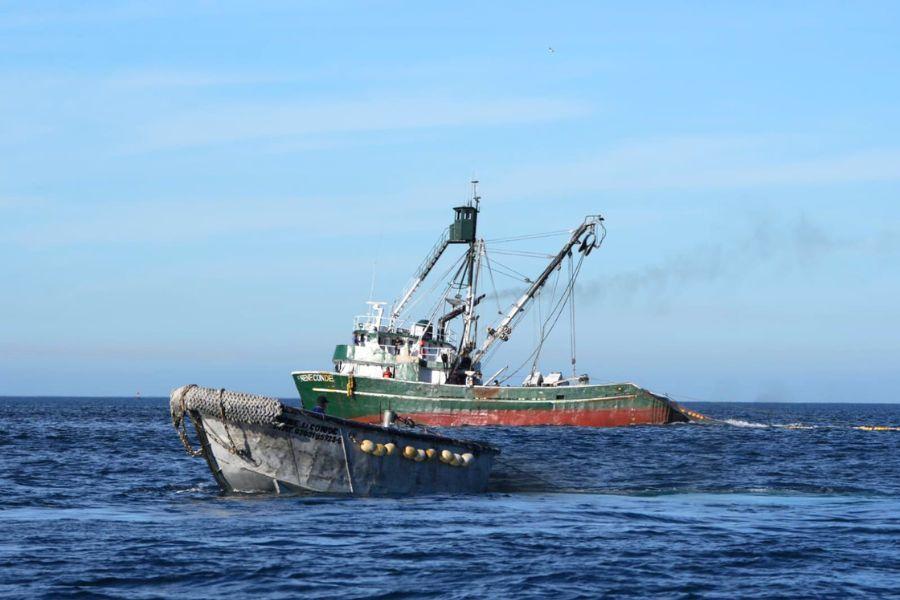 Industrial fishing boat in Magdalena Bay. Source: Courtesy.
“What is most worrying is that the wealth of biodiversity is in the sea, it is in the waters and it is something that is not protected. Where the problem or threat to biodiversity is, that's where protection is required,” Bravo said.
Faced with this situation, what he proposes is that there be an inspection of fishing activities in the area and that working groups be held between the different authorities such as the Secretariat of Environment and Natural Resources, Integral Port Administration, Conapesca and Conanp, with fishermen and tourist service providers, to work on a proposal that protects the bay, incorporates coastal fishing and establishes restrictions on industrial fishing.
“I think the best thing would be to make a community agreement to request the creation of a Protected Natural Area under the marine reserve scheme that protects the lagoon and a 20-mile strip of the islands out. This would make the area recover and if there are industrial fishing activities, they would be more regulated, more limited and there would be fewer boats in such an important area,” Bravo said.
If it is not possible to create a marine reserve, Bravo proposes that at least Conapesca should not grant more industrial fishing permits in the area or restrict it during the whale season (from January to April).
“Conapesca should restrict fishing permits during whale season and should definitely stop giving permits for so many years if they don't have a supporting study that allows us to know if the populations of sardines, shrimp or tuna are stable and if they guarantee to be sustainable. I would propose a working table for the restriction of permits during whale season, that could be a first step,” Bravo said.
For his part, Porras de Conanp emphasized that the proposal must come from a community consensus, and on their side they are willing to support, since their main task is to build instruments that help conserve natural heritage, and protected natural areas.
“It's important to defend biodiversity because here it gives us all something to eat, from the coastal fisherman to the tourist service provider to the person who works in a fish processing plant. This sea sustains us and is the basis of the daily nourishment of many families. It's important not to be so predatory,” Rodríguez concluded.


Comentarios (0)