
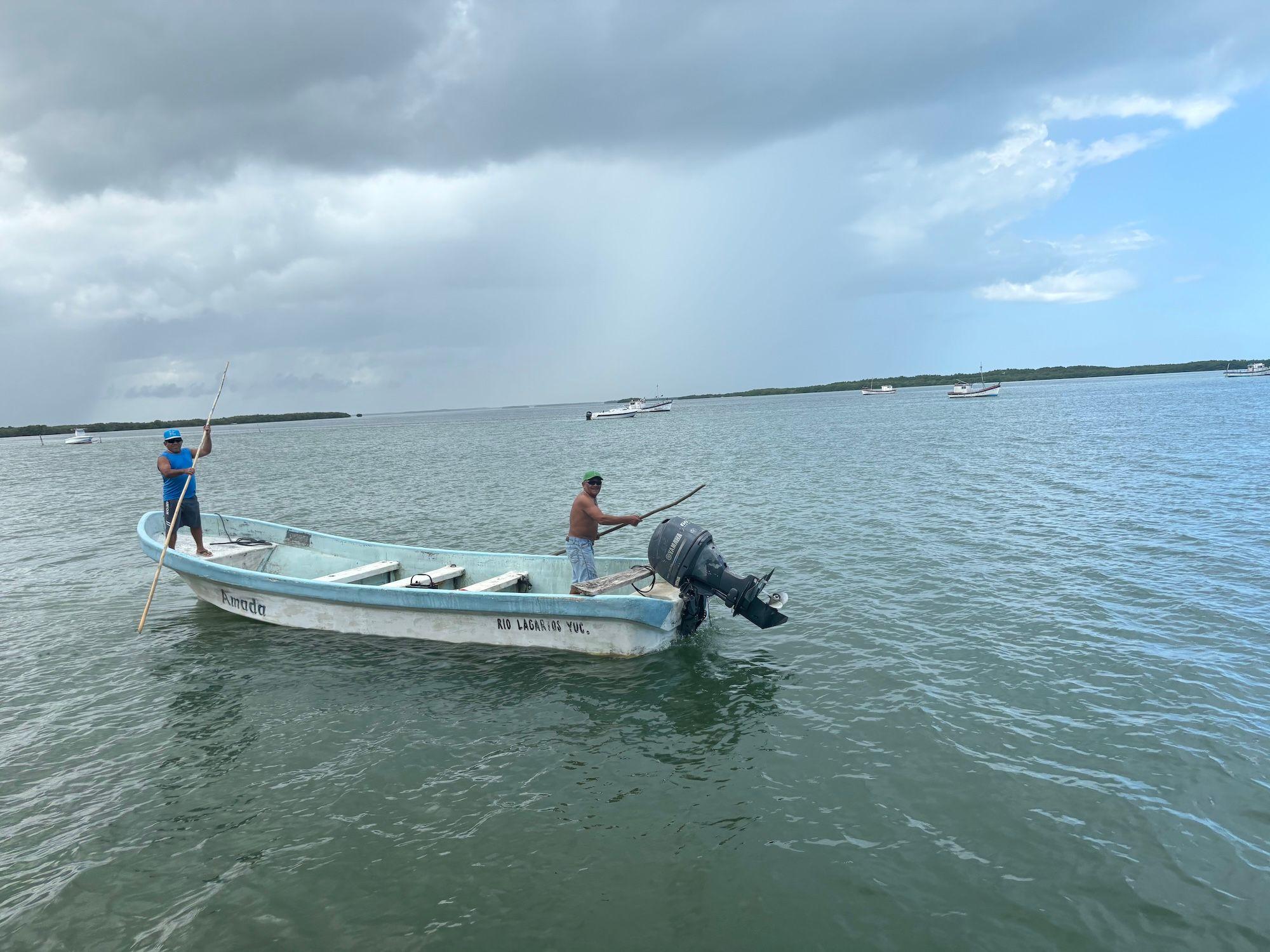
The back remembers every block of ice loaded at dawn. The shoulders keep a trace of thousands of meters of line recovered by hand. The knees accumulate years of balance on boats that never stop moving.
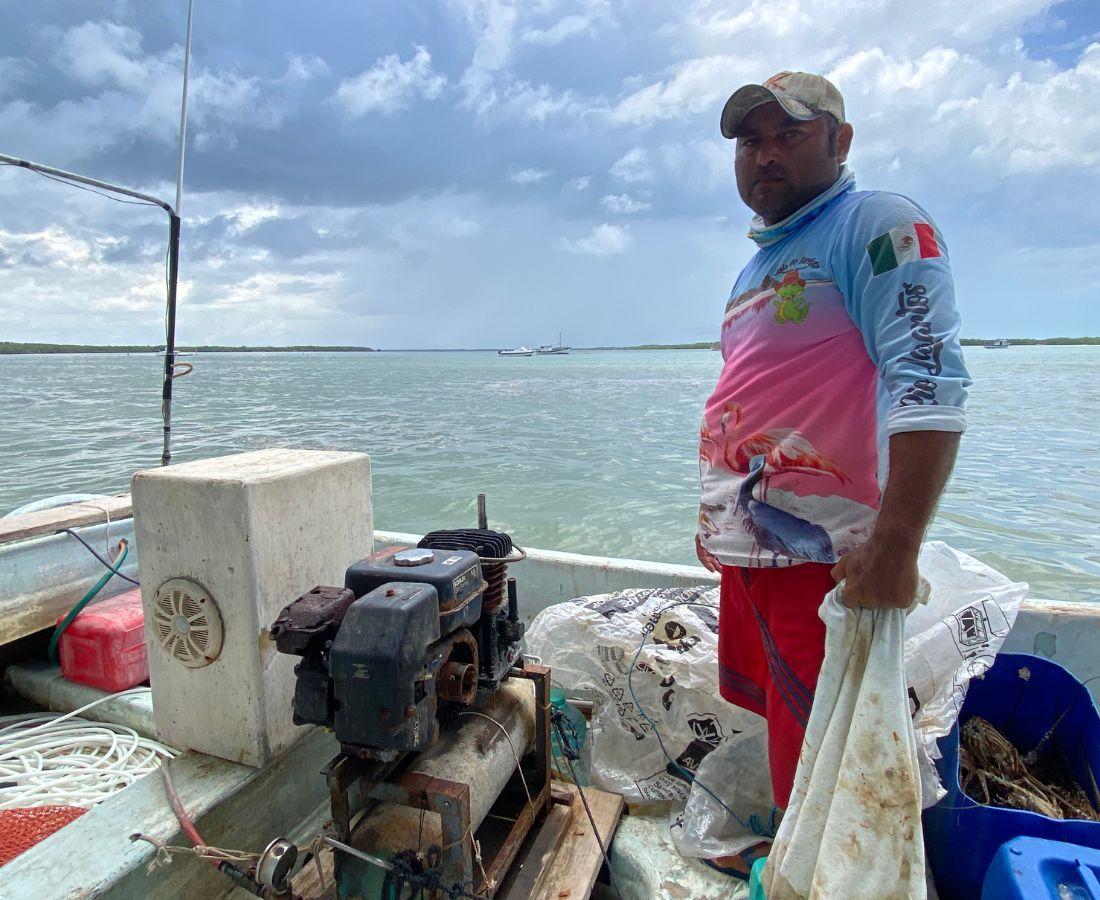
It's not dawn yet in San Felipe when José Chi sits on the edge of the bed before starting the day. The back is slow to respond. Also the shoulders. With more than three decades of working at sea, pain comes before the first coffee. They are not the result of a bad night's sleep, but of years of carrying catches, pulling lines, manipulating nets and maintaining balance on small boats for days that can last for hours.
“What is one going to do to him? Well, that's what there is and the truth is that you get used to pain. As the day goes by, it gets rid of it,” he said.
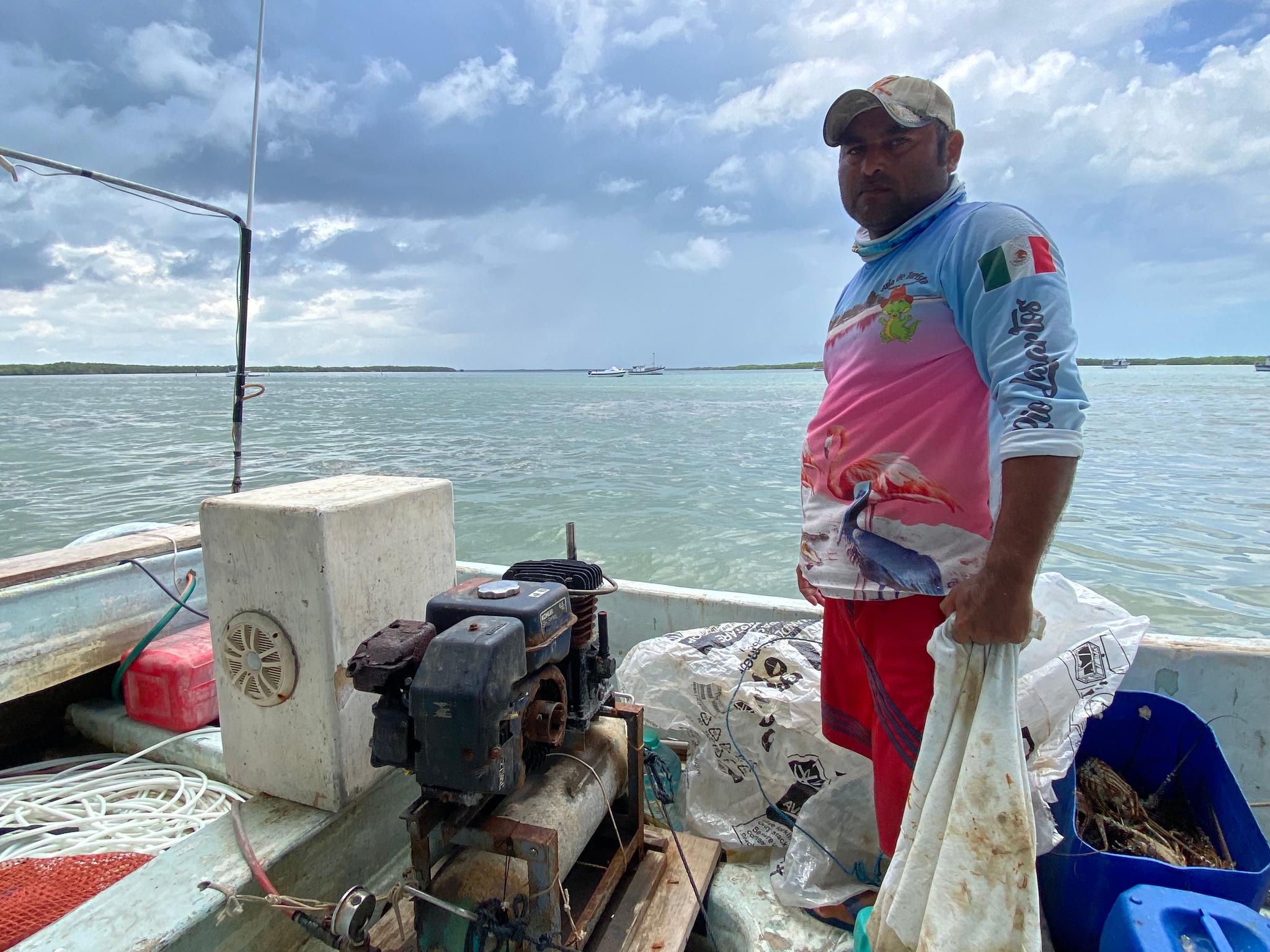 Fishermen take it for granted that they must live with pain because of the type of activities they do. Photo: Itzel Chan.
In Yucatán, around 13,000 fishermen rely directly on the sea for income and livelihood. However, behind one of the most important economic activities on the coast, there is an invisible reality and that is the physical wear and tear that accumulates during years of work.
In the state's fishing communities, many men learn to live with that silent wear and tear. Sometimes they attribute it to age, other times they just continue to work.
Although it is usually assumed to be a natural part of the profession, research carried out in fishing communities in Yucatán shows that musculoskeletal pain is a common condition among those engaged in artisanal fishing.
Studies carried out by the Marista University of Mérida document that up to 79 percent of fishermen report pain in at least one region of the body. The areas most affected are the lower back, shoulders and neck.
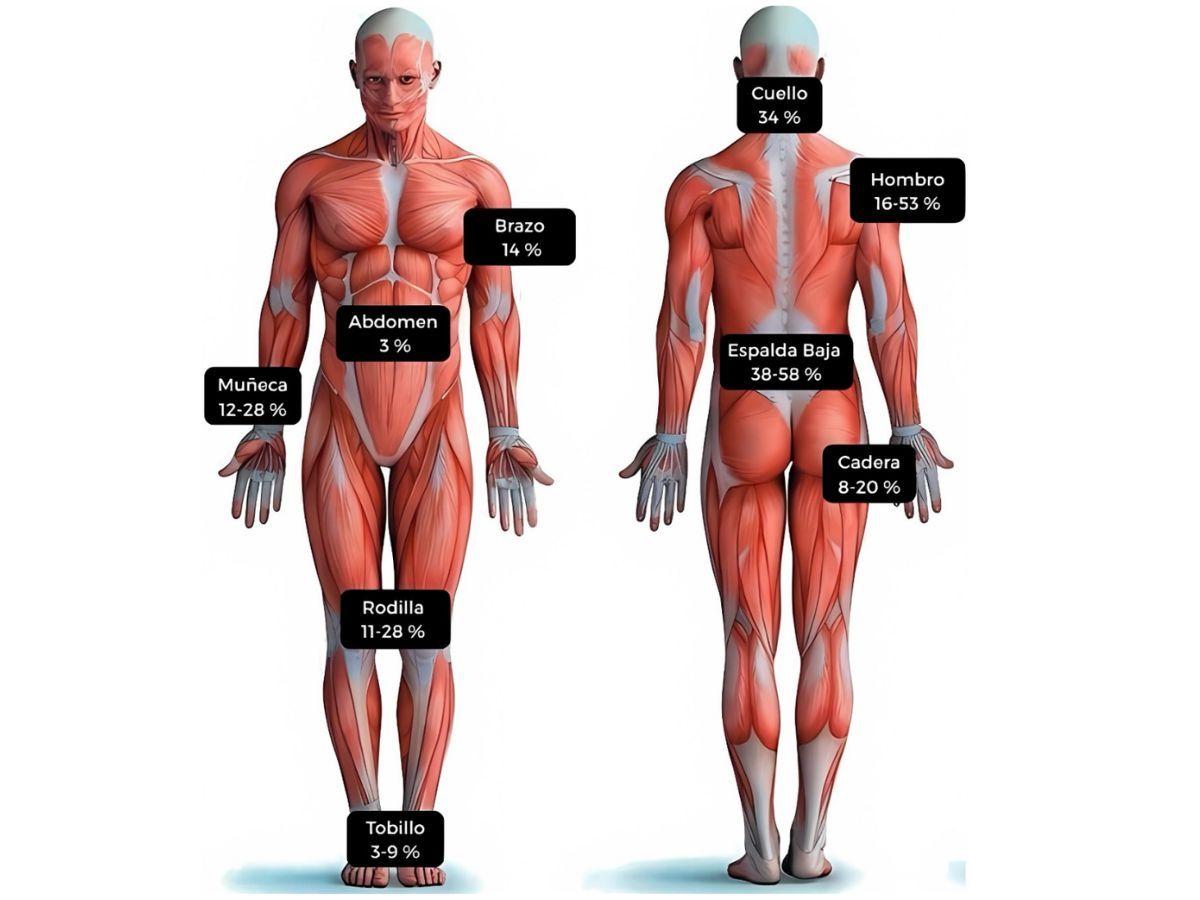 These are the most common pain areas in anglers. Photo: Marista University.
“We get used to living with pain. We see it as part of our normality, which it shouldn't be,” explained Oswaldo Huchim Lara, a doctor, researcher and professor at the Marista University, who for more than 15 years has worked with fishing communities in Rio Lagartos and San Felipe.
The specialist pointed out that the effects do not appear suddenly and are the result of years of carrying ice and catches, pulling nets, manipulating fishing lines, maintaining uncomfortable postures and performing repetitive movements in unstable conditions on small boats.
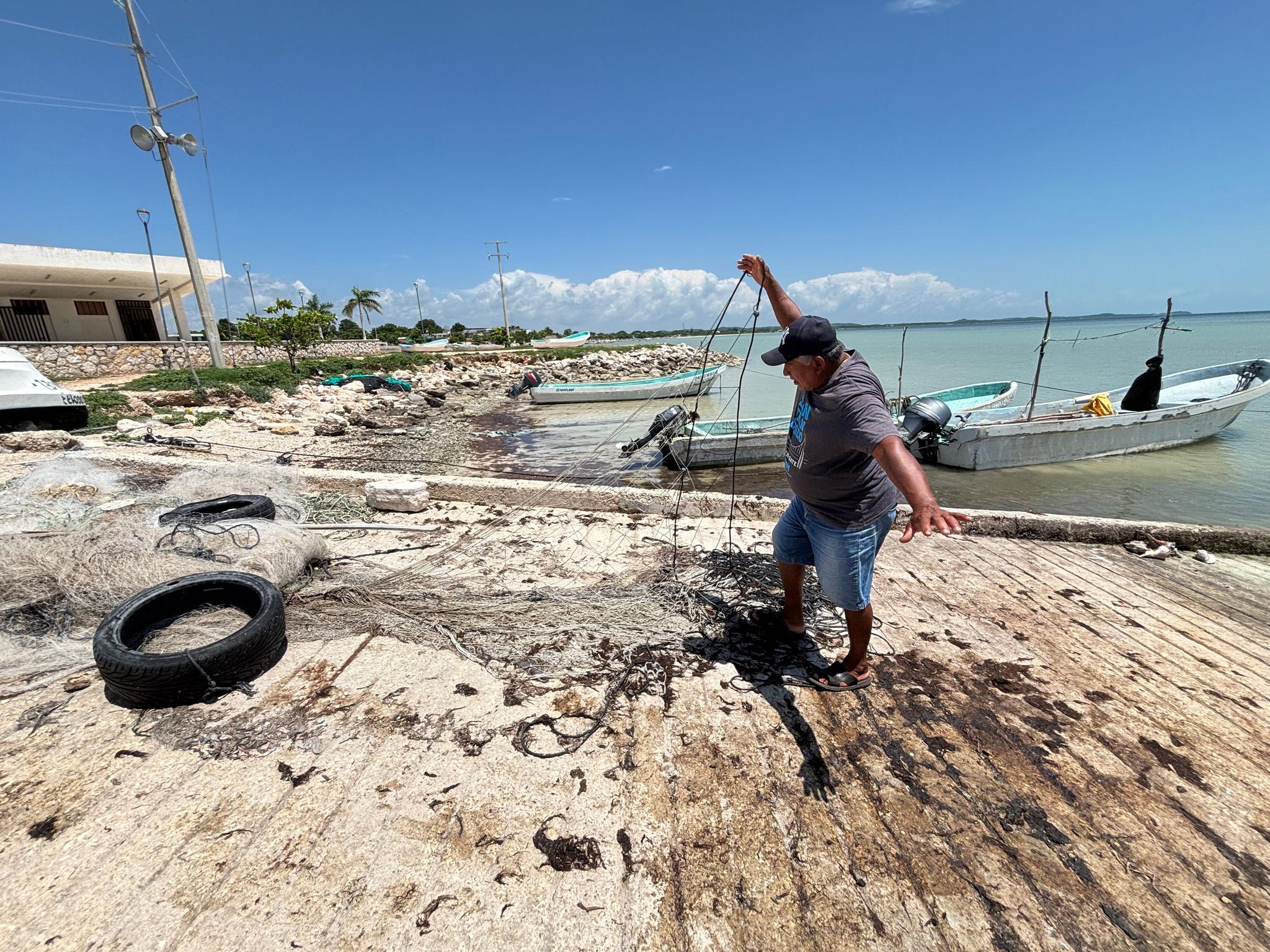 Nets become very heavy when they get caught. Photo: Itzel Chan.
In addition, research carried out together with colleagues Daryem Martínez García, Aranzazu Cueva Cantón and Ana Teresa García Naranjo-Urzaiz, identified that nearly 90 percent of the fishermen evaluated were overweight or obese, a condition that increases the physical burden on the spine and joints.
“The deterioration doesn't happen overnight. It's the result of years of effort, with little recovery between intense days,” he explained.
Beyond everyday pain
The injuries associated with fishing activity go beyond accumulated fatigue and according to Huchim Lara, some discomfort may be related to long-term consequences derived from diving, a common practice in several fisheries on the Yucatecan coast.
For decades, the researcher has studied decompression sickness, a condition that has affected hundreds of fishermen in the peninsula and which received special attention during the boom of the sea cucumber fishery due to the increase in accidents and deaths associated with diving.
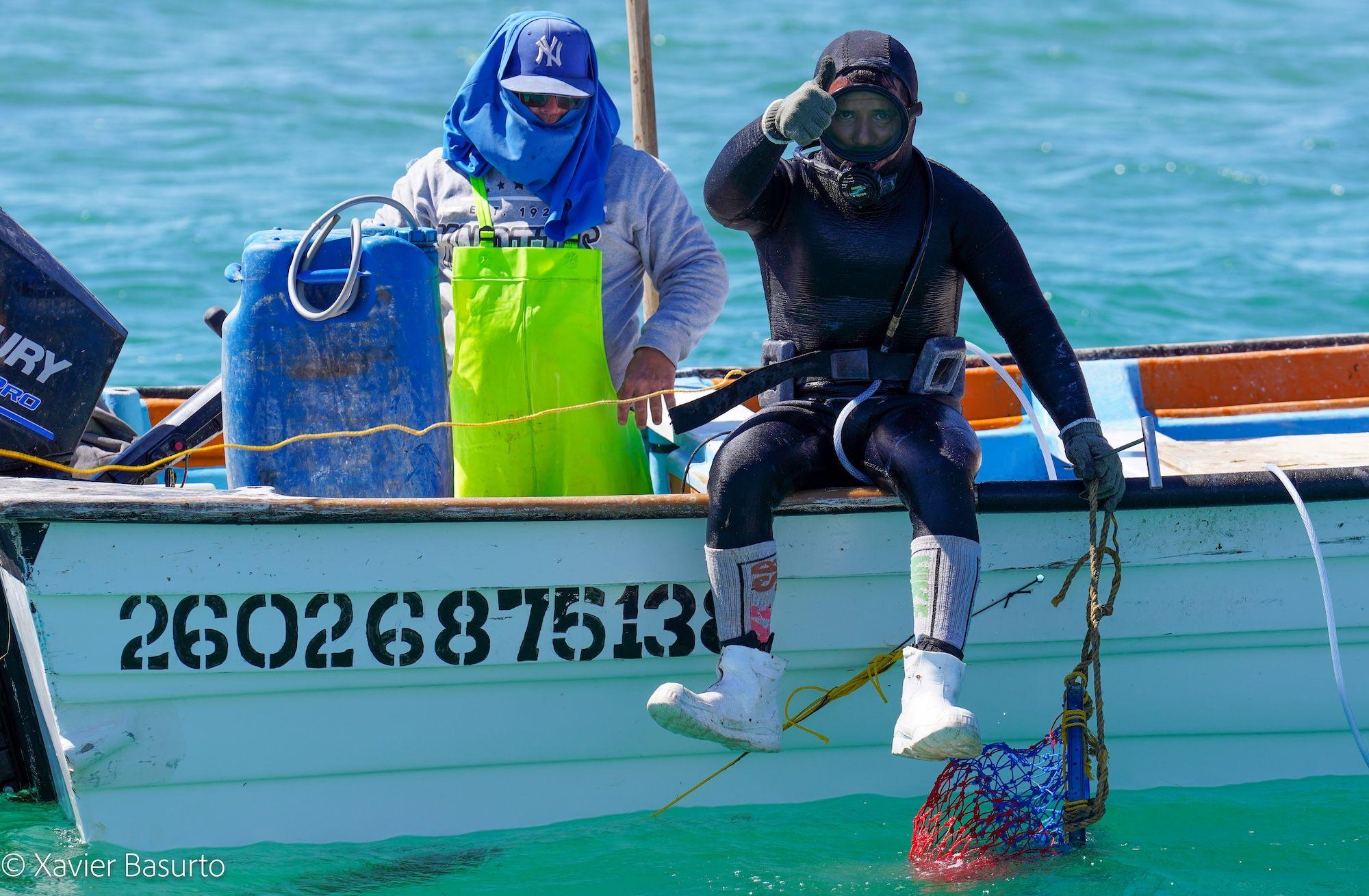 Diving is one of the most exhausting activities for anglers. Photo: Xavier Basurto.
However, there is another lesser-known condition: dysbaric osteonecrosis, a disease that causes the progressive death of bone tissue in joints such as the hips, knees and shoulders.
Researchers from the Marista University, in collaboration with specialists from California universities in San Diego and Los Angeles, conducted radiographic studies on nearly 80 fishermen from the Yucatecan coast. The results showed that between six and seven out of ten participants had signs of osteonecrosis.
“The person first feels pain. Then there comes a time when the joint deteriorates and may lose mobility,” the researcher explained.
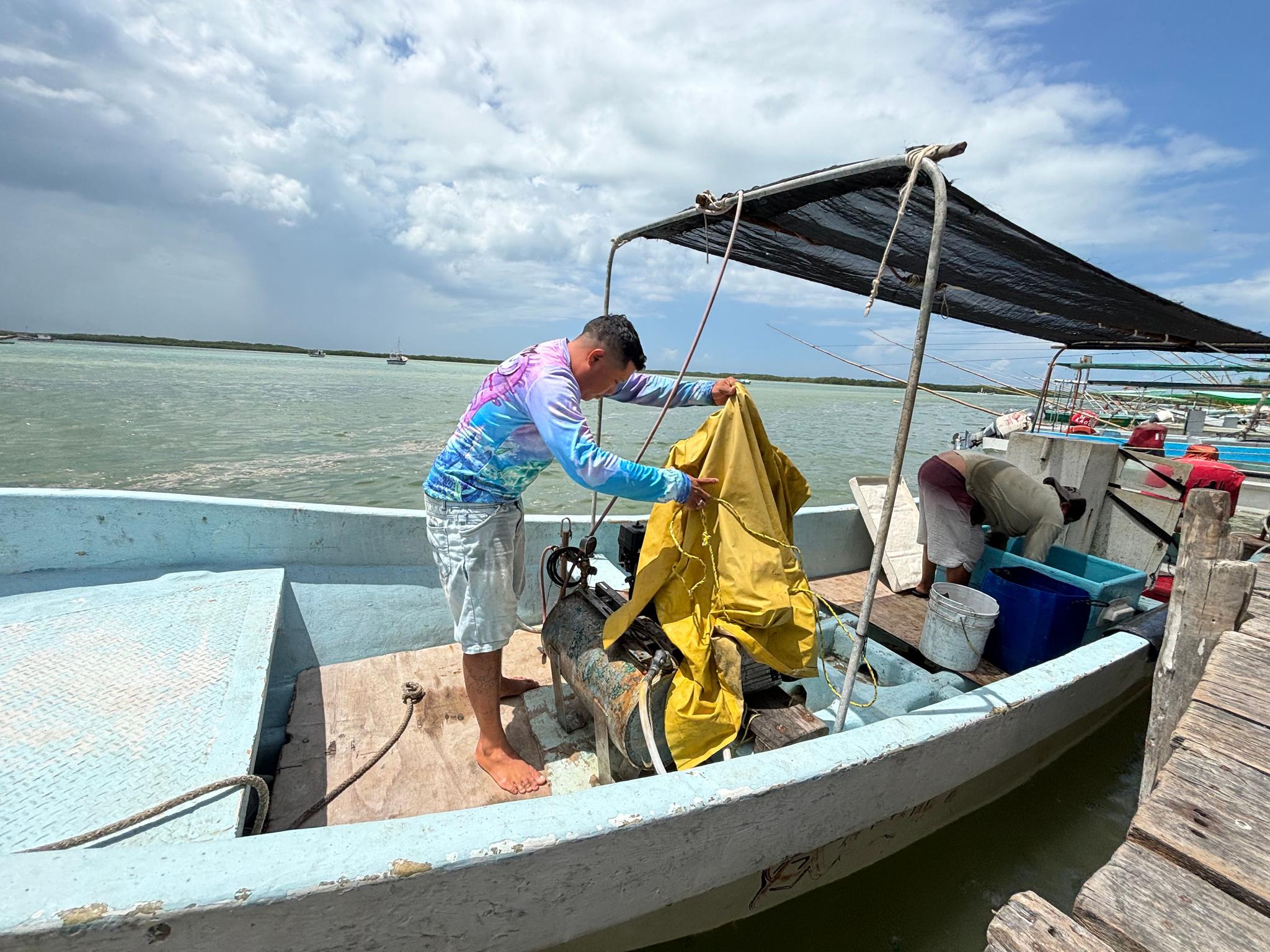 Always working while maintaining balance inside boats is a challenge. Photo: Itzel Chan.
In some cases, the consequences can be disabling. Huchim Lara recalls the case of a fisherman who for years lived with chronic pain until specialized studies revealed severe hip damage. It eventually required a total joint replacement.
Invisible occupational health
For the researcher, one of the main challenges is that the occupational health of those who live from fishing has received little attention, despite being a physically demanding activity.
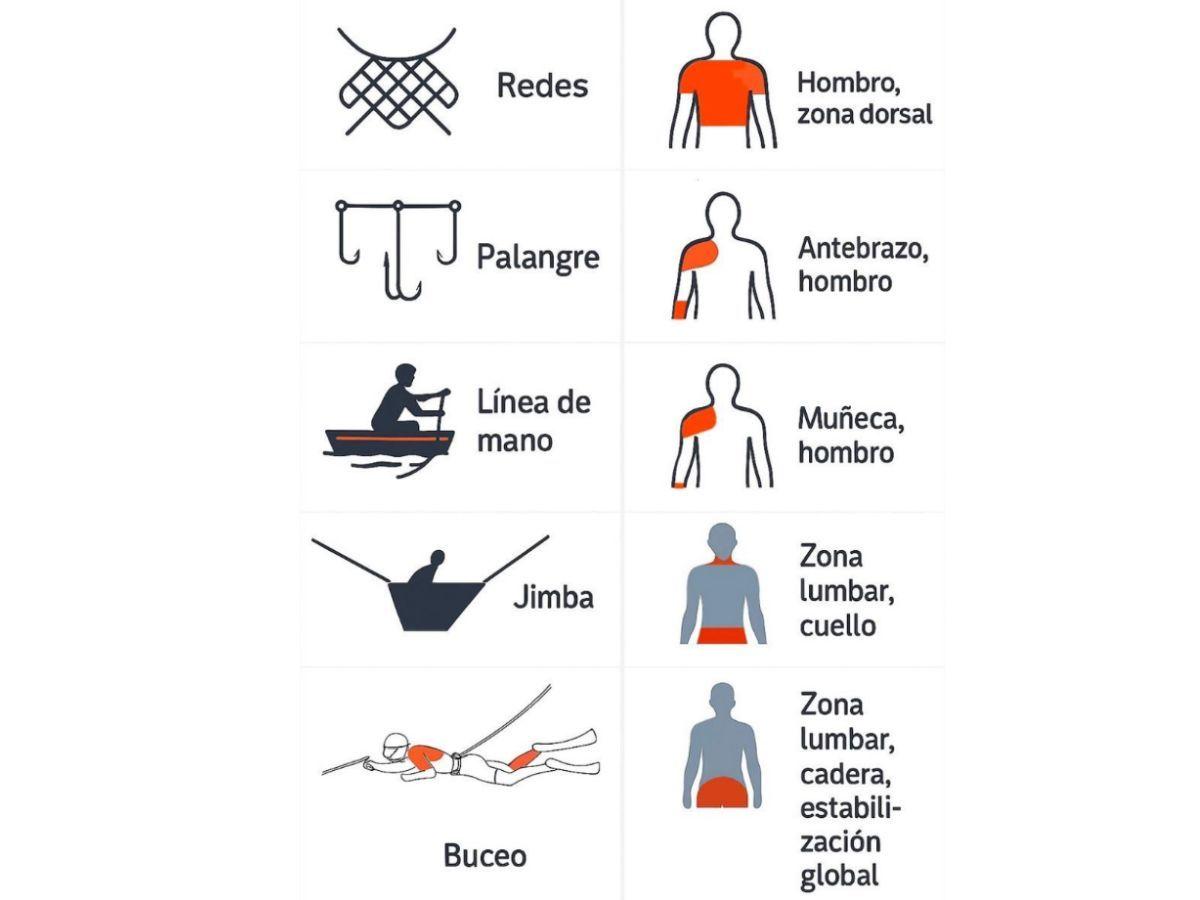
Some regions of the body affected depending on the type of fishing. Photo: Marista University.
In one of those studies he promoted, he evaluated 55 fishermen using tests of muscle strength, mobility and functionality. The results identified patterns of chronic pain and physical limitations that, in many cases, had been normalized for years.
The evaluations also showed that, although many anglers consider that they have a good quality of life, several have mild limitations in activities that require strength, manual precision or repetitive movements.
From the laboratory to cooperatives
In addition to publishing scientific articles, researchers seek to return information to the communities where it was generated.
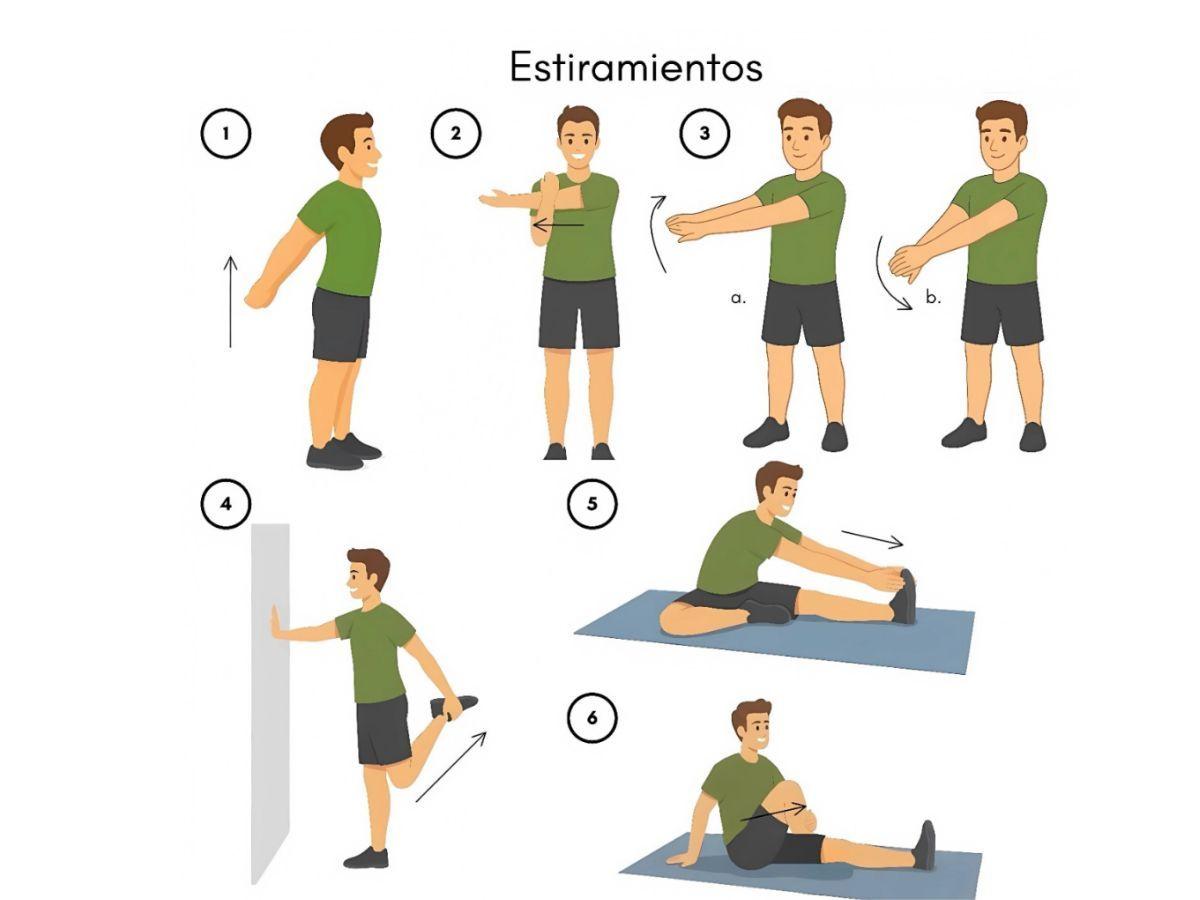 Specialists suggest this type of stretching before going out fishing. Photo: Marista University.
For this reason, they developed promotional materials and infographics with simple warm-up, mobility and physical recovery exercises that can be performed before and after fishing days.
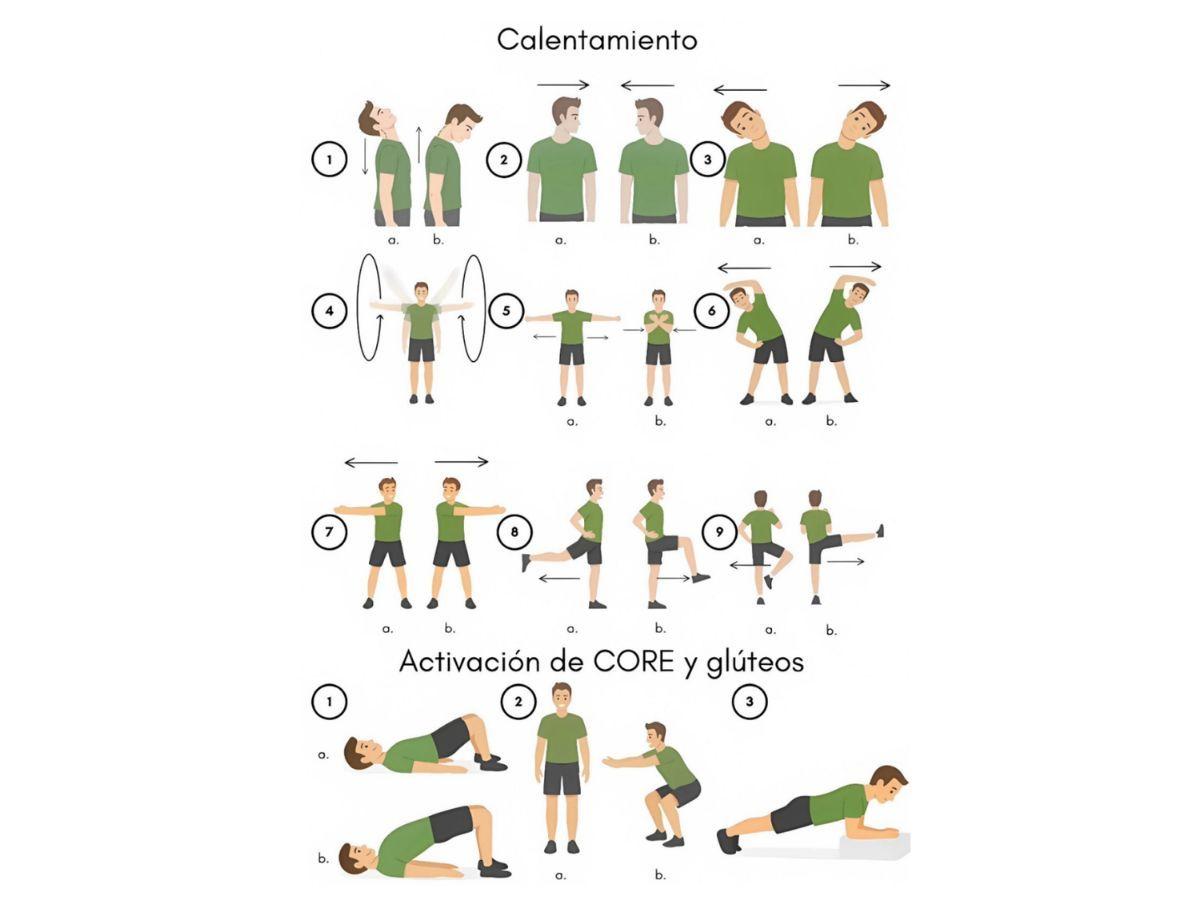 They also propose this type of heating. Photo: Marista University.
The intention is to distribute them in cooperatives and community spaces in fishing towns to promote habits that help reduce injuries and improve quality of life.
“It's not easy to change habits, but we've seen that when fishermen know the information and participate in the process, they can adopt new practices,” Huchim said.


Comentarios (0)