
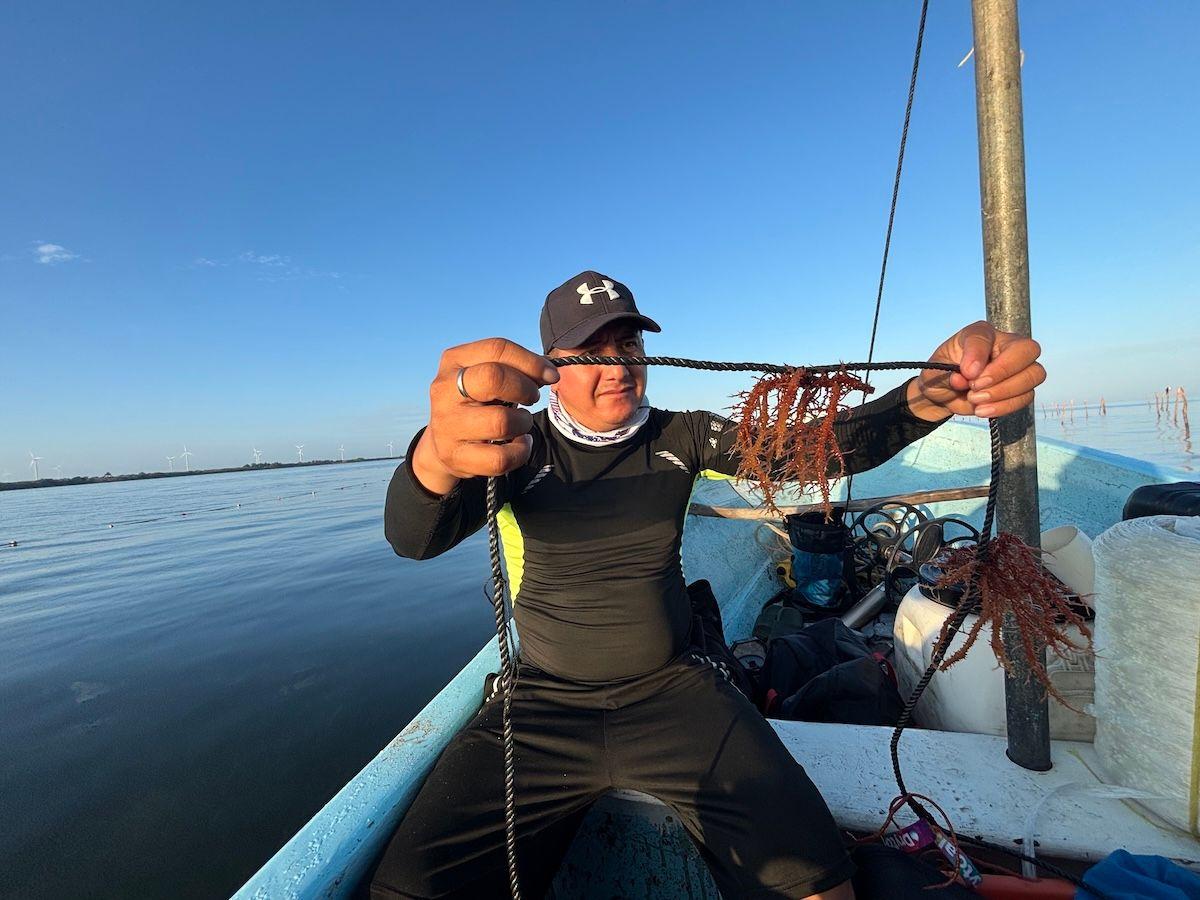
At a slower pace than that maintained for years at sea, the three brothers board a boat. David maneuvers the engine, while Julián and Pablo list the material for the day. Once upon a time they captured “everything that was put in front of them”, but today they are heading to an offshore plot, in front of Dzilam de Bravo, where they cultivate seaweed.
The fishermen of this small town in the southeast decided to temporarily stop fishing to bet on a profitable activity. Thus, they were integrated into a project to cultivate red algae, transformed into Mayan Moss, a product used for dishes in at least 15 restaurants in Mexico. These cases demonstrate transitions that could further diversify the local economy.
The Broca Rodríguez brothers are known by their aliases in the municipality of Dzilam. Since they were in elementary school, Julián “El Güero”, David “Broca” and Pablo “Clark Kent” (because he liked Superman a lot) went fishing with their dad and for the last six years they dedicated themselves to artisanal diving with the use of compressors.
“We stopped diving because they asked us for permission and all that, we didn't have a permit. So we decided to retire,” Julián described.
Except for the octopus season, since last year they have been cultivating algae with the support of the Regenerative Ocean Project (ROP), dedicated to the cultivation of macroalgae for various purposes, in which they collect these organisms, set up planting lines and place clotheslines under water.
The type of algae cultivated in the area is (phylum Rhodophyta), native to the region. However, this is the first time it has been harvested for marketing purposes.
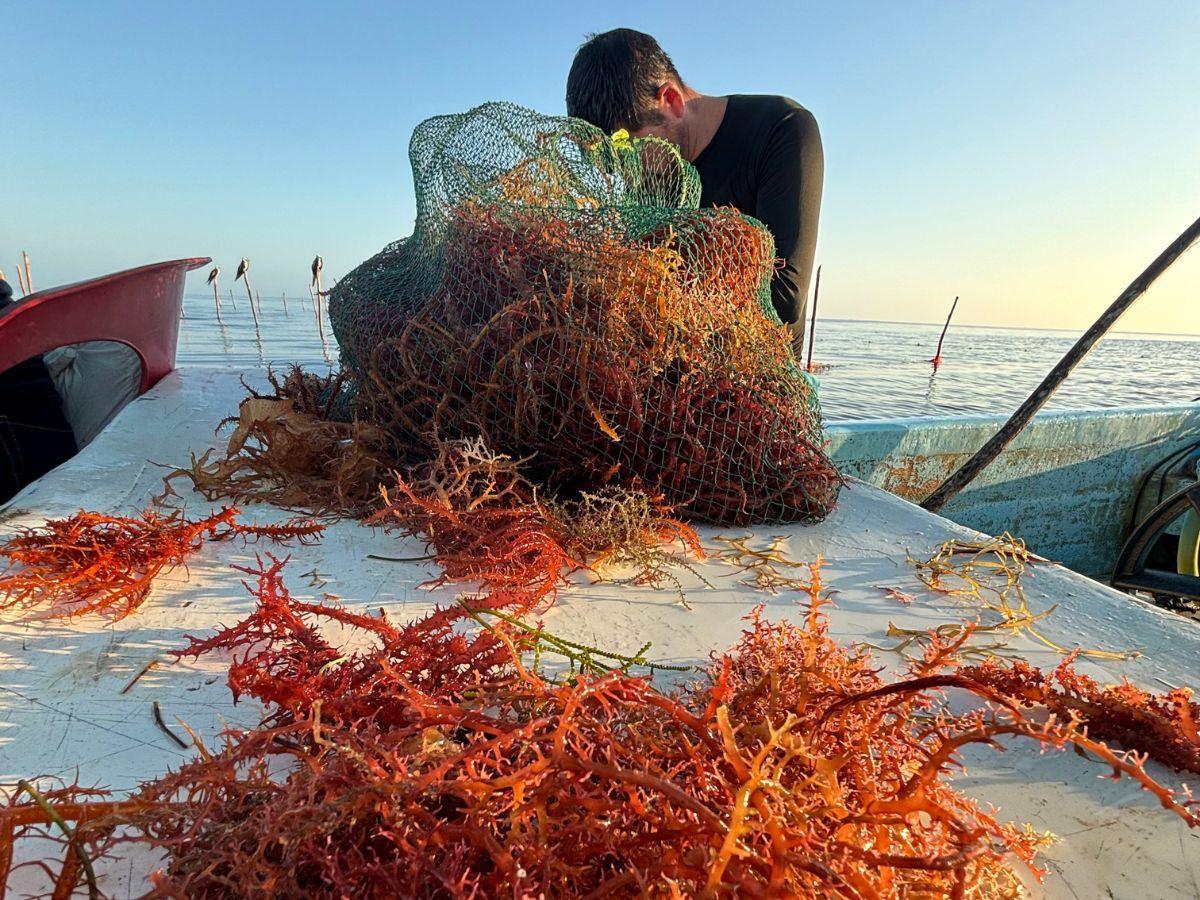 The brothers go out daily to collect algae and place them in lines where they will reproduce. Photo: Miguel Cocom.
“Fishing has already become very scarce and with seaweed cultivation we have realized that it is a 'drop by drop' type of work, you work every day little by little and you have a secure profit. Now that the northern season is coming, you can't go out fishing and in this case, since it's very close to the beach, we can come and work a little,” said David.
Since they stopped fishing, they have noticed a significant reduction in gasoline consumption. The seaweed farming area is about 10 minutes offshore. This also reduces navigational risks in adverse conditions that sometimes result in shipwrecks.
“There were times when we were gripped by the north and sometimes we thought we weren't going to arrive because there was a lot of storm, we were always afraid,” Pablo added.
Although algae have been present in their lives, this is the first time they have a deep understanding of their benefits and the productive possibilities they offer.
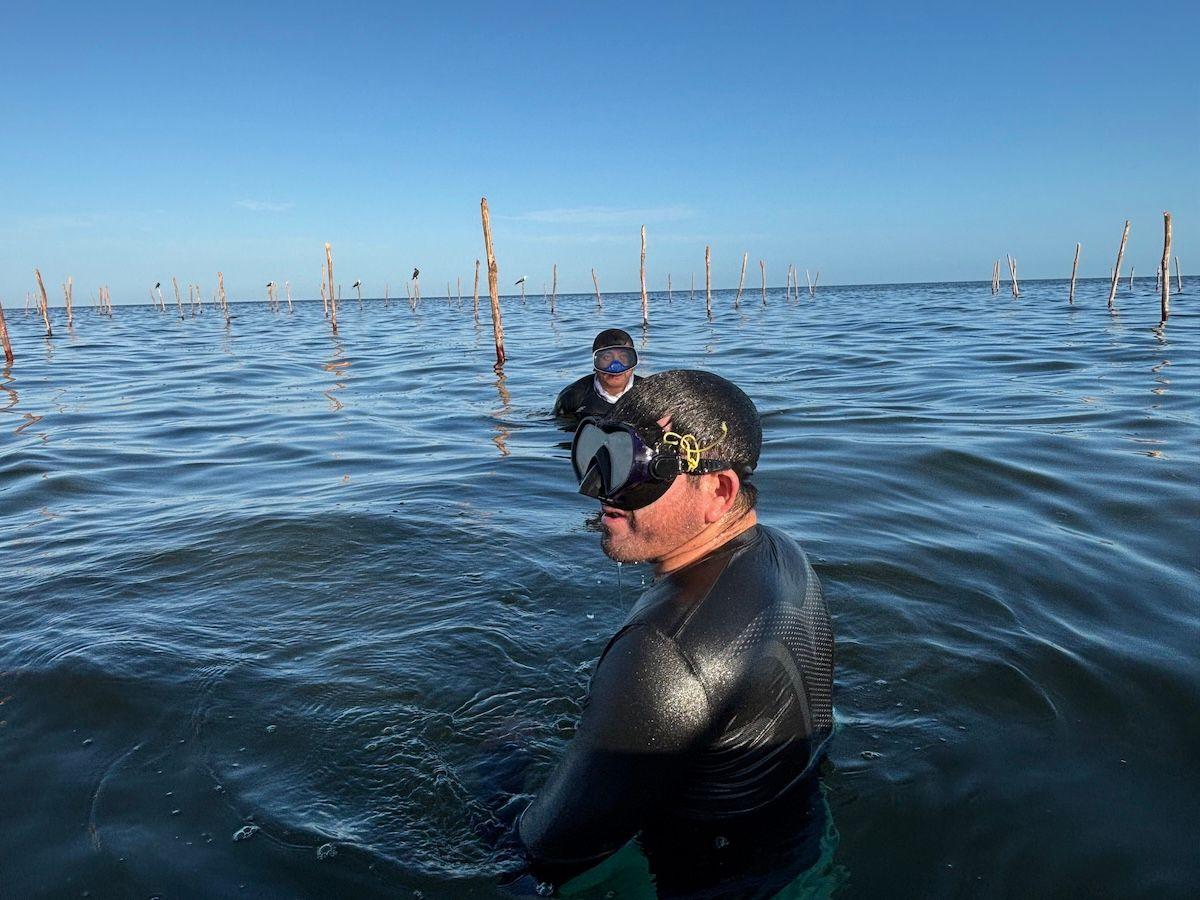 This activity is less risky for anglers. Photo: Itzel Chan.
“Before, we didn't really know what they were for. I do remember playing with them, we used them as a wig when we went out fishing, but now we know all the importance,” added El Güero.
Juan Carlos Lapuente Landero, director of operations of the ROP team, explained that the project is being developed on two hectares, where 300 saapote sticks have been planted that hold the ropes on which the algae are placed underwater.
“The idea here is that we are going to produce 80 tons a year. In reality, for now, it's not enough because when those tons dry up, they become eight tons. For now, we are focusing on technical viability to verify that cultivation is a fair business and, once proven, we want to scale the project to 50 hectares,” he described.
Algae have an element called carrageenan and many products, such as milk, toothpaste and others, have this additive. They also have components that are ingredients in ice cream, ham, cheese, bread toppings..., according to Juan Carlos.
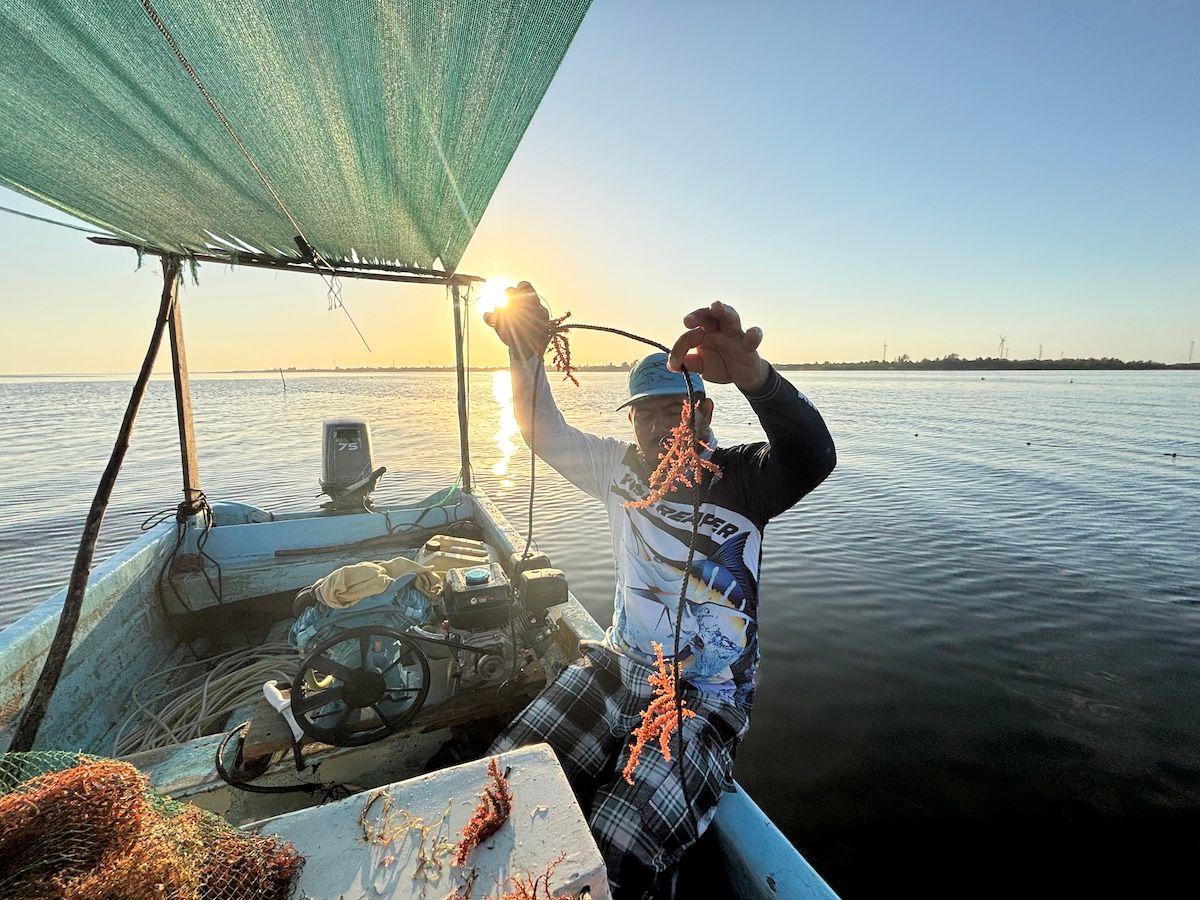 Fishermen gained more knowledge about red algae. Photo: Itzel Chan.
For their exploitation, they have permits granted by the National Aquaculture and Fisheries Commission (Conapesca) to carry out aquaculture with algae and for the collection of reproductive seeds, although the future intention will be to have their own laboratory.
The growing area is easily distinguishable because the saapote sticks stick out from the sea. In addition to planting purposes, they are an additional benefit for the birds that roost in them, since their excreta works as a nutrient for algae and, at the same time, this fauna alerts boats that circulate in the area to the existence of algae.
The reproductive cycle of these organisms covers between three and four months, so it is expected to harvest in relatively short periods of time.
For now, the commercialization has been carried out mainly in restaurants, thanks to funding from the Mexico Azul Foundation. In the medium term, they expect to position themselves in the wellness industry, cosmetics and the agricultural sector.
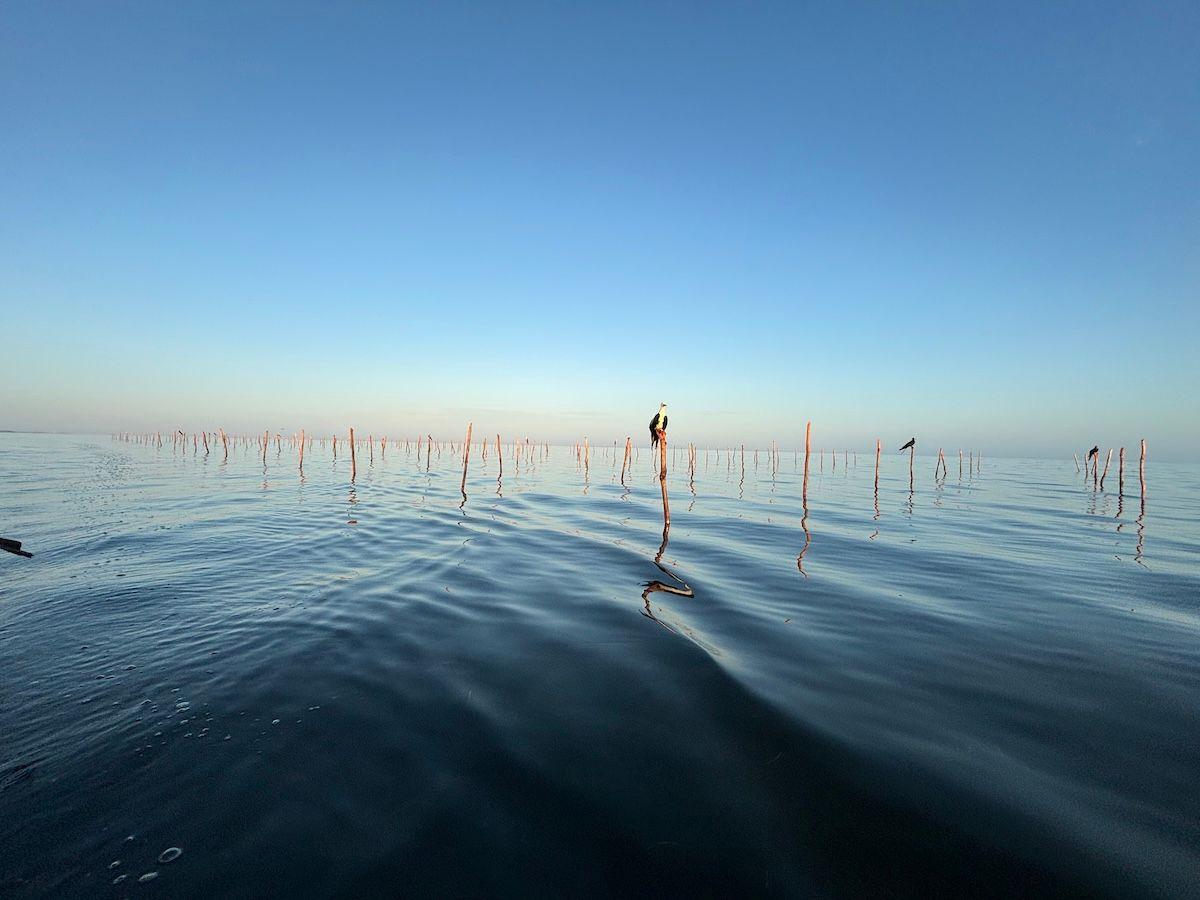 The algae cultivation area is distinguished by the planting of sapotes sticks. Photo: Miguel Cocom.
Paulina Sanela, director of ROP Mexico, highlighted the regenerative potential of algae as an economic alternative for fishing communities, in a context where closures are longer and the fishing resource is less and less accessible.
“They absorb carbon, release oxygen and are a refuge for many species maternity because the larvae stay there. We also see this project as a place where women, older adults and those with disabilities work,” she added.
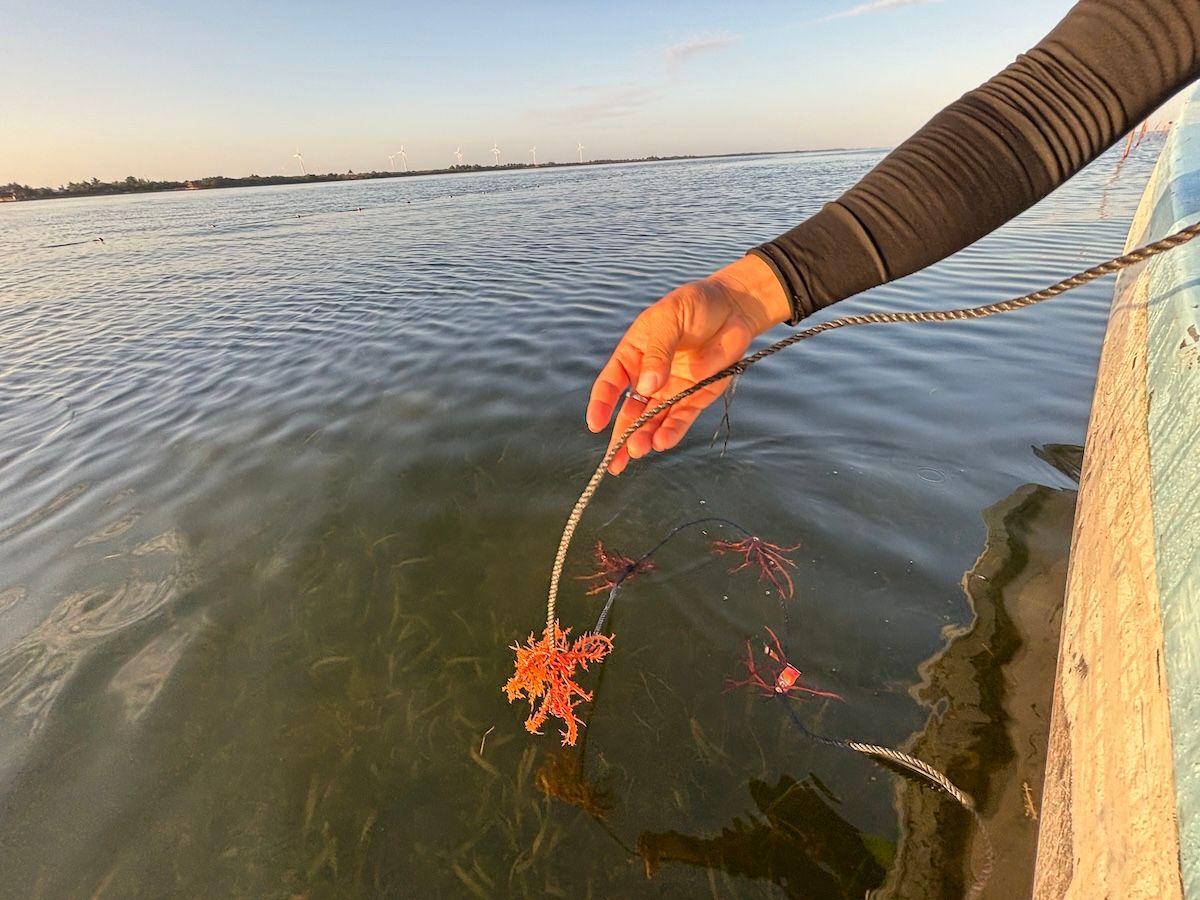 Seaweed has important health properties. Photo: Miguel Cocom.
Currently, the project succeeded in launching a product called Mayan Moss, dehydrated red seaweed that is preserved dry for culinary or nutritional use and is distributed in 15 restaurants in Baja California Sur, Mexico City and the Yucatan Peninsula.
Macroalgae cultivation is considered a regenerative practice because it captures carbon, filters nutrients, promotes marine biodiversity and does not require fertilizers, pesticides or fresh water.
The project works under approaches aligned with the Sustainable Development Goals (SDGs) and international regenerative blue economy frameworks.
Mayan Moss is made under a model that ensures the restoration of marine ecosystems, the purity of the algae without additives and traceability that allows us to know precisely the origin of the product.
ROP has been promoted in partnership with the National Autonomous University of Mexico (UNAM) and with the Environmental Defense Fund of Mexico (EDF Mexico). In a next phase, they plan to expand to Baja California Sur and other areas of Yucatán such as Sisal, Chabihau and San Felipe, where permits are already being processed.
“Our cultivation system is designed to be replicable, scalable and with low environmental impact. We operate in the open ocean under regenerative practices, adapted to the specific conditions of the Mexican coast. At ROP, we are committed to ocean health, the strengthening of coastal communities and collective well-being,” said Paulina.
* This article was written by Itzel Chan, who covers coastal communities thanks to the support of the Report for the World program .


Comentarios (0)