
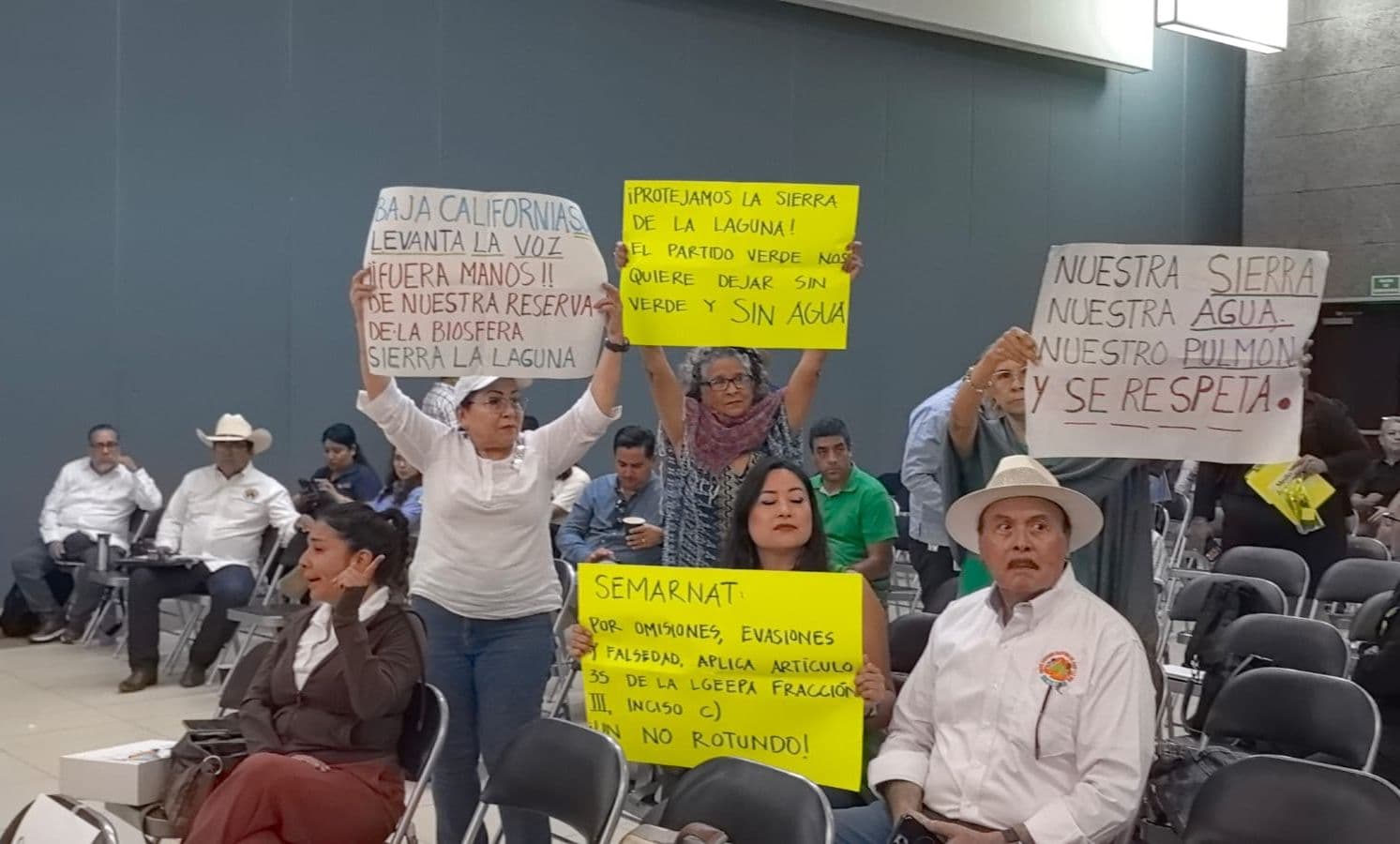
A shower of complaints, technical questions and questions about the lack of transparency marked the public information meeting convened by the Secretariat of Environment and Natural Resources (Semarnat) to analyze a new infrastructure project within the Sierra La Laguna Biosphere Reserve.
For several hours, researchers, specialists, residents and environmental organizations confronted the promoters of the project “Integral Restoration of Facilities for the Preservation and Monitoring of the Sierra La Laguna Biosphere Reserve”, promoted by the Brotherhood in Harmony association.
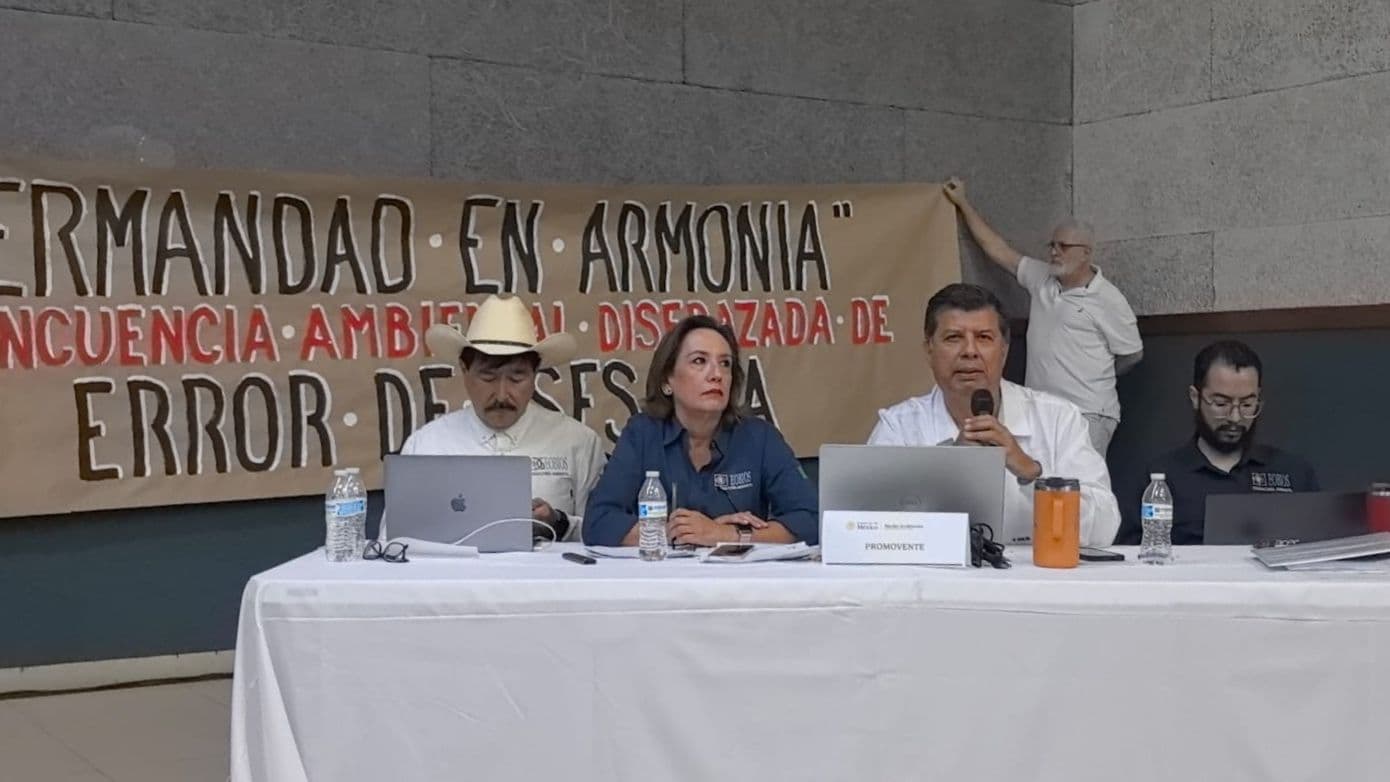
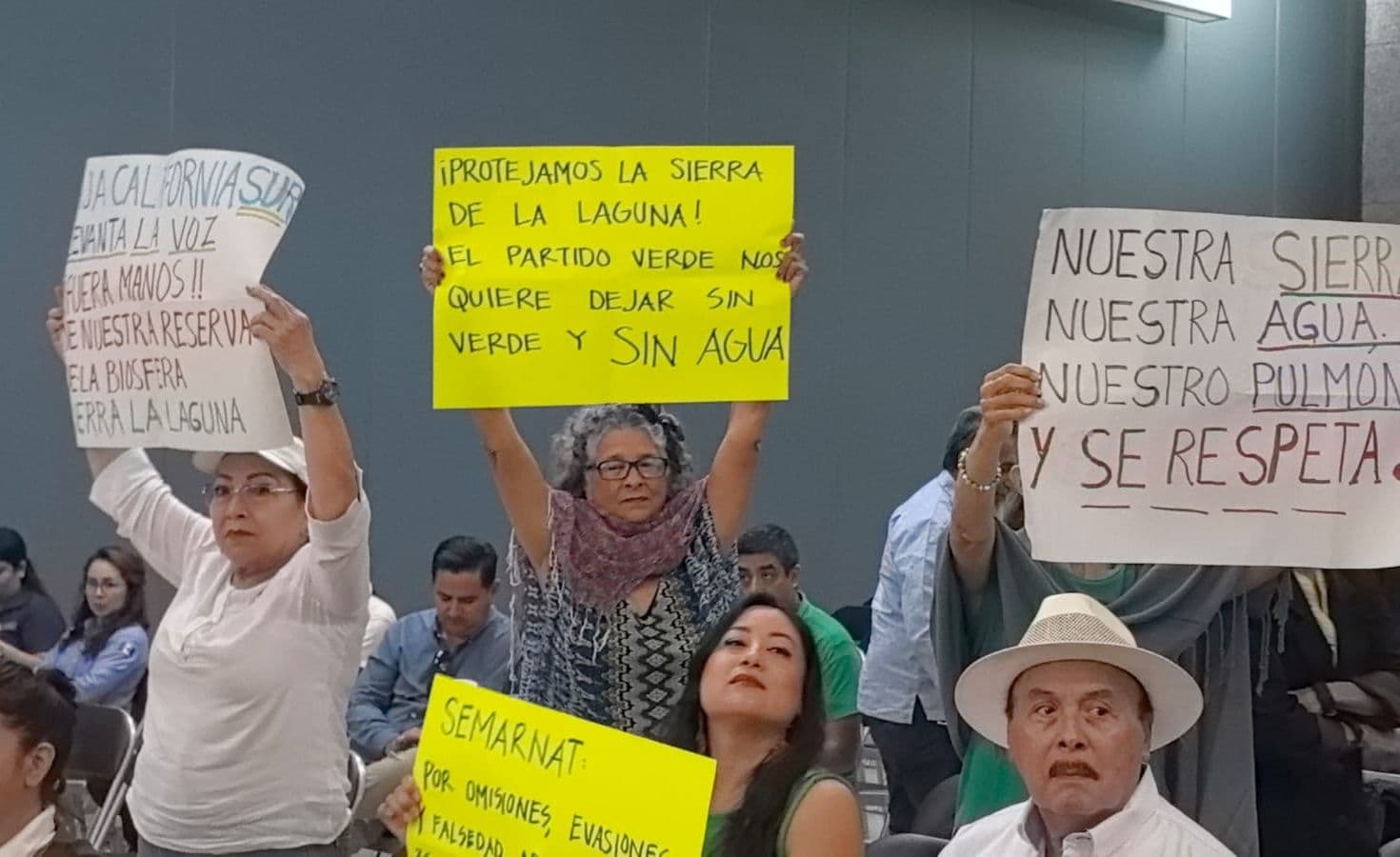
At the La Paz Convention Center, where the meeting took place, the demonstrators placed or unfolded banners with phrases such as: “Brotherhood in Harmony, disassemble, damage, alter ecosystems, ask for forgiveness and then process the permit!” ; “Brotherhood in Harmony, environmental crime disguised as an 'advisory error'” or “Out of the Biosphere, Brotherhood in Harmony!”.
The disagreements were not limited to the rejection of new constructions within the Protected Natural Area. Among the questions, differences emerged between what was established in the Environmental Impact Manifestation (MIA) and what was stated during the meeting, doubts about the location of some works, questions about biodiversity studies and the water supply, in addition to the history of the entry of materials by helicopter.
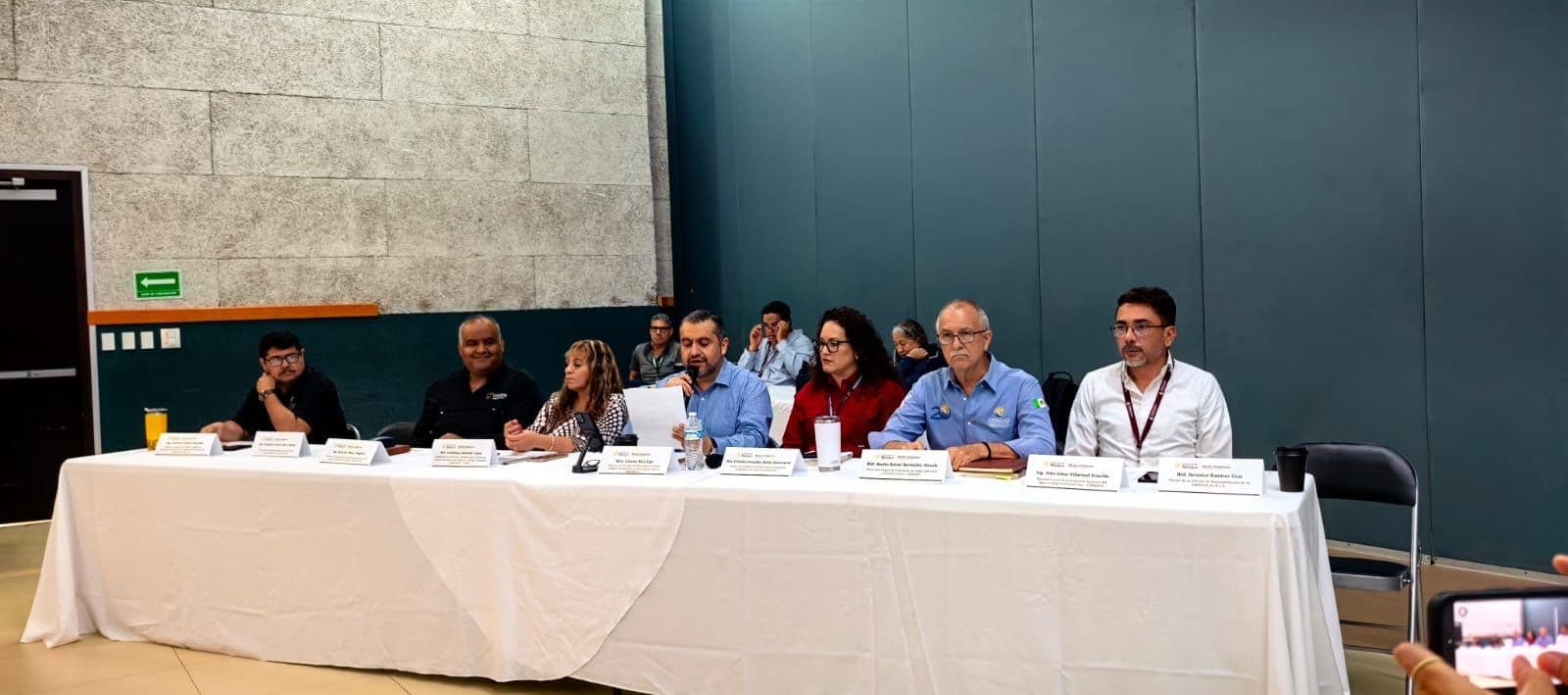
What does Brotherhood in Harmony want to build?
The developer said that the project subject to environmental evaluation contemplates a total area of just 454 square meters, equivalent to 0.04 hectares, which will be distributed in different parts of the Sierra La Laguna Biosphere Reserve.
During the presentation, the promoters emphasized that this area would represent around 0.00004% of the total territory of the reserve.
The proposal combines rehabilitation of existing facilities with new buildings designed, according to Brotherhood in Harmony, to support research, monitoring, surveillance and conservation activities.
Among the works are two service modules and five sanitary modules. One of the service modules, identified as MS-01, would be completely new and would have an area of 314,994 square meters. It would have spaces for work and research, basic kitchen, toilet, terrace, rest areas and equipment storage.
The service modules would be located in the Segundo Valle de la Sierra, an area where camping activities are currently taking place.
Five sanitary modules of 7.83 square meters each are also contemplated, designed to operate as dry toilets for authorized personnel and visitors.
The project also includes photovoltaic systems, water storage, wastewater treatment and waste management.
Don't miss: They denounce flights to introduce steel beams to the Sierra La Laguna Biosphere Reserve
“It could have been a finger mistake”
The questions began to grow when the participants pointed out differences between the MIA and the information presented.
María Fernanda Méndez questioned the fact that some modules appeared to be identified differently between the two documents. As stated, the MSN-05 is described in the MIA as an installation that will be rehabilitated, while during the meeting it was presented as a new construction. With the MSN-01, he said, the opposite was true.
The response of the promoting team was to admit that there could be a mistake.
“That may have been a mistake, really, it could have been a finger error, but at the end of the day we're going to clarify it, we're going to clarify it to Semarnat,” they said.
The explanation raised more questions because the presentation itself established that rehabilitation would be the priority criterion for intervention and that new constructions would be limited to components considered indispensable.
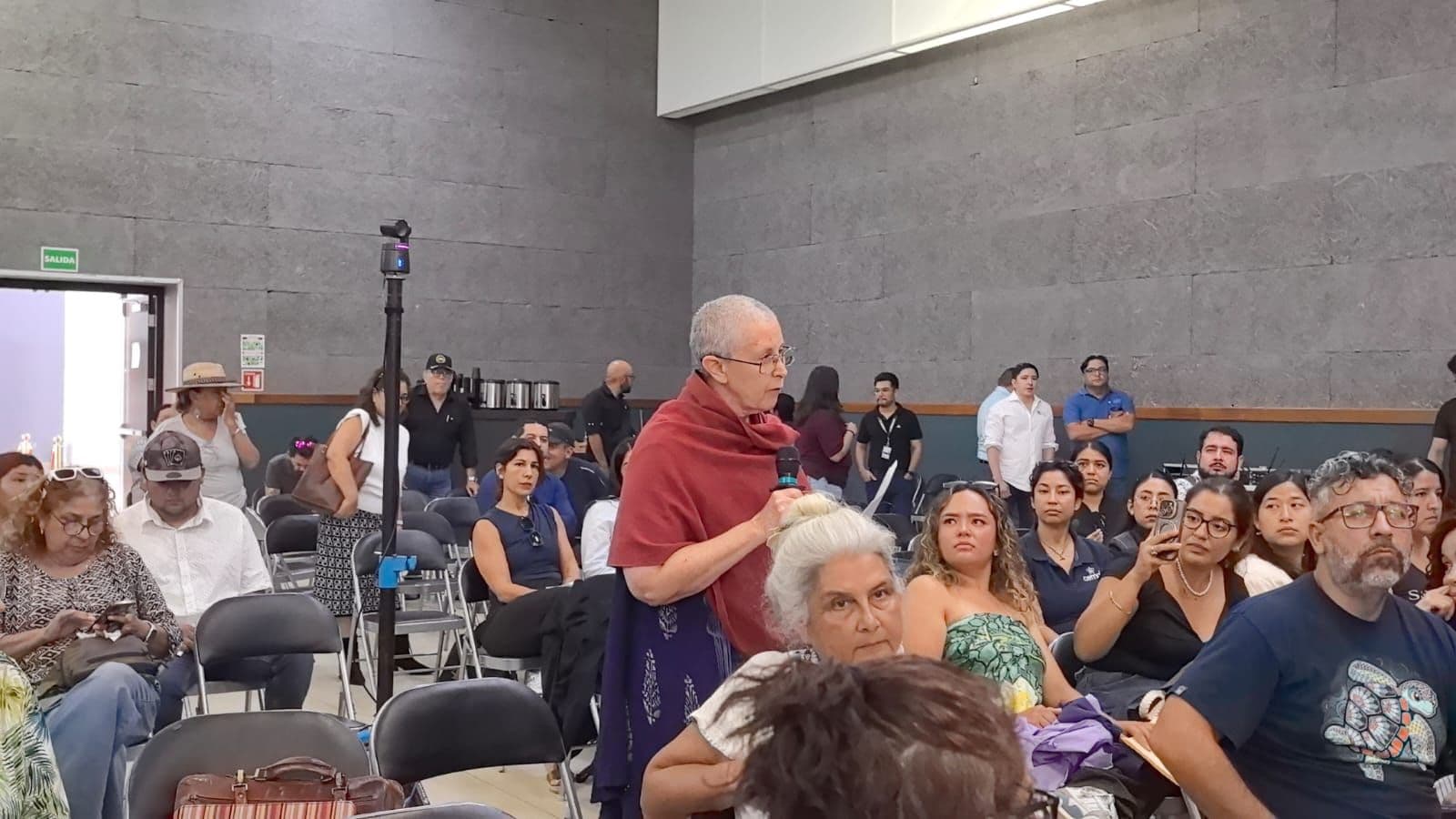
The helicopter “mistake”
The background of the construction materials previously brought to Sierra La Laguna by helicopter also came up in discussion.
Representatives of Brotherhood in Harmony attributed that action to “poor advice” and assured that there is currently an agreement to remove the materials.
The topic gained strength when, during the reading of written questions, those responsible for the project were questioned about who had provided that advice and were asked if they were facing “another advisory error”.
The discussion expanded because the MIA currently under evaluation also contains a reference to the possibility of carrying out helicopter flights. To the question about what authorization existed for this purpose, those responsible answered that they do not plan to use helicopters for the execution of the new project and attributed its appearance in the document to “another error”.
“There was a drafting error, there are no plans to use the helicopter. These were issues from other times and are not being considered at this time,” they said.
Thus, during the same meeting, the promoters recognized a possible “finger error” in the classification of some works and a “drafting error” with respect to the helicopter, while the history of entering materials was attributed to “poor advice”.
This led the participants to insist on one point: how to ensure that the project, currently undergoing evaluation, has sufficient information and advice.
Read: Work supported by the government on the island of BCS damages heritage; INAH reports to FGR
There is no date to remove the materials
The previously entered material continues inside Sierra La Laguna.
César Montaño, from Brotherhood in Harmony, assured that there is already an act and protocol for his withdrawal and noted that the procedure is in the final stage of processing.
“The material is protected” and there is an agreement that technically states how it will be removed, he explained. He also offered to bring in social witnesses to observe the proceedings.
However, during the meeting, no specific date was reported to specify the retreat.
Fidel Trasviña recalled that the foundation had made that commitment months ago and questioned whether the material remains on the site. Montaño replied that they are continuing with the corresponding procedures for the withdrawal.
The intention, explained the foundation, is to download these materials by helicopter, this time with the required authorizations and protocols.
Questions about the location of the works
The exact location of the facilities was another point that generated complaints.
Environmental engineer Alejandro Águila questioned whether some of the works were compatible with the restrictions established in the Sierra La Laguna Management Program and asked to clarify whether there is a formal request from the management of the Protected Natural Area that allows certain interventions.
During the meeting, answers were even offered that seemed to contradict each other.
At one point, project representatives pointed out that two works would be within the core area and that both would be bathrooms.
Later, faced with another question, they stated that the project is not being developed in the core area, but in an area for public use.
The location and compatibility of the facilities were thus among the points that Semarnat should review during the evaluation.
You may also like: Community of La Paz is organized to stop tourism project in El Saltito
Water, Biodiversity and Other Questions
Alejandro Águila also asked where the water that the facilities will need will come from.
Although the project involves storage, rainwater collection and wastewater treatment, the specialist asked to specify which will be the authorized sources of supply.
In addition to doubts about water, questions about biodiversity assessment were added.
Patricia Galina Tessaro, a researcher with 35 years of experience in the Cape Region, noted that the MIA records a monitoring of fauna and vegetation carried out on January 12 and questioned whether a single date would adequately characterize biodiversity.
He explained that during that time the activity of some species, especially reptiles, decreased and that in order to identify certain plants, it is also necessary to carry out observations in different seasons.
Those responsible for the project responded that, in addition to the indicated sampling, they kept camera traps for 48 days.
Who will use the infrastructure?
Hermandad A.C. argued that the modules will serve to support scientific research, monitoring, surveillance and conservation, and stated that one of its goals was to collaborate with the institutions responsible for the Protected Natural Area.
Its representatives recognized that there is currently no agreement with the National Commission for Protected Natural Areas (Conanp) or with research centers. The explanation was that these agreements could be formalized later, if Semarnat first authorizes the project.
This point does not in itself constitute an irregularity, but it was raised during the meeting in response to questions about who will use the facilities and under what scheme the activities announced by the foundation would take place.
Semarnat will have the last word
The public meeting is part of the evaluation procedure and does not represent an authorization to start the works.
Semarnat must review the Environmental Impact Statement together with the comments submitted by specialists, residents and organizations before determining the viability of the project.
Beyond the slogans and expressions of rejection that accompanied the meeting, the discussion left a series of concrete questions to be resolved, such as which works are new and which will be rehabilitated, in which sub-areas they will be located, where the water will come from, how sufficient environmental studies were and why the documentation presented contains data that the promoters themselves attributed to errors.
According to groups and citizens, it should be precisely these answers that should weigh in the decision on a project that seeks to introduce and rehabilitate infrastructure within Sierra La Laguna.
Read: Work supported by the government on the island of BCS damages heritage; INAH reports to FGR


Comentarios (0)