
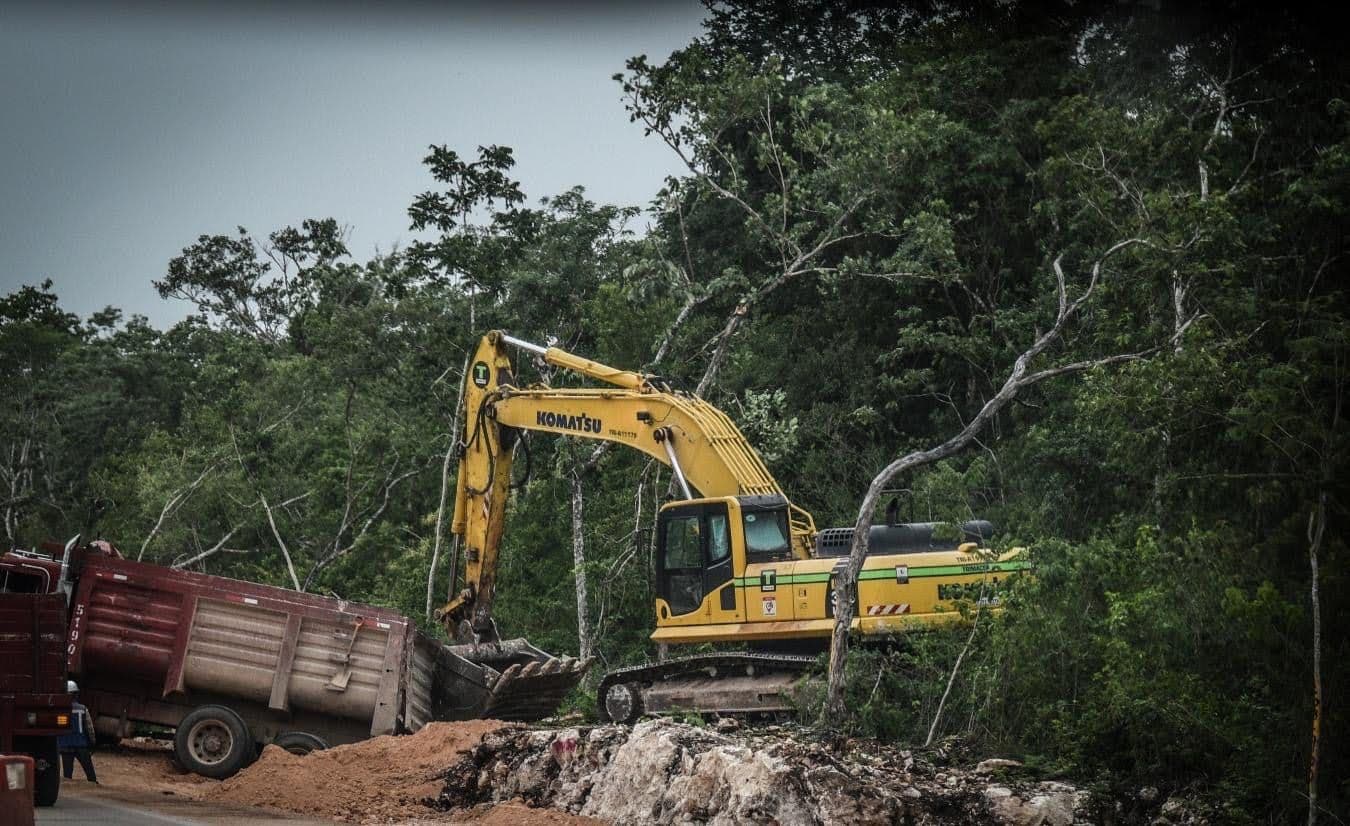
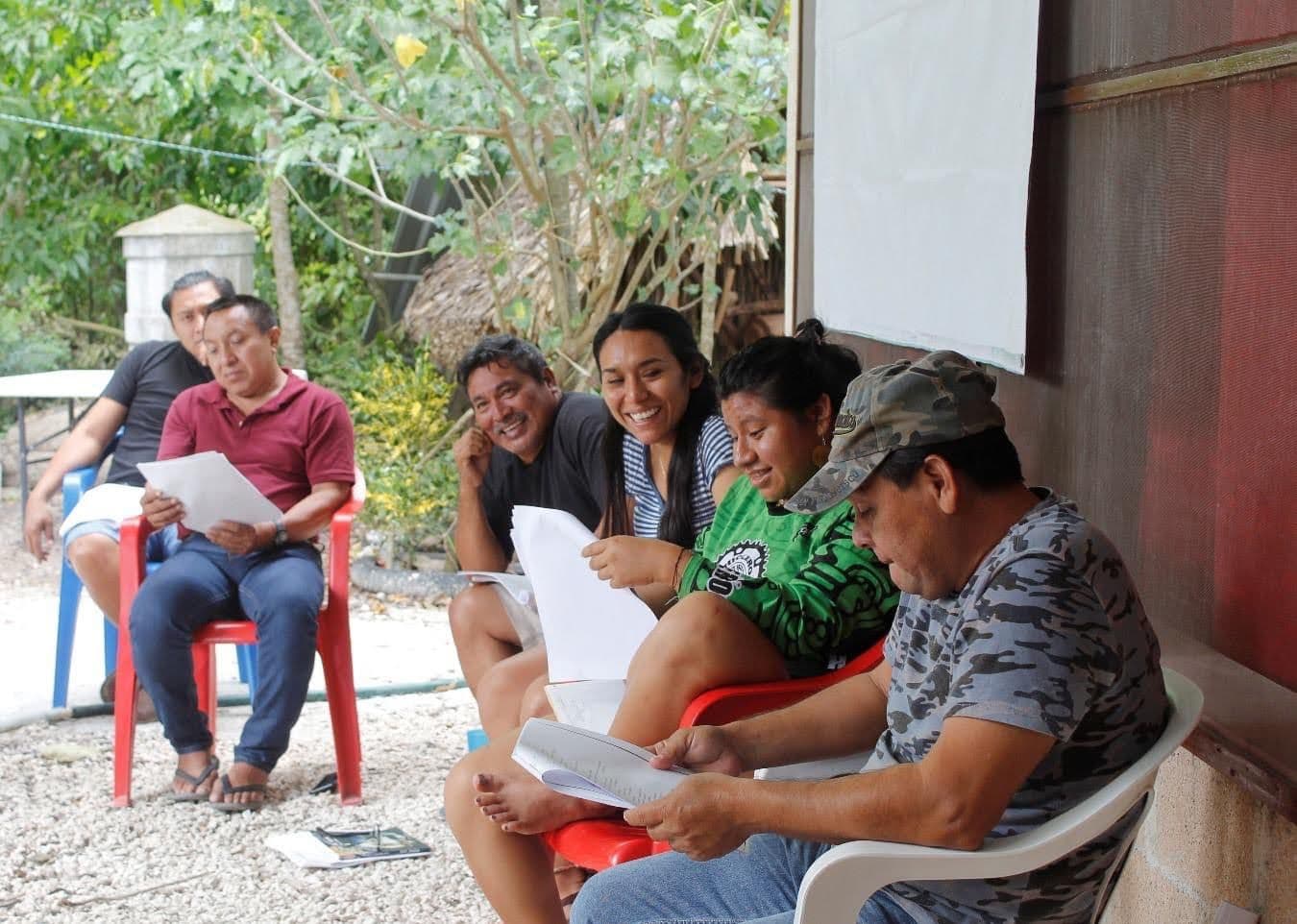
More than 15 people, mostly farmers, left Campeche, left their plots, their jobs and their families and traveled 354 kilometers to reach Mérida, Yucatán. Their reason: to sign documents to continue the amparo trial they brought against the Mayan Train.
Attorney Juan Pablo Zavala recalls that case as an example of what it means to try to access environmental justice in Mexico. The more than five hours' drive added to the costs of transportation, food and lodging, which people could hardly afford.
The trip occurred in 2020, after the amparos related to the Mayan Train were concentrated in a single court in Mérida. Zavala explains that this decision favored the Executive Branch, since it made distance another obstacle for communities that were trying to stop the megaproject.
And although on paper it is stated that access to justice must be free and expeditious, and that legal processes must be simple and effective, in practice, Zavala says, it is quite the opposite.
In addition, in environmental litigation, the evidence needed to show before a judge that a project can affect water, a forest or a jungle is costly. A single survey can be worth more than 50,000 pesos.
Attorney and environmental activist Raquel Gutiérrez Nájera indicates that these tests work to analyze social, economic, environmental and health impacts, and require specialists in water, wildlife, mangroves, forests or biodiversity.
Those who do the expertise study the case, answer technical questions and go to the judge to confirm their findings, but for a community without resources, getting that money can become another barrier. Many have turned to allied researchers or specialists willing to collaborate. Gutiérrez Nájera says: “if they didn't have these relationships... communities don't have enough to pay the lawsuits.”
But there is another cost that is not measured in pesos, and that is time. Attorney Agustina Rodríguez accompanied a 14-year litigation in the indigenous community of San Pedro Itzicán, located on the shores of Lake Chapala, in Jalisco. The case sought to protect the right to health and a healthy environment against water pollution and the effects faced by the population, where numerous cases of kidney disease have been documented.
Rodríguez explains that pending tests, reports and different resources can delay procedures over and over again. As the file progressed, the damages continued, and in those 14 years of litigation, “a lot of people died,” he says.
Despite these difficulties, communities have used the amparo trial for years as a tool to rescind an authorization; to compel an authority to act; or to require it to make a decision again while respecting rights such as access to water, information, participation or a healthy environment. It also made it possible to temporarily stop a work that could damage territory while a judge was analyzing the case.
But the rules changed. The reforms approved in 2024 and 2025 restricted the scope of suspensions and modified the requirements to demonstrate who can go before a judge.
These changes occur, in a context in which defending the territory remains dangerous and many aggressions go unpunished. Between 2024 and 2025, the Mexican Center for Environmental Law (CEMDA) documented 35 murders against environmental defenders and 550 specific attacks, such as intimidation, harassment, stigmatization, criminalization and defamation.
The State topped the list of aggressors in both years: it was identified in almost two out of every three events recorded in 2024 and in more than half of those documented in 2025. It was followed by private companies and organized crime.
Those who defend the land thus face double pressure: within the courts, a more restrictive path to try to stop projects before the damage is irreversible; outside them, threats, aggressions and, in some cases, death.
Don't miss: Chuburná fights to save the dunes of a real estate project
Before the damage occurs
The amparo trial was born more than 180 years ago in Yucatán. In simple terms, it allows a person to go before a judge when they consider that a law, decision or action of the State violates their rights.
If a farmer discovers, for example, that an authority allowed him to clear a forest, cut down the jungle or dump toxic substances into the river on which his community depends, he can request an amparo.
While the judge is studying the case, he can also order a suspension: a measure that temporarily halts the work to prevent environmental damage from progressing before there is a ruling.
In environmental matters, this possibility is fundamental because the times of justice and those of nature are different. A trial can drag on for years, but clearing a forest, drilling an aquifer or destroying a mangrove forest can take just weeks.
For environmental lawyer Carla Aceves, amparo represents the last legal remedy when all other avenues of defense have been exhausted. Zavala describes it as a mechanism of control in the face of state power.
A constitutional reform in 2011 expanded its scope. Among other changes, it strengthened the protection of collective and environmental rights and incorporated the concept of legitimate interest. This allowed a person to go to justice, even if they did not own the affected land, provided that they demonstrated a relationship with the ecosystem and an effect on their rights or interests.
The change was important because environmental damage doesn't recognize the boundaries of a property. A river crosses municipalities, an aquifer connects communities and the destruction of a mangrove forest can have consequences far beyond the place where it occurs.
The case of Laguna del Carpintero, in Tampico, Tamaulipas, became a reference for legitimate interest. The project envisaged the construction of a 16-hectare ecological park next to the wetland. Two people went to the amparo, considering that the construction and the felling of mangroves violated their right to a healthy environment.
The matter reached the Supreme Court, and it was later recognized that one of the plaintiffs had a legitimate interest because she lived in Tampico within the ecosystem's area of influence. The 2018 ruling ordered the project to stop, revoke permissions and restore the mangrove forest.
Attorney Jorge Fernández Mendiburu considers the case a “watershed” because it helped to develop the idea of the adjacent environment: it is not necessary to live in the exact place where an ecosystem is located to be affected by its deterioration. It can also be defended by those who receive its environmental benefits and those who would suffer the consequences of its destruction.
Starting in 2024, however, some of those rules began to change. The changes affect two different issues: the scope of the suspensions and the conditions for proving legitimate interest.
The first change: suspensions
In June 2024, the Amparo Act was amended to establish that, when a general rule is claimed to be unconstitutionality, the suspension cannot have general effects.
What does this mean in simple terms? If a person succeeds in getting a judge to suspend the application of a rule for them while their trial is being resolved, that protection does not automatically extend to those who are in a similar situation. For others, the rule may continue to apply.
For Fernández Mendiburu, this limitation “goes back to us 30 years ago”. In environmental matters, he warns, the problem takes on another dimension because ecosystems are shared. The pollution of a river, the destruction of a mangrove forest or the clearing of a jungle do not affect a single person: the same decision can affect entire communities.
Gutiérrez Nájera warns of another difficulty related to suspensions: stopping a work can be complicated when the Government maintains that it is being built because it responds to the social interest, that is, that its benefits for society justify its continuation despite the risks reported.
The second change concerns who can go to amparo.
In 2025, the conditions for proving legitimate interest became more specific. The law establishes that there must be an individual or collective legal injury, real and differentiated from the rest of the people, and that winning amparo must produce a certain benefit, not just a hypothetical or possible benefit.
For lawyer Raúl Aldama, these requirements increase the burden of proving legitimate interest and bring this figure closer to the most restrictive legal interest, which requires the holder of a right. This has an impact because previously legitimate interest allowed us to go to court without owning the affected land, provided that a particular relationship with the ecosystem or its benefits could be demonstrated.
Academician and lawyer Carla Aceves explains that environmental causes are almost by definition collective because they fall on common goods and diffuse interests. Air is one of their examples: if it is polluted, it does not affect only a person, but rather those who breathe that same air.
For Aceves, making the accreditation of these effects more individual represents a regression. In indigenous, rural or resource-poor communities, it means that each member seeks their own protection, multiplying the work of lawyers, procedures and costs.
The lawyer also points out that requiring him -the person seeking amparo- to prove a real and differentiated injury and prove that winning the trial will bring him a certain benefit is a setback, since environmental conflicts begin when the damage has not yet occurred because he seeks to avoid it.
If a community tries to protect a forest before it is felled, it may be more difficult to demonstrate a specific impact because the deterioration has not yet occurred.
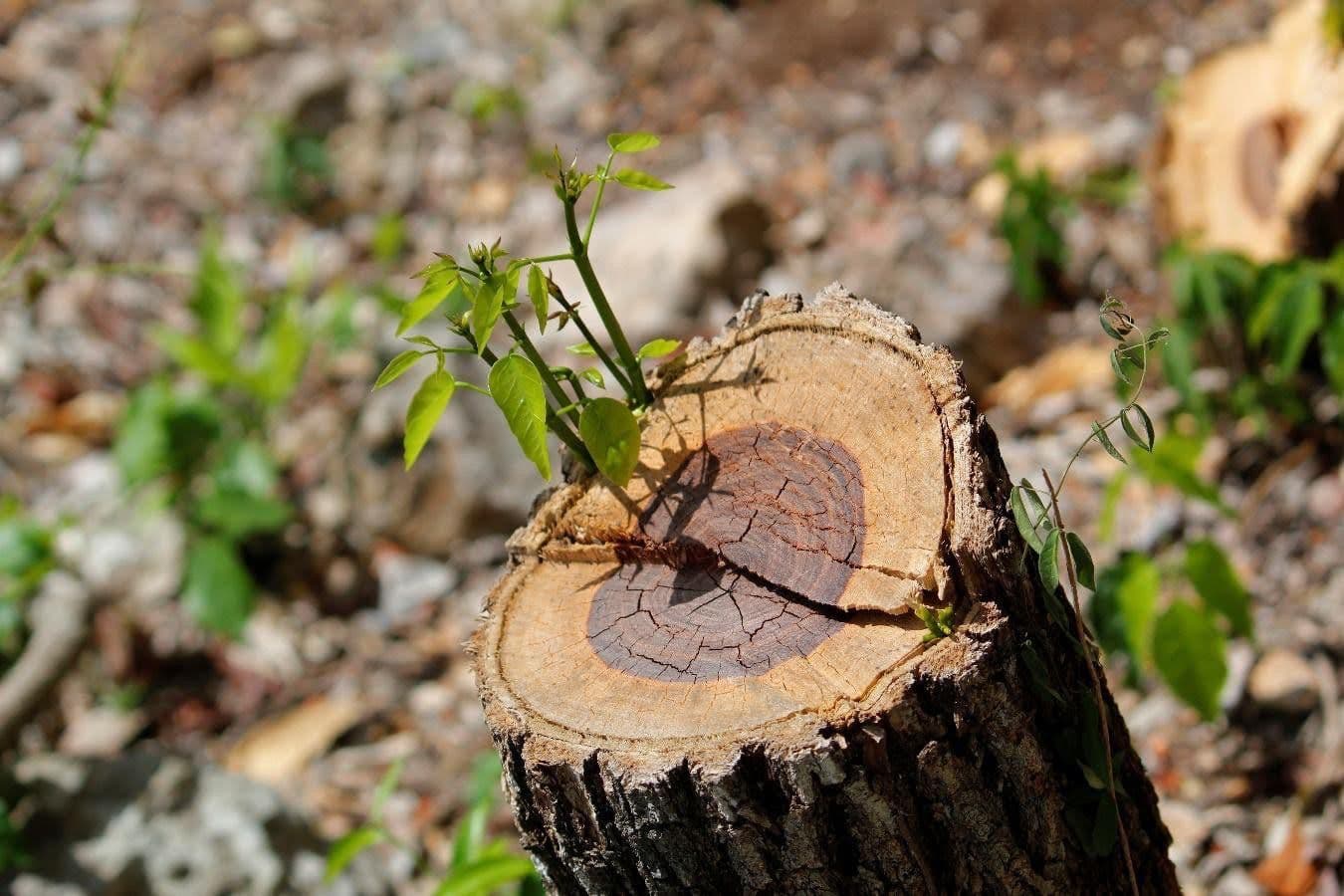
Aceves explains that environmental justice not only seeks to repair damage, but to prevent it from happening. Trees can be planted where there used to be a forest, but rebuilding the relationships between species, soil and water that formed that ecosystem can take decades, and the damage can be irreversible.
When Justice Doesn't Come
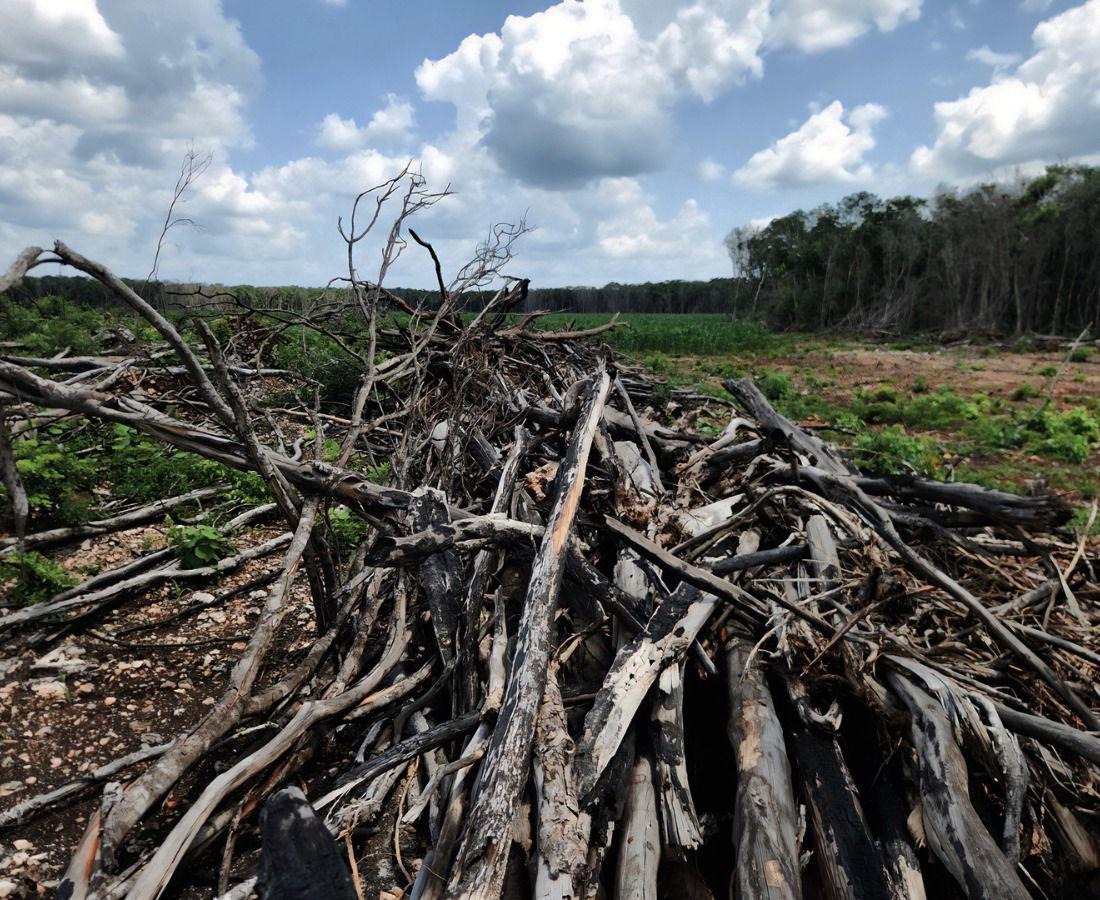
The Mayan Train allows us to observe these changes off the paper. When then-president Andrés Manuel López Obrador presented the project that crosses Chiapas, Tabasco, Campeche, Yucatán and Quintana Roo, he promised development, tourism and jobs. He also assured that he would not sacrifice the environment. But the project progressed amid clearing, with an estimated felling of more than 10 million trees.
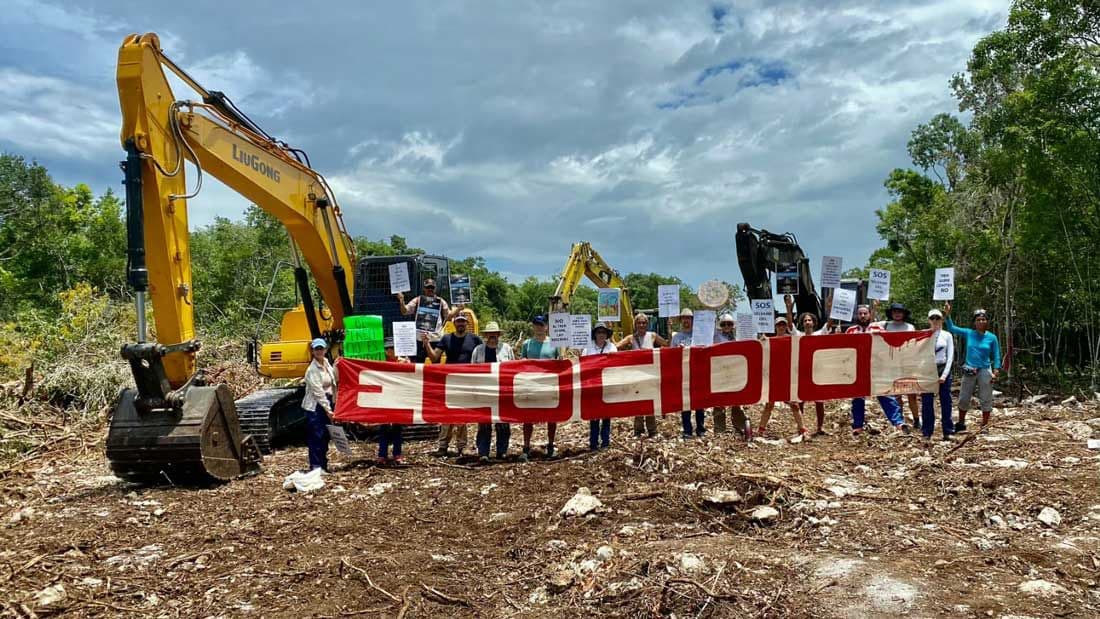
In addition, concrete and steel pillars were installed in the fragile system of caves and cenotes; and this sparked a growing judicial dispute. During its construction, more than 70 amparos were presented.
In January 2020, Zavala obtained the first definitive suspension linked to the Maya Train due to the lack of adequate indigenous consultation. The works continued. The project was declared “national security”, the Armed Forces acquired an increasing role in its construction and operation, and judicial decisions did not always succeed in stopping the machines.
The dispute was later compounded by a broader institutional transformation. Since the end of 2024, seven autonomous constitutional bodies have disappeared, including the National Institute for Transparency, which is key to obtaining public information.
The judicial reform also introduced the popular election of judges. Specialists interviewed for this research warn that these changes can weaken counterweights and affect the independence of those who must resolve disputes against political power.
The reforms further tightened a system that was already on the edge. They changed the rules for those who seek to stop environmental damage, but they didn't correct what happens when those people come to court: lawsuits that can last years, expensive tests and a public defense without sufficient capacity to face complex environmental litigation. In other words, the State imposed more requirements for seeking justice and did not reinforce public resources so that communities can sustain such litigation.
By law, the Federal Institute of Public Defender must provide free legal guidance, advice and representation to those who cannot afford private counsel, and the legislation establishes preferential care for members of indigenous and Afro-Mexican peoples and communities.
In 2022, the IFDP had only 344 legal advisors for the entire country. That year, 41,342 services covered administrative, amparo, migration, labor, civil, fiscal, financial and agrarian matters. Two years later, there were 314 advisors, 30 fewer, even though the need has been increasing.
The problem is greater when looking at attention to indigenous peoples. In 2023, only about 43 of the 560 state public defender and legal counsel units dealt with indigenous issues. Only 0.3% of public defenders and 0.4% of legal advisors reported belonging to an indigenous people.
And getting a lawyer doesn't solve another barrier: understanding the information. Juan Pablo Zavala explains that in consultation processes, contracts, trusts or environmental impact assessments can be presented in language that is difficult to understand.
Although indigenous peoples have the right to interpreters, this guarantee rarely covers the explanation of complex technical documents. In Mexico, 23.2 million people are recognized as indigenous and there are 68 indigenous languages.
In 2024, the National Institute for Indigenous Peoples supported 3,435 criminal and administrative proceedings with 384 interpreters and translators. However, there is no public record of how many interpreters are specifically involved in amparo proceedings.
For some Mayan communities, this inequality in access to information also ended up modifying the way they defended themselves.
You may also like: The struggle of women fisherwomen from Veracruz who managed to get the Supreme Court to order the regulation of the Fisheries Law
90-year contracts
Haizel de la Cruz, Mayan photographer and activist and member of the Múuch' Xíinbal Assembly, a network that brings together communities in southeastern Mexico, explains that one of her defense tools has been to understand how projects that seek to settle in their territories operate.
Communities have identified a pattern: governments and companies arrive with promises of development and immediate benefits, while long-term commitments and potential consequences for the territory are minimized or left unexplained.
Representatives promise them cheaper electricity, financial support or sponsorships for the holidays; sometimes they bring beer for adults and balls for children. In other cases, negotiations end up dividing communities.
But when the Múuch' Xíinbal Assembly reviews the documents, the promises take on another dimension: they have found contracts for 30 years that allow two additional extensions, that is, to commit land use for up to 90 years.
In one of the cases analyzed, the payment was equivalent to just 70 cents of weight per hectare per day.
The Assembly brings together contracts, concessions, trusts and environmental impact assessments. Lawyers and academics help to review them; some concepts go from Spanish to Mayan and the information is compared with maps, community knowledge and experiences of other peoples.
In addition, they use No Radio, a community medium where its members explain projects, tell what happened in the assemblies and translate technical and legal concepts. When the Internet doesn't reach a community, the analyses are reproduced using speakers. Then come the brochures and, if necessary, the visits from house to house.
Gustavo Aldair Tut, a cartoonist and member of the Múuch' Xíinbal Assembly, found another way to do it. Their murals, posters and fanzines turn territorial conflicts into images and use art to preserve memory and strengthen Mayan identity. “It's very easy for outsiders to cut the veins of the lagoon, to destroy the mangrove or the mountain, and they do it without any sense and without any respect.”
For Aldair Tut, nature is not something separate from those who inhabit the territory: “The lagoon and I are not that different. Neither do the wind, the trees or the animals: the jaguar, the wild turkey, the tapir. We are all part of the same community.”
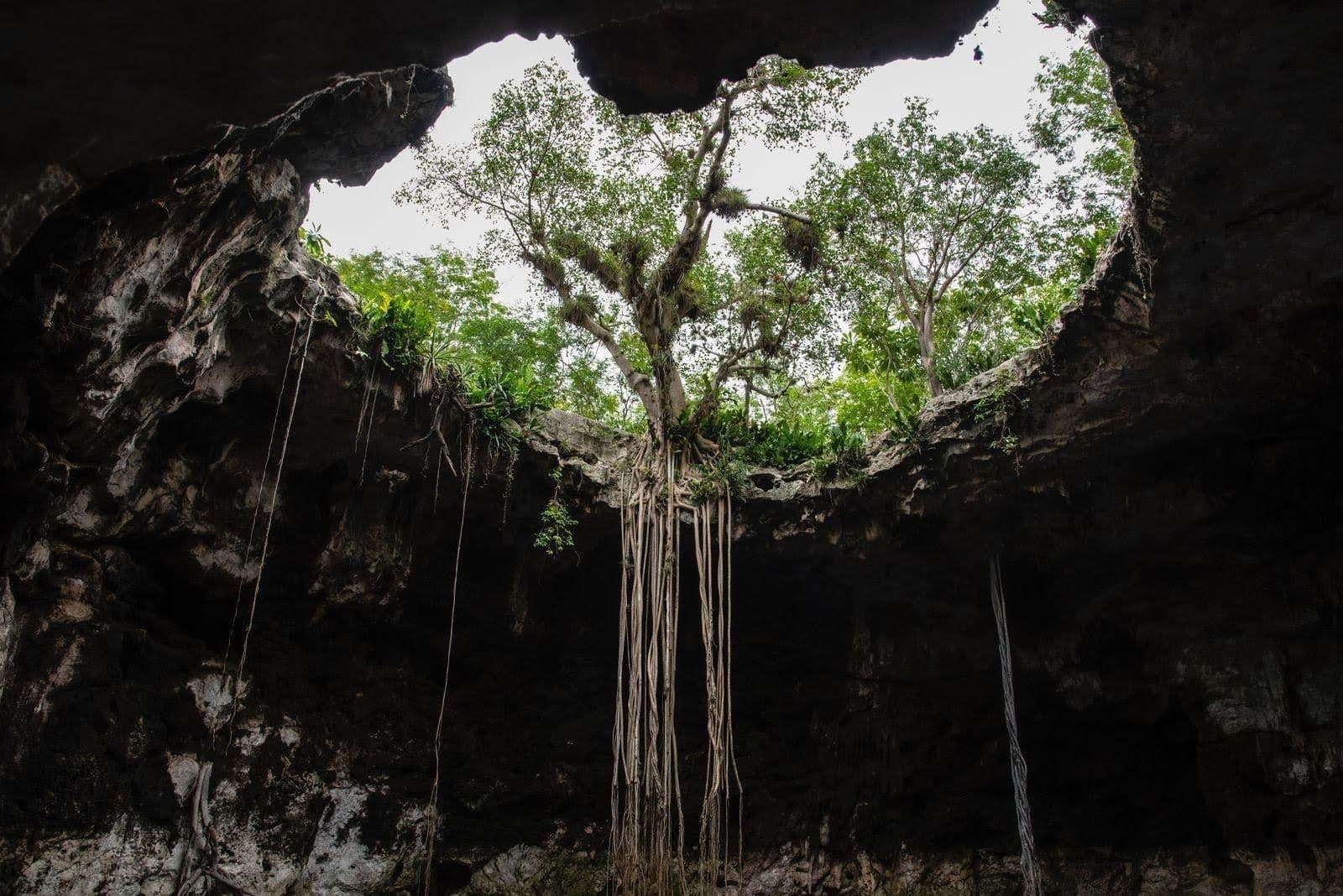
In Quintana Roo, biologist Roberto Rojo and more than 500 volunteers documented for years the caves and aquifers that extend underneath the limestone. His work helped explain why installing thousands of Mayan Train piles could pose a risk to the freshwater system.
In environmental litigation, that knowledge can be turned into evidence. But in the face of growing barriers to access justice, the lawyers and defenders interviewed agree that amparo cannot be the only way to defend the territory. They recommend documenting breaches of suspensions, filing administrative complaints, resorting to international instruments such as the Escazú Agreement, knowing the fiscal support granted by the authorities to companies, and building alliances with scientists, universities and organizations capable of providing knowledge and evidence that communities could hardly afford on their own.
The risk of raising your voice
Sara López spent 11 months in prison after opposing high electricity rates in Campeche. She was accused of kidnapping and obstructing public works.
Years later, during the construction of the Mayan Train, it returned to accompany communities in the peninsula. For her, criminalization and harassment have a purpose: to create fear so that people stop defending themselves.
Biologist Roberto Rojo also faced public criticism. After questioning the impacts of the Maya Train, scientists and environmentalists were called “pseudoenvironmentalists” and accused of acting against development. Rojo says that the attacks continued on social networks and that he came to wonder if anyone was following him when he went out on the street.
Attorney Viridiana Maldonado faced a criminal investigation after participating in amparo litigation. Raquel Gutiérrez Nájera has also faced lawsuits related to her environmental defense work. Carla Aceves decided to move away from direct litigation when, she says, the risk began to grow.
Despite risks and legal barriers, communities continue to make decisions, share what they have learned and organize themselves in the face of projects that can transform their ways of life. In the end, these conflicts pose a deeper dispute: who decides what happens in a territory and what place those who inhabit it have in that decision. Haizel de la Cruz sums it up in a sentence: “Without territory there is no language, no culture, no Mayan life”.
***
This project is based on 21 semi-structured interviews conducted between October 2025 and April 2026 with lawyers, academics, scientists, environmental defenders, and community organizers working on environmental justice issues in Mexico.
His experience nourished every stage of the research, although not all of the interviews are directly cited in this report. Carla Delfina Aceves Avila, Gustavo Aldair, Raúl Aldama Gavilán, Haizel de la Cruz, Rubén Jaime Flores Medina, Salvador Guerrero, Sara López, Diego Merla López, Viridiana Maldonado Galindo, Jorge Fernández Mendiburu, Luz Helena Orozco y Villa, María Agustina Rodríguez Morán, Roberto Rojo, José Urbina Bravo, Carlos Javier Verduzco Reyna and Juan Pablo Zavala.
This report is a journalistic and updated version of the research carried out at the Reuters Institute of the University of Oxford.


Comentarios (0)