
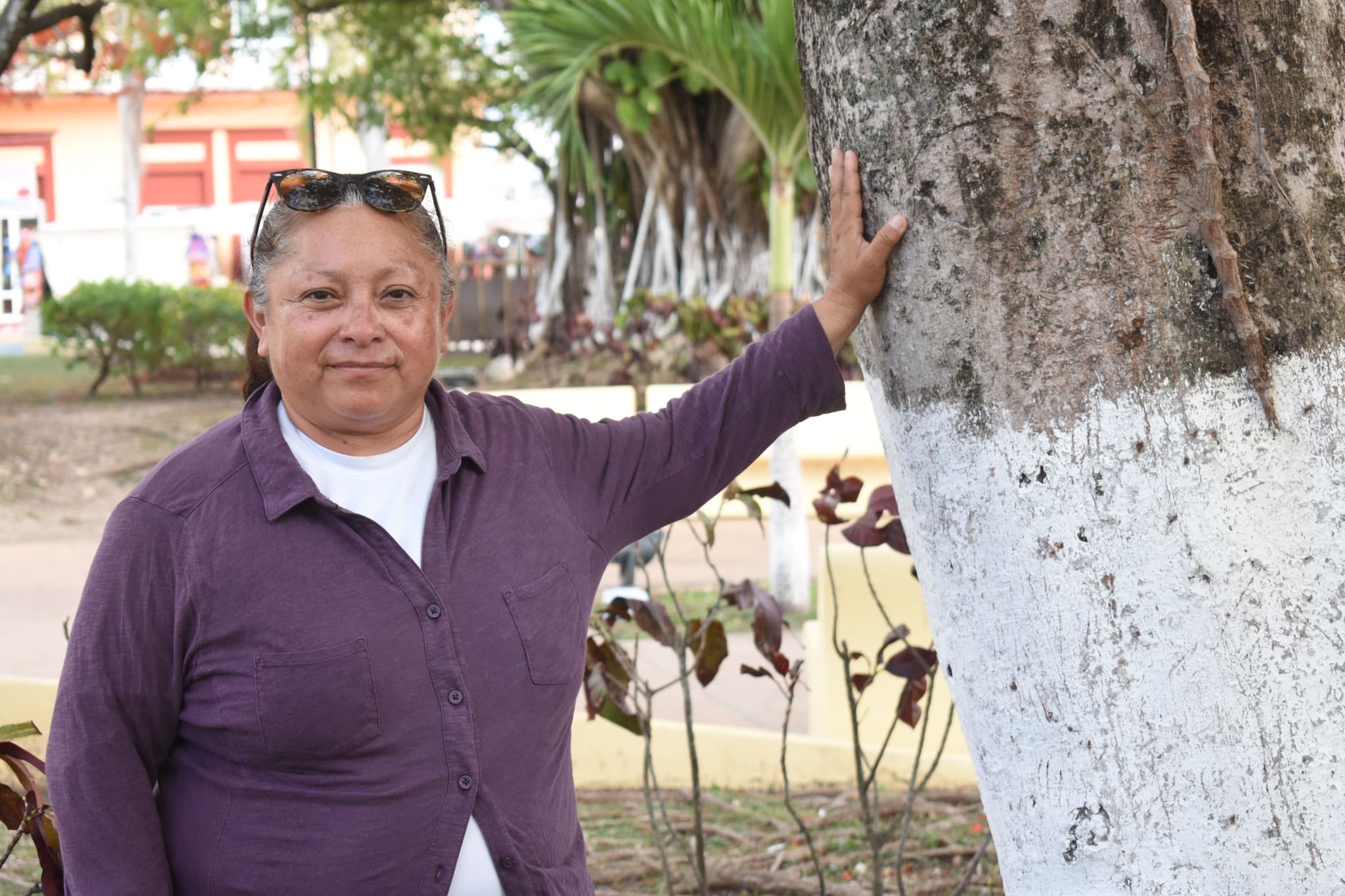
When Noemí Guadalupe Martín Cab's father was a child, the beach reached 10th avenue in San Miguel de Cozumel, Quintana Roo. Now, in that place where there used to be pure sand are the boardwalk, the central park, the ticket offices that sell tourist tours and the souvenir shops. Added to this growth are new megaprojects, from the expansion of a gas turbine plant and an underwater power line that will cross the reef, to a private Royal Caribbean beach club.
“In recent decades, the rulers had no vision, they built on the shore and that's why the beach is so eroded. Despite the fact that everything is pure concrete, permits are still being asked to build hotels on the coast and I think it's even more serious, because now they know the consequences perfectly,” says Noemí Guadalupe, president of the civil association Conservation and Research and Environmental Management of Cozumel (CIMAC).
Something that worries this civil association, like other environmental organizations, is the possible construction on the island of a new gas turbine plant, which could later promote its cementing.
“The power plant is a pretext to continue promoting new buildings. We don't need more electricity, what we need is for them to set limits on tourism development. Stop giving permits to build!” , says the activist, who everyone knows as Lupita Martín.
In its 2016-2018 Development Plan, the same city council of Cozumel recognized the island's “excessive and disordered growth” and even the current state government declared that it wanted to stop. “The Mexican Caribbean can still grow, but in a sustainable way, attached to the environment,” said the governor of Quintana Roo, Mara Lezama, in an interview with El País.
Don't miss: They give environmental authorization to a mega-gas project in Sonora and hide it; ASEA ignores recommendations and protections
New projects despite the energy deficit
On April 17 of this year, the Federal Electricity Commission (CFE) submitted to the Secretariat of Environment and Natural Resources (Semarnat) the Environmental Impact Statement (MIA) of the project to install a 25 MW turbogas power plant, which would bring the total capacity of the existing Chankanaab power plant to 78 MW.
The estimated investment for the construction of this plant is more than 127 million pesos and would burn 179 thousand liters of diesel per day, irretrievably polluting the air of this Caribbean paradise.
However, according to the MIA, the concentrations would remain below the limits established by law and there will be no damage to the soil or aquifer, despite the fact that the same document recognizes that the karst soil of Cozumel is highly permeable and vulnerable to pollution. The project has been submitted to public consultation and is now under review by Semarnat.
The objective of the plant expansion is to reinforce Cozumel's electricity supply during the months of increased heat demand.
“In Quintana Roo there is a large energy deficit, meaning that we consume more than the grid can provide us. This is due to several reasons: the excessive and poorly controlled growth of cities —Playa del Carmen, for example, doubles in size every five years—the construction of megaprojects such as the Maya train, new airports; all of this has increased electricity consumption,” says Aarón Siller, director of the southeastern office of the Mexican Center for Environmental Law (CEMDA).
“Even with this large deficit and despite the fact that the network is no longer sufficient, large real estate, hotel and tourism projects are still being authorized. Before we are promoting new infrastructures, we should have the capacity to meet Cozumel's needs in terms of electricity, drinking water and wastewater treatment,” says Siller.
The CEMDA specialist also recalls the existence of another electrification project on the island, which consists of the installation of an undersea power line from Playa del Carmen to Cozumel, with a distance of about 20 kilometers.
Governor Mara Lezama stated that construction will begin on October 5, with an investment of 3.6 billion pesos, although the community of Playa del Carmen is concerned that it could affect reefs, as stated in the MIA.
For Lupita, however, the problem is different. “It's true that there are blackouts in Cozumel, but I'm more concerned that the wastewater treatment plant, San Miguelito, is broken down and spills faeces into the sea every day,” he says.
“No more buildings, no more developments, no more hotels. We don't require an electrical power plant, we need a well-functioning wastewater treatment plant,” he says.
Foul odors in the lagoon
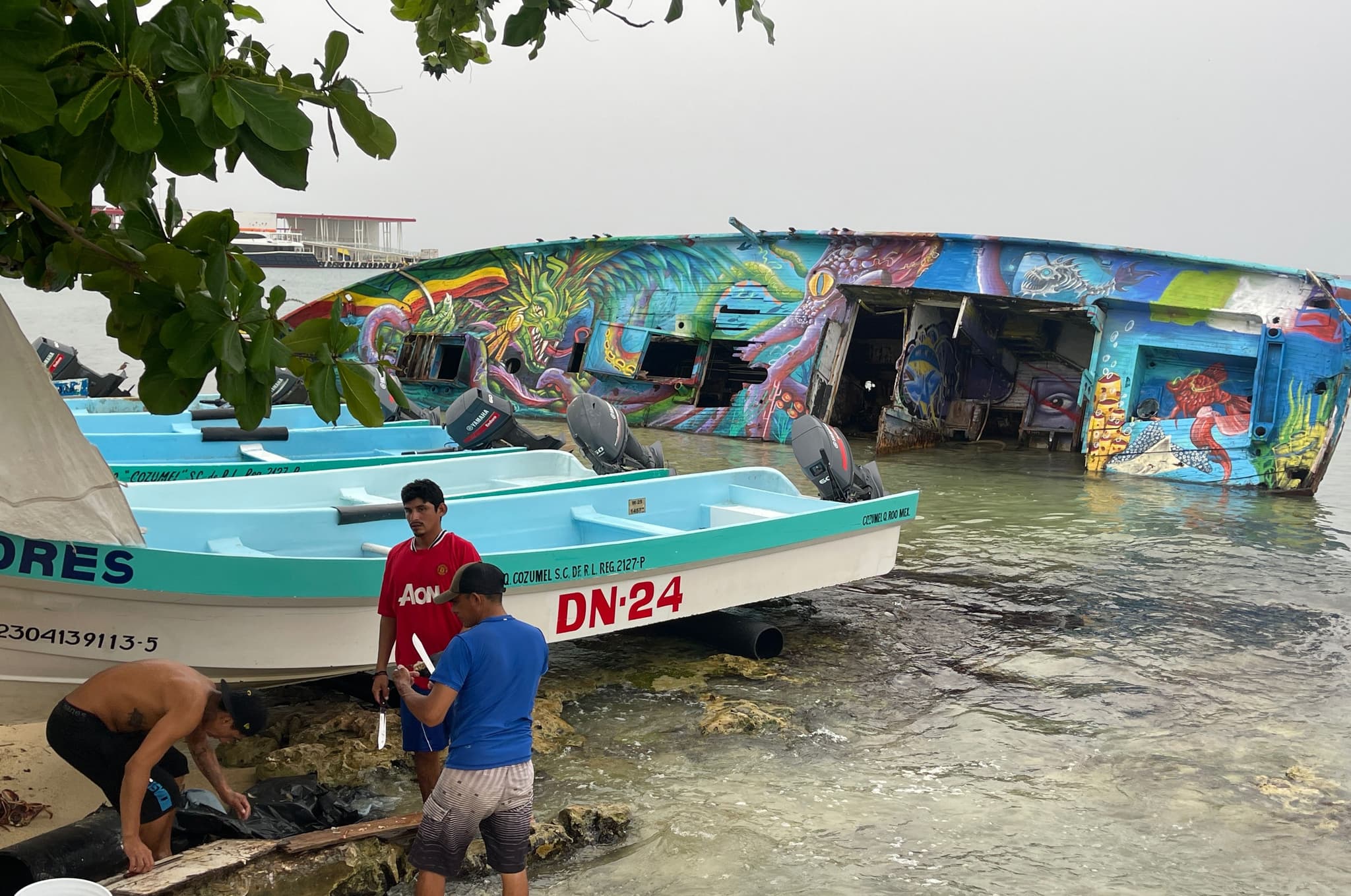
In May of this year, the organization Sélvame Mx reported that the San Miguelito wastewater treatment plant was spilling sewage into Laguna Ciega, in the north of Cozumel, just in front of Passion Island.
“After hearing comments from some residents, we went on a tour around the plant and there were a lot of bubbles, foams, fetid odors and a residual sludge characteristic of poorly treated water. We took several samples for water quality analysis and realized that it was highly contaminated,” says Guillermo D. Christy, president of Sélvame Mx. The organization released images of a white spot floating among the mangroves and filed a complaint with the authorities.
Sélvame Mx also points out that, in the first quarter of 2025 alone, Cozumel received 241 million pesos for environmental sanitation, thanks to a tax that has been charged since November 2020 to every cruise passenger who arrives on the island.
“The question is: where is all this money going? We know that part of it was used to buy equipment for the police, which has nothing to do with environmental sanitation,” says Guillermo D. Christy.
You may also like: The struggle of women fisherwomen from Veracruz who managed to get the Supreme Court to order the regulation of the Fisheries Law
The population is also concerned about the economic consequences of so much pollution. “They're throwing poop into the sea. This may also affect our economy because Cozumel depends on the reef and it receives feces every day, we are killing the goose that lays the golden eggs,” says Lupita Martín.
A fight from all over Cozumel
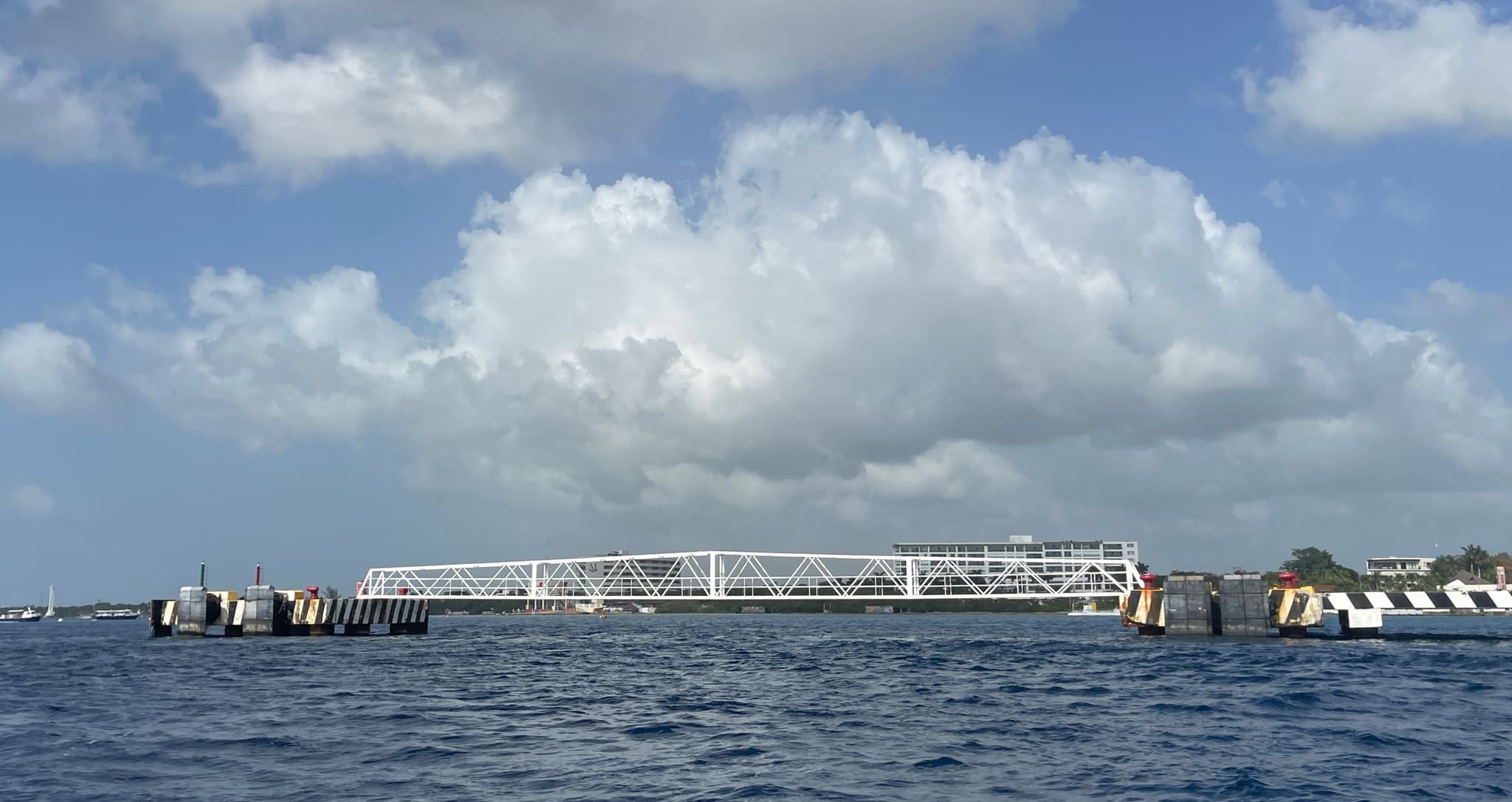
Of all the mobilizations that took place in Cozumel against the construction of a fourth pier for cruise ships, the most shocking was that of May 2025, according to Lupita, when dozens of boats gathered near Villablanca, the reef that would have been impacted by the work.
Other equally creative mobilizations were also organized: marches, walks and a protest organized by a group of divers at the bottom of the sea, where a photo was taken showing banners that read “No to the Fourth Pier”.
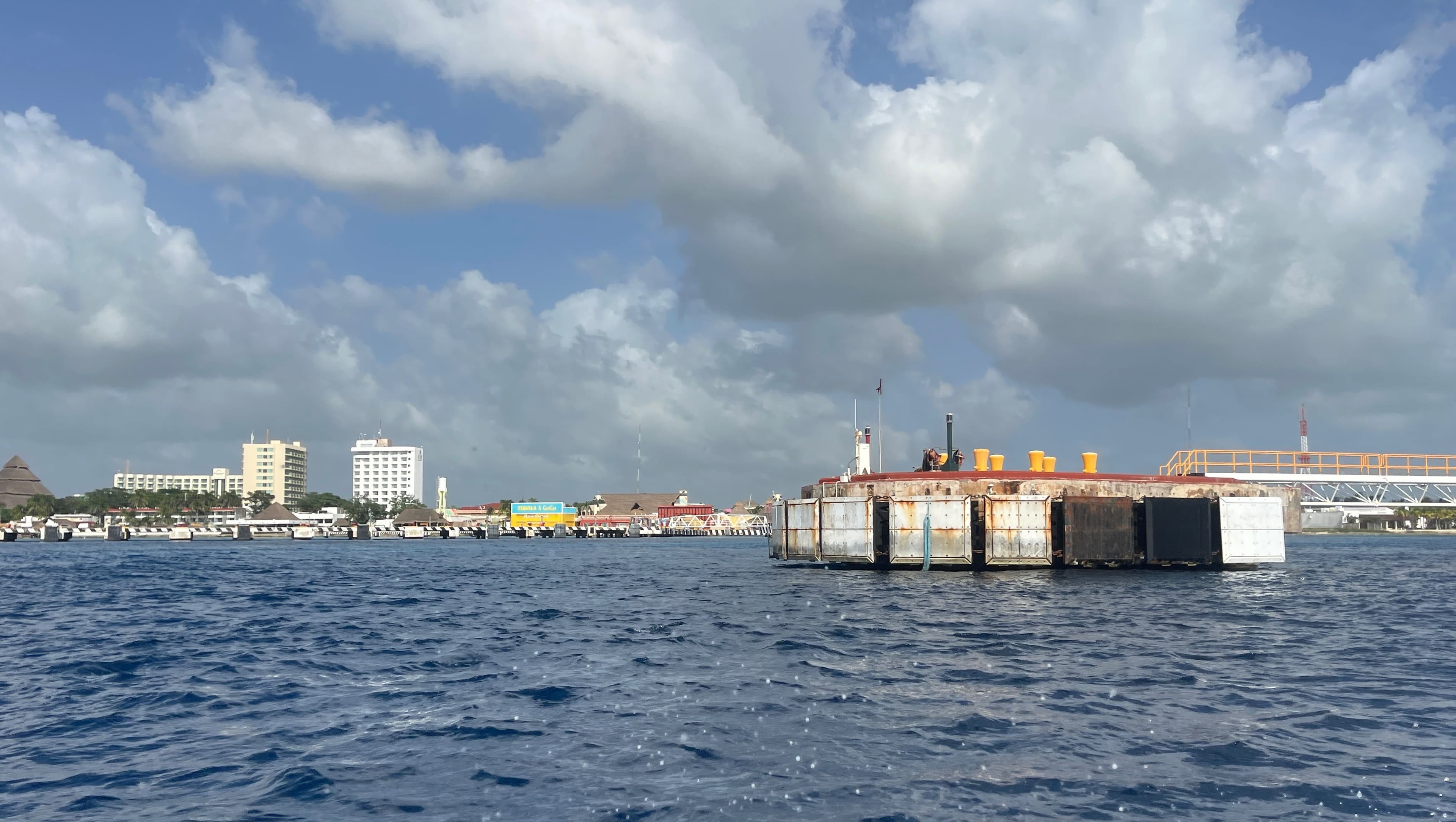
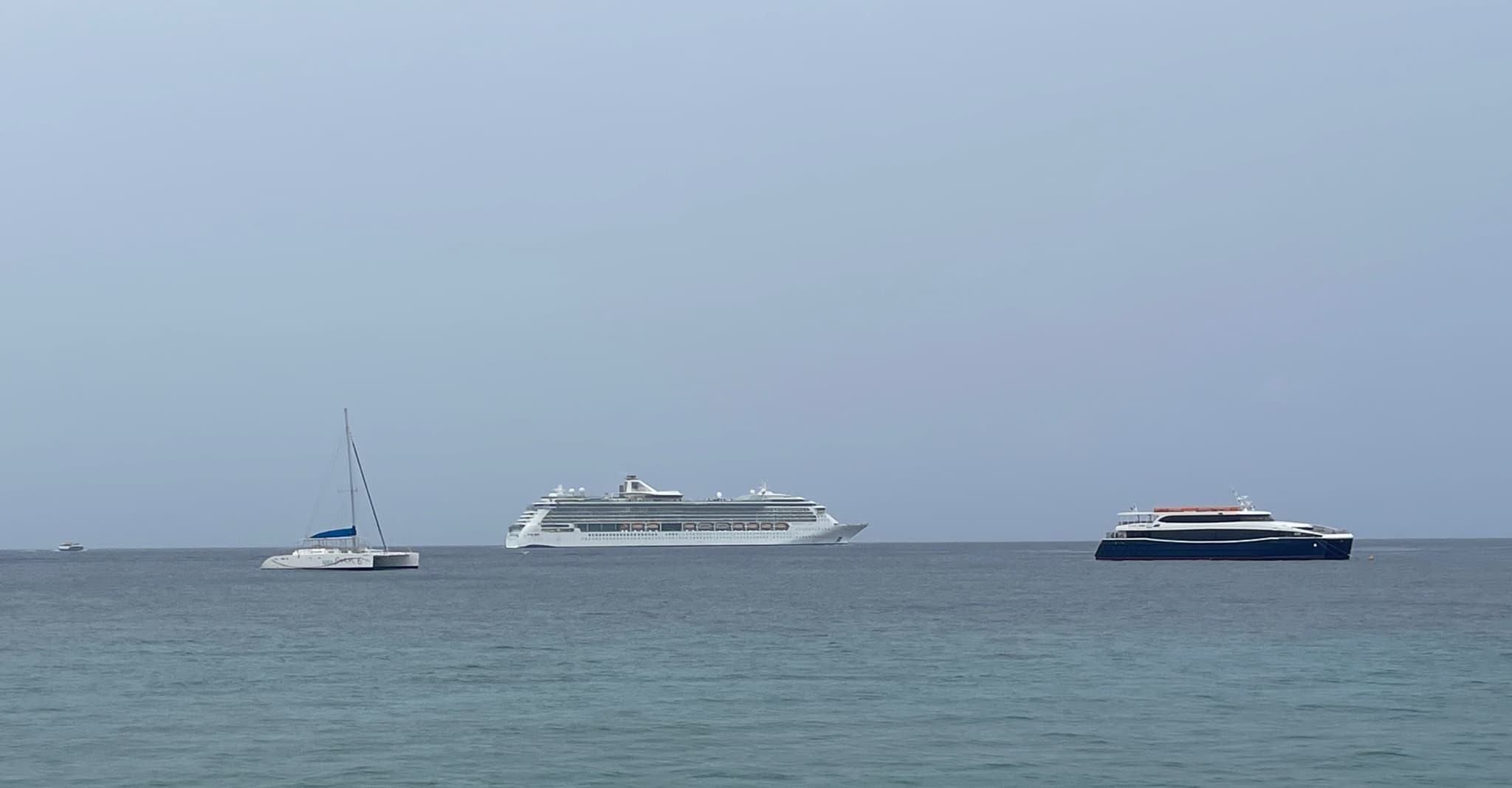
In Cozumel, there are already three international terminals and according to Sectur data, in 2025 they received almost 1,300 cruise ships, bringing a total of more than 4.7 million tourists to an island where about 90,000 people live.
In December 2021, Semarnat approved the construction of a fourth pier for cruise ships, 800 meters long, presented by the company Muelles del Caribe de los Molina Casares, a family that owns dozens of companies, many of them in the tourism sector.
The people of Cozumel created a massive movement against the work when they saw signs that its construction was about to start and measured the impact it would have had on the reef.
The disgruntled not only organized protests in the streets and at sea, but they also went to CEMDA to promote a legal fight. “Our strategy was both administrative and judicial: we filed an appeal for review with Semarnat and an amparo before the courts,” says Siller.
“With the amparo, we were able to suspend the works, which allowed enough time for Semarnat to review the project and take into consideration several elements that he had omitted from the original evaluation. Meanwhile, the community was pressuring to demonstrate,” Siller explains.
Among the omissions that Muelles del Caribe and Semarnat incurred in their first evaluation is the lack of recognition of the presence of the reef in the place where the work was intended to be built. Finally, the people of Cozumel managed to get the federal agency to recognize the existence of the reef and the effects that the construction of the pier had caused, canceled the permit granted and submitted the project to a new environmental impact assessment. The process ended in February 2026, when Semarnat decided to deny authorization for the work.
“Muelles del Caribe used its resources to oppose this decision and lost again, but we know that it could continue to fight with other media, or present a new MIA. We continue to monitor what legal actions they take and defend the community's cause,” says Aarón Siller.
Read: Divers abandoned on the high seas: the invisible risk of poaching in Yucatán
“The Cozumeleño can't go to the sea”
About 10 kilometers south of the cruise ship docks, Royal Caribbean wants to promote another mega-tourism project involving the Molina family: a beach club that could receive up to 4,000 daily visitors, with an estimated investment of 24 million dollars.
It would be built on top of a beach club called Playa Mia, which Royal Caribbean bought from the powerful Yucatecan family, and two other adjoining properties.
The MIA of the project recognizes that the beach club could have up to 15 environmental impacts on the territory and there is also another concern among the population: the project would prevent access to Playa Mia, one of the few public beaches on an island whose coastline is a succession of beach clubs with prohibitive prices for locals.
“The people of Cozumela cannot go to the sea: between beach clubs, hotels, condominiums, everything is completely built. Wherever you want to go, the Cozumela area looks like a wall, we have almost no access to the sea, unless we don't pay for the entrance”, reports Lupita Martín.
The Royal Caribbean beach club has been the subject of public consultation and is currently being evaluated by Semarnat, along with other beach clubs that other companies want to build on the island, such as Lakam-Ha and Cozumel Opportunity. However, on its official website, Royal Caribbean has already set the inauguration of the project for December of this year.
“Now I understand my dad”
Before mass tourism, which arrived in the 70s, islanders were engaged in agriculture, fishing, bartering and receiving sailors who traveled on ships that exported Cozumel gum to Europe.
“My dad always said that tourism helped us and hurt us at the same time, because when it arrived we stopped being self-sufficient and began to depend on everything outside, on stores and then on supermarkets; he had to see that change and it hurt a lot,” says Lupita Martín.
From his father, Manuel Martín Chan, he inherited the pleasure of going out after sunset. “I love to dive and I love to do it at night. Now I understand my dad, who was a farmer and liked to walk in the mountains,” says the activist who enjoys going down to the bottom of the Caribbean Sea, in a darkness populated by manta rays, fish and sharks, where the silence is so deep that for a while you can forget the noise of cruise ships and beach clubs.


Comentarios (0)