
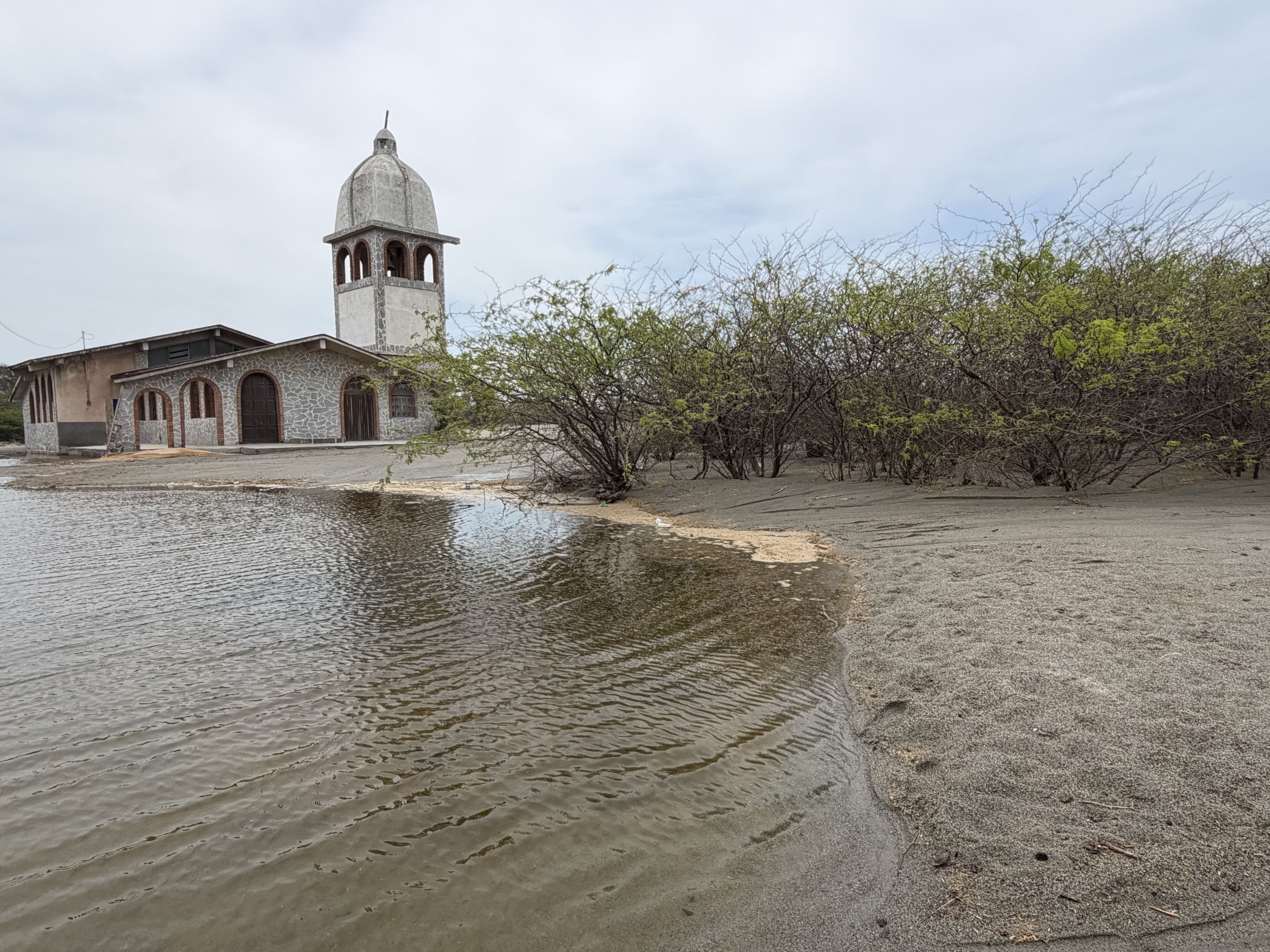
In 2024, the Government of Mexico put into operation the Western Breakwater of the Port of Salina Cruz, Oaxaca, a strategic infrastructure of the Interoceanic Corridor of the Isthmus of Tehuantepec (CIIT), regardless of the Ikoot indigenous people who live in the Cuauhtémoc colony of San Mateo del Mar.
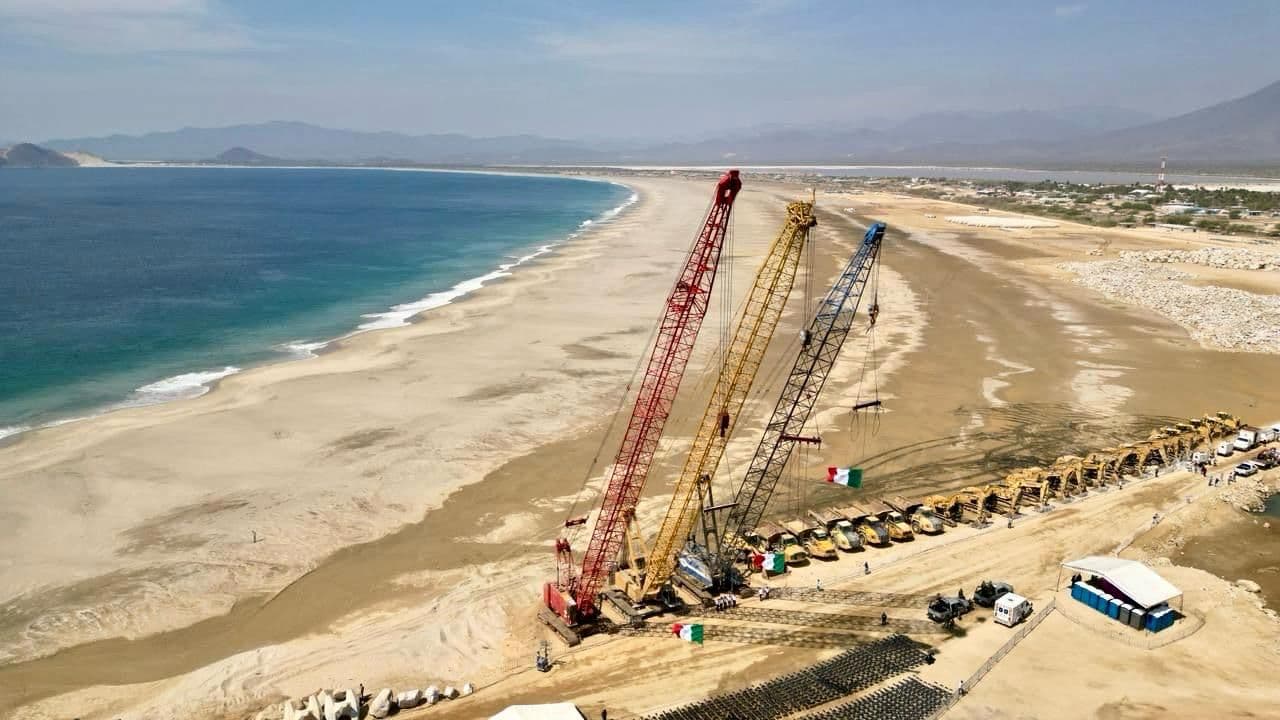
The company ALEPH | Consulting Engineers, responsible for the technical supervision and design of the work, identified as one of the environmental impacts in the operation of the western breakwater the evolution of the coastline in the adjacent areas, that is, changes in the border between the beach and the sea in areas close to the breakwater, due to the movement of sand and other sediments along the coast.
“The construction of maritime-port infrastructure, such as docks, breakwaters, breakwaters, etc., may modify the dynamics of the waves,” the firm said.
These effects are documented in the Private Modality Environmental Impact Manifestation carried out for the project “Conclusion of the western breakwater of the Port of Salina Cruz, Oaxaca”, in sections V, VI and VII.
However, in narrowing down the area of study, it omitted to measure the impacts on nearby indigenous communities such as San Mateo del Mar, and therefore also the responsibility for mitigation and remediation, and the sources of funding in case of damage.
Don't miss: Pozo Krem-1: Six months of an unending tragedy in Veracruz
The impact on nature: water is always looking for a way to pass
Although the MIA does not specifically foresee these effects in the area of Colonia Cuauhtémoc in San Mateo del Mar, specialists agree that no matter how insignificant a work may seem to be in the face of the immensity of the sea, the force of the water will always change drastically around it.
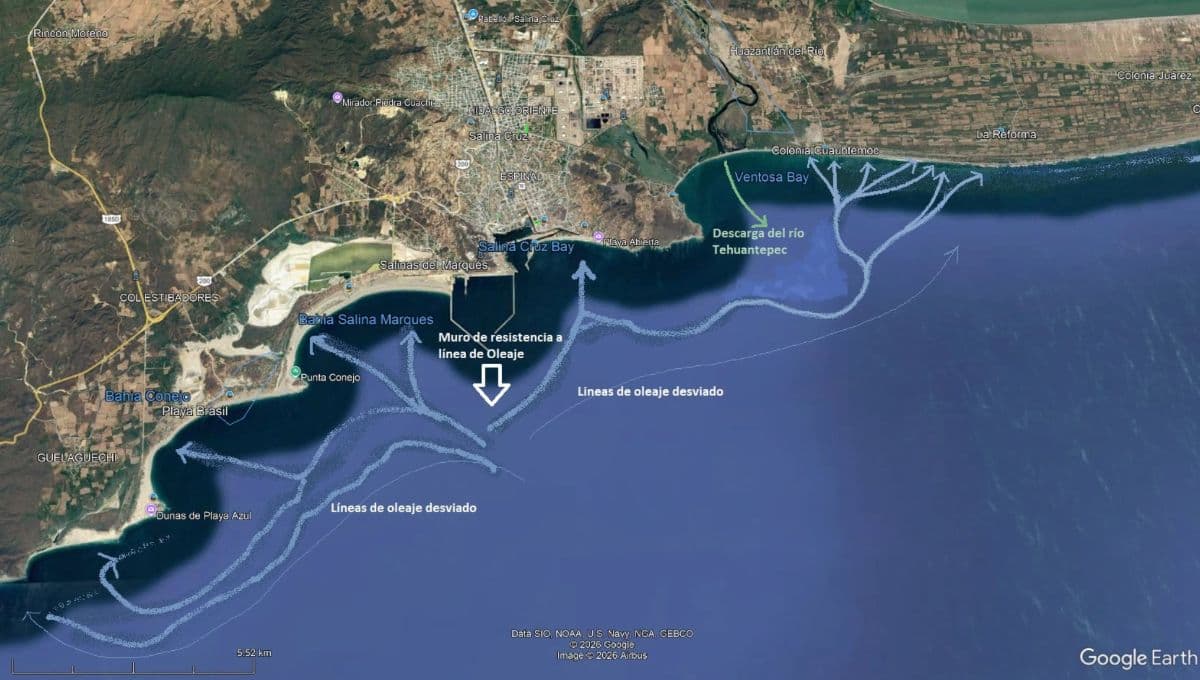
Raymundo Lucero Vázquez, master of science at UNAM, explains that the breakwater creates a natural wave flow stopper.
“It's like putting a wall in the middle of a channel to divert it. It's normal for a part of the current to deflect with different force on both sides of the divide,” he says.
The independent researcher on land use planning and environmental impact explains that the change in momentum is reproduced by the coming and going of the waves. If the conditions don't change, the waves act like a rebar, like a propeller, as nothing stops them, that rotating force continues to grow and advance.
For this reason, he estimates that the impact could cover a radius of 73 kilometers around, would even exceed the Cuauhtémoc colony and would reach the town of Santa María del Mar, if the undermining effect is maintained.
A technical note from the Secretariat for Territorial and Urban Agrarian Development (Sedatu) requested via Transparency, indicates that an explanation for coastal erosion in the Cuauhtémoc colony could be attributed to the construction and expansion of the breakwater in the port of Salina Cruz, since large rocks and concrete breakwaters have been placed in the sea to carry out these works, reinforcing the researcher's statement.
“This process, together with marine currents and the phenomenon of coastal upwelling, has caused the sand that was previously found in the port of Salina Cruz to now be deposited in Colonia Cuauhtémoc and its surroundings,” the document cites.
It may interest you: The struggle of women fisherwomen from Veracruz who managed to get the Supreme Court to order the regulation of the Fisheries Law
Why is the MIA-P not contemplating effects on the Ikoots people?
By law, the MIA has to measure, in addition to the impact of the works on ecosystems, the social, economic and cultural impact on the human populations that live in the area of influence.
However, ALEPH | Consulting Engineers, based on the catalog of the National Institute of Indigenous Peoples (INPI), stated that no indigenous peoples were identified in the area of influence of the project, so it did not require reporting or carrying out a public consultation, “because the peoples are not close to the urbanized area”, despite the fact that Colonia Cuauhtémoc is located about 16 kilometers from the port of Salina Cruz.
In the same way, the National Institute of Indigenous Peoples, headed by Adelfo Regino Montes, justified the absence of an indigenous consultation required by the ILO agreement, in relation to the Salina Cruz Development Pole for Welfare project, which, like the western breakwater, forms a fundamental part of the strategic infrastructure of the Interoceanic Corridor of the Isthmus of Tehuantepec (CIIT).
“Since there is no indigenous community, it is clear that it is not necessary to analyze whether the measure at hand can generate a significant impact... this Institute believes that there is no need to implement a consultation process regarding the possible implementation of the Salina Cruz Development Center for Welfare,” the declaration states, despite the fact that it specifies that this Pole borders the municipalities of Santo Domingo Tehuantepec, San Pedro Huilotepec and San Mateo del Mar, where the ikoots are from.
Semarnat also justified the absence of consultation with the community. Among his arguments, he points out that the project did not receive requests for public consultation because of this, “it did not need to be presented to civil society at a public meeting, since only technical opinions were requested from agencies or entities of the Federal Public Administration and from groups of experts”.
There is no comprehensive or sustainable vision: ASF
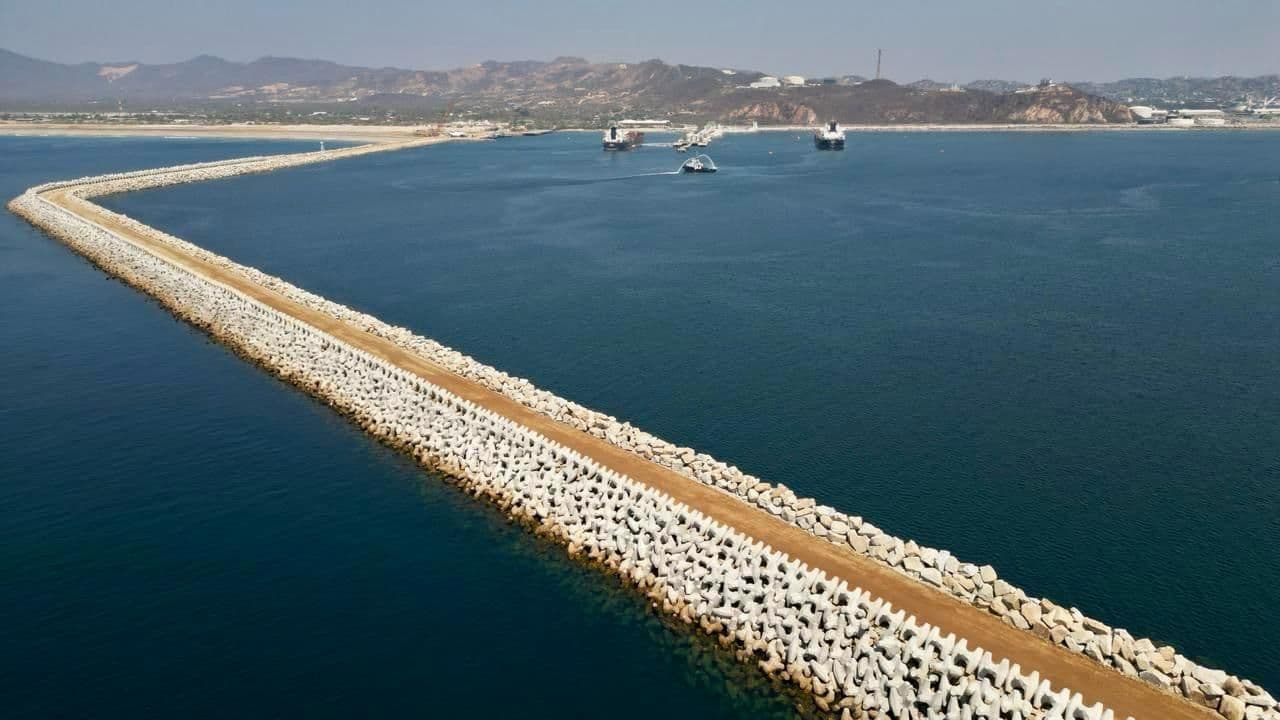
Some omissions in this project were also raised by the Federal Supreme Audit Office (ASF).
In the 2020 Performance Audit, the supervisory body evaluated the Interoceanic Corridor of the Isthmus of Tehuantepec (CIIT), in charge of the Integral Port Administration of Salina Cruz, responsible for supervising strategic works such as the breakwater, and also Semarnat as responsible for evaluating the environmental impact of the Corridor.
Among his observations, he indicated that since its origin, the CIIT, which integrates the breakwater into its national logistics plan, as a higher entity, did not consider a comprehensive strategy in terms of environmental impact, that is, it did not indicate how the development of the corridor can impact the functional integrity of ecosystems.
Regarding the MIA of the breakwater, it points out that environmental conditions and their main trends of development and/or deterioration were not correctly identified, nor was a comprehensive analysis of aspects such as climate, air, water, soil and relief, population, economic activities, use and cultural heritage, to detect vulnerabilities and predict how this project would affect the specific environment; although the company listed some conditions, it did not demonstrate the technical analysis carried out for this purpose.
The ASF considered that Semarnat did not analyze the methodology used to identify environmental impacts and whether it was fully justified.
To identify environmental impacts, the company ALEPH | Consulting Engineers used studies and satellite images from Google Earth, Landsat and Sentinel, on which it placed the plans of the work and organized them in a Leopold Matrix to quickly locate each environmental impact through a system of rows and columns, as recorded in the MIA P held by CN Media.
Among several observations, the ASF points out that the company omitted the list of fauna such as the purple snail, which is found as an endangered species in NOM-059-SEMARNAT 2010, nor did it have a design of mitigation measures related to environmental impacts.
It specifies that the information represented individual and isolated actions, which results in a disengagement that allows the sustainable development of the project in the area.
Also read: Mafia, sea cucumber and disappearances in Dzilam de Bravo, Yucatán: “When they open their eyes, we'll have the drug dealer next to us”
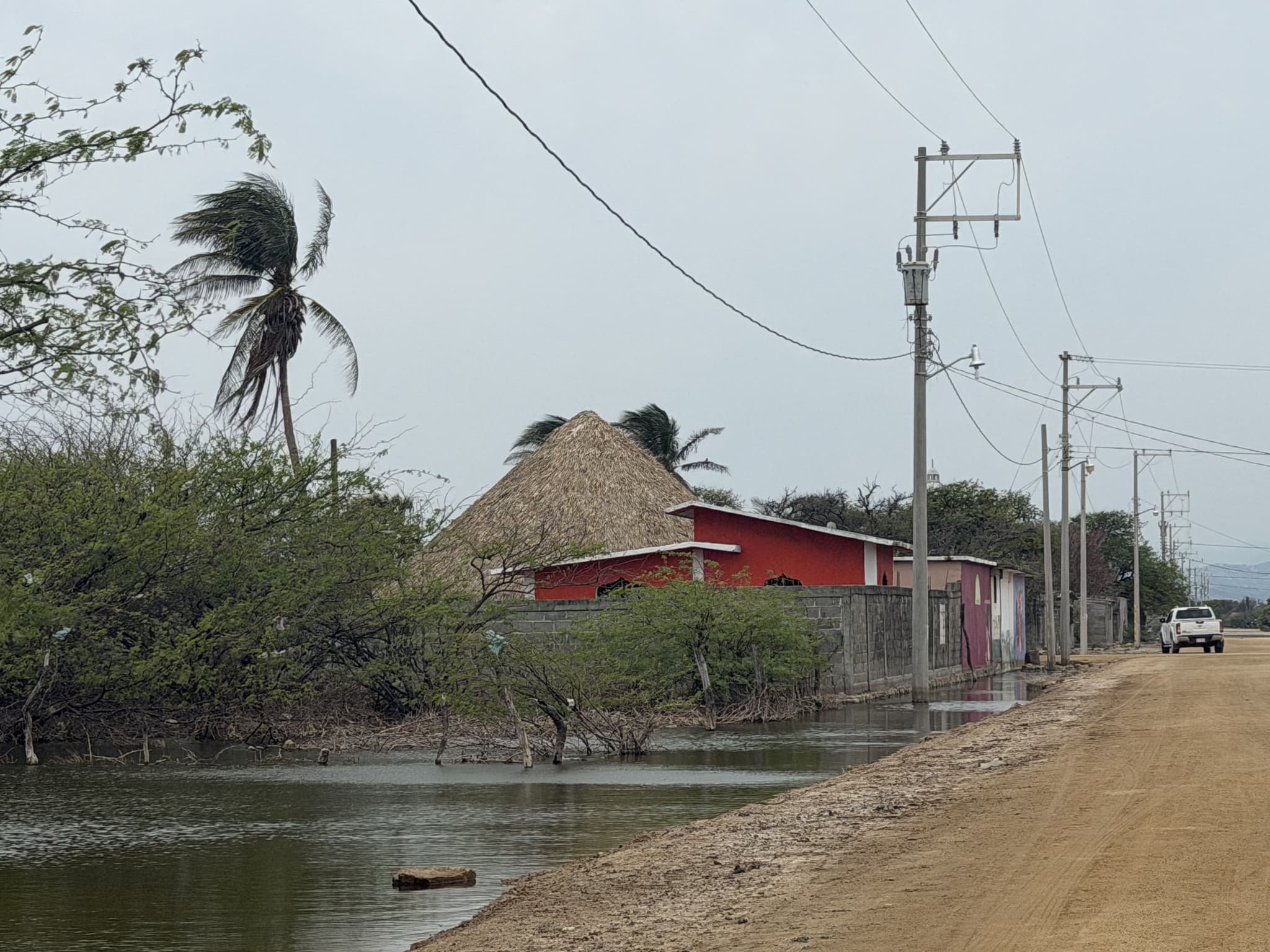
They predict an increase in coastal erosion
Far from institutional formalities, the reality for the Ikoots in the Cuauhtémoc colony is alarming, the sea level is rising higher and higher. In fact, Sedatu's technical note suggests, as a definitive measure, a more detailed analysis of the actions carried out in the port of Salina Cruz, and of the phenomena that occur in the Cuauhtémoc colony, which detonate at rising sea levels and dragging sand, in order to project at what time and how much more land the sea can gain ground on the coast of the Cuauhtémoc colony or surrounding colonies.


Comentarios (0)