
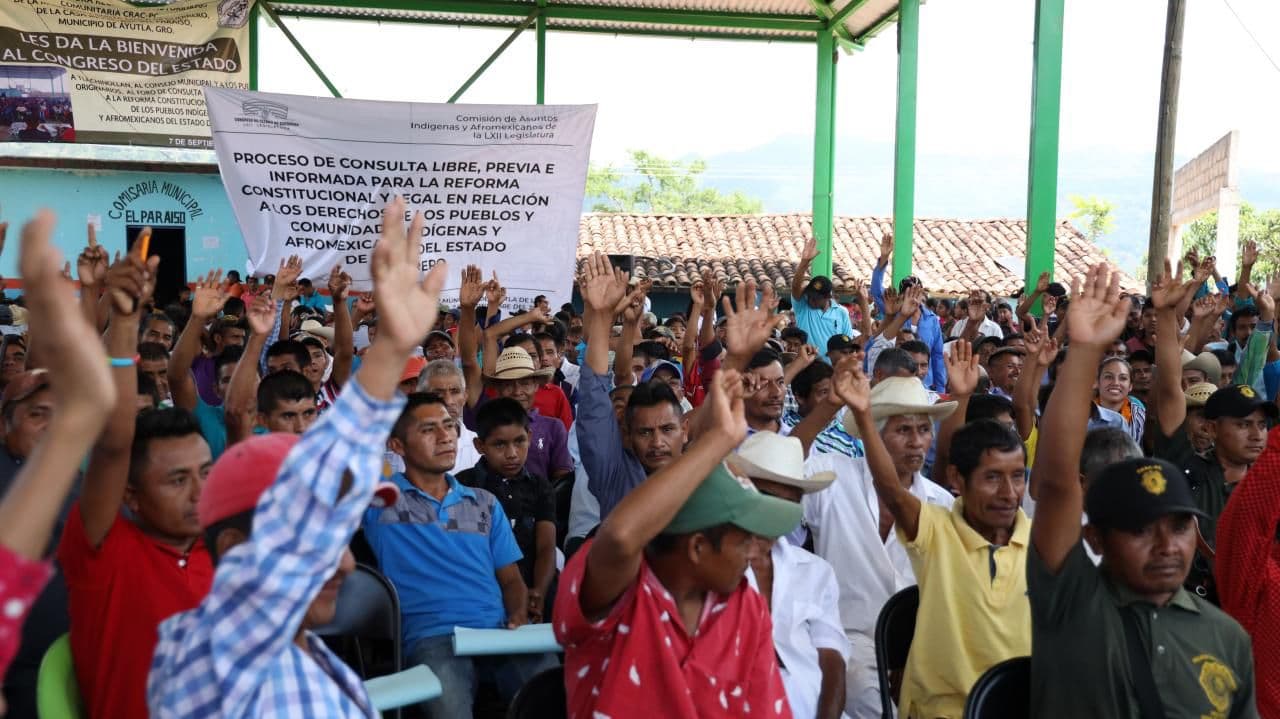
More than 3,734 collective actions, including public complaints, assemblies, requests for information, marches, amparos and support networks are part of the strategies that communities, social organizations and collectives have promoted to defend territories against extractive and real estate projects in Mexico. This is documented in a report by the Observatory of Socio-Environmental Conflicts (OCSA) of the Universidad Iberoamericana Mexico City.
As part of its second report, in which it expands on research published in 2021 on extractive projects, social and environmental impacts, the OCSA recorded that between 2017 and 2024, 58.59% of the projects that needed to be submitted to public consultation did not do so. Faced with this omission, communities have had to articulate themselves in defense of the territory through litigation, assemblies and organizational networks.
For Dr. Paola Lili García Alanís, a member of the observatory, these actions reflect the organizational capacity of populations in the face of an unequal system.
“What we wanted was to frame it in this series of mechanisms to account for how they are articulated and act together,” says García Alanís.
You may also like: Celestún, the sea cucumber and social resistance to organized crime
Collective actions and the defense of the territory
Organization and coordination between communities are elements that García Alanís highlights when analyzing territorial defense strategies.
“What we have seen is that they work when they are sustained over time,” he points out and explains that these responses are usually built through alliances.
“Rarely is it through isolated groups, but rather there are networks that combine different types of alliances.”
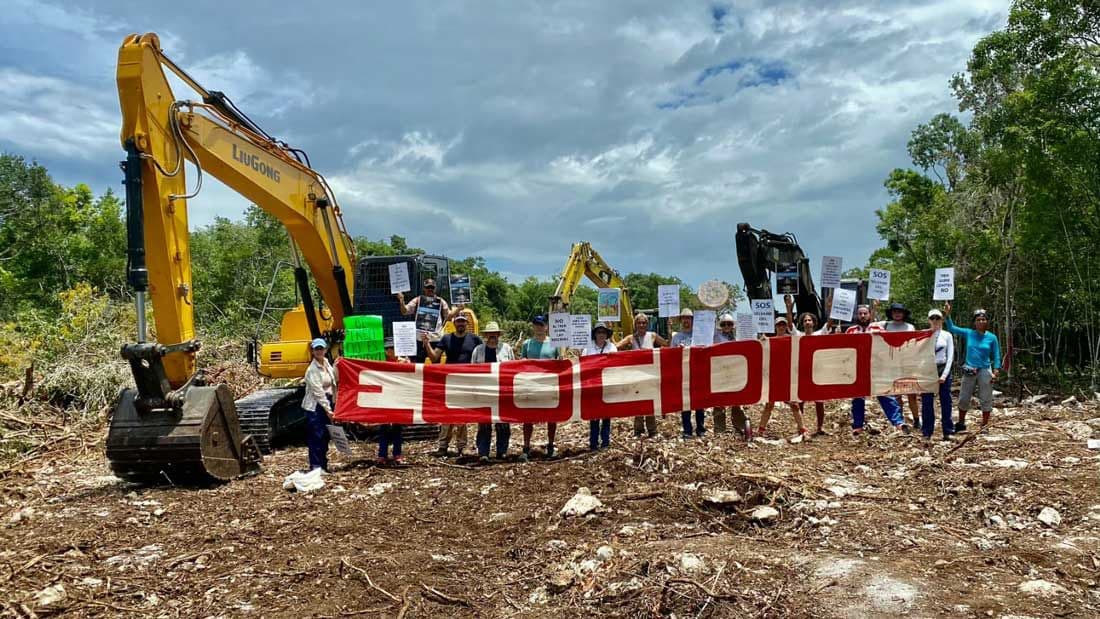
In the report, the team documented four mechanisms used for dispossession: legal, institutional, coercive and socioeconomic. Legal mechanisms include legal instruments that facilitate the implementation of projects; institutional, bureaucratic procedures and the actions of officials; coercive instruments, the use of force and violence against communities; and socio-economic instruments, practices that seek to gain acceptance of projects or modify forms of community organization.
Faced with these mechanisms, communities have found different organizational forms. The case of Chemours Company's sodium cyanide plant, which was intended to be built in 2017 in Gómez Palacio, Durango, shows how different tools were combined. Representatives of 22 communities formed the United Front of the Peoples of the Lagoon in Defense of Life and Territory. The organization resorted to blockades, a permanent sit-in, public complaints and litigation.
In April 2018, it obtained a suspension through amparo and, in December 2020, the environmental authorization was revoked after inconsistencies and incomplete and false information were established in the environmental impact statement.
In Huayacocotla, Veracruz, Otomí, Nahuas and Tepehuas peoples organized ejido meetings and agreements to reject the exploration activities of the company La Victoria Exploración. In 2024, the community of Tzocohuite obtained a definitive suspension that prevents carrying out works in the territory, accompanied by legal clinics of the Jesuit University System.
In Juan C. Bonilla, Puebla, residents of 20 Nahua villages organized themselves against the extraction of water from the Bonafont bottling plant. In 2021, they occupied the facilities and transformed them into Altepelmecalli, “The House of the Peoples”, a space dedicated to meetings, workshops, autonomous radio and agroecological projects. The camp was evicted in February 2022.
The three cases document different strategies: the challenge of authorizations, agreements between communities and the creation of autonomous organizational spaces. Together, they allow us to observe how territorial defense combines legal actions, mobilization and community forms of organization.
The mechanisms involved in conflicts
García highlights that one of the patterns they identified is the systematic absence of free, prior and informed consultation, conceived as a tool to protect the rights of indigenous peoples.
According to the data presented by the researcher, out of 227 projects that needed to be submitted to indigenous consultation, 133 of them found no record of this process, or 58.59%. Among the 94 registered queries, the report identifies 84 that, according to its analysis, served to legitimate the dispossession.
It also points to problems in the use of environmental impact assessments. These instruments must provide information about the consequences of a work and allow us to assess its effects.
In the cases reviewed by the OCSA, communities have questioned assessments that they consider to be incomplete or insufficient.
Socio-economic mechanisms are also involved in the relationship between companies and communities. García mentions wind projects in Oaxaca where payments are offered for occupying ejido land. As he explains, these agreements can generate unequal benefits, internal tensions and changes in community relations.
The territory beyond the work
The OCSA documented 1,139 extractive projects in the country's 32 states by reviewing 4,667 press reports published between 2017 and 2024.
Hyperdevelopment represents a significant proportion of the registry: it includes real estate developments, shopping malls and other transformations of urban space.
The study identified 298 projects affecting water and 327 affecting biodiversity. Impacts include changes in land use, ecosystem alterations and effects on productive activities that depend on natural resources.
García explains that a megaproject transforms the territory through the main work and the infrastructure it requires. Roads, gas pipelines and other facilities can modify roads used for decades, fragment jungles and wetlands, and change the daily activities of communities.
“A megaproject not only occupies the land, but it reorganizes the entire territory,” he says.
The report records 202 projects affecting the soil and 96 with impacts on biocultural heritage. The latter includes sacred places, knowledge and practices related to landscapes and community life.
In terms of livelihoods, the study documents effects on activities such as agriculture and fishing. García also mentions projects related to the cultivation of berries and the use of insecticides that affect beekeeping production in areas of Yucatán.
While on the coasts, environmental and infrastructure changes can modify the conditions on which fishing communities depend. The transformation of the territory can also generate displacement.
Communities that rely directly on fishing may be forced to change jobs when their working conditions deteriorate, Garcia says.
Elsewhere, inhabited areas become industrial or tourist areas, with consequences for those who have lived there for generations.
The risks for those who defend the territory
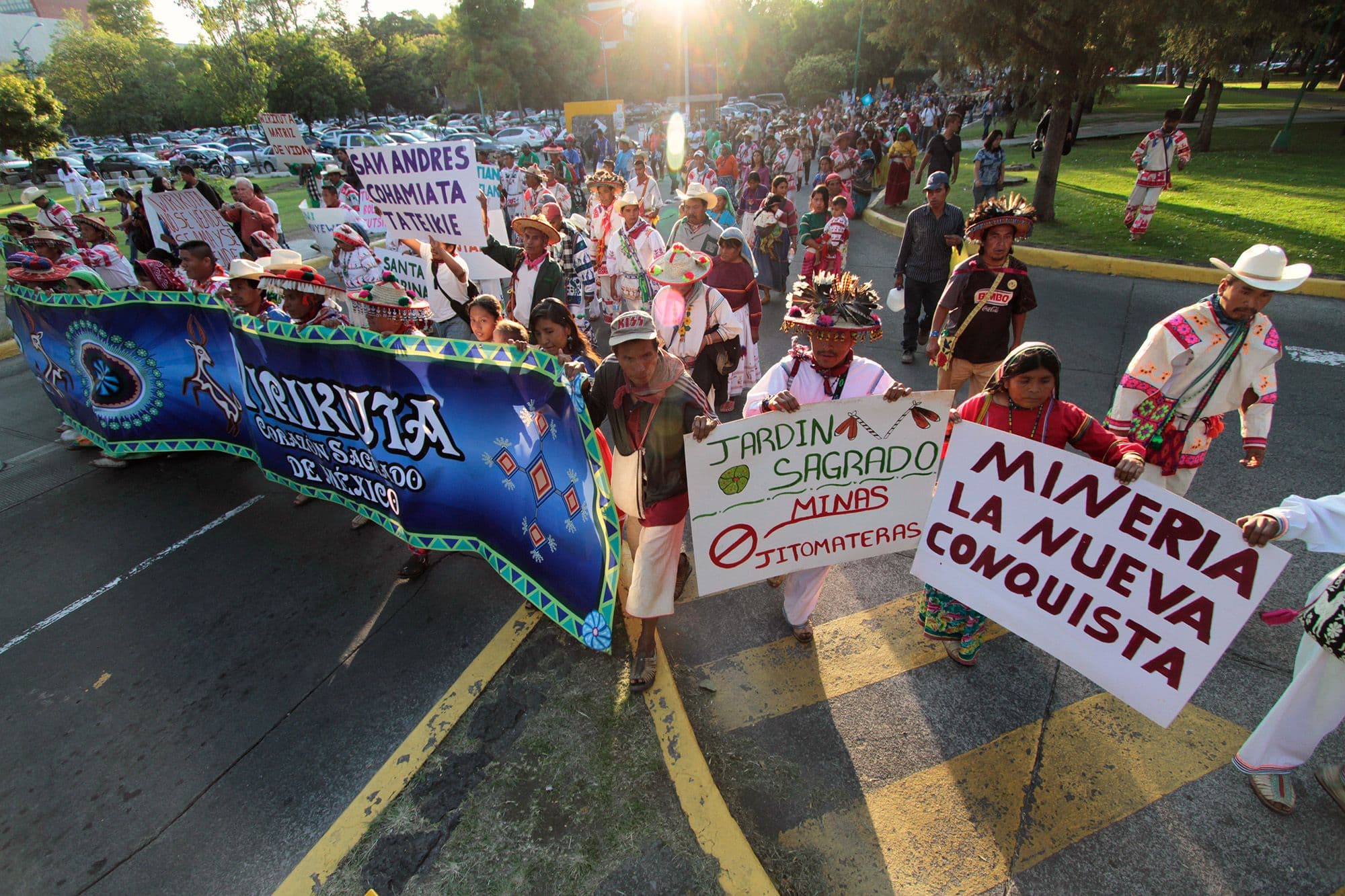
The report also documents murders, disappearances and other forms of violence linked to extractive conflicts. García mentions more than 103 murders, 24 disappearances and four extrajudicial executions recorded by the Observatory between 2017 and 2024.
Violence appears to be related to other mechanisms that intervene in conflicts, including the criminalization and repression of protest. For the OCSA, analyzing these practices allows us to observe how institutional decisions, legal instruments and coercive actions are articulated in the territories.
The report was built primarily from journalistic sources. This methodology leaves out conflicts that do not reach the press, in particular those that occur in rural and indigenous communities with less media coverage and where the practice of journalism faces greater risks.
“What doesn't reach the media, then doesn't stay in our observatory,” explains Dr. García Alanís.
Read: Women's networks from coastal communities restore mangroves in the face of advancing climate change
Added to this limitation is the lack of official information. The researcher points out that there is no public record of defenders killed or of displacements linked to extractive projects. To complete the journalistic records, the team relied on reports from the Federation's Superior Audit Office and requests for information. García Alanís stresses that the scope of the research must be understood based on these limitations.
“Our report presents a floor, a starting point that must be complemented by other types of investigations,” he says.
The lack of information also has consequences for those who defend their territories. “This lack of information, this lack of access to information, because it doesn't have a neutral origin,” says García Alanís.
In his opinion, this absence contributes to making the people who support the defense in the communities invisible. “On the front line, what they do is the defense of life,” says the researcher.
With this report, the OCSA seeks to make visible the experiences of those who face extractive projects and the conditions in which they defend their territories.


Comentarios (0)