
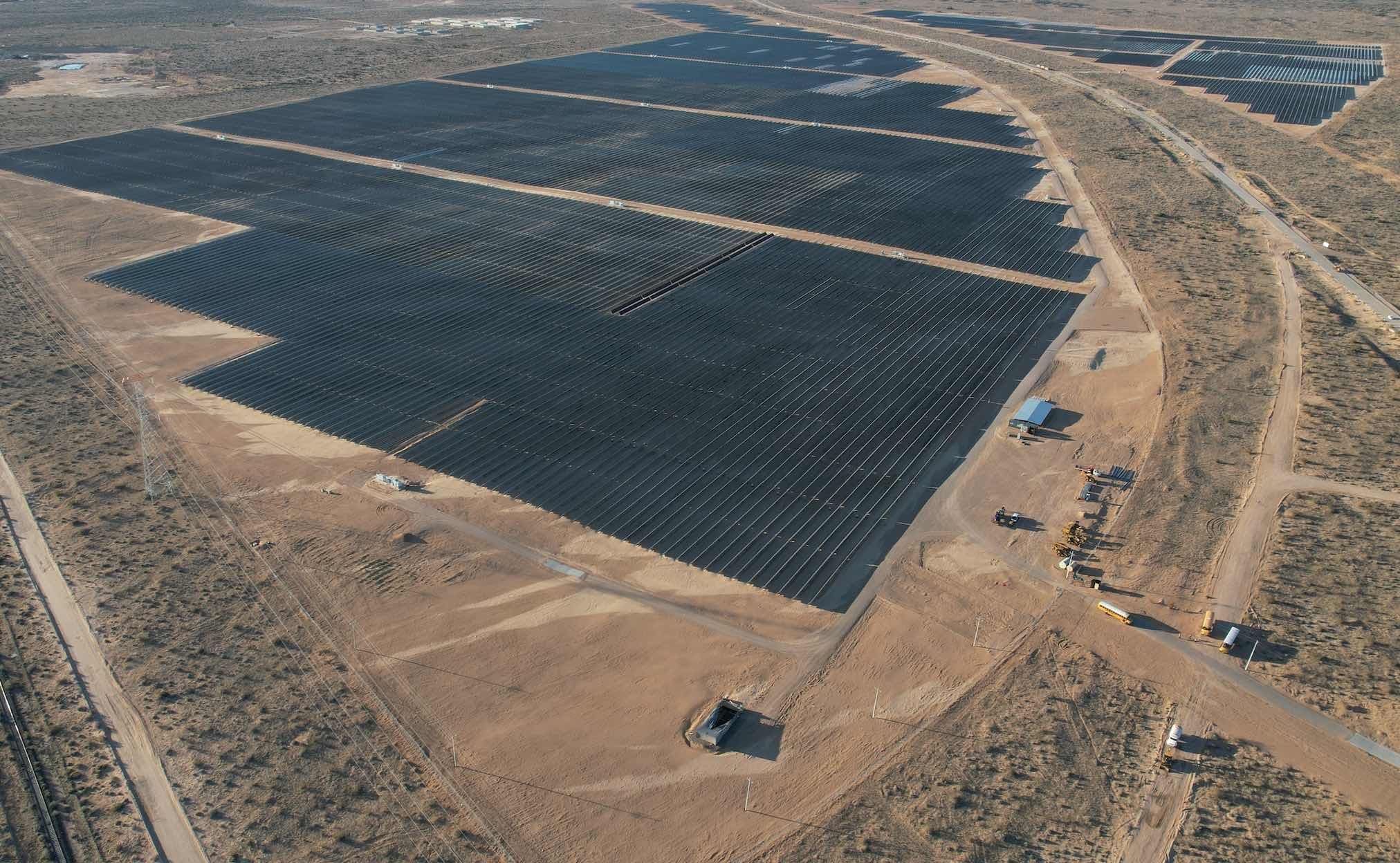
The Federal Electricity Commission (CFE) plans to finance with private capital a significant part of the expansion of its electricity generation capacity and its renewable projects. The company needs to invest 25 billion dollars to increase the share of renewable energy in its matrix from 31% to 38% by 2030, a goal that involves banks, investors and multilateral organizations in financing the country's energy infrastructure.
Eugenio Amador Quijano, Finance Director of the CFE, explained that joint projects with private companies will concentrate 64% of the funding sources planned for electricity generation during this six-year period. The model involves companies providing resources and participating in the construction and operation of power plants, while the public company guarantees the purchase of electricity through long-term contracts.
“The private sector provides debt financing, its knowledge in the design, construction, start-up and operation of the asset; while the CFE takes long-term electricity purchase coverage, up to 25 years,” Amador said during the panel From Risk to Resilience, where will climate capital flow in Latin America? , held within the framework of Mexico for Climate.
Private participation will make it possible to finance projects that require investments in excess of the CFE's annual borrowing capacity, set at 1.5 billion dollars. For the company, these mechanisms also seek to preserve its investment grade and expand the scope of its electrical expansion program.
“When the private sector reaches a target internal rate of return over time, the asset reverts and returns to the CFE,” Amador explained. The scheme thus establishes private participation during the development and operation of the projects, with the subsequent incorporation of the assets into the assets of the public company.
The strategy includes the expansion of the transmission network, necessary to transport electricity from the new power plants. The CFE plans to allocate 6.9 billion dollars to this area and build nearly 7,500 kilometers of lines to connect plants and reinforce infrastructure in different regions of the country. It also includes battery storage systems to meet variations in solar generation.
The financing of these projects takes place in a market where capital competes between different sectors and interest rates increase the cost of investments. Adrián Garza, Senior Vice President of Credit Strategy and Advisory at Moody's Ratings, summarized the current conditions with a phrase: “In general, this can be summarized as the fact that money is more expensive.”
Garza noted that investment needs in artificial intelligence, data centers, energy and critical minerals compete for resources available in financial markets. In this scenario, private investment and banking are becoming important to cover infrastructure and energy transition needs in Latin America.
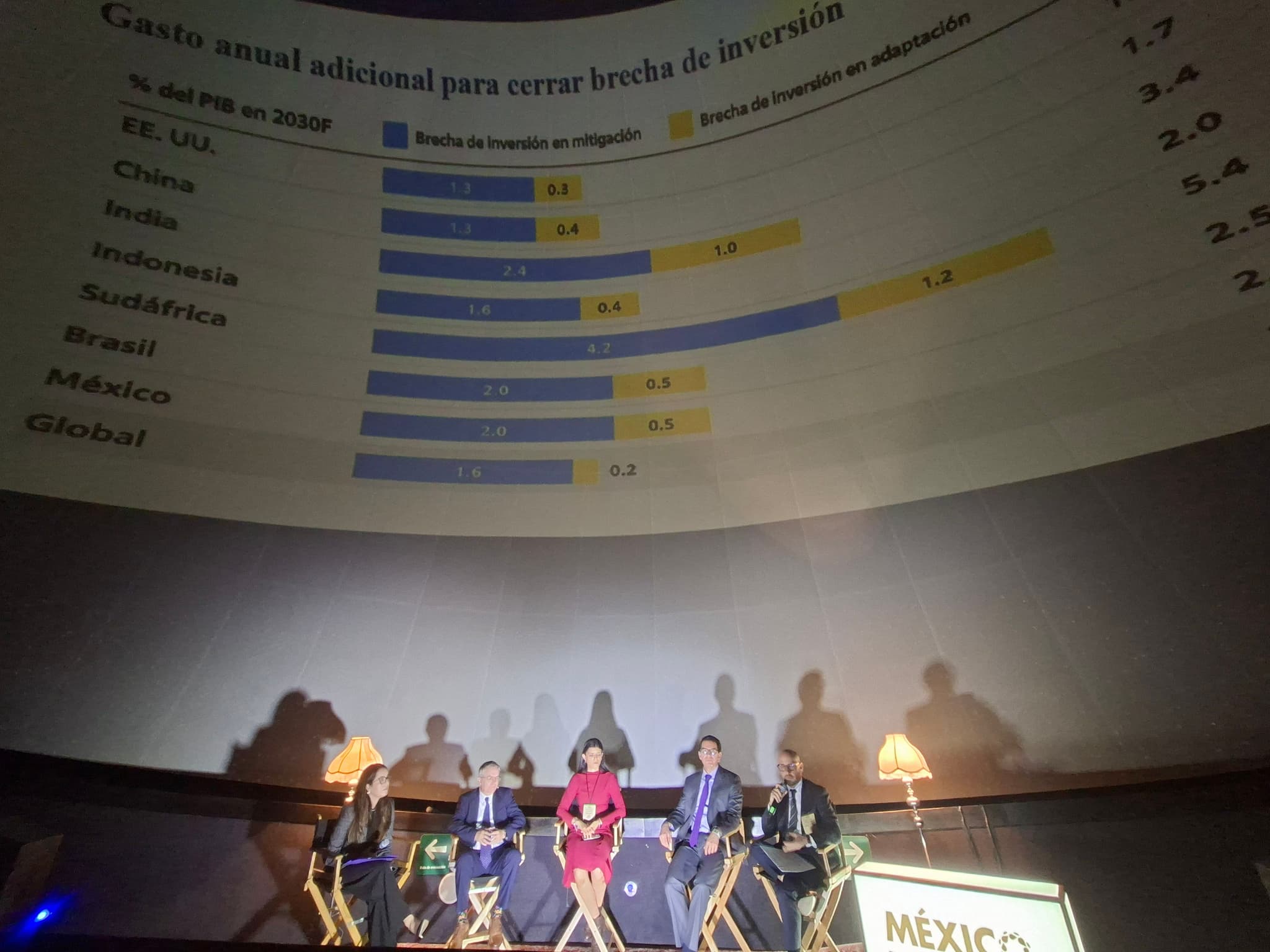
“It is clear that private investment, together with private banking and multilateral banking, will be key to financing this 2.5% gap,” he said. The estimate presented during the panel places the region's climate investment needs at an amount equivalent to 2.5% of the annual gross domestic product until 2030. In Mexico, the Ministry of Finance and Public Credit estimates that the sustainable financing gap amounts to 13.6 trillion pesos by 2030.
Gabriela Rincón, director of ESG Control and Monitoring at the agency, explained that the government has instruments to direct resources to projects that contribute to environmental and social objectives.
“These tools are part of a broader sustainable financing architecture that is part of the National Development Plan, Plan Mexico and the Sustainable Finance Mobilization Strategy,” Rincón said.
Among these instruments is the Sustainable Taxonomy of Mexico, which classifies economic activities according to their environmental and social contributions and incorporates objectives for mitigation and adaptation to climate change. The Treasury is also working with the Ministry of Environment and Natural Resources in the development of a biodiversity objective.
Capital mobilization also depends on projects offering clear conditions for investors. Diego Spannaus, executive director of Sustainable Finance for HSBC Latin America, said that long-term contracts and risk sharing make CFE projects bankable.
“We see this bankable because the CFE found a balanced 25-year solution where the public sector has 54% participation and the private sector 46%, sharing risks and guaranteeing the purchase of energy by the CFE,” he said.
Spannaus also highlighted combined financing, through which governments provide capital or guarantees together with commercial banks to reduce the cost of projects. This mechanism can expand financing options for energy infrastructure and other investments related to sustainability.
The CFE has also used instruments labeled as green and credit lines from multilateral organizations. Amador reported that a recent issue of 20 billion pesos had a demand equivalent to 2.2 times the amount offered and that two of its tranches were allocated to green bonds. The company also has a 500 million dollar line of credit from the Central American Bank for Economic Integration for green projects, as well as financing agreements with CAF and the World Bank's International Finance Corporation.
The scope of these mechanisms will be relevant to determining how resources are distributed between renewable generation, transmission and storage, and how climate objectives are incorporated into investment decisions. At the close of the panel, Amador said that binding planning for the electricity sector must offer certainty to those who finance the projects: “Planning must be linked to clear actions that give credibility to the financial sector.”
The interventions were part of the panel From Risk to Resilience, where will climate capital flow in Latin America? , carried out during Mexico for Climate, where representatives of the CFE, the Treasury, Moody's Ratings and HSBC analyzed the conditions for mobilizing investments towards the energy transition and climate resilience.
Projects, states and expected investment
The Federal Electricity Commission plans to invest 651 billion pesos between 2026 and 2030 to expand electricity generation, build transmission lines and modernize distribution. The program includes 467,299 million pesos for generation, 131,889 million for transmission and 51,770 million for distribution. The company estimates that more than half of the funding will come from mechanisms external to its balance sheet, mainly partnerships with private companies and Fibra E issues.
In terms of generation, the CFE will allocate 335 thousand 258 million pesos to mixed projects with a planned capacity of 13,800 megawatts. Another 132,041 million pesos will be allocated to projects developed directly by the company, with a capacity of 4,768 megawatts. The CFE Development Program 2026-2030 estimates that mixed projects will mobilize around 16.7 billion dollars.
In these companies, the CFE will have at least 54% of shares and the private partner, 46%. Between 70% and 80% of the total investment will be financed through resources obtained by the companies themselves. Eugenio Amador Quijano, Finance Director of the CFE, said that the company's debt limit is 1.5 billion dollars annually and that the expansion plan is equivalent to three times that capacity. Amador said that 64% of the sources of financing for generation during the six-year period will come from mixed projects.
In Sonora, sequences III and IV of the Puerto Peñasco photovoltaic plant will provide 580 megawatts and are scheduled to start operating in 2028. The program includes these works among its own generation projects, whose combined budget amounts to 132,041 million pesos. The document doesn't specify how much each sequence will cost.
The expansion plan also includes five combined-cycle power plants with a combined capacity of 3,174 megawatts, scheduled to start operating in 2030. In addition to these works, there are projects for internal combustion, cogeneration and aeroderivative units. The program does not show the individual cost of each plant.
The strengthening plan includes four combined cycle power plants: Tuxpan Phase I, in Veracruz; Riviera Maya/Valladolid IV, in Yucatán; San Luis Río Colorado, in Sonora, and Lerdo, in Durango. Together, they would provide 3,403 megawatts between 2026 and 2028. All four are part of a strengthening program that includes a global investment of 25 billion pesos; the document does not specify the budget of each plant.
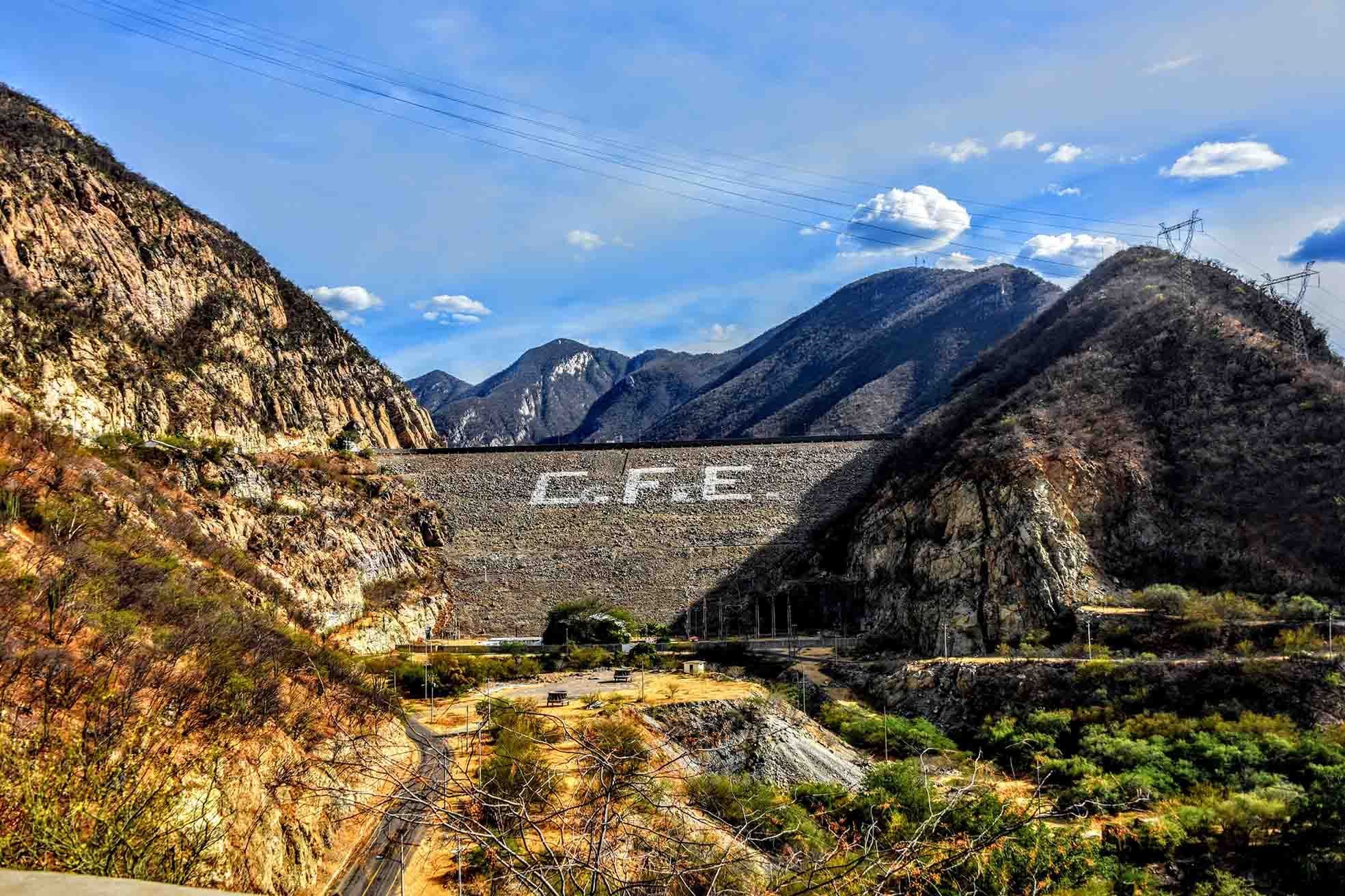
The hydroelectric expansion includes the Santa María, Picachos, Amata and Chicoasén II power plants, as well as rehabilitation and modernization works. The program estimates 7,698 million pesos for the set of works, which would provide 403 megawatts of capacity.
In transmission, the CFE plans to invest 131,889 million pesos in 175 projects that would add 7,545 kilometers of power lines. Of that amount, 48,310 million would be financed through Fibra E and 83,579 million through budget and long-term financing.
For distribution, the estimated investment amounts to 51,770 million pesos. The program includes four lines of work, the construction of 97 new substations, the expansion of another 95, the modernization of networks and electrification projects through Energy Justice.
You may also like: Federal Justice recognizes the powers of ASEA and Semarnat to comprehensively evaluate gas projects in the Gulf of California


Comentarios (0)