

Just one flight from London to New York generates an amount of carbon dioxide that requires approximately 4,047 square meters of trees over a year to be absorbed. This volume is equivalent to the emissions generated by an average inhabitant of Zimbabwe in that same year. The data are from the Sustainable Travel International organization and exemplify the concern that exists around the environmental cost of air travel.
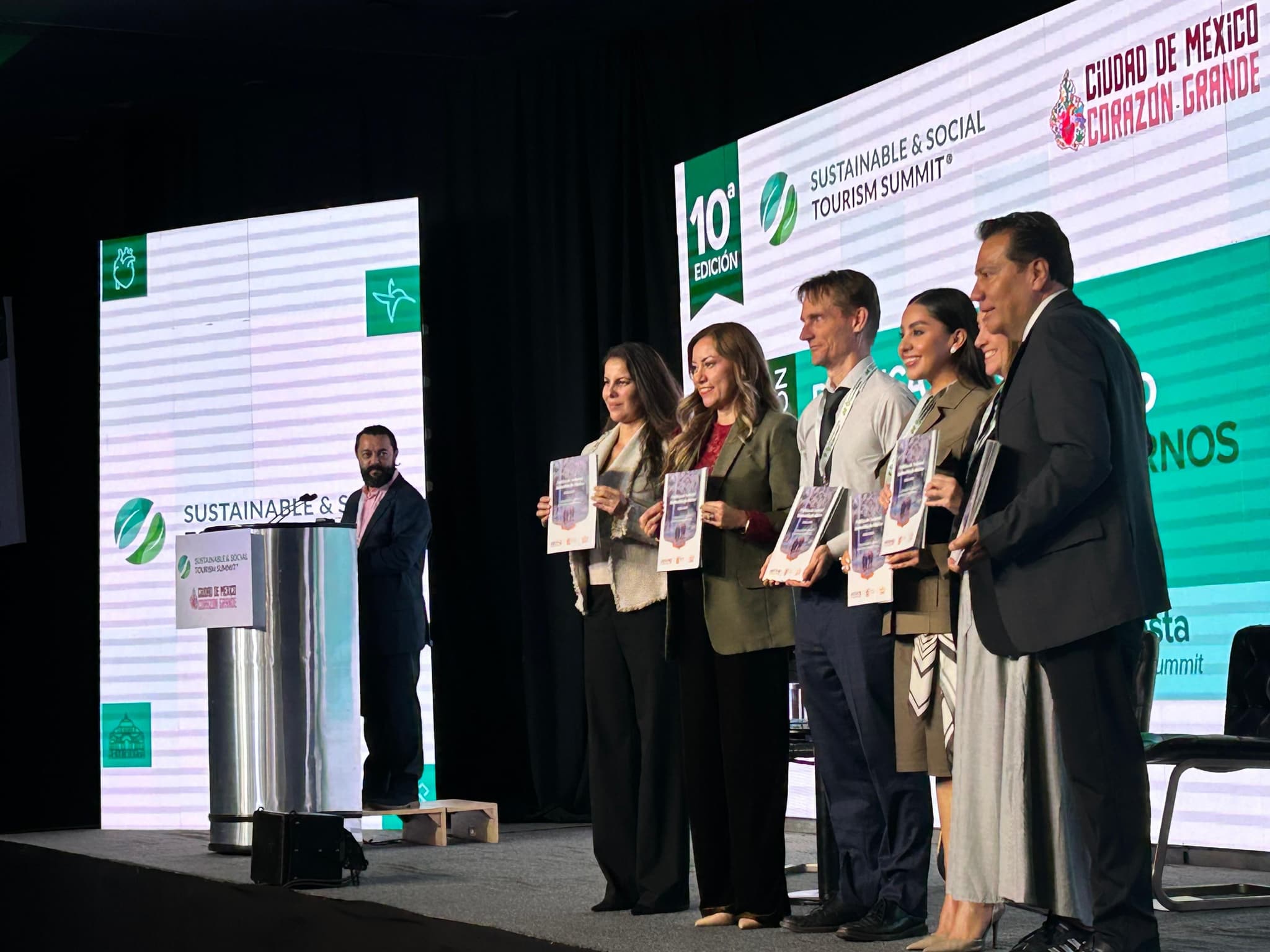
During the tenth edition of the Sustainable & Social Tourism Summit, an international meeting that took place from August 31 to September 2 in Mexico City, specialists and organizations called governments and companies to take action to comply with the Paris Agreement and implement measures to reduce global greenhouse gas emissions in accordance with the 1.5°C global warming limit.
One pending task is precisely tourism, which accounted for 8% of the world's greenhouse gas emissions in 2026, according to the World Economic Forum (WEF). Airplanes and cars are the main emitters.
Less than 1% of airplanes run on non-traditional energy
Oscar Rueda, director of sustainable tourism at the CAF Latin American Development Bank, presented some graphics, during his speech at the forum, to show the challenge: in 2009, tourism represented 7.3% of global emissions, that figure rose to 8% in 2013 and reached 8.8% by 2018.
Although there was a historic collapse in 2020 due to the closure of borders due to the Covid-19 pandemic, with a percentage of 4.5%, when international travel resumed, emissions rebounded rapidly and in 2024 they were at 7.3%. The data are from the University of Queensland and show the weight of tourism in global emissions.
If it continues at the current rate, the contribution of tourism will continue to rise to 10% in 2030 and even reach 18% in 2044, according to a sheet of projections presented by Rueda.
And it is precisely the slow adoption of new technologies, such as biofuels for aircraft, known as Sustainable Aviation Fuel (SAF), that aggravates the trend.
“Less than 1% are aircraft that are powered by non-traditional energy,” said Oscar Rueda. “The goal is to reach 90%. Hopefully we can rely on governments, the private sector,” he added.
Sustainable aviation fuel is produced from non-petroleum raw materials, such as food waste, woody biomass or vegetable oils, which reduce air pollution from air transport, and can be mixed at levels of between 10% and 50%, depending on the raw material and its production method, according to the data center of the United States Department of Energy.
Don't miss: Chuburná fights to save the dunes of a real estate project

The carbon footprint and mitigation measures
When Jordi Tresserras, UNESCO's consultant on culture, creative economy and sustainable tourism, measured his personal carbon footprint, he faced an uncomfortable contradiction: he, who is dedicated to promoting sustainable tourism, realized that his constant air transfers had a measurable environmental impact. To mitigate that impact, he is now planting trees frequently, he said in an interview with CN Media.
However, he knows that his personal effort is not enough. For this reason, it proposes that companies and governments bet on biofuels. “And then, on the other hand, there is also a tendency to modify gasoline for the electric car, which then also has its waste with the issue of batteries. But I think we should look for more adapted transport systems and try to reduce the impact,” he shares.
In addition to reforestation and the transition to biofuels, Jordi mentions the importance of promoting the circular economy and promoting inclusion and community tourism for the fulfillment of global goals.
For Jordi, one of the key premises is that, although being sustainable is more expensive, it is also more beneficial in the long run. “Out of respect for the environment, for involvement with the communities where you are, for local culture, for the circular economy. It really is a bet for the future,” he says.
“Especially if we want to maintain tourism as an opportunity to generate employment and entrepreneurship for people,” he adds.
For this forum, the organizers asked participants, both speakers and attendees, to calculate their carbon footprint to measure the impact of the event, in which federal and state tourism authorities, businessmen, hoteliers, academics, specialists and tourism associations participated.
The reduction of emissions was not the only topic that was part of the meeting, the speakers also addressed the importance of promoting conservation projects, the restoration of ecosystems, and the rescue and respect for biocultural heritage, as part of tourism sustainability and the public policies that governments must adopt.
You may also like: The struggle of women fisherwomen from Veracruz who managed to get the Supreme Court to order the regulation of the Fisheries Law


Comentarios (0)