
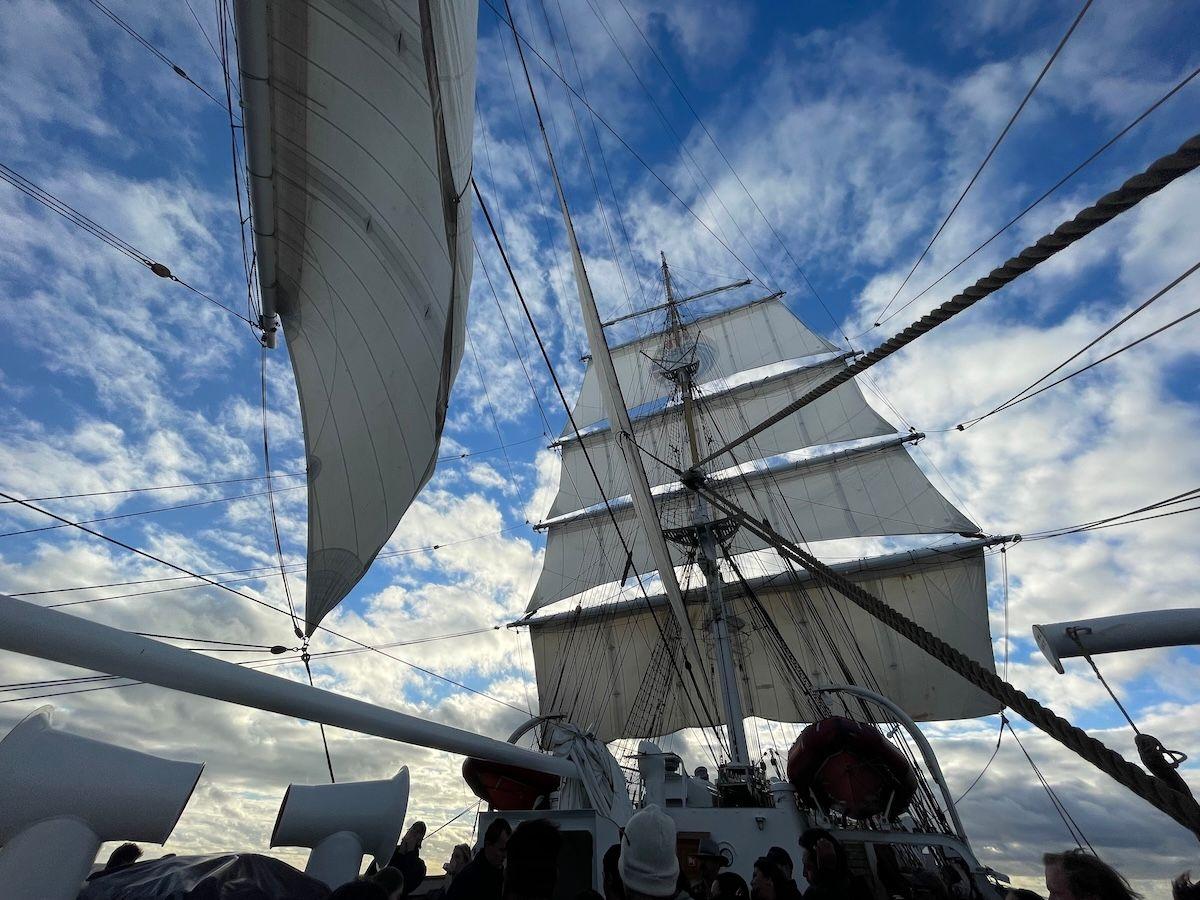
A starry night in the Pacific Ocean is stretched out like a sheet of constellations on a Norwegian sailboat that sails the Baja California Peninsula. The roof is dominated by a red light and the incessant lulling of the waves. A trio of young crew members from the Nordic country take a break from readjusting sails to share with a group of visitors the meaning of sailor tattoos. There is no shortage of laughter between Mexicans and Norwegians. This encounter of two cultures takes place in the One Ocean Expedition, a global journey carried out by the Statsraad Lehmkuhl boat to raise awareness for the seas, which in the stretch from Ensenada to La Paz receives people from NGOs, academics and companies, who responded to the initiative of the Innovaciones Alumbra collective to create synergies for the seas.
The crew of the sailboat is made up of a permanent staff that rotates every month. So once the deadline is up, they move from the port to the nearest airport to return to Norway and take a breath for what awaits them 30 days later, in another port and, often, in another country. It is not an easy undertaking because the route of this Expedition will have taken a trip around the world next April after 12 months in the Ocean. With the help of these young people, the visitors have been able to live and learn for seven days in this floating school about sailing. Someone asks these 18 and 19 year old boys why they decided to join a boat that is more than 100 years old. Right away, William says that his older brother works as a motorist on a ship, he grew up admiring how he traveled the world and from the age of 16 he knew that he would follow in his footsteps. Emma, a determined and friendly girl, points out that she is here because of the experience and because she loves sailing. Oliver, on the other hand, says that he had a friend in the ship's operating system, took part in a test trip and realized on the second day that this was for him. “All my friends are in the North Sea, sailing back and forth between two platforms and now I'm in Mexico with you,” he says and smiles.
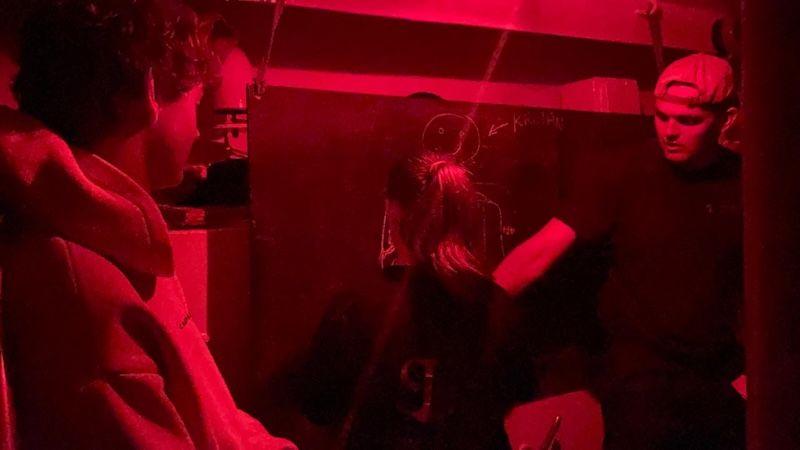
Young people exercise unusual leadership in someone their age. They were forged in the sea and carry on their shoulders the execution of operations on the deck and engines of a boat that once kept a permanent port in Bergen, Norway. They already have experience at sea, but unlike previous trips, seven days were enough for them to recognize that they had not seen an equally expressive group of visitors on board. A strict regime of 24/7 guards, hands broken by the hedgehogs, clothes soaked in rain and tiredness have not diminished the triumph of the spirit and joy of Mexican culture and a group of internationals who are agreeing to this trip. With this spirit of spirit, friendships have been celebrated on board; Norwegians are now the ones who greet with “good night” and Mexicans are offering God Vakt! (Good turn! , in Norwegian).
***
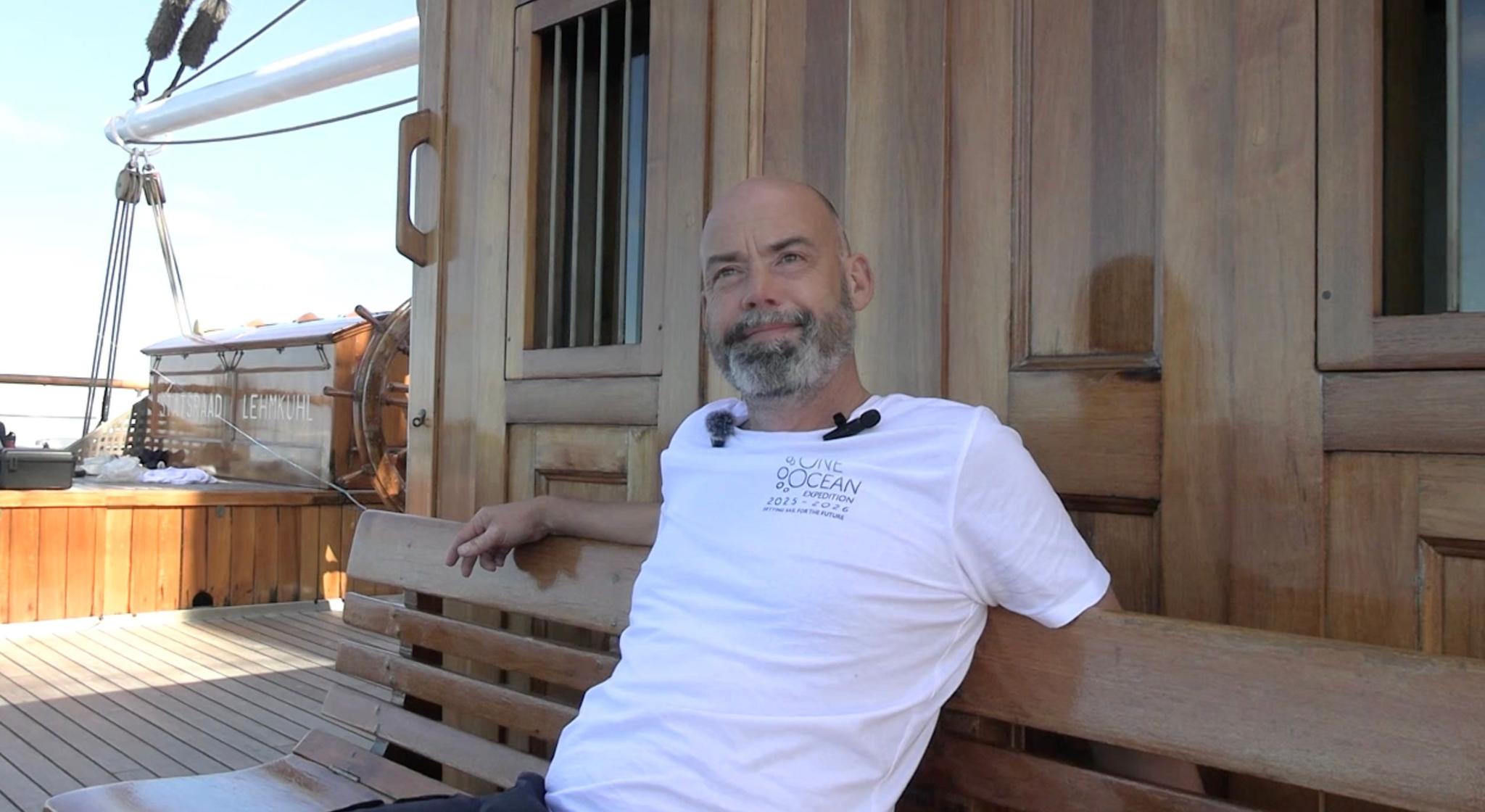
Jens Joachim Hiorth is the captain of this ship. He has an elegant mood and projects a confidence that surrounds everyone on the sailboat. On this trip he has reached the age of 47. It is the first time that Las Mañanitas has been sung on this ship and it has been sung by dozens of people on deck. After a first step in his youth as an apprentice in the Statsraad Lehmkuhl, Hiorth returned nine years ago as captain and since then he has more than stopped following the routes of this sailing school, whose responsibilities include being an ambassador for ocean issues by the United Nations.
Prior to this year's edition, Hiorth toured the world in 20 months in 2021. The spirit of that expedition is maintained in 2025. “The idea, which is the same in this One Ocean Expedition (2021) expedition, is to be part of the United Nations Decade of Ocean Sciences for Sustainable Development and to be a flag ship for sailing the oceans and doing ocean research. We have converted this 111-year-old ship into a cutting-edge research vessel,” he says.
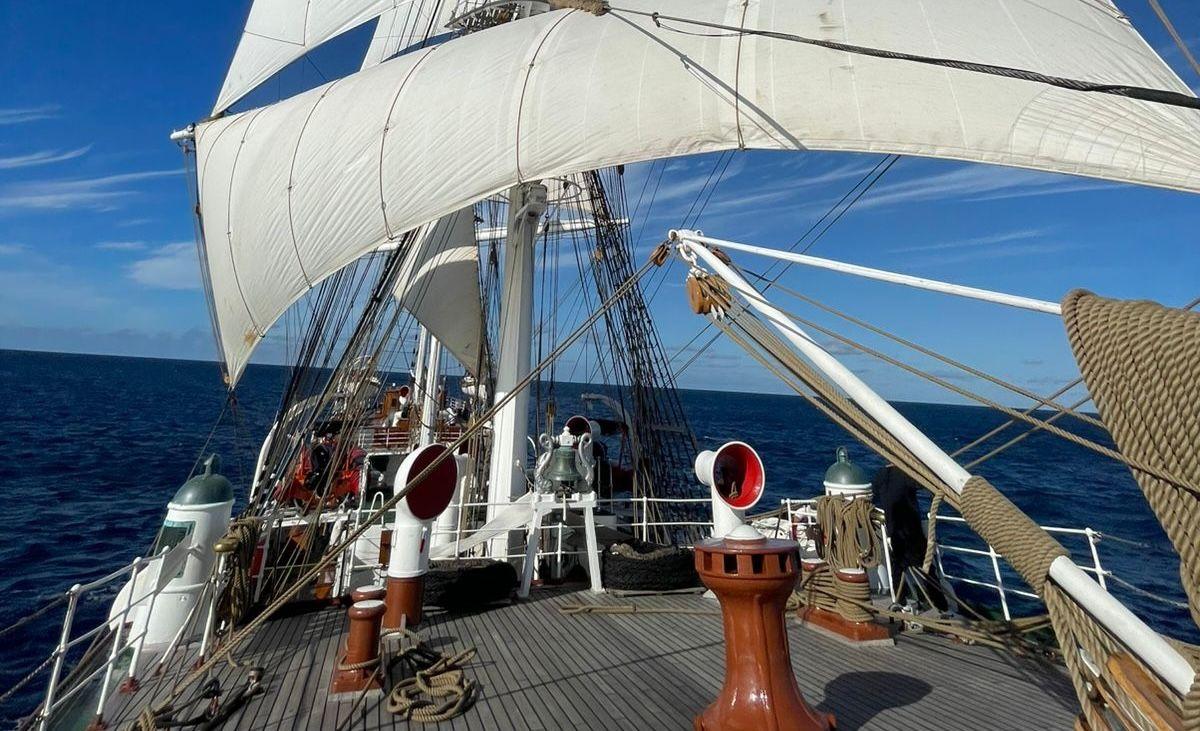
Being a flag ship is also closely linked to the fact of sailing. Although the sailboat has an engine, 70% of sailing is done with sails. According to a crew member, it is in Mexico that they have all been able to hoist. Until the Royal, a sail that crowns the mast 48 meters high. Lifting them requires pulling several halyards in unison by dozens of hands and a constant readjustment of angle orientations due to the dynamics of the wind and direction of this mission. Its deployment not only adorns the ship, but it also accompanies the movement with the water. Going from motor to sailing is like traveling from breaking the waves to gliding with them.
“If the weather is right, this is a very environmentally friendly way to get around. Obviously, we need to produce energy for electricity. But either way, it's a modern ship, with modern equipment, we have to have that. But in proportion, if you can sail under sail, fuel consumption is drastically reduced. And that's an environmentally friendly way of doing research. We're here doing most of the research things that big boats can do,” says the captain.
As important as the feat of traveling the seas is what happens in the 27 ports where they will have docked by April of next year when the Expedition ends, since the ship is a meeting place for people from various sectors and decision makers to support ocean health, climate change and sustainable development.
Climate change involves dangers so specific that they forced the captain to readjust the journey of this Expedition, whose original route contemplated the crossing of the Northwest Passage, a journey to the north of Canada that would emulate the journey of the Norwegian Roald Amundsen, the first to achieve this feat between the islands of the Canadian Arctic Archipelago.
“Now the paradox is that the warming of the oceans, melting the ice, during a longer ice-free season in the far north was really what opened the door for us to think about something like that. But in the end it was the same rise in ocean temperatures, the melting ice, that closed the door. Because it is breaking due to the high temperatures of the glaciers, it is melting at an upward pace. So, there is more floating ice of glacial origin in the passage and, eventually, the Canadian government told us 'we can't let you pass by, 'he says.
Therefore, Hiorth amended the sailboat's route to warmer waters and, for the first time, the ship crossed the Panama Canal. The purpose was to reach the Pacific and cross the seas heading north to fulfill their commitments in Canada, the United States and Mexico. Now heading south, on the stretch from Ensenada to La Paz, more than 60 people are on board. The captain's time calculations are made by the clockmaker and the boat sailed from Ensenada on November 17.
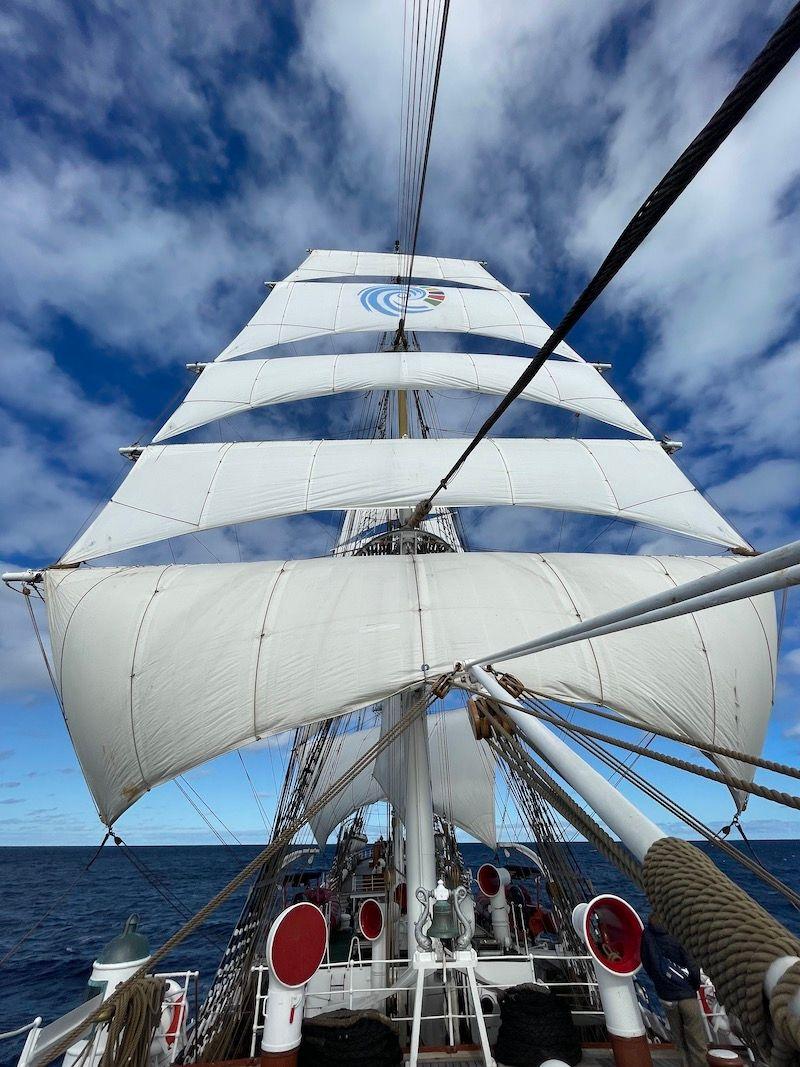
For Hiorth, the waters of Mexico evoke good memories.
“Mexico for me personally it's lovely to be back because I was here in 2007, on vacation, I definitely had more time then than now. But my memory of my first visit is that it's a super friendly country, friendly people and, of course, with the weather and everything, coming from Norway, that doesn't need to be said, it's very pleasant. So it was a good experience. And now I intend to have, even if only, a few hours to go down and see La Paz,” he shares.
***
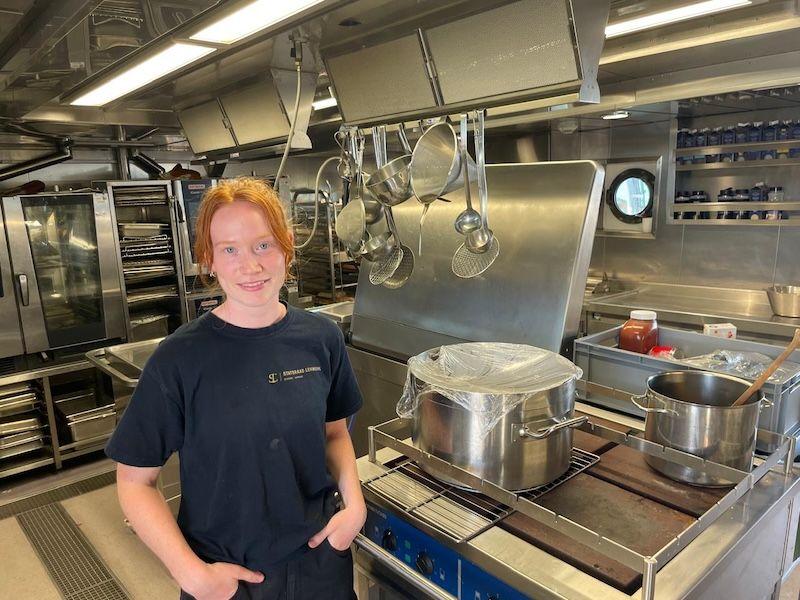
She's shy and smiling. Chef Vilde Hesvik works 10 hours a day to make the three meals that have kept all the crew members and participants on board afloat for five years. She is part of a three cooks team on this boat with the capacity to feed up to 150 people and, not least, to do so with great seasoning.
The main challenge is to cook with the swaying of the waves. The boat is a kind of ups and downs that intensifies when it is powered. Off Baja California, the Pacific waters experienced the greatest heat of the trip. So the kitchen is equipped with fixatives and industrial equipment that prevent the overflow of boiled water and other possible accidents, explains the chef.
“Usually, we make the same type of food on trips, although it varies a little depending on the supplies we bring on board. Typically, we make Norwegian food,” says Hesvik.
A certain expectation has resonated with the crew as to whether Mexicans will like Norwegian tacos. The tradition has gained so much popularity in Norway that there is even “tacofredag” (Friday Tacos). These were served during this trip as a variant of burritos. Clean dishes endorse people's acceptance.
Arriving at a port also becomes a stop for getting supplies, a list made by the Steward on board includes the number of people and days at sea. Although the diet above is consistent, they take into consideration those who suffer from allergies or are vegetarians. The snacks on board are sweet and, when fishing is allowed, the cuisine breaks records in passing from the sea to the plate whatever the fishermen on the crew send it.
She never thought she would work on a ship, but when he heard of the opportunity it seemed incredible and decided to take it to see the world, an echo that resonates with most of the crew. In some countries, he is excited to try local food, and this time he is looking forward to coming to La Paz to try a taco, this time Mexican, he says.
***
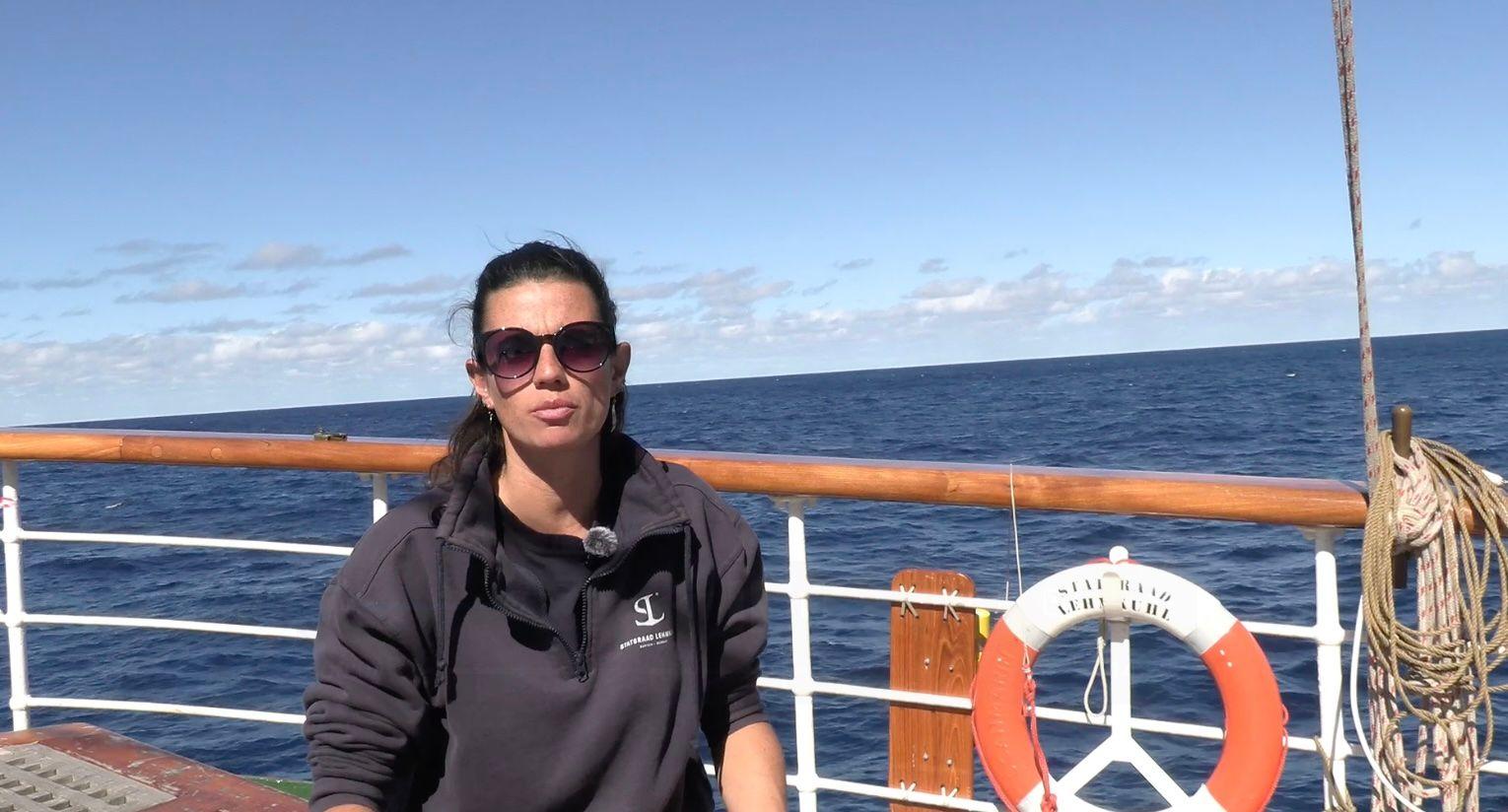
An important part of Statsraad Lehmkuhl's mission is science. French Natasha Fábregas leads these efforts aboard the ship that samples seawater once or twice a week.
It is a device for taking samples up to 1,200 meters deep, which in the Mexican chapter has been entrustred on the scientist Adrián Munguia and his team, who will analyze the samples from the deep waters of the Baja California Peninsula. A gesture of collaboration that the ship promotes with scientists who join the various sections of the Expedition.
The number of weekly stops increases depending on how many scientists are on board. For example, in an exceptional case with the European Space Agency, 30 stops were made to take samples in 45 days. Less is known about the Ocean than about the Universe, says Fábregas. And there are those who have set up Statsraad Lehmkuhl with a view to space. Just on May 6, Spanish astronaut Pablo Alvarez boarded the sailboat in preparation for his space trip.
“But then there are times when there are no scientists on the ship and, in that case, we still stop because it's good to collect ocean data and because we're sailing anyway and it won't take too long to stop to collect some data. And also because people who come in the boat also want to learn about science. So it's really nice to teach them,” Fábregas said.
The dissemination of science and the collaborative efforts that are woven on board are fundamental for the sake of knowledge of the seas. The sailboat had its masts and scientific equipment were refurbished in 2023 for this expedition. A small percentage of research vessels can take samples at that depth, says the scientist. Accordingly, most of the Expedition's samples will be analyzed in laboratories in Norway and later published on a website. This is a collaborative effort, like most of those that happen on this boat.
“I think it's a way of doing science, being able to share your results with everyone, because if you're left alone in your corner doing your own research, then there isn't as much progress, you have to share what you've found to build from there and continue the research,” says Natasha Fábregas.
She explains that you might think that the sea is all one mass, but these analyses are able to identify different masses of water across the layers that make up the sea, salinity, amounts of oxygen and plankton. The boat has an echo sounder and takes images of plankton and organisms that live in the water, which is useful for fisheries. At the same time, routines are carried out to sample the levels of microplastic contamination and some climate data are sent to meteorological services to aid in prediction models through sensors of the water surface and the environment.
***
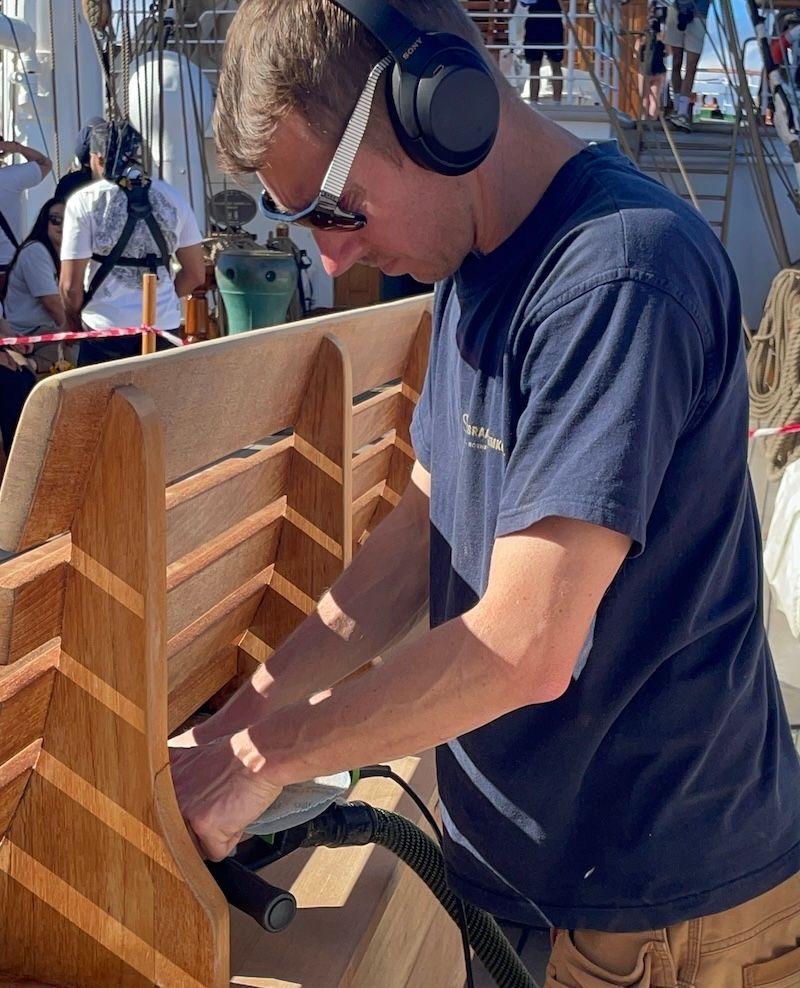
There are ideas and also the hands that make them a reality. From a locker to the deck, his routine involves the constant repair and conservation of the ship's wooden parts, whose varnish pulses with use and salt. A carpenter on the high seas on this sailboat is essential. His name is Torben Peiter Skov and he's been here for 18 years.
One of the pillars of sustainability is reuse. Peiter is well aware of this, that he must manage to keep the boat in optimal condition. “We reuse all the time, such as old ropes, old wood and steel for different purposes. We can use everything for something different,” he says.
Most of the components are constantly reused, to the extent that some of the pieces in the wood warehouse were part of the original deck of the sailboat built in Bremerhaven, Germany, in 1914. Most of these pieces are waiting to become an integral part of the deck again, but others have found more artistic destinations, such as a couple of pieces provided by Skov to the artist Joel García Mayoral of the N-Gen network so that he can paint on them.
The use also causes things to break all the time and that keeps Skov busy, who finds new outlets for objects also made of metal, because the frame of the ship is made of this material and some of the carpenter's tools are pieces that have a second life for working with wood.
When this is no longer possible, it is also the case that tools are requested so that someone can put them in their suitcase and travel from Norway to their workshop. A trip that the entire crew takes every month. Skov shares that life at sea isn't easy. Like the Mexican participants for a short time, everyone on board has a family waiting for them back home.
“Being a sailor is not being at home all the time, I have two young children and a wife, so of course it's difficult, sometimes they need me at home, because the kids are crying or sick, but I've been sailing my whole life and that's the only thing I know how to do. We miss each other, but then I come home and it's nice,” he says of life at sea.


Comentarios (0)