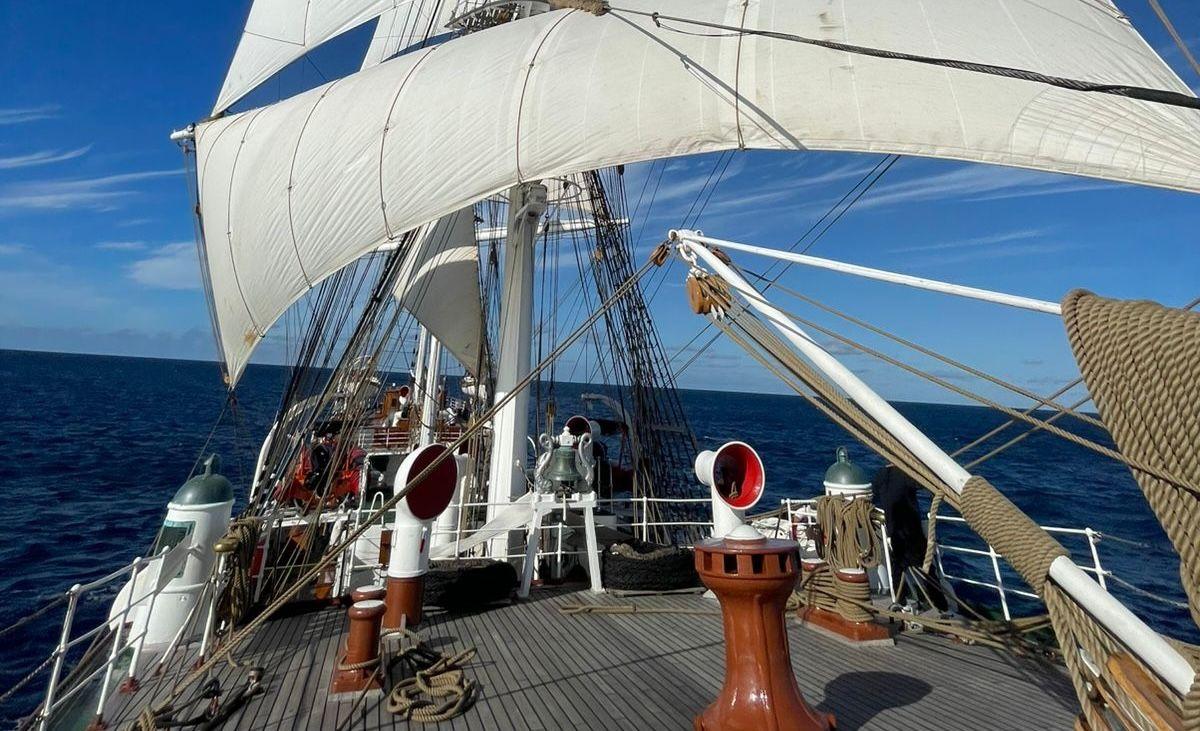
Las drizas del velero noruego Statsraad Lehmkuhl izan las velas y el tránsito en el agua parece acompasarse con las olas. A bordo un grupo de mexicanos, acuerpado de extranjeros, conforman parte de la travesía global de la barca llamada One Ocean Expedition (OOE, por sus siglas en inglés).
Tan sólo en el tramo de Ensenada a La Paz se gestan múltiples proyectos a favor de los mares y las comunidades costeras, destaca en particular uno de miras globales como lo es el Centro de Acuacultura Aplicada e Innovación (CAAI).
“Será en los próximos años un centro mundial, global, para fomentar la innovación y soluciones aplicadas para avanzar en la acuacultura regenerativa”, explicó Andrew Rhodes, director de relaciones públicas y política para el colectivo Innovaciones Alumbra, quien participa de este viaje marino.
La OOE es una travesía del velero que es embajador del Decenio de las Naciones Unidas de las Ciencias Oceánicas para el Desarrollo Sostenible. En su camino por el mundo diversas sinergías y decisiones ocurren a bordo de este velero y las 945 millas náuticas a bordo no han sido la excepción.
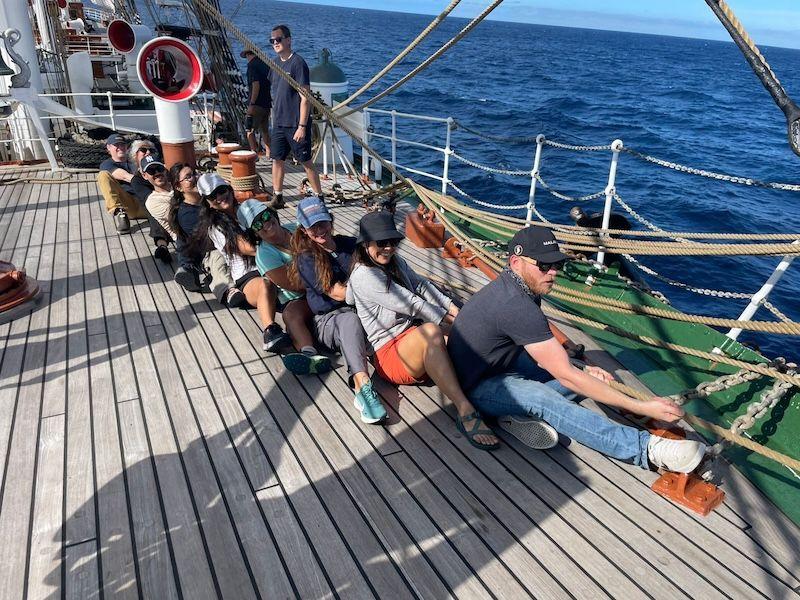
Participantes de le expedición provenientes de oenegés, negocios, centros académicos y producción acuícola compartieron a bordo. Foto: Juan Luis García.
Luis Castellanos, director del área de Emprendimiento e Innovación del CAAI, destacó que el centro surge como resultado de un trabajo de años del colectivo Innovaciones Alumbra que armoniza la economía con la vitalidad oceánica y el desarrollo de las comunidades.
“Y dentro de toda esa visión como colectivo, el centro de Acuacultura Aplicada e Innovación busca ser este espacio donde puedan integrarse la ciencia, la innovación, la capacitación, la educación y el desarrollo económico, el emprendimiento en un solo lugar a través de un espacio que queremos hacer abierto, interactivo”, comentó.
Castellanos destaca del CAAI pilares científicos que involucrarán laboratorios para la realización de pruebas que atiendan necesidades acuícolas de crecimiento y alimentación; espacios de capacitación, para la especialización y la incubación de emprendimientos.
“La idea es que sea todo un espacio virtuoso, un centro donde cualquier persona que quiera desarrollar, que quiera aprender, que tenga un negocio o el sueño de integrarse en la acuacultura, pueda ir al centro y encuentre las herramientas”, detalló.
La ambición del proyecto tiene dimensiones globales, una proyección que encuentra sus raíces en lo local.
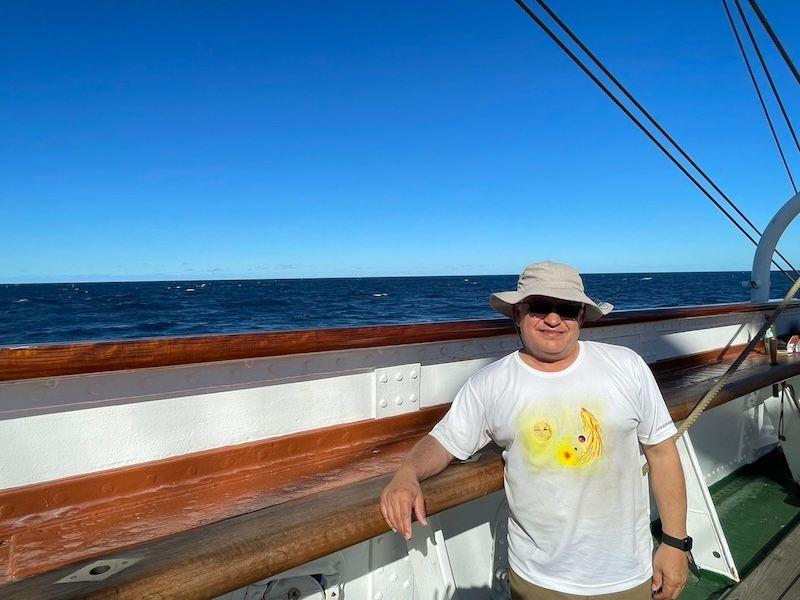
Cota Rivas compartió sus perspectivas de innovación a bordo del velero. Foto: Juan Luis García.
Rafael Cota Rivas, director de Desarrollo de Talento y Fuerza Laboral del CAAI, comenta que ya trabajan en dos vías: identificar las necesidades y deseos de los actores involucrados en el sector acuícola; y elaborar las mejores formas de trasladar las capacidades necesarias a desarrollar.
Sobre este trabajo de mapeo comenta: “Ha sido conocer todo el territorio y todas las personas involucradas en la cadena de valor de la acuacultura en la región, pero al mismo tiempo también a aquellas que por alguna razón han tomado la decisión de no entrar a la acuacultura, porque también nos interesa conocer cuáles son esas razones, qué es lo que les ha hecho falta”, apuntó Cota.
Convenios con universidades
A bordo del barco también se tejen sinergias. Un acercamiento con la Universidad de Maine ha tenido lugar y dos de sus expertos a bordo han podido compartir con el resto de participantes de la expedición el trabajo que realizan en esta zona del Noroeste de los Estados Unidos conocida internacionalmente por la pesca de langosta y sus esfuerzos acuícolas.
Meggan Dwyer, directora asociada del Instituto de Investigación Acuícola (ARI, por sus siglas en inglés) de la Universidad de Maine, compartió que se abre un abanico de posibilidades de colaboración con el CAAI y otros actores, en el que hay un interés particular por afianzar un eje de intercambio estudiantil.
“Mi deseo sería que estudiantes de Baja California Sur vengan a Maine durante el verano. Participarán en nuestro programa y luego iremos a Baja California Sur en enero o algo similar, durante una de sus vacaciones para visitar granjas y trabajar en proyectos que, de alguna manera, pueden trascender fronteras”, comentó Dwyer.

Dwyer desarrolla estrategias de hacia dónde debe ir el ARI, un instituto financiado por grants. Foto: Juan Luis García.
Junto con el profesor Damian Brady de la misma casa de estudios barajean proyectos que abonarían a la acuacultura local en México como pueden ser el uso de imágenes satelitales, que identifiquen un lugar idóneo de producción y desarrollen herramientas para los acuicultores.
“Por ejemplo, un cultivador de ostión podría preguntarse si un área es buena para la acuacultura. ‘Necesito datos sobre ella y tú puedes tomar las imágenes desde el satélite’ y aterrizarla en el terreno para crear herramientas de mapas que les muestres a la gente”, apuntó la directora.
Si bien Dwyer reconoce que ahorita hay muchas ideas sobre la mesa, hay entusiasmo por lo que se está gestando entre el Instituto y el CAAI.
De parte del CAAI, la firma de convenios y puestas en marcha iniciaron al arribo del Statsraad Lehmkuhl a La Paz el 24 de noviembre.
De parte del CAAI, la firma de convenios y puestas en marcha iniciaron al arribo del Statsraad Lehmkuhl a La Paz el 24 de noviembre. El primero con el Instituto Mexicano de Investigación en Pesca y Acuacultura Sustentables (Imipas) y un segundo con el Tecnológico de Monterrey.
Con la universidad, el CAAI estima avanzar los programas de capacitación y desarrollo tecnológico, mientras que con el Imipas se centrará en la investigación aplicada.

A la firma del convenio asistieron representantes del Tec. de Monterrey y del Imipas. Foto: Juan Luis García.
La concreción de nuevos convenios continuará en el 2026, adelantó Cota.
“Definitivamente, vamos a tener casos muy concretos, tan rápido como que mañana que estemos en La Paz firmaremos convenios con una universidad (Tec. de Monterrey), precisamente, pero hay otros que ya están muy avanzados, incluido el de la Universidad de Maine, que nos van a permitir establecer acciones para ejecutar muy rápidamente durante el próximo año”, confirmó Cota.


Comentarios (0)