
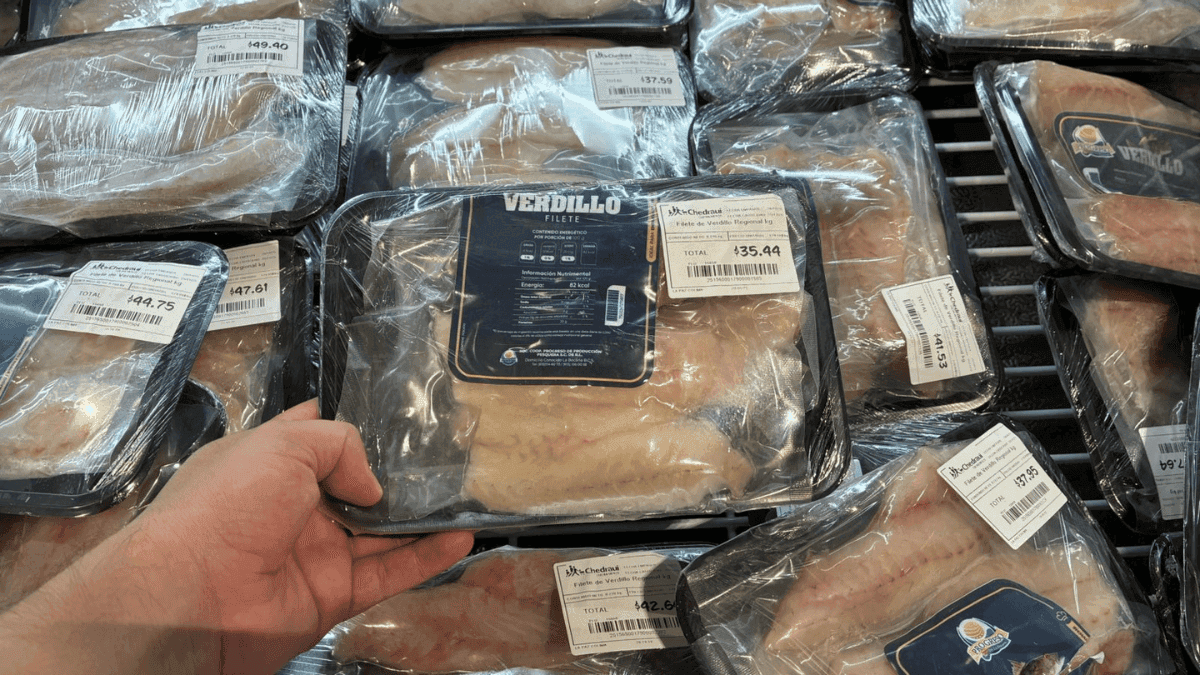
The fish and seafood distribution of the Progreso Cooperative Society located in La Bocana, Baja California Sur, previously focused on local sales —commercialization of frozen and canned products—, took a leap towards self-service markets after concluding negotiations with the Chedraui chain.
The entry not only expanded their commercial presence, it also modified the way they process, package and order their product to meet standards that allow them to compete on national shelves.
At the beginning of marketing, the cooperative filleted 10% of its production, but when it marketed with Chedraui, the need for filleting increased to 30% of production.
This increase represented adjustments in inventories, freezing machinery, internal control, vacuum packaging specifications and labeling with nutritional information to provide visible and differentiated presentations compared to generic products that are usually sold in unlabeled bags. The goal set for 2027 is for 100% of the fish processed by the cooperative to have added value through filleting or vacuum packing.
Access to a national chain required systematizing information, updating nutritional studies, standardizing presentations and, above all, demonstrating traceability.
Regarding these changes and their impact on the cooperative, Jesús Verdugo, president of the board of directors of the Progreso Cooperative Society, provides these answers for Causa Natura Media.
This interview has been edited for synthesis and clarity.
— How did the cooperative start entering the supermarket and what requirements did they have to meet to achieve this?
We have been talking with supermarkets for about a year and about six months ago we started marketing with Chedraui. Once we have completed all the procedures, we enter the floor with frozen products, basically steaks and octopus.
In addition to signing contracts and administrative reports, the central requirement was to demonstrate quality and guarantee supply, but this did not imply substantial changes in operation, because the good practices we did on board boats, because we do it for all products, and because the plant and vessels are already endorsed by the State Commission for Protection against Health Risks, the Federal Commission for Protection against Health Risks and the National Service for Health, Safety and Quality Agrifood. What Chedraui asked of us, we were already doing.
— What adjustments did the new type of packaging entail for the cooperative and how has its processing volume changed?
The main changes were concentrated on inventories, labels and presentations. What we didn't have were inventories in some of the presentations they asked us for. This included nutritional studies in species that did not have them and the acquisition of equipment to improve standards. We purchased larger vacuum packing equipment and a freezing machine that freezes our fillet in 45 minutes to provide better quality.
This process also changed the volume because before, only 10% of the production was filleted, now it's around 30%. For example, if it's 100 tons of fresh produce, we would fillet 30 tons. And although not all that volume goes directly to the supermarket, the model developed for Chedraui is helping us to replicate it with other customers.
— What markets do you currently trade in?
We export live lobster to China and croaker steak and sole to the United States. But the domestic market demands significant volumes and prices don't change much compared to the United States. We have distributors in Mexicali, Chihuahua, Cancun, Mexico City, Guadalajara, Querétaro and we are about to enter Los Mochis. We come in with one product and then send samples of others so they can get to know them.
— What certifications do they currently have and what role have they played in opening up the market?
In the Fisheries Improvement Project (FIP) we work green, white and octopus. At lobster, we had MSC - an international certification that evaluates sustainability - and we are in a review process. In addition, we collaborate with the civil association SmartFish on traceability so that any customer can trace from which boat the product was captured to how it arrived at their table. These certifications gave us our first entry to Chedraui and, from there, the chain accepted some other products that are not in FIP, such as sole or horse mackerel, due to the trust in our management.
— Do you think that these changes bring something to regional fisheries?
Yes, what Chedraui asks for guarantees quality for the consumer and helps combat illegal fishing or improper management. Large installations are not needed: a roof and ice can guarantee good practices if properly worked. Traceability and health requirements make it possible to increase the consumption of fish and seafood and to generate differentiated markets that recognize quality.
— Finally, what does it mean for the cooperative to have entered the supermarket market?
For us, it means a significant increase in process volumes and an opportunity to further professionalize the presentation of the product. We have tripled steak production and we want to reach 100%. It is also a way to position the brand and ensure that the consumer has access to the very good quality products offered by Baja California Sur, made with good management from the moment they are caught.


Comentarios (0)