
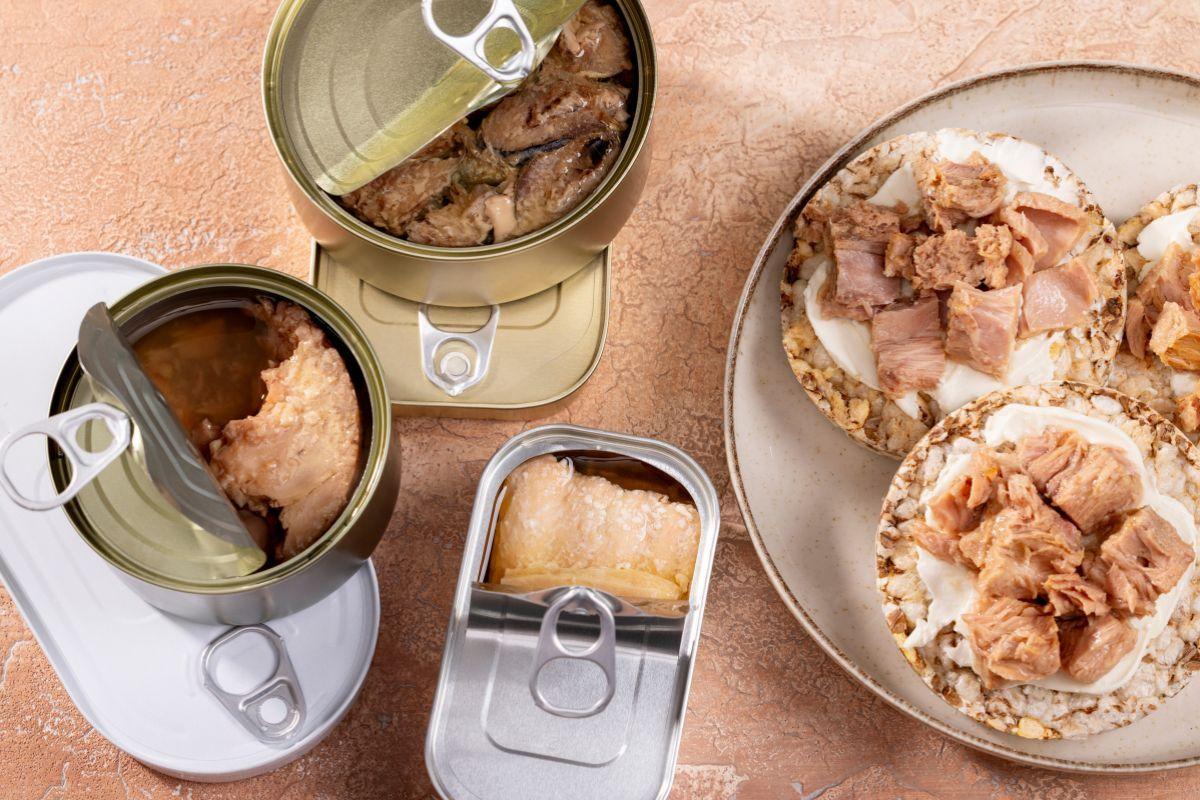
A rule that makes the contents of tuna cans transparent has sought as a side effect that less soy is passed off as the meat of this fish. In an interview, Alfonso Rosiñol, institutional relations manager at Grupo Mar, a Mexican tuna company, comments on the implementation of this regulation and its effectiveness in alleviating unfair competition.
In 2019, the Federal Consumer Attorney's Office (Profeco) published a study that showed that soy was being sold for tuna in supermarkets, since there were products with up to 62% soy and most of them did not report this to consumers.
Based on these results, it promoted the Official Mexican Standard NOM-235-SE-2020, which establishes the obligation to indicate how much solid product you have, not including the liquid covered with the coating, understood as drained mass, and to add the amount of soy, which should not exceed 50% of the drained mass.
In 2024, Profeco redid the study with the current NOM and found that soy continues to be used to reduce costs, that there are brands whose drained mass is lower than they declare, and that contain more soy than they declare.
To explore the advances and challenges posed by the implementation of the new NOM for the consumer and for the tuna sector respectively, Causa Natura Media interviewed Rosiñol.
*This interview has been edited for synthesis and better reading.
— What have been the challenges in implementing the new regulation?
— I think it hasn't been a problem for Mexican companies. The machinery that is used may have a small fault and that is when maybe the drained mass is not exactly the right one, but the variation is very small. As long as your equipment is recent and you give it the correct maintenance and calibration, they will give you the correct results to be able to comply with the standard.
— How did the tuna industry perceive the creation of this NOM?
— It didn't seem right to us that a product was arriving from abroad with a high soy content and that the can only said only tuna. It seemed to us that it was unfair competition because we saw products that brought 50% and those products sold very cheaply.
We were asking Profeco to make this type of regulation so that the customer knows that they are buying and there would be correct competition between all brands.
— What changes have there been in the presentation of tuna and what impact has it generated on the consumer?
— This NOM is made to protect the consumer and that they receive what they are selling to them. Soy continues to be used because we must remember that it is not a bad thing, but if it seems to us that people should know what they are buying.
We believe that now people have a better understanding of what they buy, they make more informed decisions and with that they begin to understand the difference that may exist in prices.
The consumer accepts that they want to spend a little less, which is very valid, and they continue to buy a healthy product.
— Why are there brands that came out with high levels of soy?
— The brands that were poorly evaluated because they came out with the highest soy percentages are what are called “white labels”, because they are supermarket brands.
The supermarket asks that they give it the cheapest possible can and because of the prices of tuna, the only way to comply is to put soy in place. That's why these cans are cheap, but they have quantities of soy that are inconceivable to commercial brands.
— In what other products could the regulation of tuna be replicated?
— In many products that are sold packaged, it can be replicated that they include the ingredients. There could be some presentations of smoked tuna or marlin, octopus, or any frozen seafood mix other than what it says it is. There it can work so that the consumer actually receives what they think they are buying. This regulation can give Profeco weapons to take care of the consumer in other fisheries.
Also, the guideline for declaring the dough drained perfectly can be applied both to oysters, mussels, canned sardines, and others, so that they give the consumer the amount they are paying for. It even works for any other canned product such as corn, green beans and mushrooms.


Comentarios (0)