
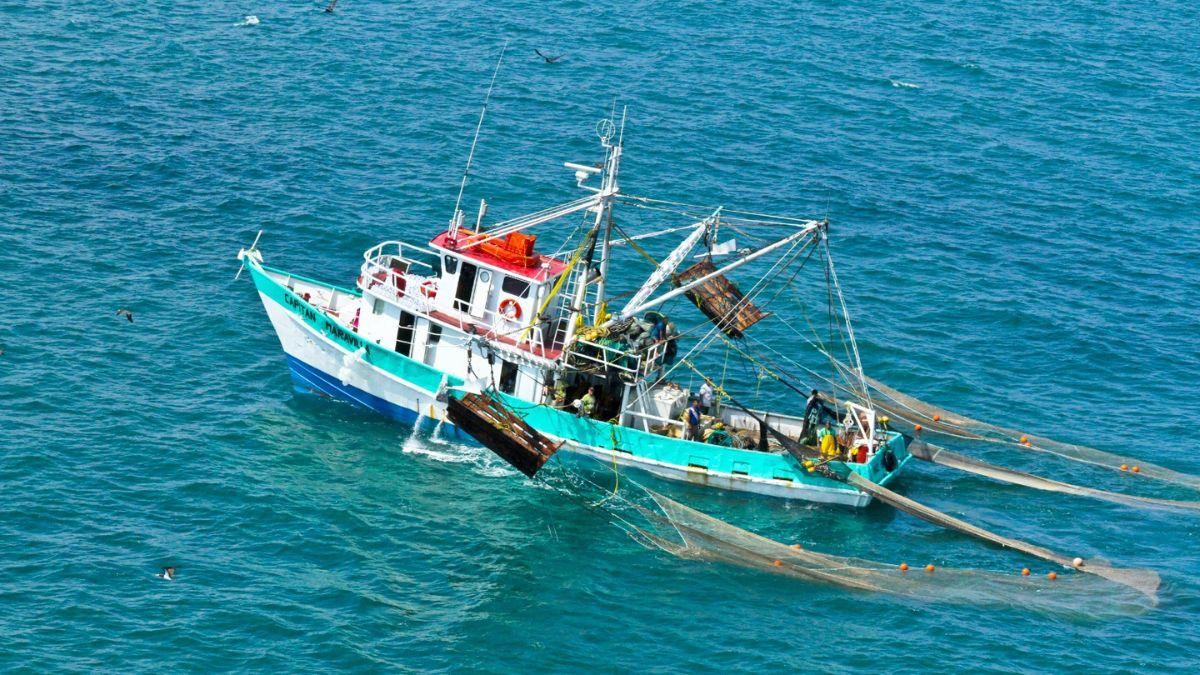
The lack of verifiable information and robust monitoring systems is the main factor that triggered the embargo imposed by the United States on 21 Mexican fisheries, according to specialists in conservation and fisheries management.
Beyond a direct indication of the mortality of marine mammals, the problem lies in the absence of clear, transparent and systematized data to evaluate the interactions between fishing activity and species such as whales and the vaquita marina, said Alejandro Olivera, representative in Mexico of the Center for Biological Diversity. “There is no verifiable data and there are no mitigation measures,” he said.
For his part, Rafael Ortiz Rodríguez, director general of the Environmental Defense Fund (EDF) Mexico, explained that “on many of these occasions it is simply because the fishery does not present the information in the way it is required to not be affected by the law of the Marine Mammal Protection Act.”
Both specialists agreed that the lack of reporting, observation and transparency mechanisms limits Mexico's ability to demonstrate management comparable to that of the United States, even in fisheries where the real impact on marine mammals is low or even zero.
What are embargoes and comparability about?
The entry into force of the embargo on 46 countries, as of January 1, 2026, prevents the export of various seafood products to the United States, including Mexico, considering that it does not meet the “comparability” criteria established in the Marine Mammal Protection Act (MMPA).
The measure applied by the National Oceanic and Atmospheric Administration (NOAA) is derived from an evaluation of the country's regulatory performance in monitoring, reporting and mitigating interactions between fishing activities and marine mammals, such as whales, dolphins, sea lions and the vaquita marina.
Unlike other mechanisms, the embargo is not related to levels of overfishing or to the state of the target populations, but to the lack of verifiable information to estimate the bycatch of marine mammals and demonstrate the application of measures to reduce it.
The MMPA requires exporting countries to prove a level of protection “comparable” to that of the United States in their own fisheries, which involves observer programs, systematic recording of interactions, maximum allowable bycatch limits, and mitigation measures when impacts are detected.
Olivera explained that this requirement “does not require the perfection of each fishery”, but rather “an equivalence in the effectiveness” of the rules. “What he is asking for is that there be evidence of marine mammal monitoring, bycatch limits and mitigation measures,” he said.
He also clarified that NOAA does not evaluate fisheries by cooperative, permit holder or state, but rather by large regions where fishing gear and marine mammal populations coincide. “Even if the same fishing gear is used, NOAA identifies them differently depending on the region and the marine mammal stock with which it overlaps,” he explained.
After several years of extensions following the publication of the Marine Mammal Protection Act in 2016, the evaluation process intensified during August 2025, when NOAA published its final comparability determinations, in which it concluded that 240 foreign fisheries from 46 countries do not meet marine mammal protection standards and would be subject to import bans.
At the end of that month, NOAA specified that the measure would not be an embargo by country, but by fishery and species, provisions that were formalized in the Federal Register in September. Since then, January 1, 2026 has been set as the start date for trade restrictions.
Certifications and implications for the sector
One of the points that generated the greatest surprise in the sector was the inclusion of fisheries that have sustainability certifications or advanced improvement processes, such as lobster certified by the Marine Stewardship Council (MSC) or hake, which is part of a Fisheries Improvement Project (FIP).
Olivera clarified that these certifications do not replace the MMPA requirements. “It doesn't help you maintain an MSC certification, because it doesn't ask you for the same thing as the Marine Mammal Protection Act. The MSC is a sustainability certification, but U.S. law requires reporting and mitigating interactions with marine mammals,” he said.
Ortiz reinforced this position by pointing out that “the embargo and certifications are two totally different issues”, and that “not because a fishery is certified means that it cannot be embargoed, and vice versa”.
The case of hake illustrates this disconnect. According to Ortiz Rodríguez, this is a fishery that has an observer program and that has generated relevant information about zero interactions with marine mammals. “However, that information is not presented in a way that U.S. authorities had access to, and is therefore on this list,” he explained.
As long as the embargo remains, he added, hake exports to the United States cannot be carried out, which represents “a significant economic loss and a loss of market opportunities.”
According to NOAA trade data, imports of Mexican hake into the United States amounted to 274,000 kilos in 2025, valued at around 500 thousand dollars (about 8 million 798 thousand pesos).
For cooperatives whose main trading partner is the United States, the impact can be direct. Olivera warned that the measure “can be devastating” when access to its main export market is limited and noted that the lack of timely information from the authorities aggravated the scenario. “The people in the cooperatives, in the fisheries, weren't aware. Conapesca did not document well or request information from all the fisheries,” he said.
In this context, he said, it is the fishermen who suffer the consequences.
Both specialists agreed that compliance is possible if action is taken in a coordinated and urgent manner. Olivera pointed to the need for an immediate approach with the affected fisheries, the holding of workshops and the generation of verifiable information.
Ortiz Rodríguez added that the key actions are to “present the information you do have”, ensure adequate reporting of interactions and, when there are effects, “work on technological alternatives to avoid them.” He also highlighted the role of the Mexican Institute for Research in Sustainable Fisheries and Aquaculture (Imipas) in the transparency of fisheries information.
While the review processes before NOAA are being resolved, Olivera warned that, in the absence of effective controls, there is a risk of irregular marketing routes. “It's happening right now for Upper Gulf shrimp. The product is washed and exported,” he said.
The embargo will be in place until Mexico requests a new evaluation of these fisheries. Both interviewees agreed that this is a turning point for Mexican fishing in terms of monitoring, transparency and accountability to international markets.


Comentarios (0)