
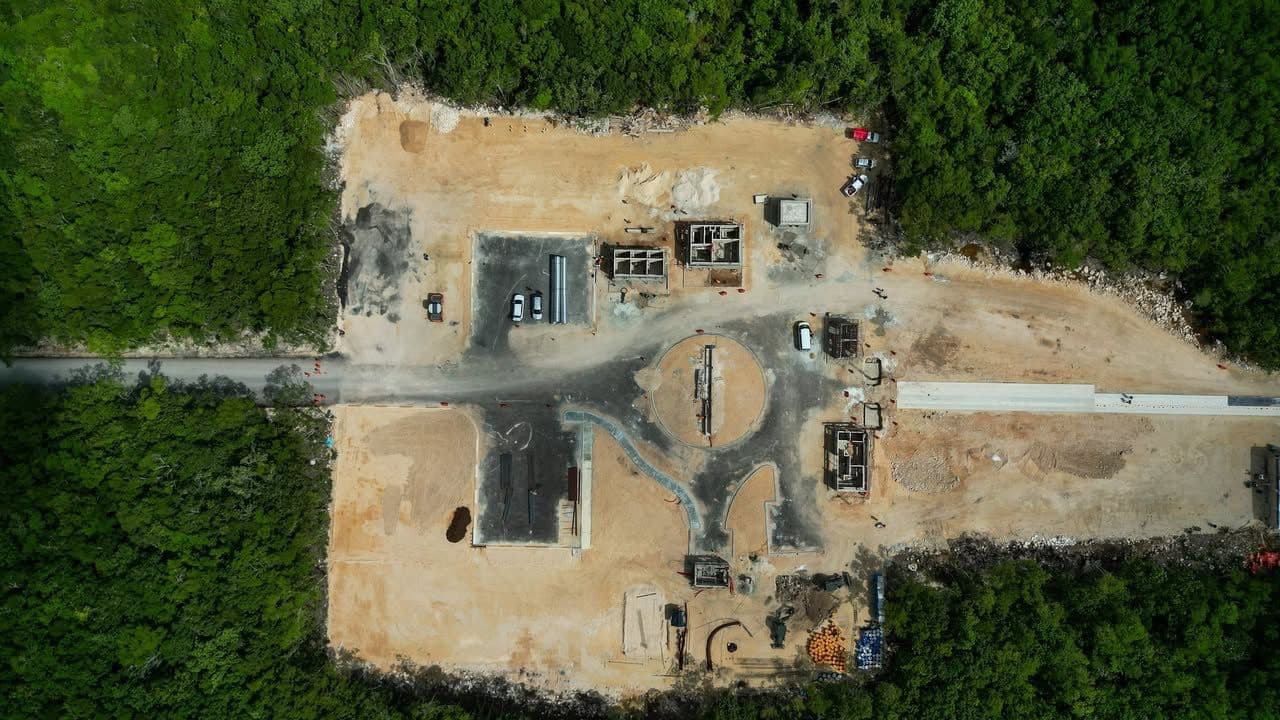
For three years, the people of Punta Allen, who are mainly dedicated to receiving low-impact tourism and lobster fishing, have been living with great concern: on the other side of Ascension Bay, in Vigía Chico, the Secretariat of National Defense (Sedena) began construction of a tourism project called “Puerta al Mar” in the Sian Ka'an Biosphere Reserve, overlooking the Caribbean Sea and considered a World Heritage Site by Unesco since 1986.
Despite the fact that the Ministry of Environment and Natural Resources (Semarnat) announced the suspension of the megaproject, after recognizing the impacts on the mangrove, the Mayan communities of Felipe Carrillo Puerto and the fishermen of Punta Allen warn that the works have already caused environmental damage that has not been repaired.
“The project has an impact on our economy, on fishermen and on tourism service providers, as well as the environment,” says a representative of the Vigía Chico Cooperative Fishery Production Society of Punta Allen, who prefers anonymity.
“We have signatures of more than 200 people, the entire community doesn't agree, we are an example for all of Mexico in conservation,” says the lobster.
With the help of the organization Diverse Territories for Life - Terravida, residents of Punta Allen presented an amparo that is based on the alleged violation of the right to a healthy environment and denounce environmental damage, lack of information and indigenous consultation, effects on the territory, their traditional fishing practices and their ways of life.
It also seeks recognition of these violations, the cancellation of the project and an ecological restoration program with the participation of communities.
In July, the lawsuit was dismissed without a substantive examination of the reported damages and the communities filed a complaint for the amparo to be admitted.
Works began before environmental authorization
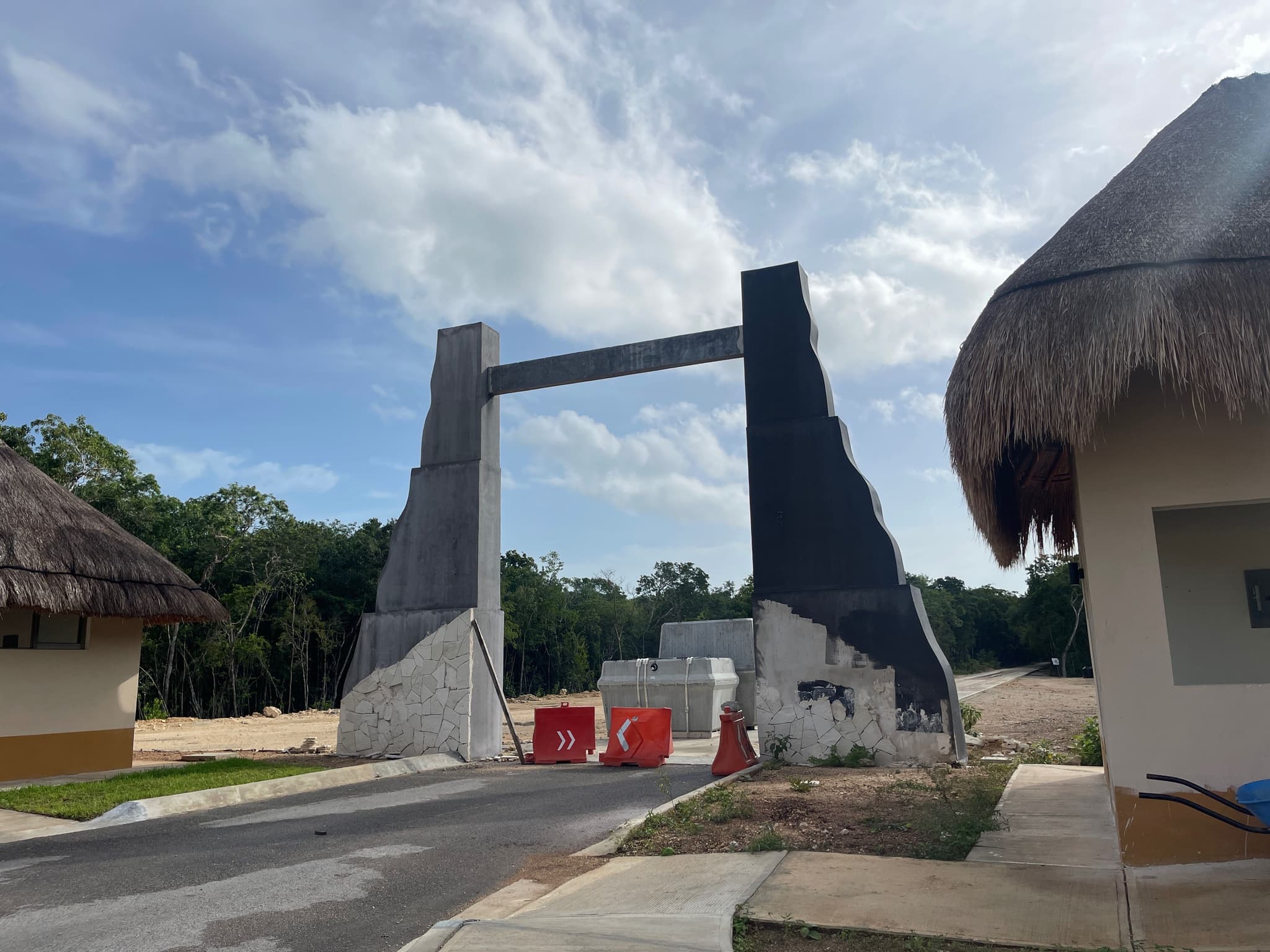
The works of “Puerta al Mar” began in August 2023 without environmental permits and thanks to a provisional authorization granted to the Sedena within the framework of the presidential agreement that declared some projects of public interest and national security. It was not until after the start of the works that in December 2024 the Army admitted the Environmental Impact Demonstration (MIA) to the Semarnat.
It has the name of “Puerta al Mar Artisanal Way”, although the 54.6 kilometer road that it contemplates - and that crosses the wetlands of the reserve from the municipal seat of Felipe Carrillo Puerto to the Caribbean Sea - is not artisanal: the stretch outside the Sian Ka'an Biosphere Reserve is made of hydraulic cement. The one inside the Protected Natural Area (ANP) is made of a mixture of limestone and cement.
The Environmental Impact Statement of the project foresees many more works than a road: a restaurant, a parking lot with commercial premises, pedestrian paths, a pier with a viewpoint and an artificial beach of 6,000 square meters with palapas and loungers in an area of mangroves.
However, the resolution with which Semarnat approved the project on April 13, 2026, almost three years after the start of the works, no longer contemplates the construction of the artificial beach, the work that would have the most impacts on mangroves.
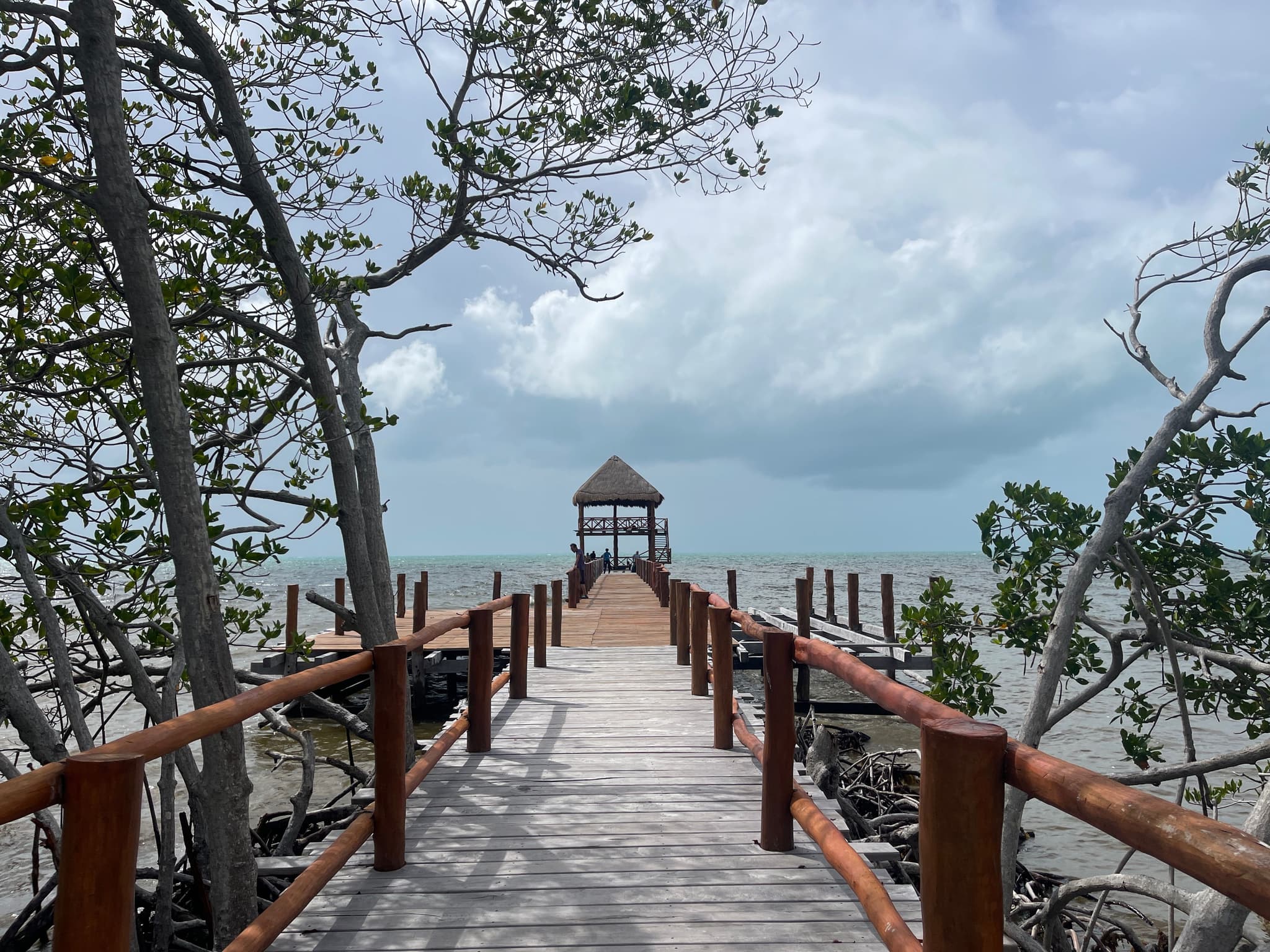
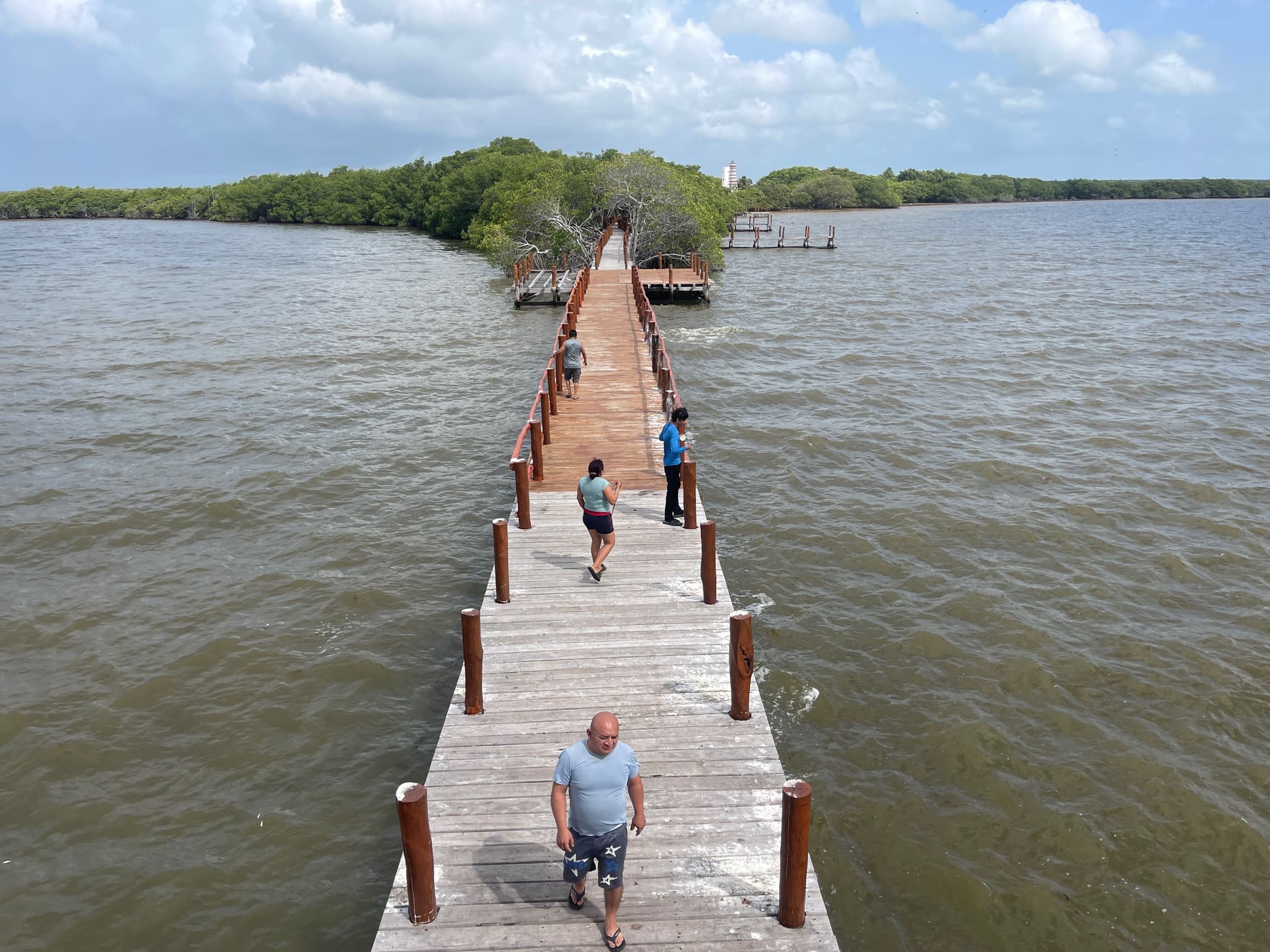
So far, “Puerta al Mar” consists of a road, a memorial, a pier with a palapa and a “transfer station” that consists of several infrastructures located halfway: a parking lot, commercial premises, restrooms, a roundabout and an electrical substation.
Despite the fact that on more than one occasion the authorities announced its early inauguration, that has not yet happened.
Also read: Hunt for revenge: the conflict that fuels jaguar traffic in Calakmul
Semarnat authorizes works that violate the rules of Sian Ka'an
The Semarnat resolution recognizes that part of the “Gate to the Sea” works that the Sedena has already built expressly contravene the Sian Ka'an Biosphere Reserve Management Program. The General Directorate of Environmental Impact and Risk (DGIRA) itself points out that the project opened mangrove vegetation to rehabilitate and build the Vigía Chico pier, an activity that the program considers not allowed.
In addition, the pier and the bay also contravene other provisions of the Reserve. According to Gabriela Carreón, Terravida's lawyer, who accompanied the communities' demand for protection, the construction of the “Gate to the Sea” also had other environmental impacts, such as the destruction of wetlands, while the road could be fragmenting wildlife habitat and obstructing underground water flows.
“There are also some 'accessory projects' that are not included in the MIA of the 'Door to the Sea', for example, certain material banks that were opened for the works and that involved the removal of forest vegetation,” says Carreón.
Don't miss: Defending the territory against the law: How do amparo reforms hinder environmental justice in Mexico?
A road that can change the future of Sian Ka'an
The City Council of Felipe Carrillo Puerto presented it as one of its “key tourism projects” and the Sedena as part of the works of the comprehensive Maya Train project. However, the government's discourse around the “Gate to the Sea” changed.
After the publication in the Ecological Gazette of the Semarnat resolution, which establishes that the project be transferred from the Sedena to the National Commission for Protected Natural Areas (Conanp), it is no longer presented as a tourism project but as a site for Conanp personnel responsible for protecting the reserve.
On October 2, the federal agency released a statement about the project in Vigía Chico: “The works carried out in 2025 within the Reserve are an artisanal road and infrastructure for the personnel of the Protected Natural Area, operated by Conanp; their scope does not correspond to a megaproject tourism.”
But for communities, the works already carried out open the door to other projects. “For us as a Mayan people, it is a megaproject, regardless of the parameters that can measure what that means and even though it may seem smaller than others,” says Ángel Sulub Santos, who signed the amparo against the “Gate to the Sea” and coordinator of the U Kúuchil K Ch'i'ibalo'on Community Center of Felipe Carrillo Puerto.
“We think that this road creates the conditions for other increasingly large projects in Sian Ka'an to be promoted in the future, because we know that in the long term a road can define the future of a community. For example, the development of infrastructures that promoted mass tourism in the north of Quintana Roo began after the construction, in the seventies, of federal highway 307, which runs from Cancun to Chetumal”, warns the defender.
Sulub Santos also affirms that the “Gate to the Sea” is not only an attack on nature, but also on memory. “The memorial that is in Vigía Chico honors the army of Porfirio Díaz who put a military train there, and hundreds of Mayans and Yaqui people died to build it. The memorial should be for all the people who were killed by the Mexican Army in this territory during the Mayan Social War of the 19th century; in 2022, we Mayan peninsular groups declared it a 'Quintanarroan genocide'”.
It may interest you: Despite a cut of almost 30%, trains absorb a third of the budget against the climate crisis
Semarnat promises conservation, but communities ask for guarantees
A few days after publishing the statement about the “Gate to the Sea”, the head of Semarnat mentioned the project to the Chamber of Deputies. “Sian Ka'an is a super important topic, it's a biosphere reserve that is very dear to us. Of course, we managed to make it possible to allocate it to conservation work, because the community wanted development to take place in this area and we managed to avoid a development in Sian Ka'an, that in any case a minimum structure for sustainable tourism should be built, in an area called Vigía Chico,” said Alicia Bárcena, head of the federal agency, during her appearance on October 6.
According to Ángel Sulub Santos, the communities that live around the Sian Ka'an Biosphere Reserve have never requested the construction of tourist infrastructure in the Protected Natural Area, but rather the former municipalities of Felipe Carrillo Puerto or individuals with economic interests.
In fact, the local population was not even consulted before the construction began and the public information gathering took place in October 2025, when the project was almost finished.
“The meeting was called because of community protests. There, a soldier in charge of the work presented the MIA, but did not talk about the effects of the project. Almost everyone who participated in the meeting was against the project, because of all the environmental and social damage it causes,” says the representative of the Punta Allen lobster cooperative.
“Semarnat tries to minimize a project that clearly had, and has, touristic overtones. From Terravida, on behalf of tourism and fishing cooperatives, residents of Felipe Carrillo Puerto and Mayans, we salute the secretary's statements because they recognize the importance of Sian Ka'an and point out that the development originally planned, designed under a logic of mass tourism such as that of the Riviera Maya, will not take place. This is a positive statement that is consistent with the conditions that the agency had already established in the environmental impact authorization,” says Gabriela Carreón from Terravida.
“People and the environment require reparation, but also legal certainty that there will be no more works or agreements with third parties to develop mass tourism projects. The secretary's statements are a good step forward, but they hardly provide that certainty. The recognition of Sian Ka'an as a conservation area already existed and did not prevent the Sedena from destroying wetlands and dismantling jungle”, emphasizes the lawyer.


Comentarios (0)