
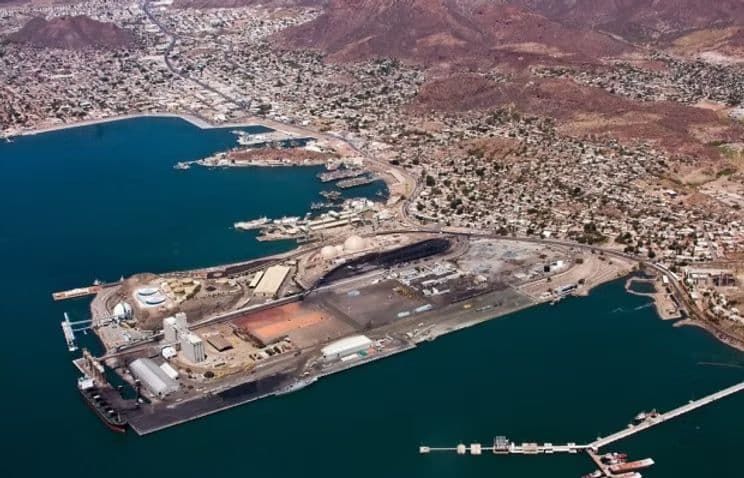
The company Amigo LNG did not evaluate in its Environmental Impact Statement all of the 90 hectares of land and sea granted to it by both the Government of Sonora and the Secretariat of the Navy for the use and exploitation of federal land in Guaymas for the operation of a liquefaction terminal to export gas from the United States in huge ships through the Gulf of California to Asia.
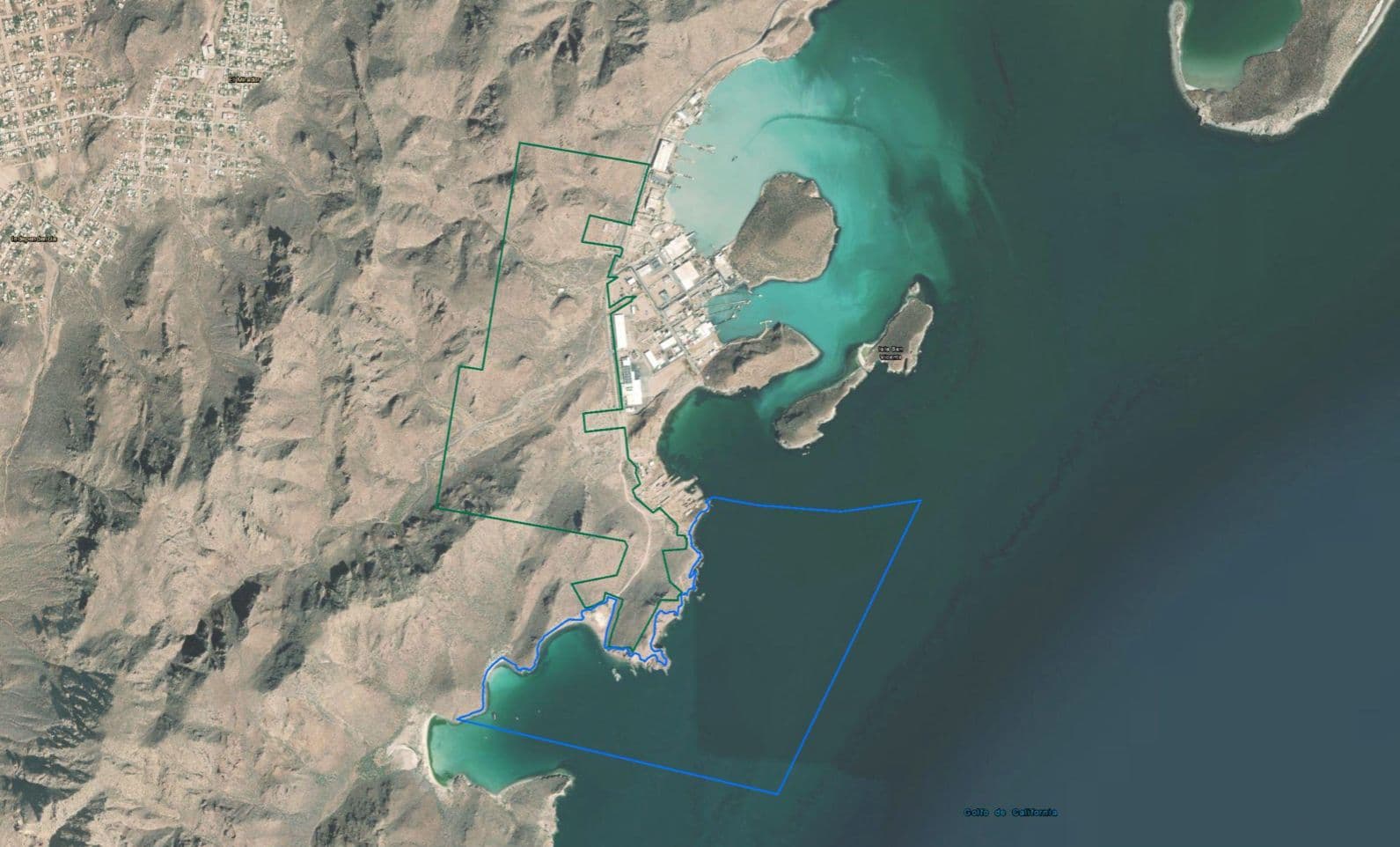
In the Regional Environmental Impact Manifestation (MIA-R), Amigo evaluated the impacts of a polygon of a total of 41.78 hectares between the Sánchez Taboada Industrial Park and Bahía Catalina, five kilometers from the Port of Guaymas. This is 9.28 hectares of land and 32.49 hectares of sea.
However, the National Port System Administrations (ASIPONA) Guaymas, coordinated by SEMAR, granted, by direct award, 36.6 hectares of maritime area in Bahía Catalina to Amigo for use and exploitation, according to documents released in an investigation by the newspaper El País.
This, despite the fact that in the MIA-R that the company submitted to the National Agency for Industrial Safety and Environmental Protection of the Hydrocarbons Sector (ASEA), the company evaluates a smaller marine area of 32.49 hectares.
ASIPONA Guaymas granted Amigo LNG the official transfer register on July 17, 2025 and the company filed the MIA-R with ASEA on November 26, 2025, four months after the transfer, despite the fact that the regulations of the Ports Act and the General Law on Ecological Balance and Environmental Protection (LGEEPA) require that, in order for the direct award or transfer of a maritime public domain to proceed, the company must first have the Environmental Impact Authorization, which occurred until April 13, 2026.
“The authority handed over the Catalina Bay Sea to a private and foreign company when the Environmental Impact Authorization had not been issued, that is, the viability of the project in environmental terms had not been decided and the Mexican territory had already been handed over,” says Cecilia García, spokeswoman for the Northwest Environmental Defense organization, who are taking legal action for the project's irregularities and ecological effects.
You may also like: La Marina begins phase II of the expansion of the Port of Veracruz; organizations warn of serious damage to the La Gallega reef
The data doesn't add up
Meanwhile, the Sonora government ceded, free of charge and to a for-profit company, a 53.99-hectare industrial estate in the Sánchez Taboada Industrial Park, according to official documents, which were released by N+. In the MIA-R, the company reported a terrestrial polygon of just 9.28 hectares.
If a comparison is made of the hectares reported in the MIA-R and the total of those granted both federally and by the government of Sonora, the company did not consider in the MIA the real environmental impact on all 54 land hectares or on the 36.6 licensed maritime hectares, leaving dozens without environmental impact assessment.
Consequently, the environmental authorization did not take into account the additional 44.72 hectares of land and 4.11 hectares of sea. DAN points out that ASEA failed to evaluate the project's impacts in accordance with international standards.
“Following the actions for years of Epsilon LNG LLC, a subsidiary of the company created in Mexico to carry out procedures called Amigo LNG, we realize a series of inconsistencies between what it declares to the United States Department of Energy, from whom it must obtain the guarantee of the hydrocarbon it wants to export, and what it declares in Mexico. The polygons of territory that he claims to have under his control don't add up,” adds García from DAN.
“Far from the Mexican authority doing a rigorous job of collating data for the care of the national heritage, what we see is a facilitating attitude towards the project,” he concludes.
At a time when a legal battle is being waged by civil society organizations to stop the project, due to its potential risks to the ecosystem and to the conservation of the Gulf of California, CN Media announced last September 20 that ASEA authorized the construction and operation of the Amigo LNG Liquefaction and Storage Terminal in Guaymas on April 13.
Although a month later, on May 20, the decentralized administrative body of the Ministry of Environment and Natural Resources assured a federal judge that it had not granted any permission.
Don't miss: Mafia, sea cucumber and disappearances in Dzilam de Bravo, Yucatán: “When they open their eyes, we'll have the drug dealer next door”
Other inconsistencies of the Amigo Project
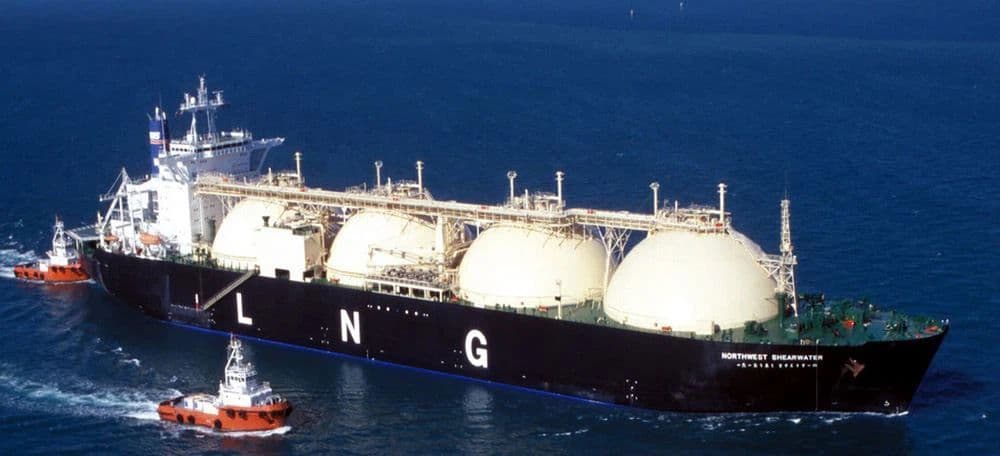
According to the environmental authorization, the project's marine park will be located in front of the terrestrial polygon on the coast of Guaymas, where the maritime terminal with deep water access will be installed for the berthing of up to two methane tankers, in addition to four permanent berths for the fixed pretreatment barge, the fixed liquefaction and energy barge, and two floating storage units. As well as terrestrial reception, control, water treatment facilities and administrative offices.
However, Amigo LNG did not include in the MIA-R the gas pipeline that will supply natural gas to the project, as he assured that it will be presented in a separate environmental assessment.
The document indicates that a lateral connection from the Sasabe-Guaymas gas pipeline, owned by IEnova, will supply the Amigo plant through a branch that will include a submarine section. A buried submarine gas pipeline segment will extend from the connection of the new gas pipeline in Playa El Cochórit to the terminal.
“It is against the law to evaluate a project fractionally, because that prevents us from properly weighing the damages to be mitigated or absorbed by an ecosystem. In these fossil projects in Sonora, foreign companies present everything separately, minimizing the impacts of gas pipeline branches, desalination plants, areas destined for construction logistics or the impact of heavy shipping, as if all those elements were not part of the project itself,” says DAN.
The authorization establishes a period of six months to prepare the site, two years 11 months to build it, 40 years to operate it and six months to dismantle it when it reaches the end of its useful life, with the possibility of extension.
From there, they will load the product onto methane tankers, which will cross the Gulf of California, a UNESCO World Heritage Site, with a nominal production of 5.1 million tons of liquefied natural gas per year.
However, the beginning of the works have been temporarily suspended, after the extension of an amparo lawsuit promoted by the organization Our Future A.C. based on allegations of operational irregularities in the environmental evaluation procedure of the work.
Our Future had obtained a previous suspension. Last June, a federal court ordered ASEA to refrain from issuing any environmental impact authorization for the project while the amparo lawsuit promoted by Our Future and the Article 19 organization is being resolved due to the lack of information about the project and irregularities in the public consultation process.
It is now known that the environmental authorization had already been granted without being known to the public.
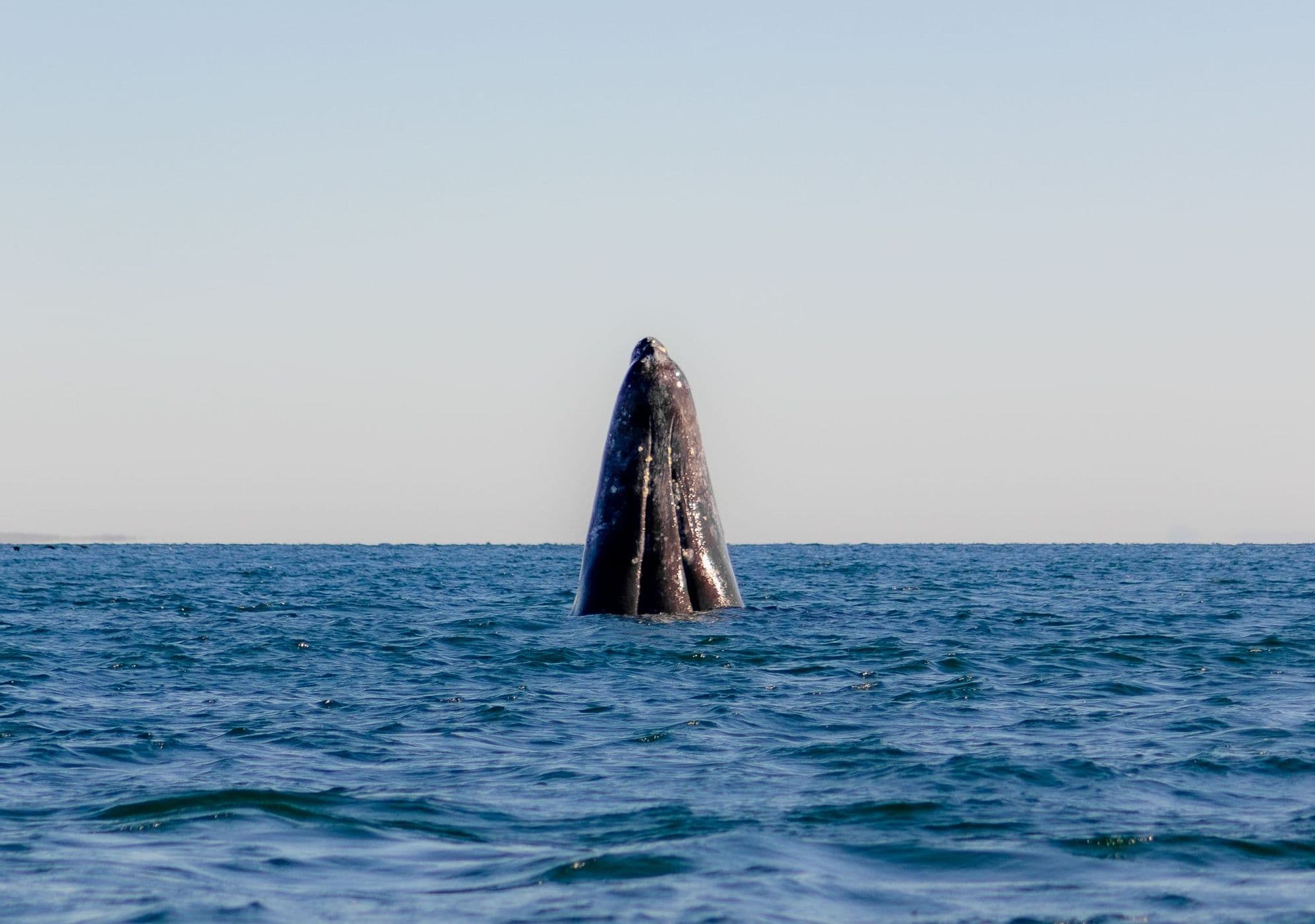
The industrial complex plans to liquefy natural gas from the United States to send 7.8 million tons annually to Asian markets. Its operation will depend on the transit of methane tankers in an ecosystem that houses 80 percent of the marine mammals present in the country.
Conservation specialists warn that this level of maritime traffic will increase underwater noise, the risk of collisions with local fauna, alteration of sediments and the introduction of invasive species through the discharge of ballast water.
The Gulf of California has been officially designated as a Refuge for Migratory Birds and Wildlife since 1978, a Biosphere Reserve since 1993 and a UNESCO World Heritage Site since 2005.
In 2025, the World Congress of the International Union for Conservation of Nature (IUCN) approved Resolution 8,031, which urges the governments of Mexico and the United States to prohibit authorizations for the industrialization of LNG in this ecosystem.


Comentarios (0)