
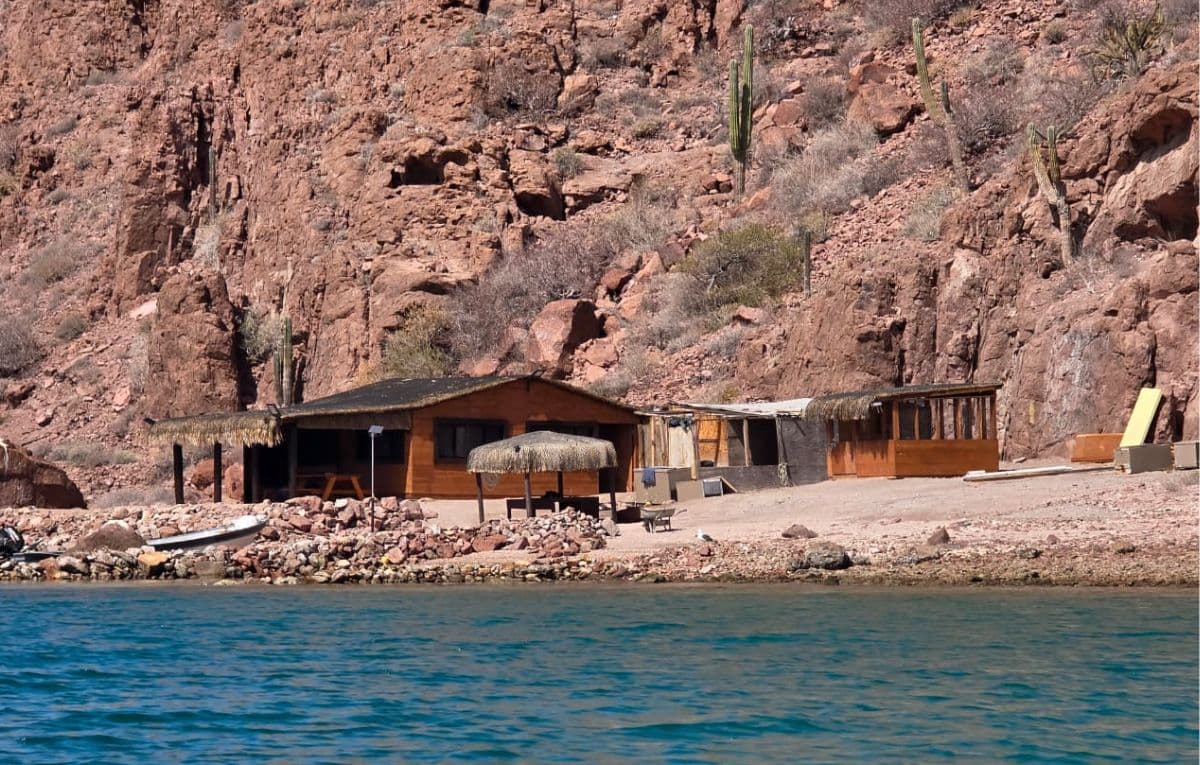
The Government of Baja California Sur maintained that it was an old fishing camp and the National Commission for Protected Natural Areas (CONANP) announced a project to improve this type of settlement, but archaeologists from the National Institute of Anthropology and History (INAH) concluded that the intervention caused damage to a protected archaeological site.
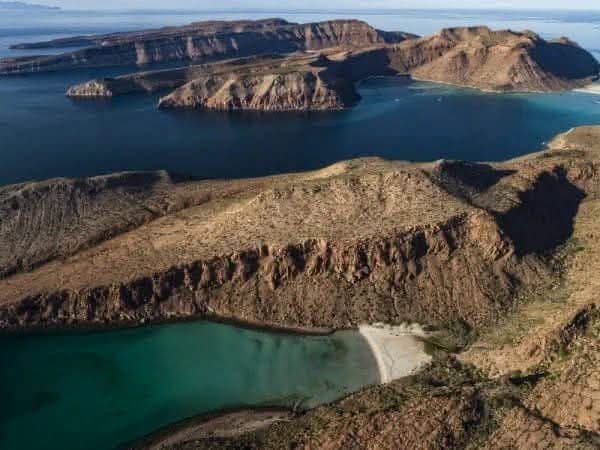
The case occurred within one of the areas with the greatest archaeological wealth in Baja California Sur.
The Espíritu Santo Island Complex Management Program records 127 archaeological sites, in addition to recognizing the existence of approximately 36 fishing sites, of which 20 have basic infrastructure. Among its objectives, it establishes the preservation of the historical and cultural heritage of the complex.
Governor defends that it is not a tourist resort
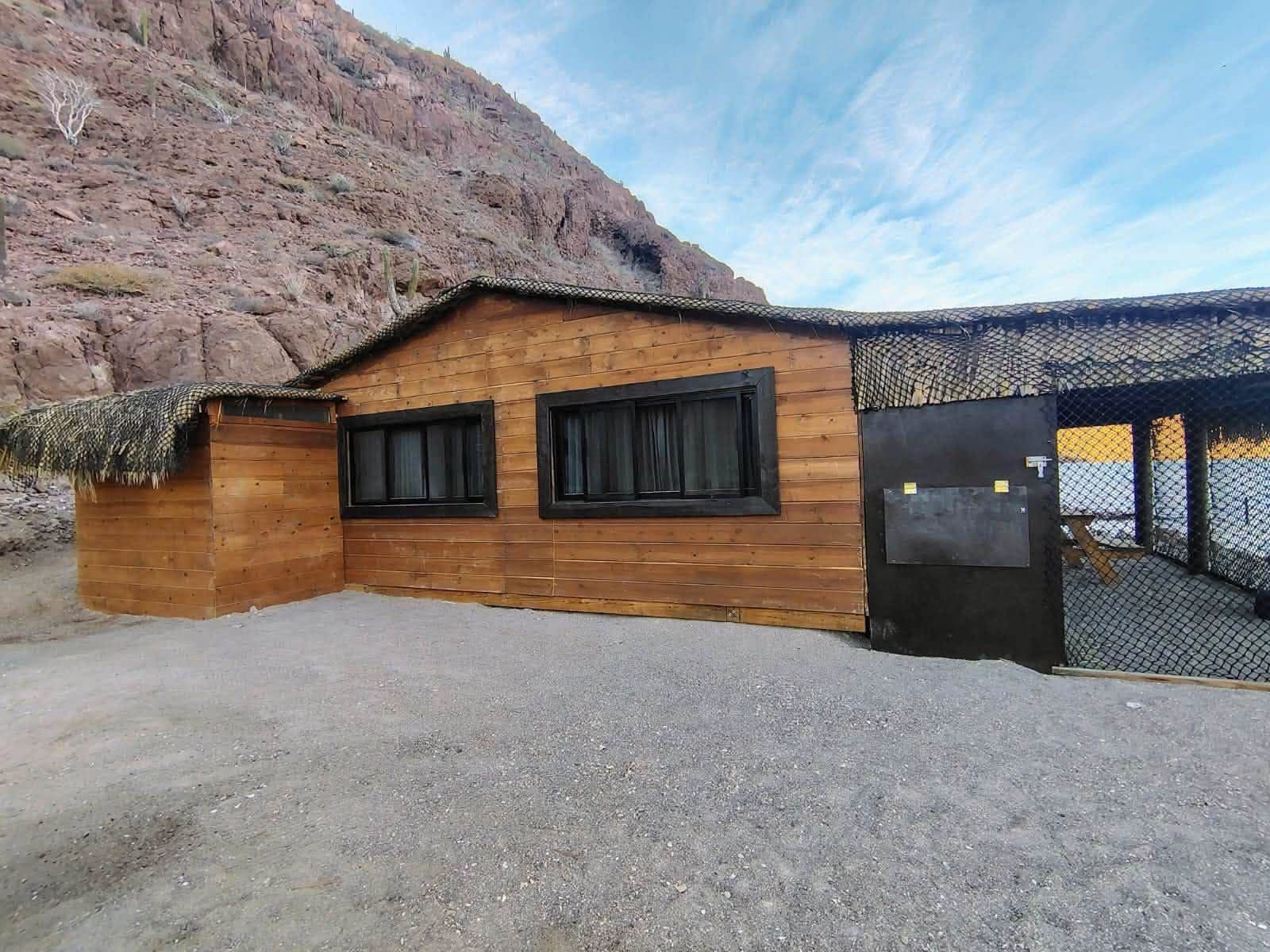
The first alerts emerged when citizens reported the construction of a cabin inside the Espíritu Santo Island Complex and questioned whether the intervention complied with environmental regulations and the protection of archaeological heritage.
When questioned about the construction of the cabin, Governor Víctor Manuel Castro Cosío assured that it was not a tourist development, but rather a fishing camp more than 40 years old used by members of a cooperative.
“That camp is years old, it's already impacted. What are they asking of them? It's like asking those who live in La Partida to have an environmental impact. They are the same, only that he invested in the cabin; the difference is that the government didn't make it for him. If they had money, they would also have built a cabin just like that,” he said.
The president stated that the structure was rustic, built with wood and palm for the shelter of fishermen and their tools, and maintained that it did not require an Environmental Impact Statement because it did not correspond to real estate development.
You may also like: Community of La Paz is organized to stop tourism project in El Saltito
The project to improve the camps
As the public discussion about the cabin progressed, CONANP released a video to announce a project aimed at the Espíritu Santo and La Partida fishing camps.
In this material, the regional director of the agency, Benito Bermúdez, explained that the initiative sought to improve the conditions of the spaces where fishermen stay during their working days.
“It consists of improving the conditions of the house where they spend the night, located on a beach territory, that the Management Program allows the installation of such fishing camps so that they can have a warehouse space, a food space, a rest space and a work space with eco-technologies that guarantee the proper use of water and its waste.”
The video itself included testimonies from fishermen who supported the initiative.
“I have been working here for 40 years. Our cabins are in poor condition and here CONANP came to offer us support so that the project they are carrying out in hand can be carried out,” said Jesús Juárez Lucero.
Also read: Civil society initiatives in La Paz fight for a clean sea of ghost networks
The citizen complaint
While the State Government and the National Commission for Protected Natural Areas were defending the permanence of fishing camps, the INAH received a citizen complaint for an alleged damage to the archaeological heritage.
The delegate of the institute in Baja California Sur, Alfredo Feria Cuevas, explained in an interview with CN Media that, after receiving the report, archaeologists came to the site to prepare a technical opinion.
“We sent several archaeologists to make the report on the damage. They make the technical opinion and identify that there was damage to the archaeological site. So, based on that, we have to proceed as required by law,” he said.
With that ruling, the INAH filed a complaint with the Office of the Attorney General of the Republic.
“They have their times... they already went to the office to interview us and they will surely do it with the people involved,” he explained.
What the INAH establishes to build
During the same interview, Feria Cuevas explained that when a work is projected on a site where archaeological heritage may exist, the developer must request the intervention of the institute.
He explained that specialists carry out archaeological surveys and records, whose costs are covered by those who promote the work, before the INAH Center determines if it can be authorized.
“The prosecutor has to pay for that investigation because that marks the law. The research is done, the polls are done, it is reported to Central Mexico and it is authorized. We just rescued the record and it's released,” he said.
He added that even when human burials or archaeological remains appear, the institute carries out the corresponding rescue and, when feasible, construction can continue.
“Every time they go to do a work, even in those places, they let us know so that we can go and rescue what is possible and that they continue with their work.” 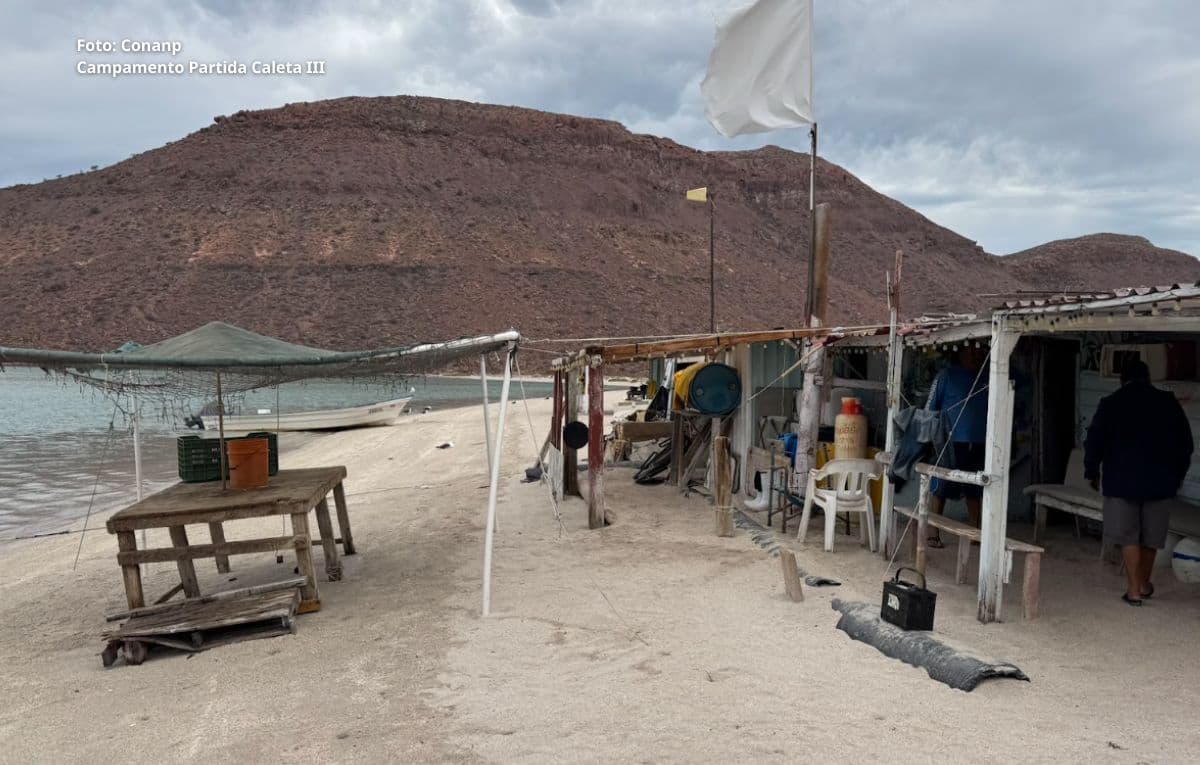
Don't miss: Fishing, Aquaculture and Tourism: This is how the fishermen of El Manglito restore La Paz Bay
From institutional support to a federal investigation
The complaint filed by the INAH placed the case in a different scenario than that initially posed by state authorities. While the Government of Baja California Sur publicly defended the construction as part of an old fishing camp and CONANP was promoting a project to improve this type of settlement, the opinion prepared by INAH archaeologists concluded that the intervention caused damage to an archaeological site, giving rise to an investigation by the Attorney General's Office of the Republic.
The research kit opened by the FGR must establish whether the work complied with the archaeological evaluation procedure that the INAH itself indicates as a requirement for this type of intervention and define, where appropriate, the corresponding responsibilities for a construction that was publicly supported by authorities and later reported for damage to the archaeological heritage.


Comentarios (0)