
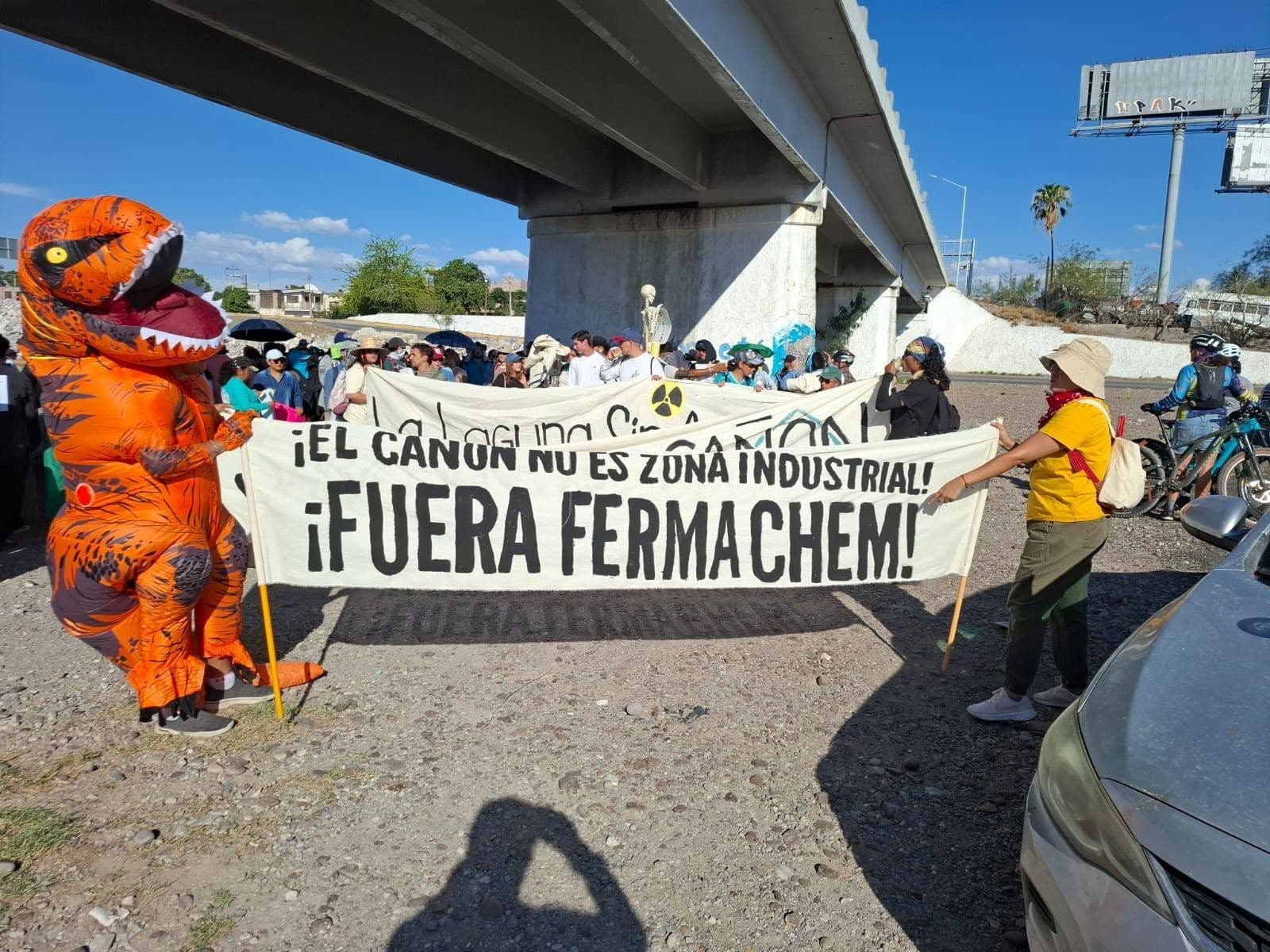
“The Nazas River is our identity. We are children of Nazas,” says Natalia Sánchez Aguirre, a member of the La Laguna without Ammonia collective, to explain her opposition to the construction of Fermachem, a petrochemical fertilizer, ammonia and urea complex, in the town of Lerdo, in Durango, a few kilometers from the boundaries of the Fernández Canyon Protected Natural Area (ANP) and the Nazas River.
The Fermaca project involves producing one million tons of granulated urea per year and storing 30,000 tons of ammonia in two tanks. While a collection of up to 360,000 liters of water per hour is estimated, with the main supply of treated wastewater from the municipal plant of Lerdo, according to the Environmental Impact Statement.
The group reviewed the Environmental Impact Statement with specialists in biology, ecology and law and prepared technical observations. “We set out to investigate in depth the Environmental Impact Manifestation of the Fermachem plant. We found that it is a document full of inconsistencies, incomplete,” explains Sánchez Aguirre in an interview.
For this reason, they ask environmental authorities to review the authorization, risk studies and water supply conditions, as well as the possible effects on nearby communities and the Fernández Canyon, a Protected Natural Area linked to the Nazas River.
The company presents the project as an investment to strengthen domestic fertilizer production and reduce dependence on imports. However, La Laguna Without Ammonia requires that its evaluation consider the risks associated with ammonia storage and the demand for water in the region.
The latest: Hunt for revenge: the conflict that fuels jaguar traffic in Calakmul
Ammonia and the risks
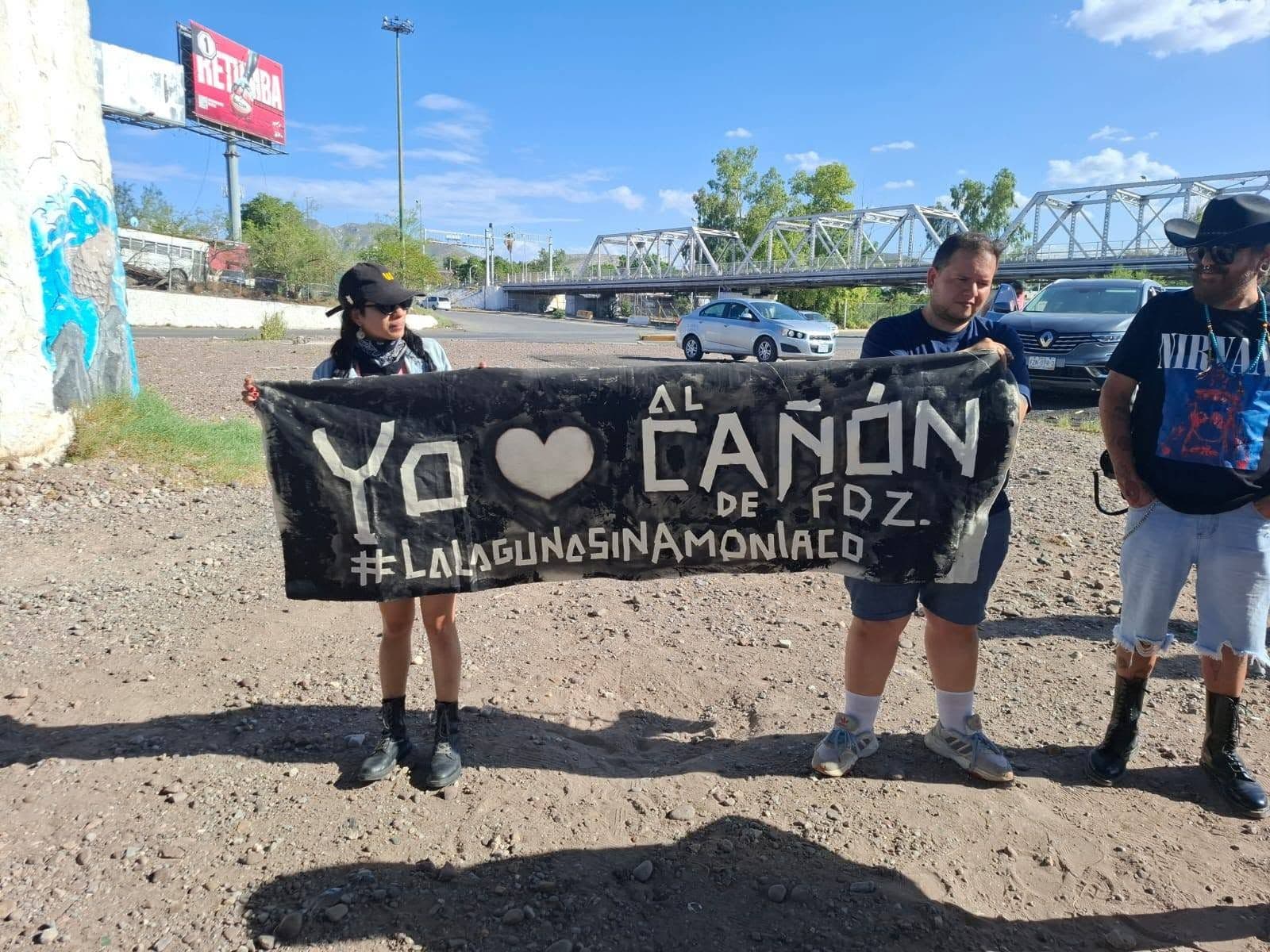
The production of urea, a nitrogen fertilizer, uses ammonia as a raw material. The Fermachem project involves its production, storage and transport. The Environmental Impact Statement (MIA) describes two liquid ammonia tanks, with a capacity of 15,000 tons each, cooled to −33 degrees Celsius and built with a double wall. “It's a toxic, corrosive substance,” said Natalia Sánchez, explaining the risks that the organization identifies in the project.
The MIA includes a quantitative risk study that models possible leaks in the pipes that connect the tanks to the loading and production areas. The analysis considers three scenarios: a leak through a 10-millimeter hole, an opening equivalent to 20% of the pipe diameter, and a total rupture. It also calculates the dispersion of ammonia under different weather conditions and concentrations.
“They talk about the fact that in the hills the smell would be so strong that it would give living beings time to run. Imagine how you are going to run 9 kilometers. It's unheard of,” says Natalia, who explains that the dispersion could reach the Nazas River, Las Lomas, Sapioriz and the Fernández Canyon.
The analysis also contemplates the evacuation of non-essential personnel and visitors within a radius of 1,355 meters, within 30 minutes, for one of the scenarios of total rupture.
The MIA concludes that the individual risk for the population is below the reference limits adopted by the study, so the Ammonia-Free Lagoon requests to review risk calculations, measures to address a leak and mechanisms for informing communities.
Chapter III of the Environmental Impact Manifestation places the Cañón de Fernández State Park, recognized as a Ramsar site, 3.5 kilometers south of the project and concludes that this distance would prevent damage to the wetland.
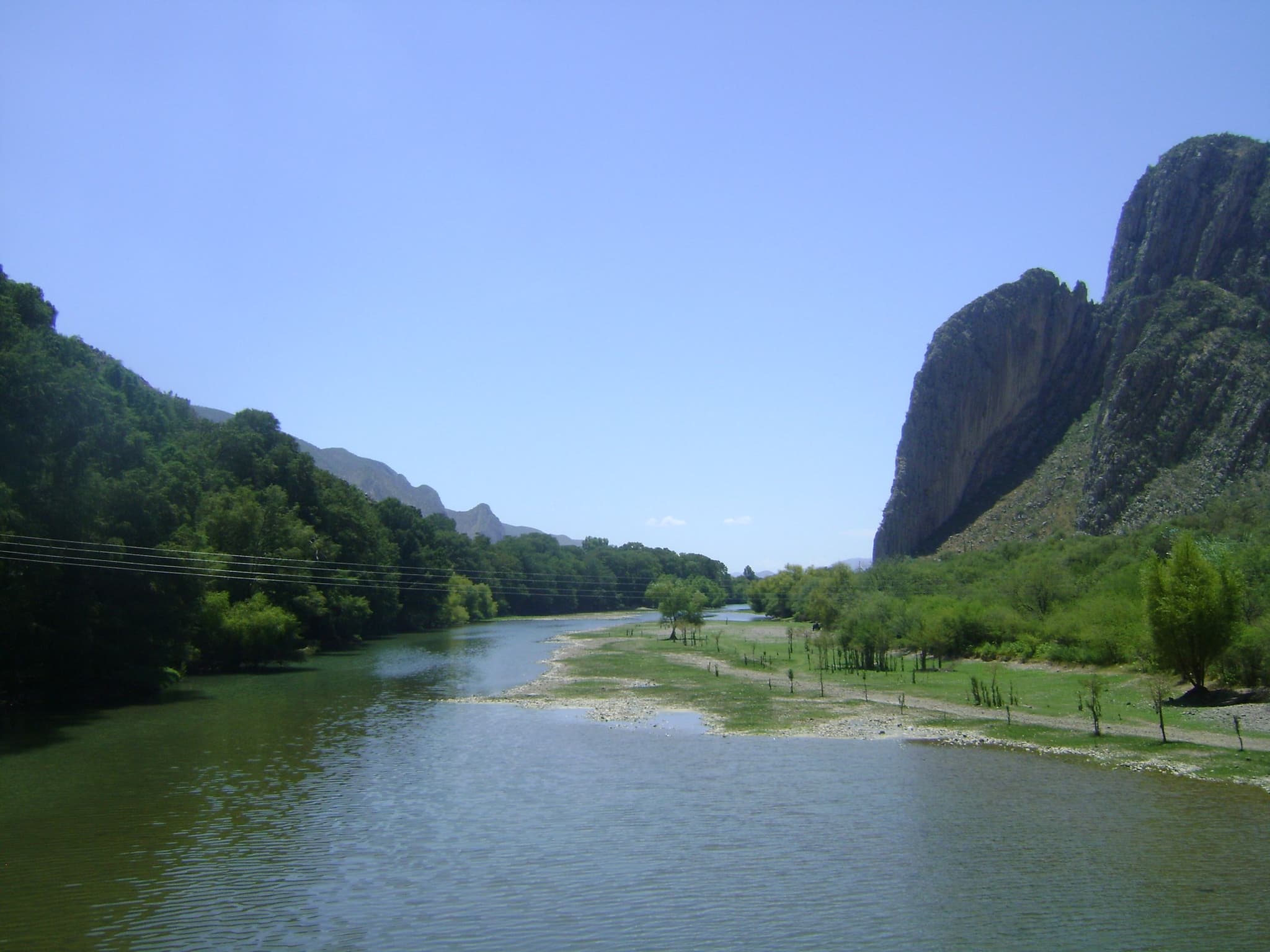
“Why install next to a Ramsar protected site?” , questions Sánchez Aguirre, who warns that the plant puts the protected area at risk. It also points to the possibility of polluting the Nazas River, which crosses the Fernández Canyon and supplies the region. The canyon preserves springs, ahuehuete trees and archaeological remains.
For Sánchez Aguirre, the river forms part of the lagoon identity.
A region with pressure on its water sources
The MIA estimates a collection of up to 360,000 liters of water per hour and establishes treated wastewater from the Lerdo municipal plant as its main source. Section 2.9.5 also contemplates studying wells on or around the site as a backup source.
“The most serious thing is that as a backup plan for the future, the company wants to open wells in the Villa Juárez aquifer,” says Natalia. The MIA recognizes that the consumption of the complex would be added to the existing water demand in the region. In Chapter V, he classifies the impact as cumulative and assigns it a smaller significance.
The document argues that the use of treated water would make it possible to avoid the usual extraction of groundwater. Section 2.9.5 also proposes carrying out a feasibility study to develop a secondary source using wells on or near the site.
Sánchez Aguirre argues that extraction should be evaluated considering the needs of communities and the conditions of aquifer availability. The Nazas River is part of the collective's concerns because of its relationship with the supply and ecosystems of the Lagoon Region. The Ammonia-Free Lagoon requests that the project evaluation consider water demand, supply sources and potential risks to communities and the environment.
In case you missed it: Corals under thermal stress: bleaching impacts reefs between Loreto and Cabo San Lucas
Observations to the environmental authorization
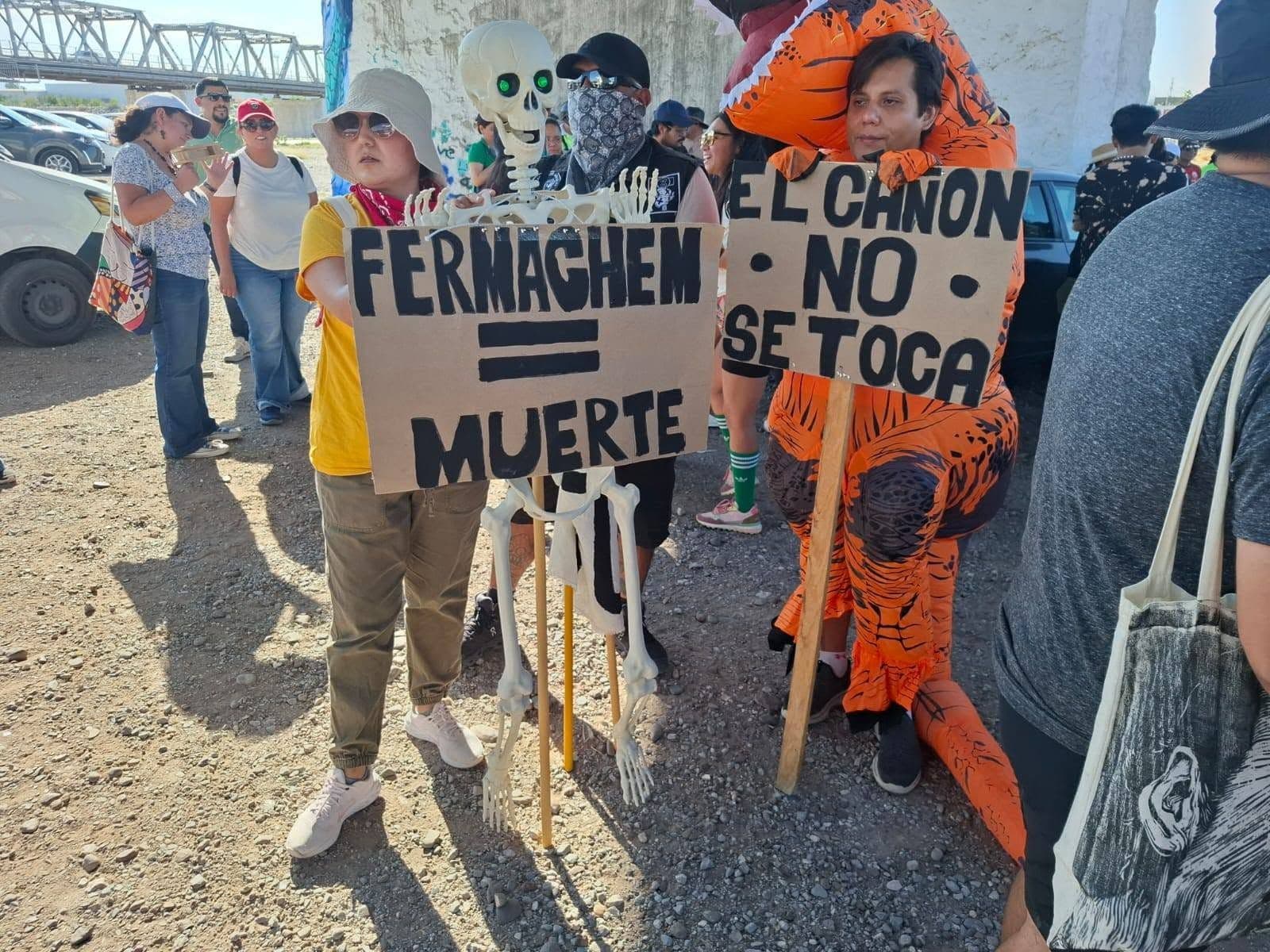
Natalia points out that the Fermachem Environmental Impact Statement contains inconsistencies and omissions that, in the opinion of the collective, should be reviewed. Among his observations is the inclusion of the gas pipeline related to the operation of the plant and the validity of the environmental authorization. “What we're asking is that it be done right, that the government review if the authorization, to begin with, is still valid.”
According to Sánchez Aguirre, communities were not consulted about the project and have expressed concern about its potential effects. For this reason, the organization asks the Secretariat of Environment and Natural Resources (Semarnat) to review the file and technical studies, as well as to consider the rights of nearby populations.
The collective is preparing legal actions together with residents of La Loma and Sapioriz. Communities demanding participation The collective has visited the towns of La Loma and Sapioriz to share their observations and questions to environmental documentation and to talk about industrial risks and water supply. “They felt extremely unseen,” says Sánchez Aguirre about the villagers. He also says that some people expressed fear of possible retaliation.
The organization asks that communities participate in decisions about the project and have access to technical studies. The Government of Durango has supported investment because of its expectation of generating jobs and economic activity.
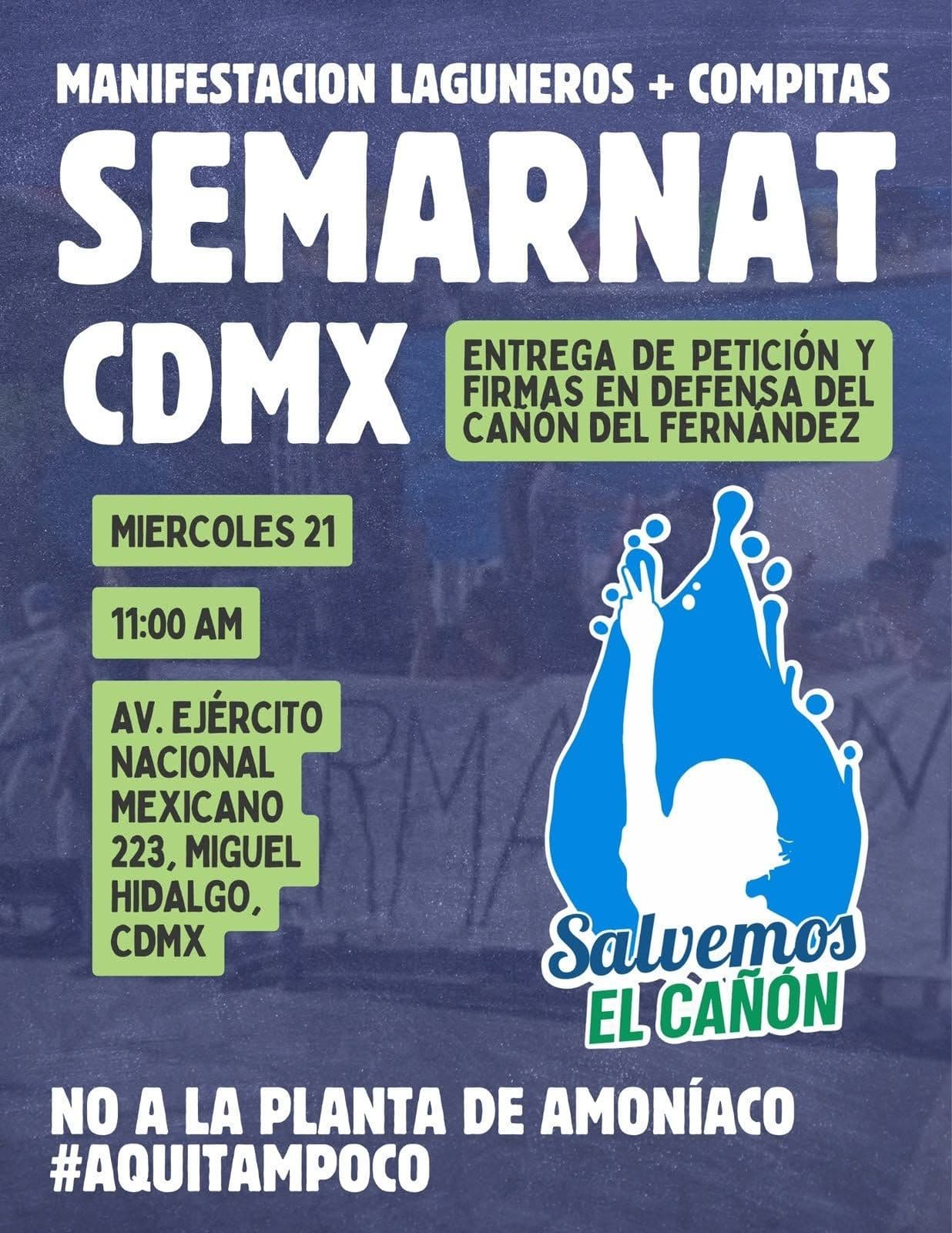
On October 21, La Laguna sin Ammonia went to the offices of Semarnat, in Mexico City, to deliver a petition and citizen signatures in defense of the Fernández Canyon and the Nazas River. The Change.org petition gathered more than 180,000 signatures against the Fermachem installation. They also submitted a technical document with comments to the project's Environmental Impact Statement.
You may also like: Just 16 pesos per hectare: Cut compromises the operation of 232 protected natural areas


Comentarios (0)