
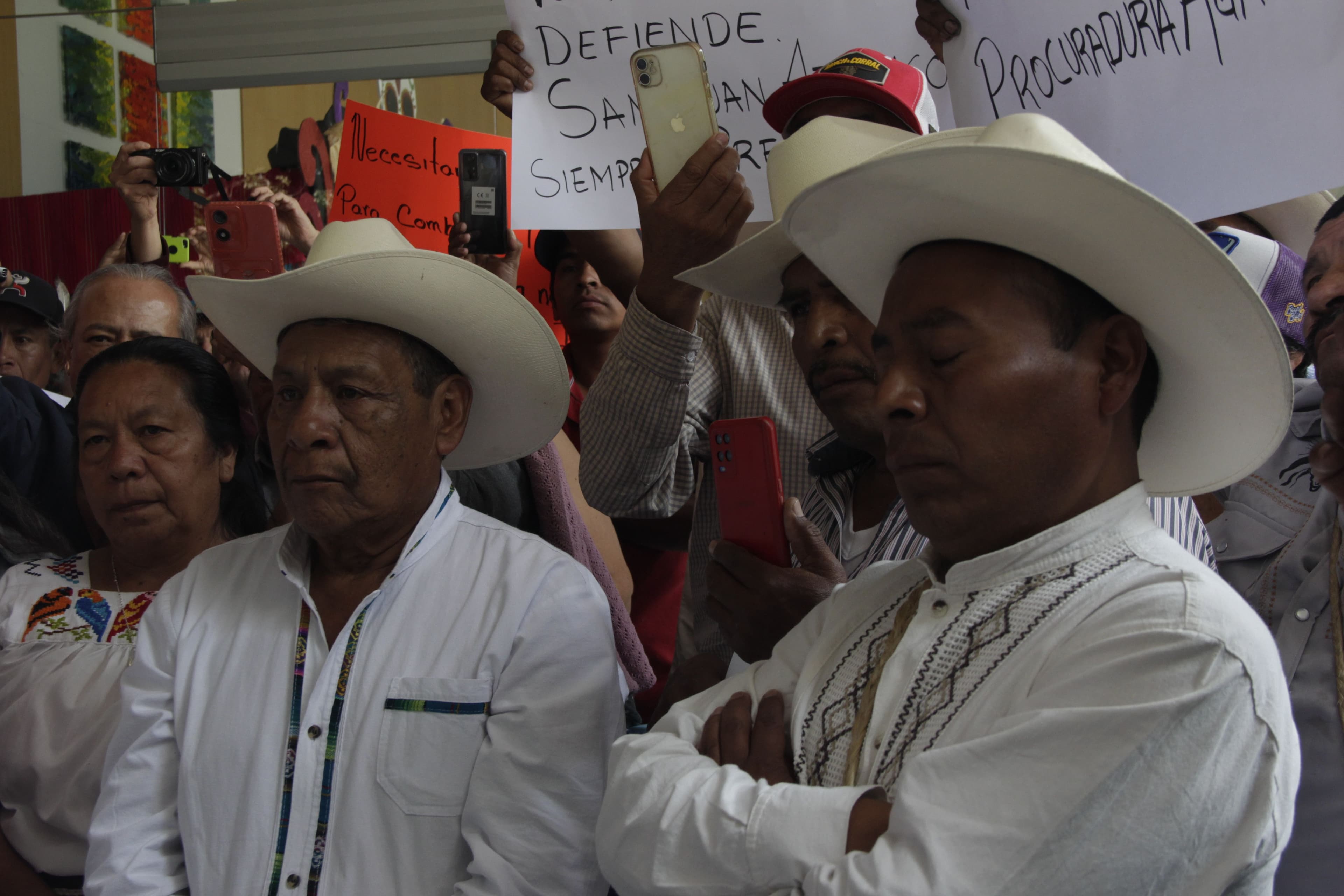
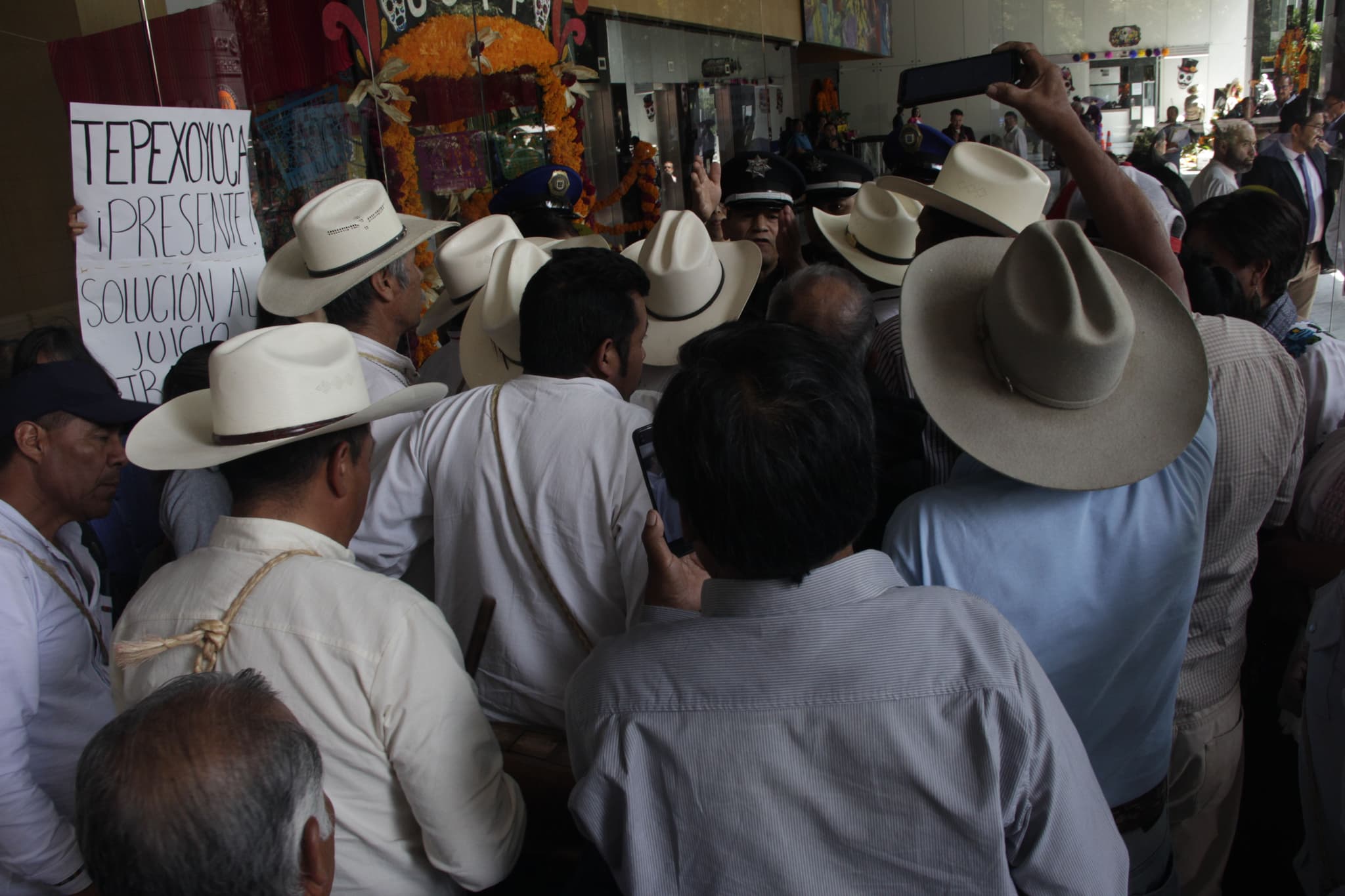
Members of the Tlahuica Pjiekakjoo indigenous people, from San Juan Atzingo, municipality of Ocuilan, State of Mexico, handed over an amicus curiae to the Superior Agrarian Court (TSA) this Thursday in defense of 18,000 hectares of the Great Water Forest, threatened by clandestine logging and pressure from real estate developments.
Outside the Superior Agrarian Court, the sound of the Teponaztle (an ancient instrument of the community) accompanied the members of the Tlahuica people during the day. For the community, the instrument represents a shield, a force and a flag, in addition to traditionally serving to summon and transmit notices.
Their demand is for the recognition of agrarian rights over 18,858 hectares of communal territory in the Great Water Forest, an area threatened by logging and conflicts over land ownership.
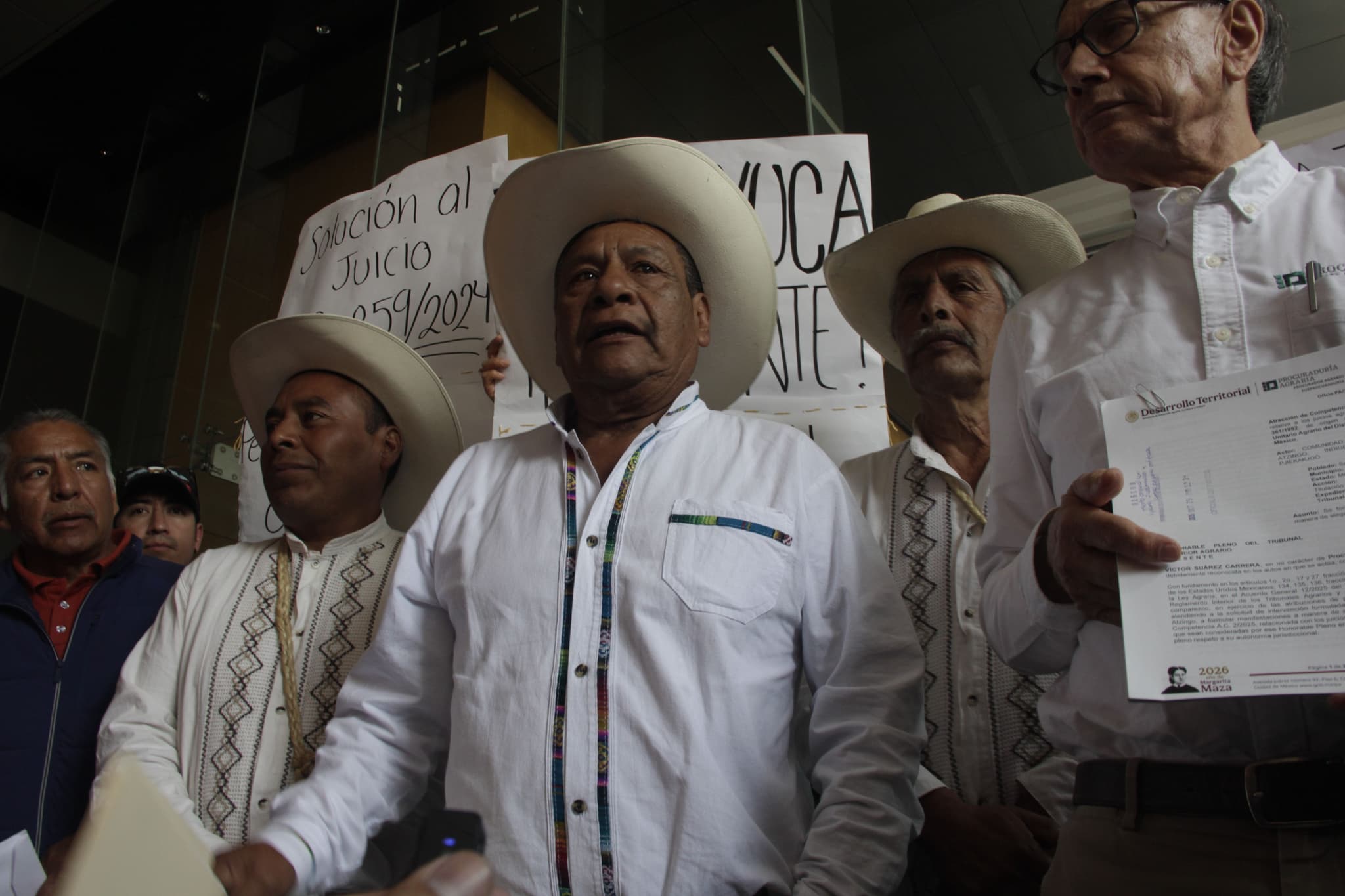
The document was delivered with the support of the agrarian prosecutor, Víctor Suárez Carrera, who asked the magistrates to review the decision of the Unitary Agrarian Court of Toluca, which ignored the agrarian rights of the community.
“We trust that the Superior Agrarian Court will have the capacity to appeal to the truth, to history, to your rights and will be able to rule in favor of justice and rights,” said Suárez Carrera. During the event, it was announced that on November 9, at 12:00 p.m., a public hearing will be held for Tlahuica specialists and representatives to present an anthropological study on the history of the town and its relationship with the territory.
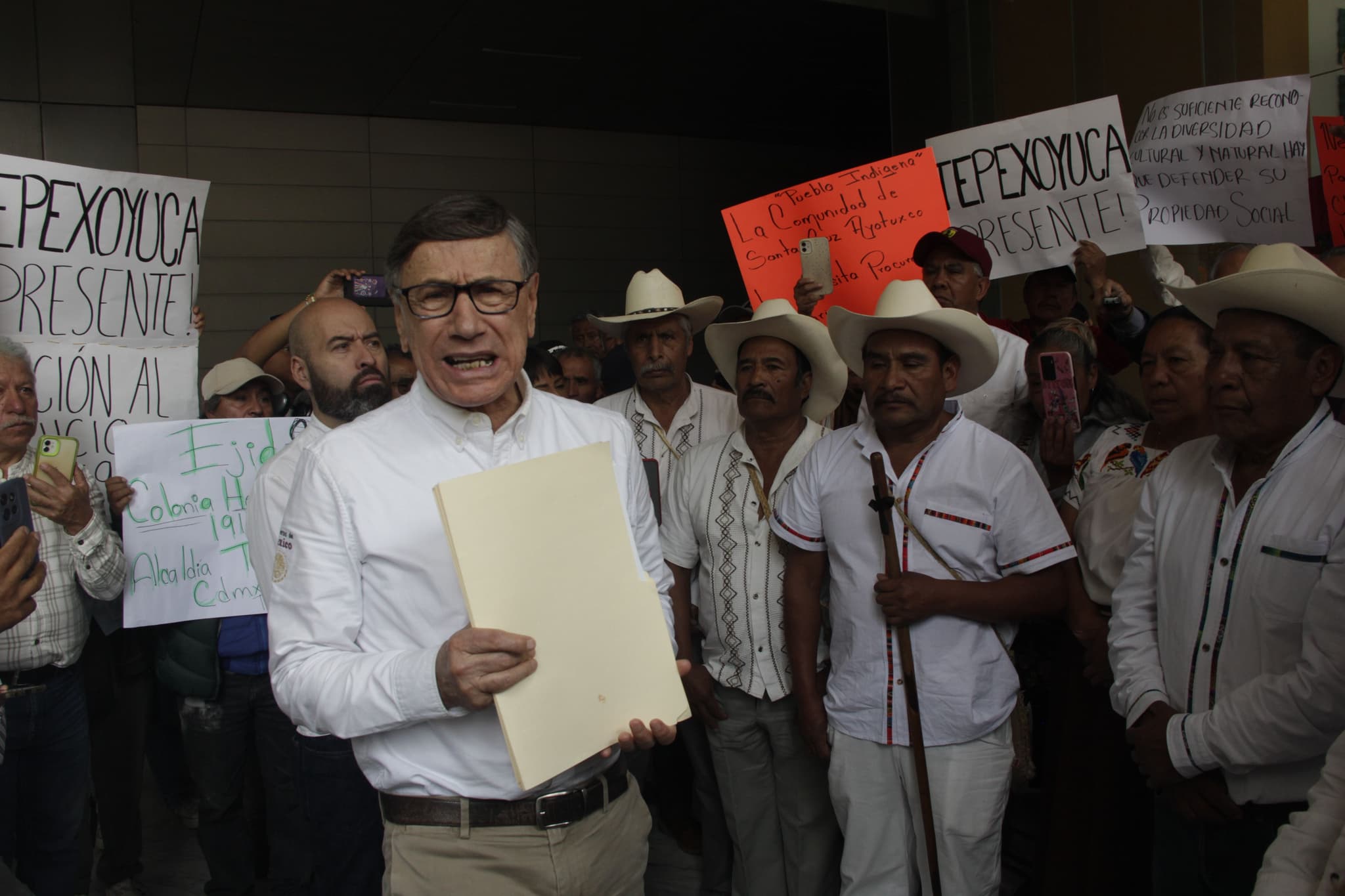
The prosecutor pointed out that the anthropological study will be presented to the magistrates by the specialist Diego Prieto and a community commission. He also indicated that the Secretariat of Environment and Natural Resources (Semarnat), headed by Alicia Bárcena, committed to sending an Amicus Curiae in support of the community's rights to their lands, territory and forest resources. An amicus curiae is a legal figure through which a person, institution or organization that is not a party to litigation voluntarily intervenes before a judge.
During the meeting, the magistrate of the Superior Agrarian Court, Guadalupe Espinosa Sauceda, explained that the file is already under review by that body and comprises around 20 volumes. He added that the analysis also requires considering other files related to neighboring communities.
The magistrate noted that the court cannot yet issue a judgment due to current judicial suspensions. “There are some suspended amparos there, meaning that they prevent us from passing on the sentence to us right now,” he said.
Espinosa Sauceda indicated that, once these amparos are resolved, the court will be able to move towards a resolution. He also assured that the ruling must be in accordance with the law and acknowledged the seriousness of logging in the region, an activity he said he observed during a visit to the area.
It may interest you: Scientists warn of the increase in heat deaths in the world and ask to recognize a health emergency
A tradition that benefits the Valley of Mexico
For his part, Nicolás Hernández Alberto, delegate of the Tlahuica community, said that the defense of the territory is part of the collective responsibility to protect the forest and preserve the rights of the indigenous people.
“We are going to take care of all that forest, which is more than 13,000 hectares,” he said. He added that the community has defended its lands against attempts at dispossession and that it seeks to continue with territorial protection with the support of the authorities.
The community's lawyer, Lidia Segovia Ochoa, who has represented them for more than 16 years, added that the San Juan Atzingo litigation is unique. “Because it involves agrarian rights and indigenous rights of a speaking community with very strong uses and customs,” he said.
He also warned of the consequences for communities of such a lengthy litigation: “It's incredible that to date they are still fighting for their land, communities are already physically, emotionally and economically worn out.”
The lawyer highlighted the environmental importance of the region and recalled that the community promoted an agreement between the governors of the entities involved, the State of Mexico and Morelos, in the face of the consequences of logging in the Zempoala lagoons. He explained that the Tlahuicas maintain a daily relationship with the forest, from which they obtain part of their livelihood through mushroom gathering and local trade. “It's part of their life, their essence and their eating area because they are the main mushroom pickers,” he said.
The latest: The richest pollute the most, but communities face the consequences of the climate crisis: Oxfam
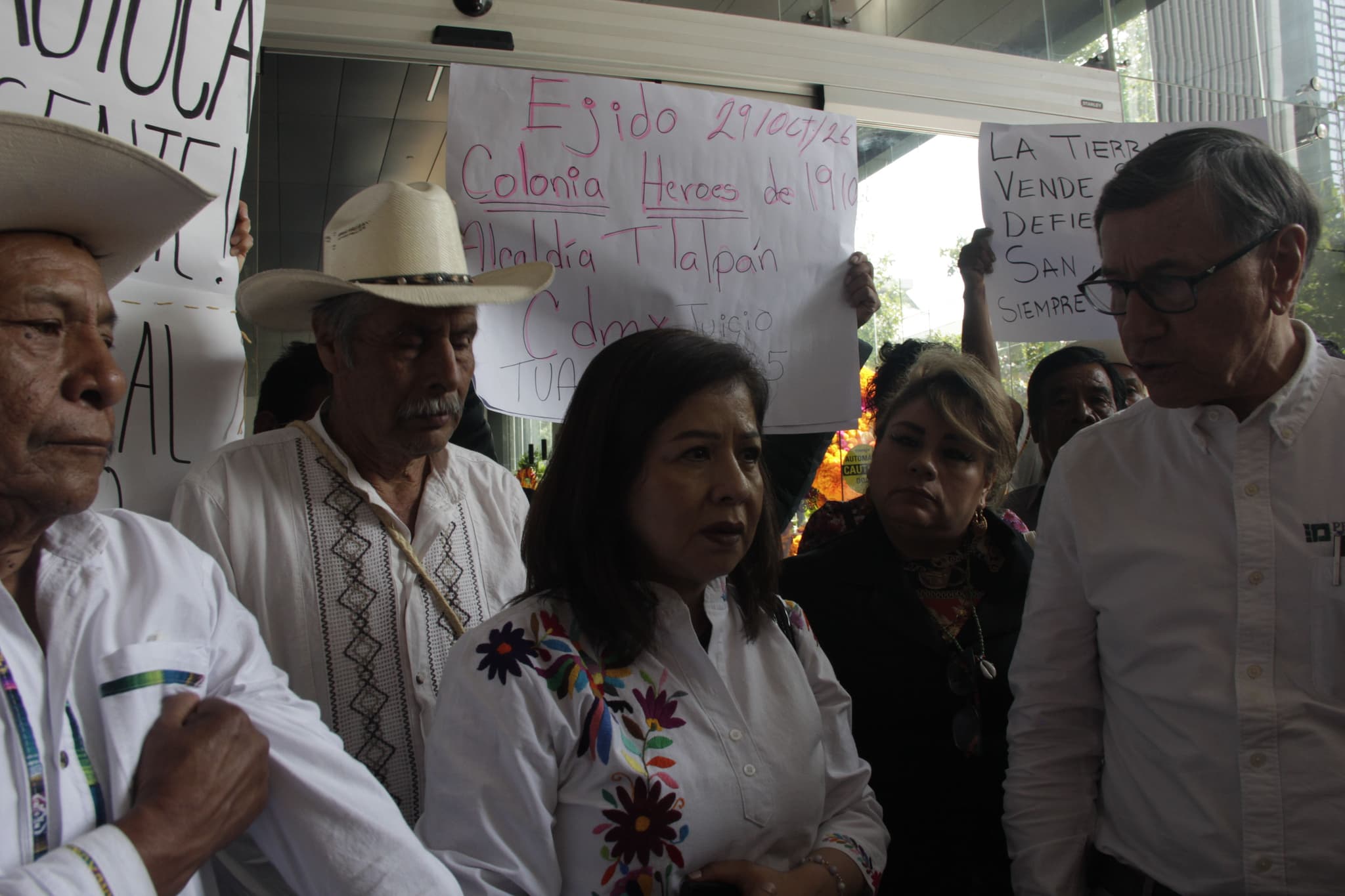
He added that the recognition of their rights is also necessary for them to access social programs: “It is a community that needs their recognition because it clashes with the rules of many laws that do not allow them to access social programs and without them that forest is going to die.”
The litigation, identified with TSA file 2/2025, relates to the ownership of 18,858 hectares of social property that the community obtained through legal recognition in 2007.
According to the background shared by the original community, subsequent challenges stopped community forest surveillance and management activities, while clandestine logging has affected different areas of the forest.
The Great Water Forest is a forest corridor of approximately 250,000 hectares that extends between Mexico City, the State of Mexico and Morelos. It includes the mountains of Zempoala, Las Cruces, Ajusco and Chichinautzin, and covers 37 municipalities and municipalities of the three entities.
The region is home to indigenous peoples such as the Tlahuicas, Otomis, Mazahuas and Nahuas, as well as other communities, whose territories include numerous communally owned agrarian centers.
Segovia Ochoa argued that caring for the forest is part of the community's daily life and its work is not recognized. “I say it's a strength and I always say that urban residents don't value what they do out of a habit,” he said.
As an example, he reported that, when fires occur, men, women and children in the community organize to fight them without waiting for the intervention of firefighters or the government. “They are alone in order, men, women, children, with their palliacates, their machetes and they go up to put out fires, all because of a city that doesn't value what they do,” he said.


Comentarios (0)