
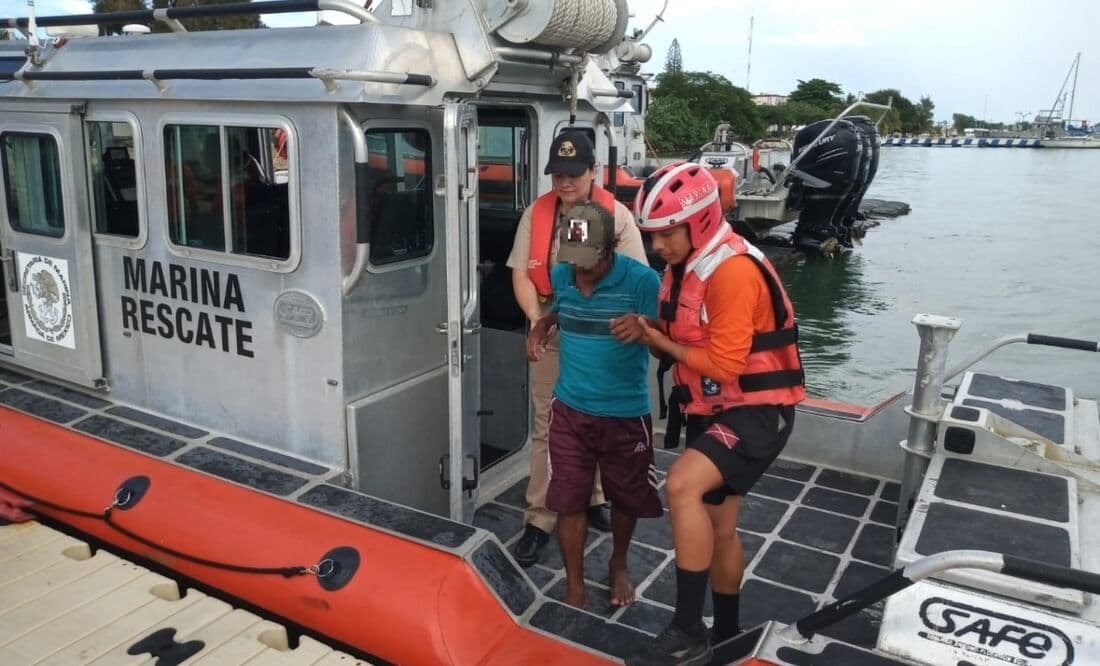
Rodrigo was afraid, he thought he was going to die or that he could end up in jail. He went out early on June 26 to catch octopus in the middle of the summer season together with five fishermen in an area known as Costa Smeralda. Everyone knew that if they were surprised they could be arrested, because this is an illegal activity. For this reason, when Rodrigo descended to the bottom of the sea to capture the catch and his companions noticed the presence of inspectors from the National Aquaculture and Fisheries Commission (Conapesca), who were carrying out a surveillance operation, they fled. The fishermen panicked, revved up the engine and left it in the middle of the sea.
“You think we're all in this together, don't you? But when you see that everyone wants to save their skin, you understand that in the end you are alone,” Rodrigo reflects, some time after being stranded in the water.
Rodrigo is not his real name, but to protect his identity and avoid possible retaliation, he was identified that way in this text.
When Rodrigo emerged and discovered that the boat was gone, he immediately understood what had happened. For a few minutes he contemplated only two possibilities, trying to swim to the shore or waiting for someone to find him before it was too late.
“Then I saw a boat coming with the Navy's logos. That's when I knew they had already caught us,” he says.
“We know that what we are doing is wrong, but sometimes we feel that there is no other way because we have to look for him to support the family,” he says in his defense.
In less than a year, at least six divers allegedly engaged in poaching have been rescued by federal authorities after being abandoned on the high seas by the boats they used to operate off the Yucatan coast, according to the National Aquaculture and Fisheries Commission (Conapesca).
The cases show a practice that, in addition to representing an environmental crime, exposes the lives of those who participate in these activities.
Félix Luna Gómez, a fisherman and former leader of the National Chamber of Fisheries and Aquaculture Industries (Canainesca), points out that fishing is considered one of the most risky work activities.
“Unfortunately, activity at sea is high-risk because it's immense,” he says. And in poaching, he adds, the scenario can be even more complex.
As these are clandestine activities, some vessels operate without meeting safety requirements or avoid any mechanism that allows their movements to be tracked, making it even more difficult to locate them when an accident occurs.
Also read: Less noise for species: a fishing community is betting on boats with electric motors in Celestún
Another risk of poaching
The first case of abandonment on the high seas in Yucatán occurred on June 26, 2025, during a surveillance operation led by the Secretariat of the Navy (Semar) and the National Aquaculture and Fisheries Commission (Conapesca) in front of the Yaxcukul lighthouse, on the so-called Emerald Coast.
Five boats fled when they detected the presence of the authorities and left four divers at sea, who were allegedly carrying out illegal capture of species such as octopus, lobster and sea cucumber, according to Semar.
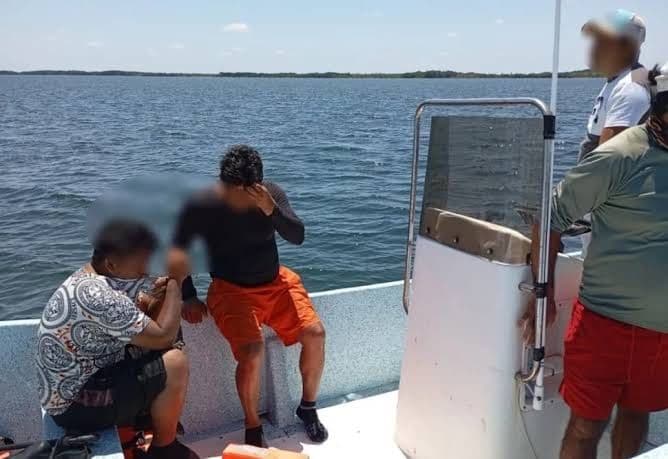
Navy elements located the fishermen floating in the water. Initially, the divers refused to be rescued, as they claimed that the boats would return for them. However, they finally agreed to be transferred by the authorities. During the inspection, harpoons, octopus hooks and other diving tools used for the extraction of marine resources were secured.
Another event of this type occurred in April 2026 off the coast of Dzilam de Bravo. On that occasion, during a surveillance operation involving the Secretariat of the Navy, Conapesca and the Sea Shepherd Conservation Society, two divers were abandoned by boats that escaped when they detected the presence of the authorities.
The two fishermen remained in the water while the boats moved away to avoid inspection.
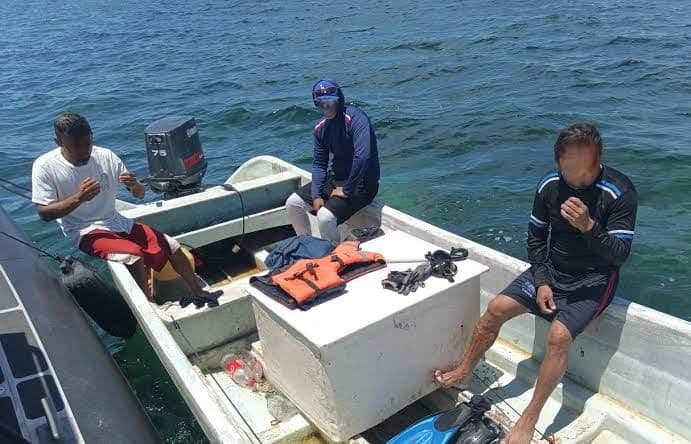
These cases reflect one of the least visible risks associated with poaching in the Yucatan Peninsula, because in addition to the impact that these activities generate on species subject to bans or catch restrictions, those who participate as divers may be exposed to high-risk situations when vessels prioritize avoiding being intercepted by authorities.
“They don't have a radio. They don't have a buoy. Sometimes, the snorkel tube barely protrudes from the water as they try to stay afloat two or three kilometers from the coast. They leave them there and then we have to go and look for them. If no one sees them, they just disappear,” explains Arturo González, a fishing and community surveillance officer in Yucatán, who has been participating in surveillance operations together with Conapesca for years.
Every year, at least two to three such cases are recorded, Arturo says.
“We are going by boat because what we are looking for is to remove that illegal fishing effort. But a lot of times, while we're going, we find people in the water and we can't leave them there anymore,” he says.
It may interest you: The grouper in Yucatán already has a recovery route
Swim or die
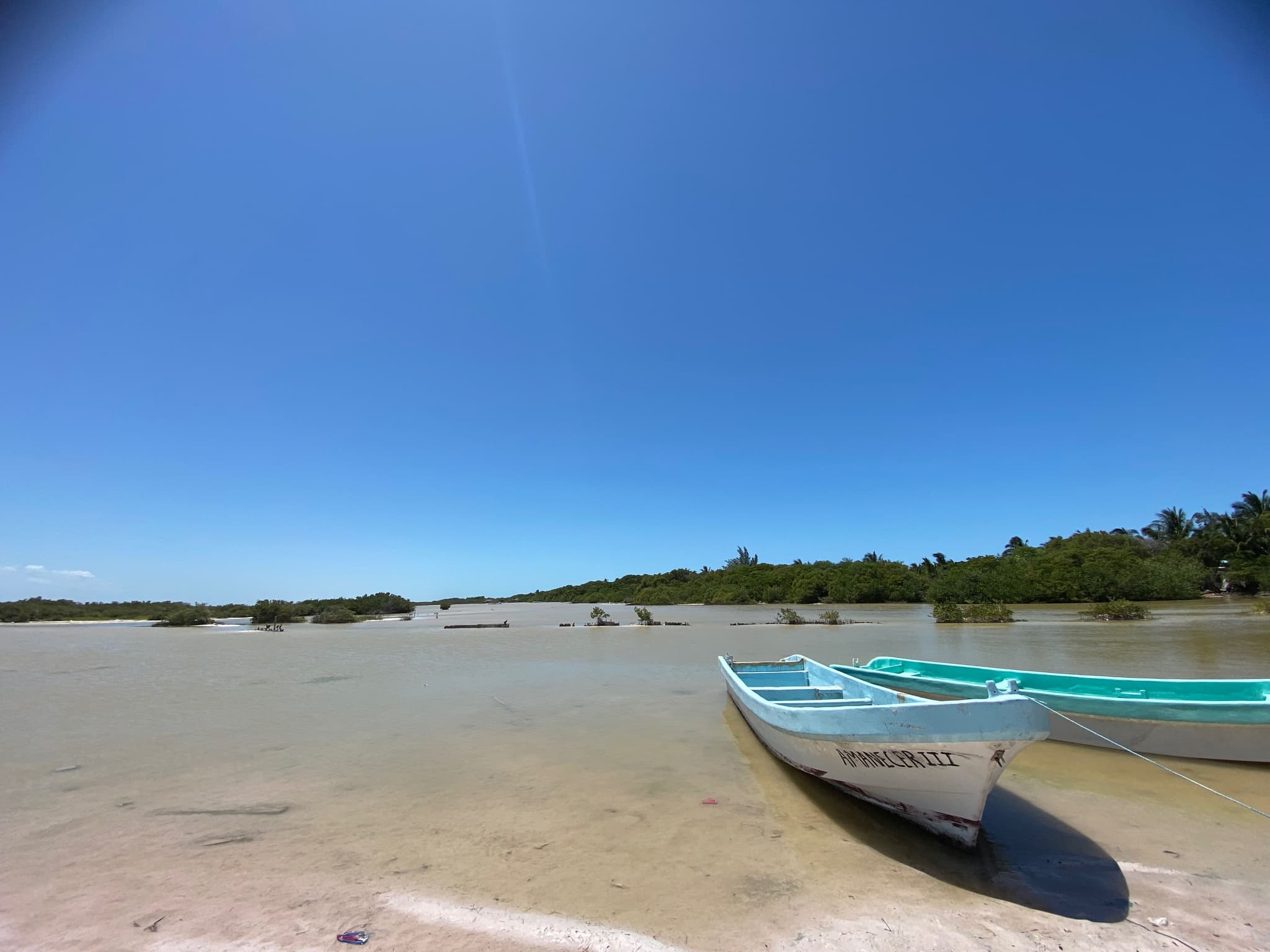
Sometimes, the divers themselves initially refuse assistance because they expect their companions to return and if that doesn't happen, then they have to swim for miles to survive.
Abandoned divers must travel between one and three kilometers to try to reach the coast and do so using only a visor, snorkel and fins.
When they finally arrive ashore, they often wait for hours for another boat to pick them up. In most cases, their families don't know what happened.
“We notified the Captaincy (of the Harbor) because the relatives only know that they went out fishing. They don't know if the boat capsized, if they were stopped or if they're still lost at sea,” Arturo adds.
Jonathan Vergara, an environmental engineer who specializes in maritime safety, explains that unlike legal fishing, where cooperatives, permit holders and the inhabitants themselves know what boats leave and who crew them, in poaching many boats operate without clear records.
“Some use altered or false license plates to hide their real owners and when they are insured, no one claims them. This lack of information also complicates any search when an accident occurs,” he says.
The specialist mentions that in fishing ports there are versions of vessels dedicated to illegal capture in deep waters where, presumably, divers with decompression sickness do not receive immediate assistance.
The United Nations Food and Agriculture Organization (FAO) warns that illegal, unreported and unregulated fishing affects the sustainability of marine populations, reduces the income of those who comply with the law and is often linked to other illegal activities.


Comentarios (0)