
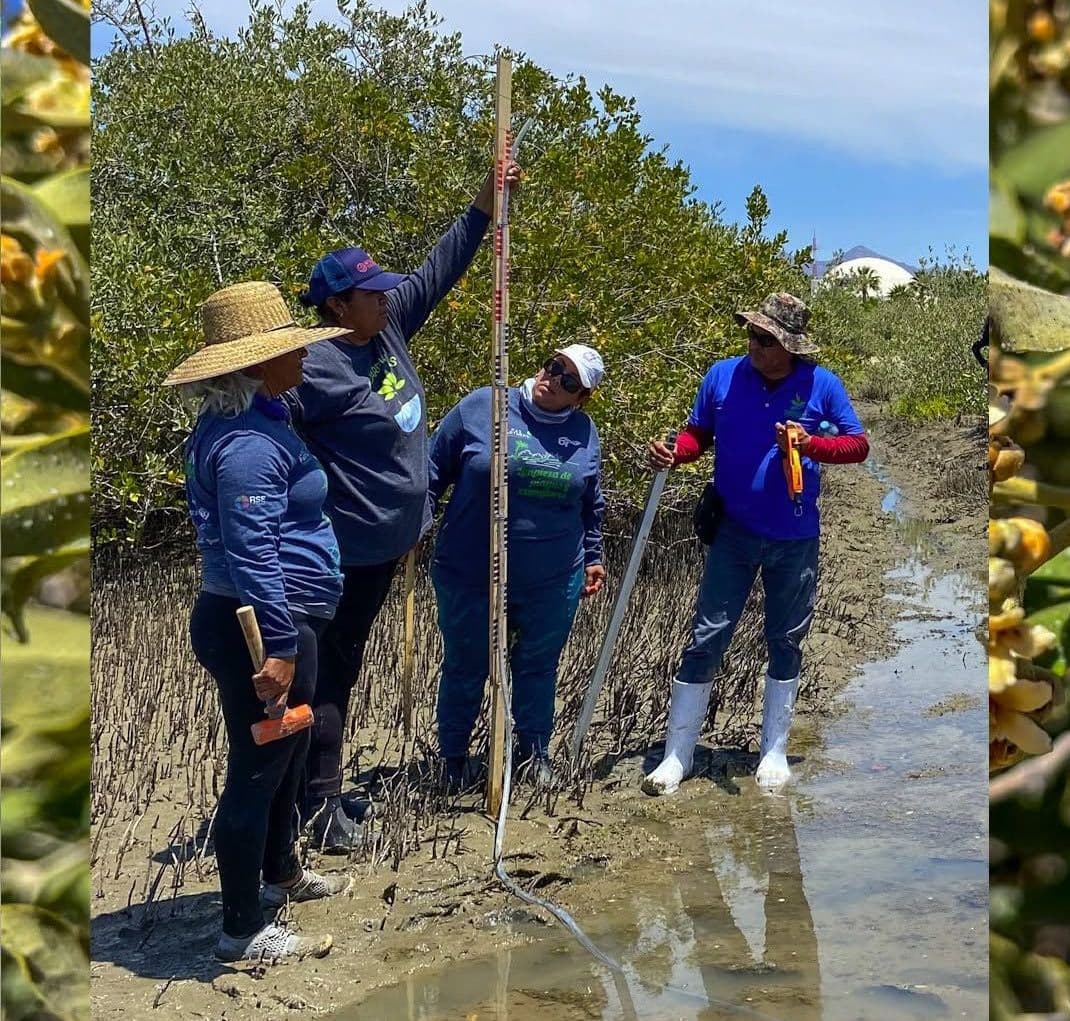
Women's groups from coastal communities participate in the restoration of mangroves through the planting of red mangroves, the recovery of channels, and the monitoring and surveillance of these ecosystems. The works seek to recover degraded areas and maintain the protection that mangroves provide to communities exposed to storms and rising sea levels.
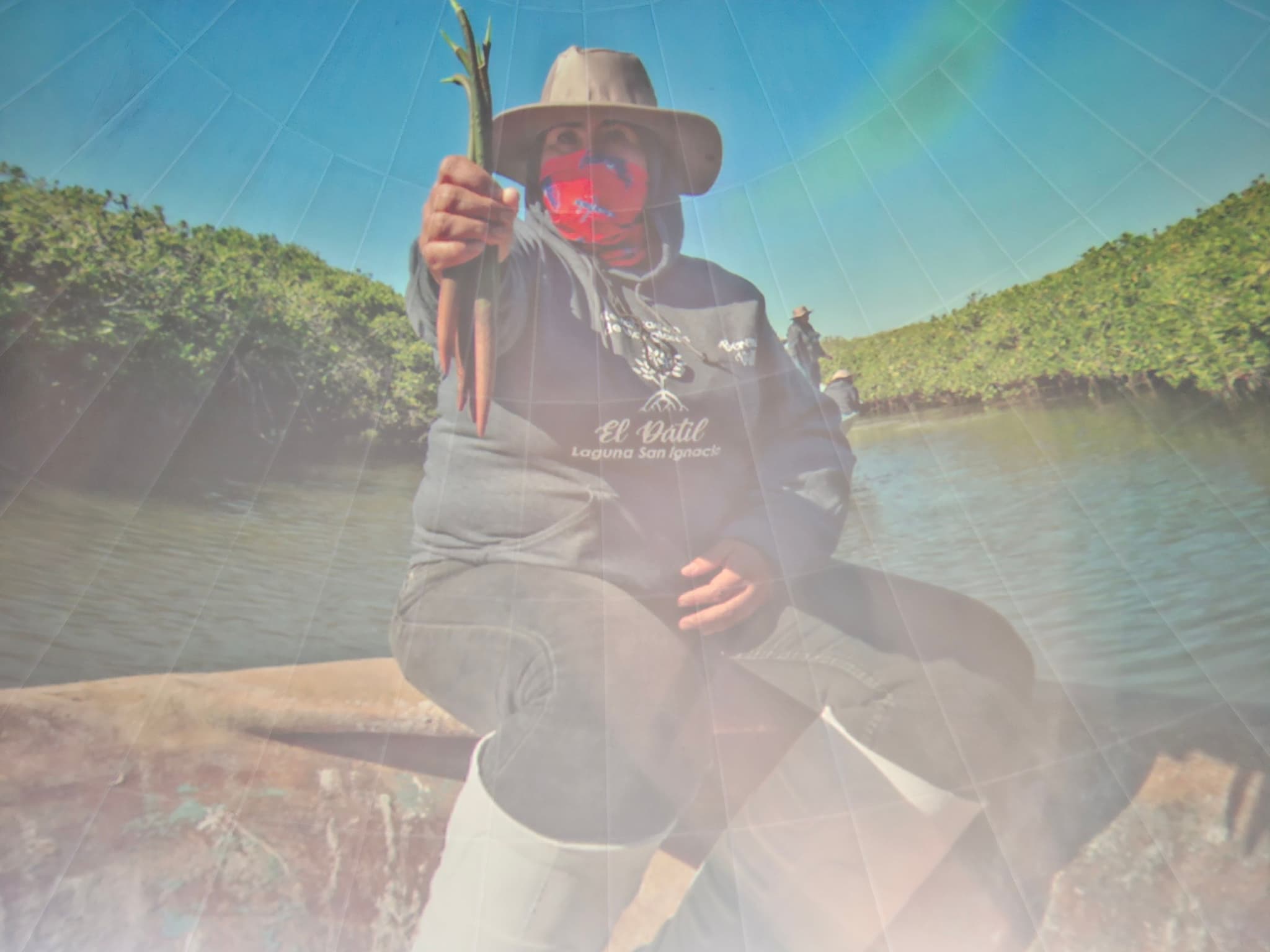
In El Datile, Baja California Sur, the group Mujeres Unidas del Datile has been working since 2019 to restore the mangrove forest in this fishing community located in Laguna San Ignacio. Tannia Frausto, director of Climate Change at Costa Salvaje, an international conservation organization that works in Mexico and the United States, said that the group is made up of 12 women and has planted around 171,000 red mangrove seeds.
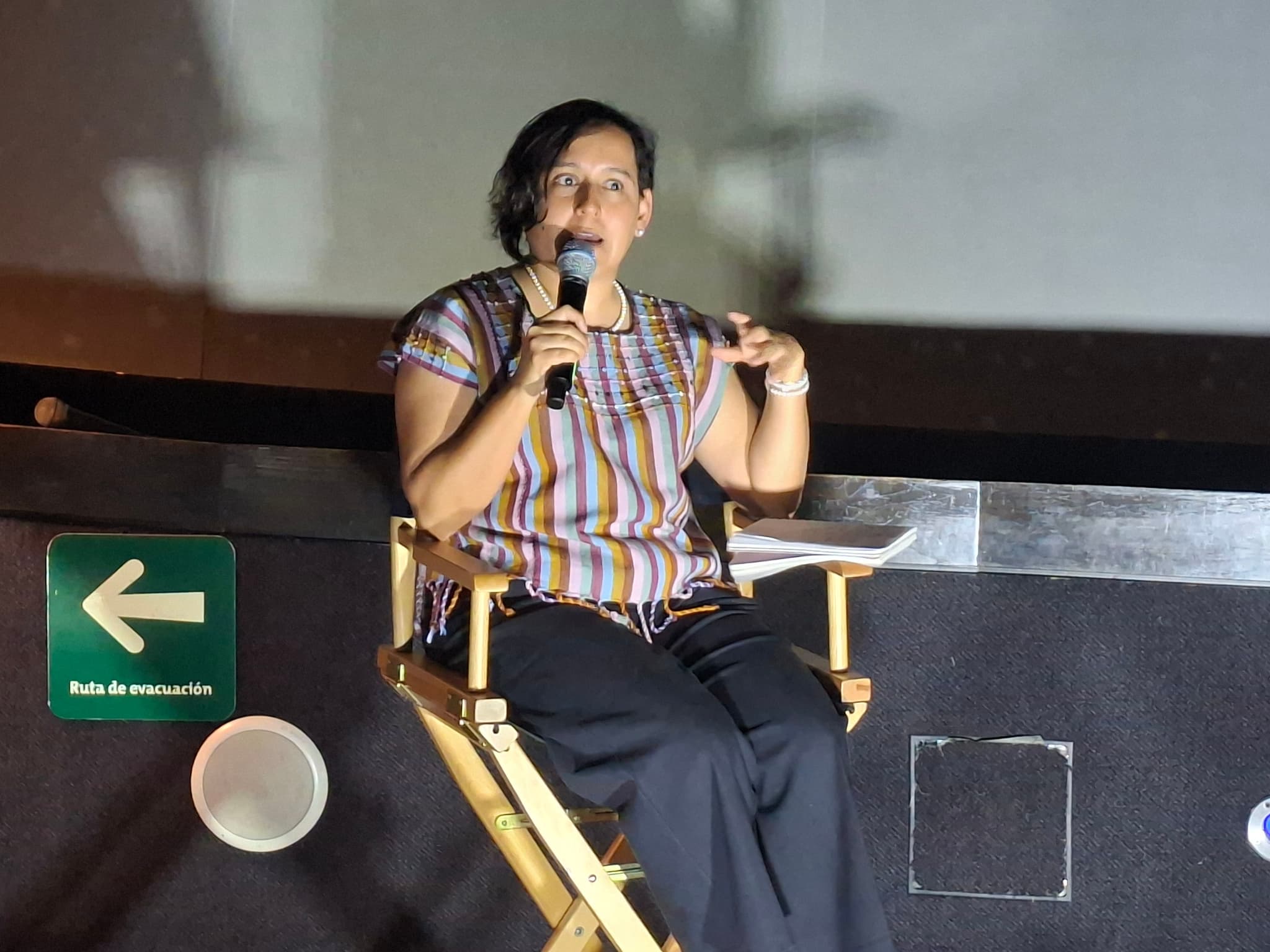
“As of today, we have already planted around 171,000 red mangrove seeds, and what we hope is that these mangroves will grow large enough so that, with their roots and with the entire network of intertwined roots, they help to retain sand, soil enough so that the sea level does not make the entire fishing community vulnerable.”
The restoration of each site begins with a diagnosis of the causes of its degradation. Frausto explained it this way: “First we have to identify the site, we have to identify the causes for which the site was degraded. We call this forensic ecology.”
In La Paz, Baja California Sur, Guardianas del Conchalito is participating in the recovery of the urban mangrove of El Conchalito. The process includes community protection actions, hydrological restoration and reforestation. According to the experience presented, the organization also promoted productive activities related to ecotourism and sustainable aquaculture.
The work reached new generations through the collective Mangles del Manglito. “Now their children have created a new collective called Mangles del Manglito, with whom we also collaborate, who are also restoring mangroves.”
Women's participation in restoration has also been replicated in other communities. Paula Tussie Berdichevsky, director of Global Wild Coast Strategy, mentioned other experiences in the Yucatan Peninsula and Oaxaca. In addition to Colombia. “We also have the Chelemeras in Chelem, on the Yucatan Peninsula and the Piangueras in Colombia. There is the Young de Balandra group, who are also women who go and monitor the mangroves, and there is also a project in Lagunas de Chacahua, where the two coordinators are Doña Siri and Doña Carla”.
It may interest you: La Marina begins phase II of the expansion of the Port of Veracruz; organizations warn of serious damage to the La Gallega reef

In addition to planting, women are involved in monitoring, monitoring and organizing restoration work. Exchanges between groups have made it possible to share experiences on restoration techniques, community organization, financing and project management.
Costa Salvaje, with the support of other organizations, has coordinated three meetings between women dedicated to mangrove restoration. “And that's how Costa Salvaje, with the support of other organizations, has coordinated three, three exchanges of experiences of women restorative mangroves,” said Tannia Frausto.
All three were in La Paz, Baja California Sur, and the first brought together about 20 women from Sonora, Baja California Sur and Yucatán. There, the first achievement was to make visible the role of these women not only as restorers, but really as defenders of the territory and as defenders of livelihoods.
“In the second exchange, which was a little more technical, it was possible to exchange experiences, that is, literally of how groups are organized, what their challenges are, what is the best way to register with the Treasury, because all that counts when you are working with communities, right? And in the third exchange that was the same, we did it hand in hand with JASS, it was a life experience for many of them as well”.
“It was the first time they flew, it was the first time they left their state, their house, so being able to do all this exchange was also the first approach to doing an analysis of why they are more vulnerable,” they say.
Investigations: Energy megaprojects and tourism expansion corner Cozumel
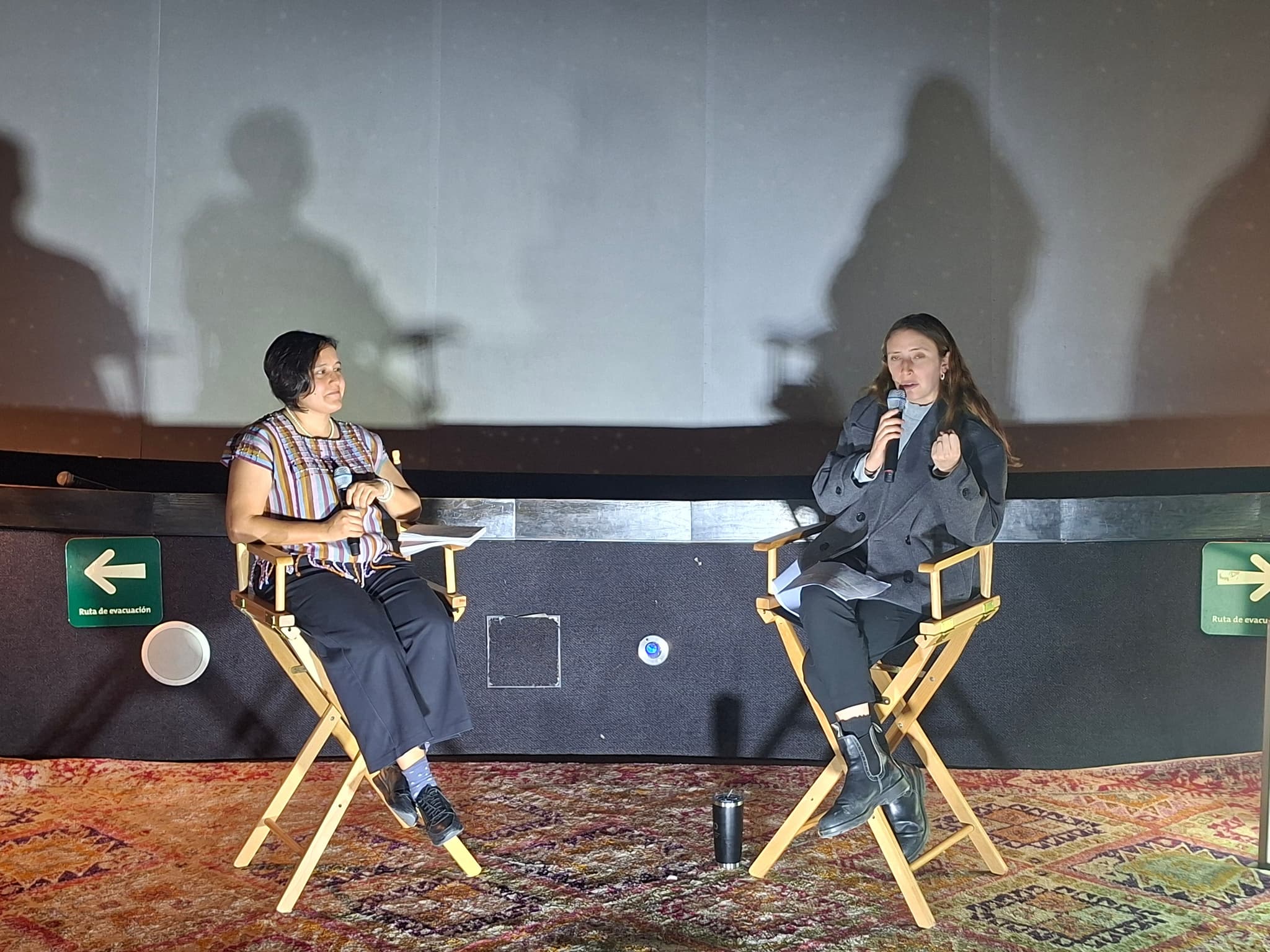
Based on these exchanges, Frausto spoke of the possibility of articulating the efforts of female restorers. “We all have a power, but if that power is added up, we already make a collective power and that collective power is the one that can defend territories, the one that can change laws, the one that can obtain funding that was not possible before. And this is how we are promoting the creation of a network of women restorers for Mexico and we know that there are efforts to do the same at the level of Latin America.”
The experiences were shared during a Mexico for Climate activity on the Espejos de Agua stage. The presentation brought together the cases of women who work in the conservation and restoration of mangroves together with coastal communities.
At the close of the presentation, Tussie Berdichevsky read a manifesto drawn from exchanges between women restorers and mangrove defenders. The organization noted that the text collects the voices of the participants.
The manifesto is reproduced below:
The Voice of the Women Who Care for and Defend the Mangrove Grove We are women of the sea, the mangrove, the river and the coast. We are fishermen, restorers, planters, caregivers, mothers, daughters, sisters, grandmothers and companions. We come from Oaxaca, Baja California Sur, Campeche, Sonora, Yucatán and many other places where life depends on the sea and the land.
We care for life, community and nature. As women, our bond with the mangrove is ancient, deep and everyday. Mangroves are part of our history, our community and our way of life.
Although many times our work has not been recognized, from now on we strongly call ourselves defenders of the mangrove. Defending the mangrove forest is also resistance. Today we recognize that caring for, nourishing, sustaining and restoring is also defending the territory.
We affirm that there is no environmental justice without social and gender justice. You cannot protect nature while maintaining inequalities.
We realize that we are full of experiences, knowledge and knowledge. Knowledge lives both in community experience and in technical knowledge. We learn from each other and continue to build new paths together.
We recognize that memory is our root and that the future is built collectively. Without memory there is no defense and without a shared future there is no hope.
We believe in new generations. We want children and young people to be involved in caring for the territory and the mangrove. Youth are action: they manage to translate, amplify and project the struggle towards the future.
That's why we want them to have a decent future in their territories without having to migrate to survive.
We know that alliances are important. We value the support of organizations, institutions and allied people, but the voice and the decision belong to us.
We demand transparent, honest, fair and respectful relationships, without impositions, extractivism or simulation. We understand that conflicts are part of the path. We believe that when we face them with honesty and respect they can strengthen our organization and help us grow.
Hope is also a form of resistance. Despite dispossession, violence, fear, tiredness and abandonment, we continue to imagine and build a different future for our communities.
Here we see ourselves reflected in each other. We recognize different stories, but also shared pains, fears that we thought were our own and that today we understand as collective.
In that recognition we find strength, because we not only share struggles, we share hopes, doubts, learning and paths. We are not alone. Our strength is in the organization, in the network and in the accompaniment between women.
We demand that care work ceases to be invisible. We want our life-sustaining work in our communities to be valued, recognized, shared and backed up with actions, resources and real respect.
We demand respect for our territories: that the dispossession, privatization and destruction of mangroves be stopped. That decisions about our lands are not made without us.
Nothing about our territories without our voices and nothing about mangroves without those who care for them. We demand clear, accessible and decent processes for obtaining permits, supports and community projects.
No more obstacles for those of us who care for life. We demand the support of the authorities to facilitate the conservation of mangroves and to move from bureaucracy to action.
We want access to tools, training and resources to strengthen our work. We want to defend our territories without fear, without violence and without dispossession.
We are committed to caring for the mangrove forest, to planting it, restoring and defending it, to protecting its roots, its waters and its cycles.
From the community, we are committed to continuing to organize and dialogue even in the face of differences.
Because we are networks that support each other and sustain life with dignity, respect and collective strength.
In case you missed it: Invasive species, another threat posed by gas ships in the Gulf of California


Comentarios (0)