
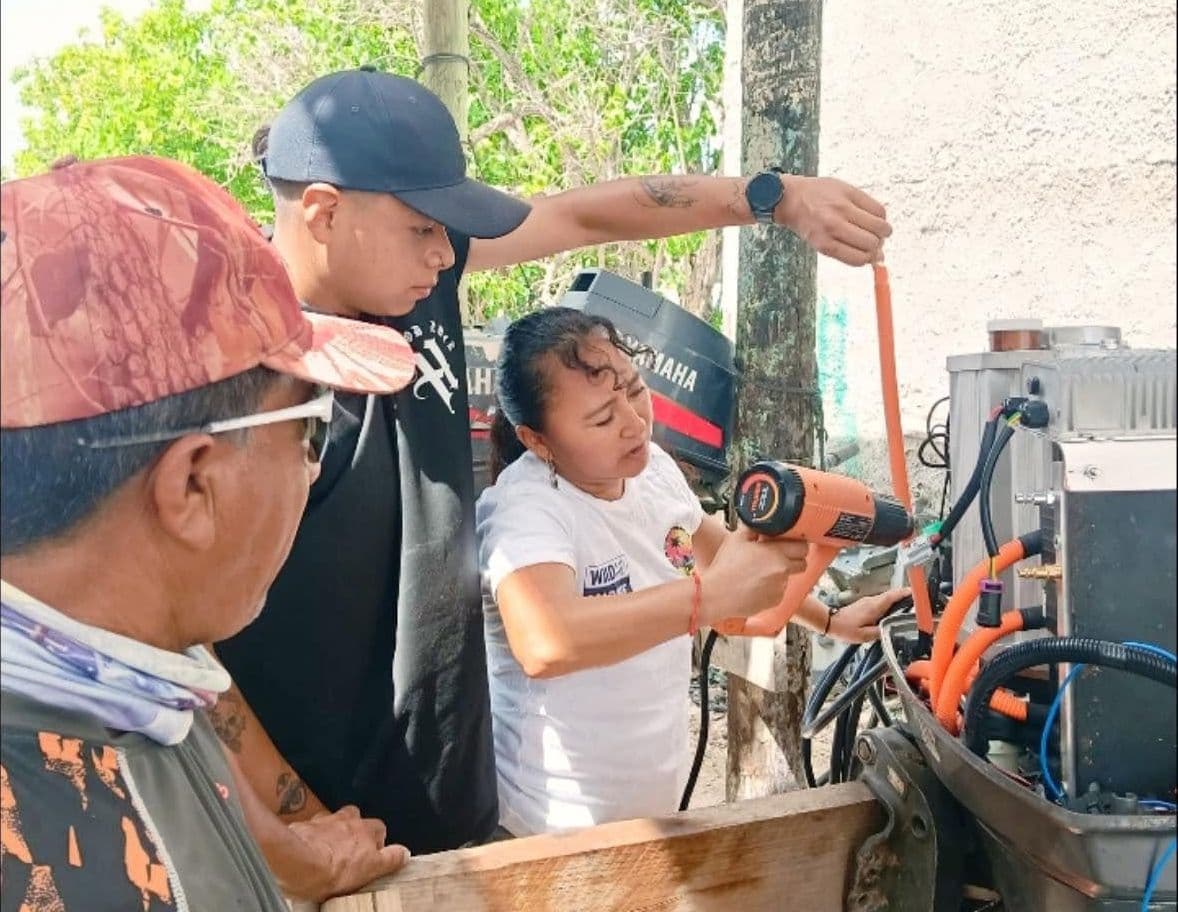
Sometimes it is thought that science only develops within a laboratory, however, this time it was born in a fishing port: the Fishing Refuge of Celestún, Yucatán, the first community to use an electric motor in its boats.
First, they were the community surveillance brigades in the Fishing Refuge, where they incorporated women into monitoring and protection tasks. Later, training with civil organizations appeared, the use of drones to strengthen surveillance and the construction of a community monitoring center that coordinates tours and assistance for fishermen, now the need to monitor marine resources forced them to look for alternatives to reduce one of the main expenses of cooperatives: fuel.
The Federation of Fishing Refuge Areas of Celestún began testing the first electric motor adapted for a community surveillance vessel, an initiative that seeks to reduce operating costs, eliminate polluting emissions and open up the possibility that, in the future, small fishing and tourist boats on the Yucatecan coast can operate with cleaner technologies.
“It was a gasoline engine and today it is a fully electric, ecological and zero-emission engine,” explained José Ricardo Novelo Chac, president of the Federation, while showing the prototype assembled by members of the community itself.
It may also interest you: The grouper in Yucatán already has a recovery route
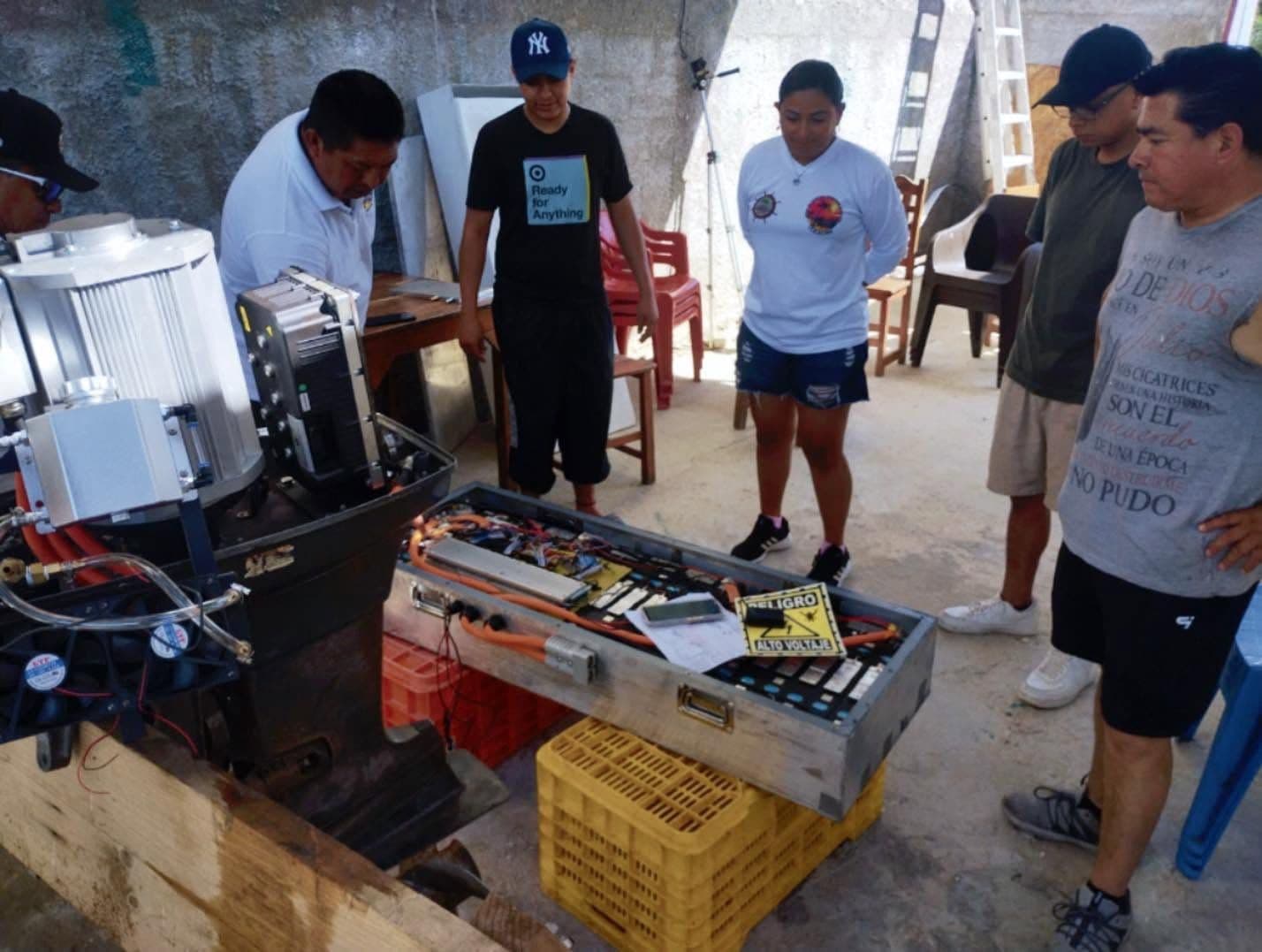
Innovation that was born from the community
The project began about a year ago with the support of the Small Grants Program (PPD). With the funding, the proposal is now a reality.
For several months, fishermen and young people from Celestún participated in workshops to understand the operation of lithium batteries, controllers, converters and electrical systems.
The intention is for the community to know how it works and, above all, that in the future they can repair it, adapt it or even build new equipment.
“We want knowledge to stay here. There are young people who studied mechatronics and today they are participating because this project is for their future,” said Novelo.
The engine is still in the testing phase, but its battery offers between two and two and a half hours of battery life, enough to begin to evaluate its behavior during surveillance trips inside the fishing shelter and to know its performance under real navigation conditions.
The first trips will be aimed precisely at community surveillance, an essential activity to protect species and combat illegal activities, which represents one of the biggest costs for fishing organizations.
The fisherman described that each route consumes between 2,500 and 3,000 pesos in gasoline and with an electrical system, that expense practically disappears.
The technological commitment comes at a time when Yucatan's marine ecosystems are facing constant pressure from illegal fishing.
Don't miss: Yucatecan coast: a territory under increasing environmental pressure
According to figures from the National Aquaculture and Fisheries Commission (Conapesca), between 2010 and 2023 the state accumulated 345 complaints of poaching, one of the three highest numbers in the country. In addition, it heads the national registry for illegal commercialization of marine species, with 186 complaints, equivalent to just over 32 percent of the national total.
The figures reflect only the reported cases
Between 2009 and 2024, the same agency reported the insurance of more than 4,579 tons of illegal fishing product in Yucatán, the fifth highest figure in the country. During that period, 300 boats, 588 vehicles and more than seven thousand fishing gears were also seized, and 104 people were placed at the disposal of the authorities for their alleged connection to poaching activities.
The scale of the problem is significant considering that Yucatán has a shorter coastline than other entities with greater fishing activity and that institutional capacities to monitor the entire coast continue to be limited.
In this context, strengthening community surveillance represents a complementary strategy to detect irregular activities, document them and reduce pressure on species of high commercial value such as the Mayan octopus.
These surveillance activities involve women such as Damaris Chuy, a mother of a family who began to worry when she saw that the fishermen from the port were returning without much fishing.
“In addition, anglers tell us that before they could fish 25 miles out to sea, but now they have to go at least 60 miles,” Chuy adds.
So carrying out surveillance activities with a boat that will not involve expenses is an incentive to continue with the activity.
From tourism to artisanal fishing
Although the first tests will focus on surveillance, fishermen are already imagining other uses.
Dozens of tourist boats operate in Celestún and cross the estuary every day to observe mangroves and flamingos. An electric motor would not only eliminate direct emissions of polluting gases during these trips, but it would also considerably reduce noise, an advantage pointed out by environmental organizations that promote the electrification of water transport to reduce disturbance to wildlife, especially birds and aquatic mammals in sensitive ecosystems.
Then they want to bet on artisanal fishing, because during the octopus season a boat can spend around 3,500 pesos on fuel alone.
“In practical terms, that means capturing 40 to 50 kilograms of octopus just to recoup investment in gasoline. With this engine, those kilos would already be a gain for the fisherman”, summarized Novelo.
Read: Chelem: the mangrove between conservation and logging
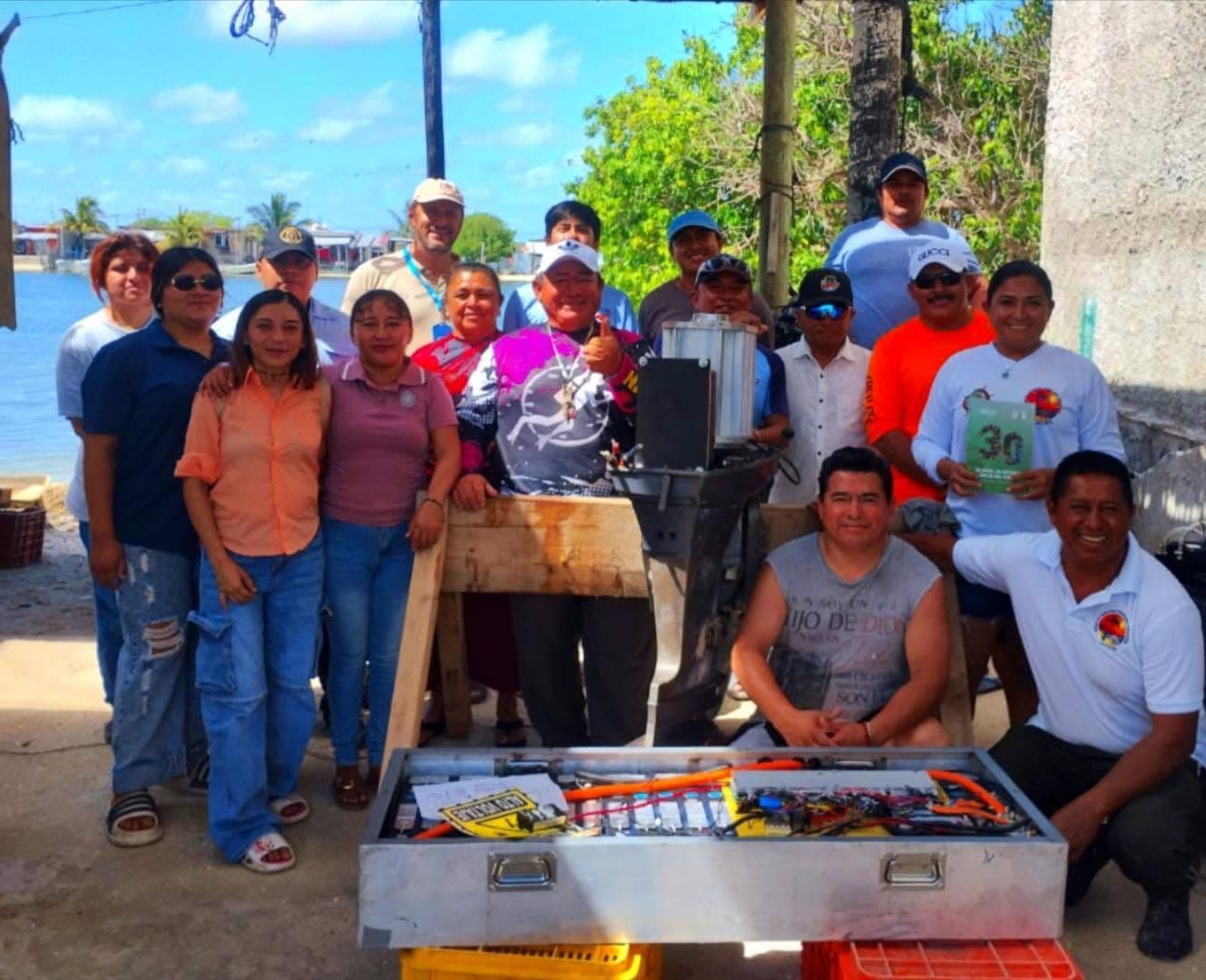
Currently, batteries are recharged through the electricity grid, but the organization is already working on a next objective, which is to supply them with solar panels so that the entire system works with renewable energy.
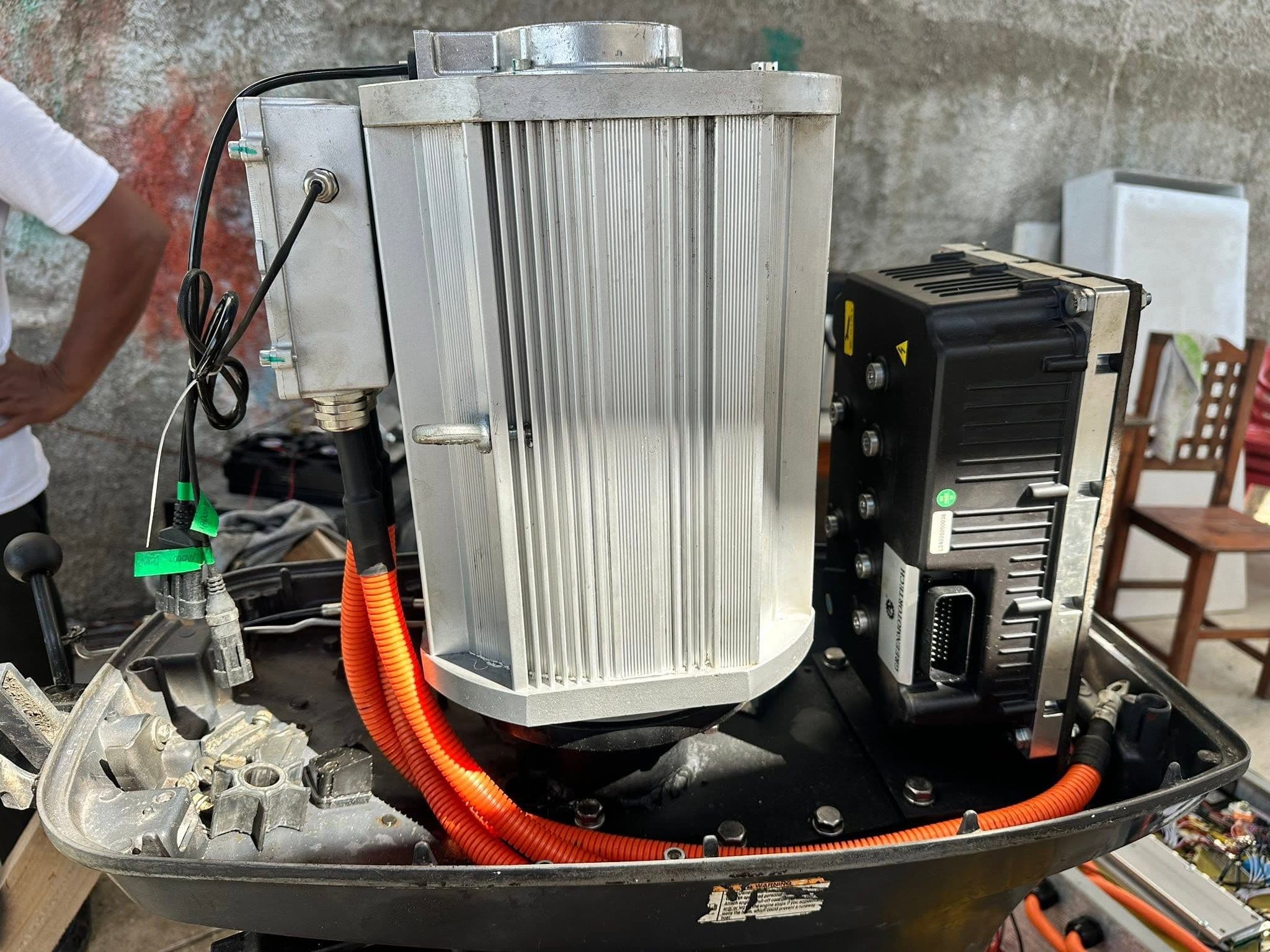
Paradoxically, the heart of the project was born from what seemed to have ended its useful life because the electric motor was built using the housing of an old combustion engine that was already considered scrap.
“We're recycling it. All this case no longer worked and today it comes back to life,” Novelo explained.
According to the Small Donations Program (PPD) of the Global Environment Fund (GEF), implemented by the United Nations Development Program (UNDP) in Mexico, diagnoses carried out in coastal communities identified three recurring problems associated with combustion vessels: high fuel consumption, carbon dioxide emissions and engine noise, which can alter the behavior of wildlife.
“The conversion of internal combustion engines to electric can constitute a solution that allows working with familiar equipment,” said Sébastien Proust, national coordinator of UNDP's PDP.
In response, the program promoted the development of electric propulsion systems adapted to community boats. According to the experience documented by the PPD, these engines require less maintenance because they have fewer mechanical components than combustion engines and make it possible to take advantage of structures already known to the fishermen themselves, facilitating their adoption.
In addition to the economic benefit of reducing gasoline consumption, the PPD points out that electric navigation significantly reduces noise during trips. In coastal ecosystems, this represents an advantage for surveillance, restoration and nature tourism activities, since it reduces disturbances to sensitive species, particularly waterbirds that use mangroves, wetlands and wetlands as feeding or resting areas.


Comentarios (0)